Key takeaways
- Small bedroom or studio: A 3-panel screen around 60 inches tall is a useful starting point. It can block a bed or dressing area from a doorway without taking up as much space as a wide, rigid partition. Look for lightweight panels if you expect to move it often.
- Home-office background: Choose a divider wide enough to cover the camera’s full background, with extra width on both sides for angled placement. A fabric-faced office partition can give a more consistent visual block than a translucent shoji screen.
- Shared living area: A 4-panel screen or a pair of independently supported panels can cover more width. Make sure the panels can form a shallow zigzag; a completely flat screen can be easier to tip.
- Rental or temporary setup: Folding screens need no wall fasteners and can be stored when not in use. Confirm the folded thickness and whether the hinges allow the screen to collapse neatly.
- Busy passage or room with pets: Favor a heavier frame, broad feet, and a stable panel arrangement. A light decorative screen may be easy to knock over and is better suited to low-traffic spots.
Best Freestanding Room Dividers for Flexible Spaces
The best freestanding room divider depends on what you need it to do: choose a 3-panel screen about 5–6 feet tall for flexible visual privacy, a wider 4-panel model for a shared room, or a rigid partition with feet when stability matters more than folding it away. Before buying, compare the divider’s usable width, height, weight, frame material, and how much floor space its feet or angled panels require.
Compare common freestanding divider types
Dimensions and weights below are typical ranges for these product types, not specifications for every model. Check the manufacturer’s measurements—especially whether width is listed flat or with the panels angled.
Our top picks
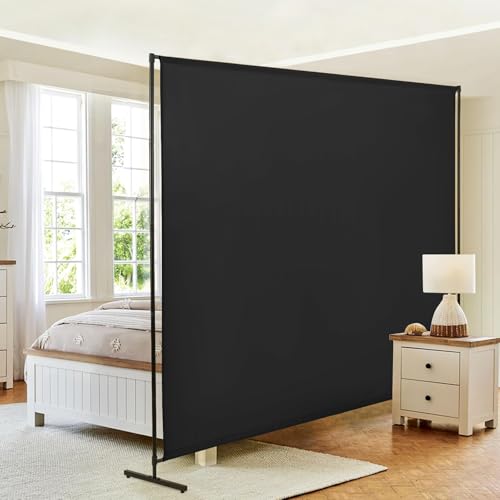


As an Amazon Associate we earn from qualifying purchases at no extra cost to you. Ratings are shown as listed on Amazon.
| Type | Typical height | Typical width | Common materials | Best fit | Main trade-off |
|---|---|---|---|---|---|
| 3-panel folding screen | 60–72 in | 48–72 in flat | Wood or metal frame; fabric, woven fiber, or paper inserts | Bedrooms, work corners, and occasional separation | Easy to fold, but coverage shrinks when angled |
| 4-panel folding screen | 60–72 in | 72–96 in flat | Wood or metal frame; fabric or woven inserts | Wider sightline blocks or shared rooms | More coverage, but more weight and floor footprint |
| Rigid partition with feet | 60–72 in | 24–48 in per panel | Metal or wood frame; fabric, acrylic, or solid panels | Frequent repositioning along a defined boundary | Often steadier in place, but less compact to store |
| Lightweight woven or paper screen | 60–72 in | 48–72 in flat | Wood or bamboo frame; woven fiber or paper panels | Decorative separation where light should pass through | Usually offers less privacy and can be more delicate |
For a recognizable folding-screen style, the Oriental Furniture Shoji Screen range includes wood-framed panels with translucent rice-paper-style inserts. These screens can soften a sightline while allowing some light through; they should not be treated as blackout partitions or sound barriers. For a contemporary alternative, compare freestanding office screens from Versare, which are designed as movable partitions rather than decorative folding screens. Match the exact model’s dimensions and base design to your room before ordering.
Choose by room and privacy need
- Small bedroom or studio: A 3-panel screen around 60 inches tall is a useful starting point. It can block a bed or dressing area from a doorway without taking up as much space as a wide, rigid partition. Look for lightweight panels if you expect to move it often.
- Home-office background: Choose a divider wide enough to cover the camera’s full background, with extra width on both sides for angled placement. A fabric-faced office partition can give a more consistent visual block than a translucent shoji screen.
- Shared living area: A 4-panel screen or a pair of independently supported panels can cover more width. Make sure the panels can form a shallow zigzag; a completely flat screen can be easier to tip.
- Rental or temporary setup: Folding screens need no wall fasteners and can be stored when not in use. Confirm the folded thickness and whether the hinges allow the screen to collapse neatly.
- Busy passage or room with pets: Favor a heavier frame, broad feet, and a stable panel arrangement. A light decorative screen may be easy to knock over and is better suited to low-traffic spots.
Measure coverage before choosing a panel count
A divider’s listed width is often its total width with every panel laid flat. In a room, you will usually angle the panels so the screen can stand independently. That bend reduces the straight-line span, so do not assume a 72-inch-wide screen will cover a 72-inch opening.
Worked estimate: Suppose a three-panel screen has three 18-inch panels, for a flat width of 54 inches. If you arrange them in a shallow zigzag, the straight-line coverage will be less than 54 inches; the exact amount depends on the hinge angles and panel depth. For a 48-inch opening, allow several inches of overlap beyond each edge rather than buying to the exact measurement. If the opening must be fully concealed, mock up the intended zigzag with cardboard or measure the product’s assembled width from the manufacturer.
Height matters too. A 60-inch divider can block a seated person’s view across many room layouts, but it will not create floor-to-ceiling separation. Measure from the floor to the sightline you want to hide, and account for gaps below or between panels. No ordinary freestanding screen provides the privacy, sound isolation, or fire separation of a properly built wall.
Materials, stability, and folding: what changes ownership
Wood and woven panels
Wood frames and woven inserts suit decorative use and are usually easy to fold. Woven or paper-like materials may fray, tear, or loosen before the frame wears out. Keep them away from damp areas, direct heat, and rough handling, and dust them gently rather than scrubbing the inserts.
Fabric and office-style panels
Fabric can provide a more uniform visual screen and may be easier to maintain if the cover is removable. Check whether the fabric is fixed, washable, or spot-clean only. Office partitions often use a sturdier base, but their feet still need a level floor and clear space around them.
Metal frames and rigid panels
Metal can tolerate frequent repositioning, but hinges, connectors, and feet are the parts to inspect. Tighten hardware as directed and stop using a unit if a joint bends or a base loosens. Acrylic or solid infill can block views more completely than translucent paper, but may show scratches or fingerprints more readily.
Folding is convenient only if the hinges move smoothly and the screen has a safe place to stand when open. Do not force a stiff hinge: it can split a wood frame or pull a connector loose. When storing a screen, fold it without pinching fabric or paper between panels, and keep it upright or secured so it cannot slide down.
A practical decision matrix
| Your situation | Look for | Avoid prioritizing |
|---|---|---|
| Tight budget, occasional use | 3 panels, simple hinges, fabric or woven infill | Heavy commercial bases you will rarely need |
| Frequent daily repositioning | Durable frame, smooth hinges, manageable weight | Fragile paper inserts or awkward fixed feet |
| Wide area to conceal | 4 panels or multiple stable units; confirm assembled span | Buying by flat width alone |
| Maximum visual privacy | Opaque fabric or solid infill with minimal panel gaps | Translucent shoji-style panels |
| Small storage closet | Light folding screen with a compact folded profile | Wide rigid partitions with protruding feet |
What to check before you buy
- Measure the opening and the storage space, including room for angled panels and feet.
- Confirm whether the published width is measured flat, assembled, or in a recommended zigzag.
- Check panel count, individual panel width, total height, product weight, and base dimensions.
- Choose opaque infill for stronger visual privacy; choose translucent material when passing light matters more.
- Look for stable hinges and support feet, and consider who or what might bump the divider.
- Review cleaning instructions, replacement-part availability, and the return policy for bulky items.
For most flexible homes, a folding 3-panel screen is the easiest starting point; step up to four panels when coverage matters, or choose a heavier office-style partition for a divider that will stay in place. The right pick is the one that covers the actual sightline you want to block while remaining stable, movable, and easy to store in your room.