Our Short List of 3
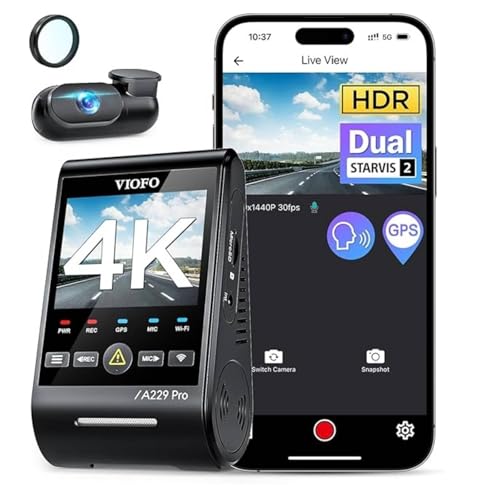
- Best for: Drivers who want the sharpest front and rear footage for insurance evidence.
- Front recording: 4K UHD at 30fps
- Rear recording: 2K QHD at 30fps
- Front sensor: Sony STARVIS 2 IMX678
- Rear sensor: Sony STARVIS 2 IMX675

- Best for: Drivers who want a ready-to-record kit with a card in the box.
- Front recording: upscaled 4K 2160p
- Rear recording: 1080p Full HD
- Image sensor: Sony STARVIS 2 IMX675
- Free 128GB microSD card included
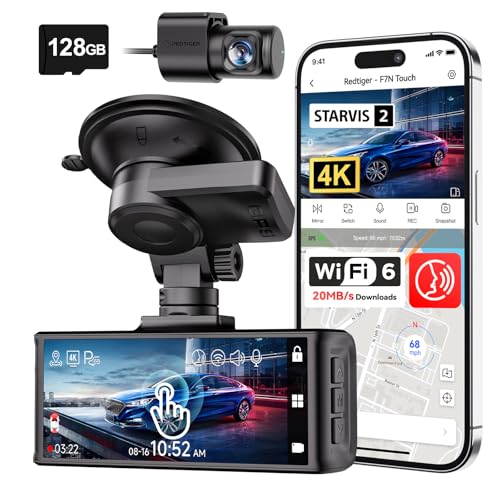
- Best for: Drivers who want touchscreen and voice control in a front and rear camera.
- Front recording: 4K UHD
- Rear recording: 1080p Full HD
- Image sensor: Sony STARVIS 2
- 3.18-inch touch screen
All 5 Picks at a Glance
| Product | Specs | Action |
|---|---|---|
| VIOFO A229 Pro 2CH |
| Check price on Amazon |
| ROVE R2-4K Dual |
| Check price on Amazon |
| REDTIGER F7N Touch |
| Check price on Amazon |
 VIOFO A229 Plus 2CH |
| Check price on Amazon |
 Vantrue S1 Pro |
| Check price on Amazon |
Our Top Picks
A front-only dash cam tells half the story. Rear-end collisions, tailgating and parking lot bumps happen behind the car, and without a rear camera that footage simply does not exist when an insurance claim or a police report needs it. The real decision is not whether to add a second camera, but how much detail the rear channel needs, how the pair behaves after dark, and whether the kit includes the card and wiring the setup demands.
This guide is for daily commuters, rideshare drivers, parents of new drivers and anyone who parks on the street overnight. Every camera below records from both the front windshield and the rear window, and each pick was chosen from the product name and specifications shown on its Amazon listing, so the comparison rests on what the listing actually promises rather than on guesswork.
Quick Picks
As an Amazon Associate we earn from qualifying purchases.
| Product | Best for | Key spec from title |
|---|---|---|
| VIOFO A229 Pro 2CH | Sharpest front and rear evidence | 4K front plus 2K rear, dual STARVIS 2 sensors |
| ROVE R2-4K Dual | Complete kit with card included | 4K front plus 1080p rear, free 128GB card |
| REDTIGER F7N Touch | Touchscreen control on the move | 4K front plus 1080p rear, 3.18-inch touch screen |
| VIOFO A229 Plus 2CH | Balanced 2K recording on both channels | 1440p front plus 1440p rear, dual STARVIS 2 sensors |
| Vantrue S1 Pro | Discreet hidden mounting | 2.7K front plus 1080p rear, STARVIS 2 sensor |
How to Choose
Match the rear resolution to the risk behind you
The front camera usually carries the higher resolution, but the rear channel decides whether a tailgating car or a rear-end impact is readable. A 1080p rear camera records the shape and movement of the vehicle behind, which suits city driving and parking disputes. A 2K rear camera captures finer detail such as a plate at a greater distance, which matters on highways and in hit-and-run cases. Check the listing for both resolutions separately, because a headline that shouts 4K may describe only the front channel while the rear records at a lower level.
Judge night vision by the sensor, not the headline
Dark roads, unlit parking lots and glare from headlights punish weak sensors. Listings that name a Sony STARVIS 2 sensor on both channels give a concrete reason to expect cleaner low-light footage, while a camera that names the sensor only for the front leaves the rear as an open question. HDR matters too, since it balances bright headlights against dark surroundings in the same frame. Look for the sensor name and HDR on each channel in the listing, and treat vague night vision claims as decoration until those details appear.
Plan parking mode before you buy
Most dual cameras only record while the engine runs, and parking mode needs a hardwire kit that connects the camera to the car battery. That kit is often sold separately, and the listing usually says so in small print. A supercapacitor instead of a lithium battery also matters for a car parked in summer heat, because it tolerates high cabin temperatures better. Before ordering, confirm whether the kit includes the hardwire cable, whether parking mode is buffered or impact only, and whether your car battery can support the draw overnight.
Count the extras the box does not include
A dash cam that needs a memory card and a hardwire kit can cost noticeably more than the listing suggests once both are added. Some kits include a 128GB card, while others ship with no card at all, so the first drive may record nothing until a card arrives. Cable length matters as well: the rear camera cable must reach from the windshield to the rear window of your vehicle, and a short cable turns installation into a second purchase. Read the included components list line by line and add the missing pieces to the plan.
The 5 Best Options
VIOFO A229 Pro 2CH
- Best for: Drivers who want the sharpest front and rear footage for insurance evidence.
- Front recording: 4K UHD at 30fps
- Rear recording: 2K QHD at 30fps
- Front sensor: Sony STARVIS 2 IMX678
- Rear sensor: Sony STARVIS 2 IMX675
Drivers who want the sharpest front and rear footage for insurance evidence.
The memory card and hardwire kit are sold separately, so budget for both before the first drive.
The A229 Pro leads this guide because it gives both channels the strongest hardware. The front records in 4K while the rear records in 2K, and each channel uses a Sony STARVIS 2 sensor with HDR, so plates stay readable in mixed light and after dark. Voice control keeps hands on the wheel, GPS logs location and speed, and the supercapacitor suits hot parked cars. It fits drivers who want the clearest possible evidence from both directions and are willing to buy a memory card and a hardwire kit separately.
Watch out for: The memory card and hardwire kit are sold separately, so budget for both before the first drive.
ROVE R2-4K Dual
- Best for: Drivers who want a ready-to-record kit with a card in the box.
- Front recording: upscaled 4K 2160p
- Rear recording: 1080p Full HD
- Image sensor: Sony STARVIS 2 IMX675
- Free 128GB microSD card included
Drivers who want a ready-to-record kit with a card in the box.
The front 4K image is upscaled rather than native, and parking mode needs a hardwire kit bought separately.
The ROVE R2-4K Dual suits buyers who want a complete kit in one box. The front camera records upscaled 4K while the rear records in 1080p, and the Sony STARVIS 2 sensor supports clearer footage after dark. A 128GB card is included, so the camera can record on the first drive without an extra purchase. Fast 5.8GHz Wi-Fi moves clips to a phone quickly, GPS is built in, and the 3-inch IPS screen makes setup and playback simple without opening an app.
Watch out for: The front 4K image is upscaled rather than native, and parking mode needs a hardwire kit bought separately.
REDTIGER F7N Touch
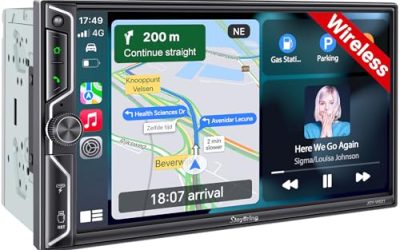
- Best for: Drivers who want touchscreen and voice control in a front and rear camera.
- Front recording: 4K UHD
- Rear recording: 1080p Full HD
- Image sensor: Sony STARVIS 2
- 3.18-inch touch screen
Drivers who want touchscreen and voice control in a front and rear camera.
The rear camera records at 1080p, so fine rear detail at distance is more limited than on a 2K rear channel.
The REDTIGER F7N Touch stands out for drivers who prefer a screen they can tap. Its 3.18-inch touch screen replaces small buttons, and voice control adds a hands-free option while driving. The front camera records in 4K and the rear in 1080p, both supported by a STARVIS 2 sensor for night driving. A 128GB card is included, GPS is built in, and Wi-Fi 6 moves footage to a phone at a fast pace. The wide front lens covers several lanes at once.
Watch out for: The rear camera records at 1080p, so fine rear detail at distance is more limited than on a 2K rear channel.
VIOFO A229 Plus 2CH
- Best for: Drivers who want equal 2K detail from the front and the rear.
- Front recording: 1440p at 30fps
- Rear recording: 1440p at 30fps
- Dual Sony STARVIS 2 sensors
- HDR on both front and rear channels
Drivers who want equal 2K detail from the front and the rear.
No memory card is included, and parking mode needs a hardwire kit bought separately.
The VIOFO A229 Plus 2CH is the balanced pick of this guide, because both channels record at the same 2K resolution. Neither direction is treated as an afterthought, which suits drivers who care as much about what happens behind them as ahead. Dual STARVIS 2 sensors and HDR on both channels support clear footage at night, while 5GHz Wi-Fi, GPS and voice control cover the everyday features. The supercapacitor design suits cars parked in strong sun, and parking modes cover the hours after the engine stops.
Watch out for: No memory card is included, and parking mode needs a hardwire kit bought separately.
Vantrue S1 Pro
- Best for: Drivers who want a discreet camera that stays out of sight on the windshield.
- Front recording: 1944p plus 1080p rear at 30fps
- Front recording option: 1440p at 60fps
- Image sensor: Sony STARVIS 2 IMX675
- Front and rear lenses: 160-degree wide angle
Drivers who want a discreet camera that stays out of sight on the windshield.
The rear channel records at 1080p, and parking mode needs a hardwire kit bought separately.
The Vantrue S1 Pro fits drivers who want a camera that blends into the windshield. Its hidden design sits low behind the mirror, so it draws little attention from outside the car. The front records at 1944p while the rear records at 1080p, and a 60fps front mode smooths fast-moving footage for plate reading at speed. The STARVIS 2 sensor and wide 160-degree lenses cover several lanes, while GPS, voice control and parking mode round out a discreet package.
Watch out for: The rear channel records at 1080p, and parking mode needs a hardwire kit bought separately.
Which One Fits Your Situation
You drive a daily commute through heavy traffic
Pick the VIOFO A229 Plus 2CH. Equal 2K recording on both channels means the car tailgating in stop-and-go traffic is captured as clearly as the road ahead. Dual STARVIS 2 sensors and HDR handle the glare of brake lights and headlights after dark, and voice control keeps the driver focused on the road rather than on the camera.
You want the strongest evidence after a collision
Pick the VIOFO A229 Pro 2CH. Its 4K front and 2K rear channels, both on STARVIS 2 sensors with HDR, give the clearest plates and the most detail for an insurance claim. GPS logs add location and speed to the footage, which strengthens the record when fault is disputed and speeds up the claim process.
You want to open the box and start recording
Pick the ROVE R2-4K Dual. The included 128GB card means the camera records on the first drive, and the 3-inch screen makes aiming and setup simple without a phone. Fast Wi-Fi moves clips quickly when footage needs to be shared, and the kit covers both directions in one purchase, with no extra card to buy.
You park on the street and worry about the car overnight
Pick the REDTIGER F7N Touch. Its parking mode and emergency lock capture impacts while the car sits unattended, and the included 128GB card keeps that footage stored. The touchscreen makes it easy to check recordings the next morning, though a hardwire kit is still needed to power parking mode through the night.
Common Mistakes
- Buying a front-only camera when the main risk is a rear-end collision or a parking lot bump behind the car.
- Reading a 4K headline as if both channels record in 4K, when the rear often records at a lower resolution.
- Forgetting to buy a memory card, then driving for days with a camera that records nothing.
- Skipping the hardwire kit and discovering that parking mode never switches on.
- Mounting the rear camera where the rear wiper, a tint strip or a headrest blocks part of the view.
Frequently Asked Questions
Do I really need a rear camera as well as a front camera?
Yes, when the risk sits behind the car. Rear-end collisions are among the most common crashes, and a front-only camera cannot show the vehicle that hit you from behind. A rear camera also records parking lot bumps and tailgating, which a front camera misses entirely. For drivers who park on the street, the rear channel often captures the incident that matters most.
What resolution should the rear camera record at?
A 1080p rear camera suits city driving and parking disputes, where the vehicle behind is close and easy to identify. A 2K rear camera is better on highways, where the following car sits farther back and plates are harder to read. Match the rear resolution to where you drive most, and check the listing for the rear figure separately from the front figure.
Does parking mode work without a hardwire kit?
No, in most cases. Parking mode needs power after the engine stops, and the standard car charger cuts power with the ignition. A hardwire kit connects the camera to the car battery so it can watch for impacts while parked. Check the listing to confirm whether the kit is included, since most of the cameras in this guide sell it separately.
How large a memory card do I need for two channels?
Two channels fill a card faster than one, because both cameras record at the same time. A 128GB card holds a useful span of driving before loop recording overwrites the oldest clips, while larger cards extend that span for longer trips. Check the maximum card size in the listing before buying, and use a card rated for continuous recording in a dash camera.
FAQ
Do I really need a rear camera as well as a front camera?
What resolution should the rear camera record at?
Does parking mode work without a hardwire kit?
How large a memory card do I need for two channels?
More from Amazon
Programs that pair well with the guide above. Offers and eligibility are set by Amazon and may change.
Free shipping on eligible items, Prime Video and more. Eligible new members can start with a free trial.
Start a Prime free trialAudiobooks and podcasts to listen to on the go. Eligible new members can start with a free trial.
Try Audible freeAd-free music streaming. Eligible new subscribers can start with a free trial.
Try Music Unlimited freeA free business account with business pricing and bulk-buying tools for work, shop or home office.
Create a business accountAs an Amazon Associate we earn from qualifying purchases.