Our Short List of 3
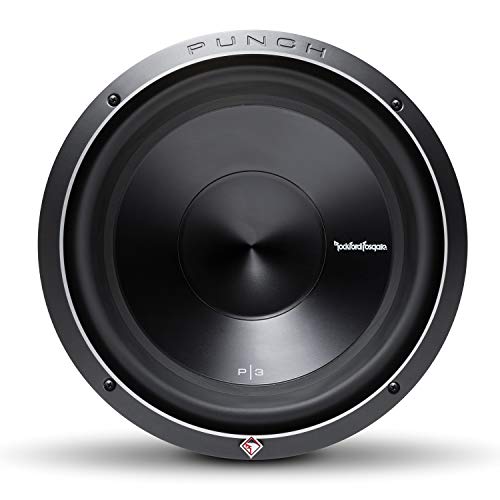
- Best for: Builders wanting the strongest balanced output in a conventional mid-size enclosure.
- Size: 12 inches
- Power handling: 600 watts RMS, 1200 watts peak
- Impedance: dual 4-ohm voice coils
- Cone material: anodized aluminum
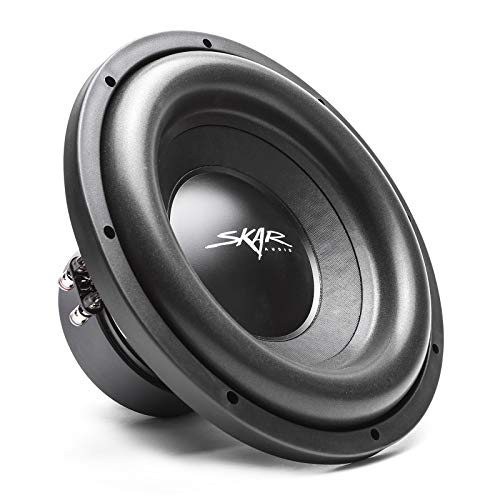
- Best for: First serious builds that want maximum low-end punch from a single driver.
- Size: 12 inches
- Power handling: 600 watts RMS, 1200 watts max
- Impedance: dual 4-ohm voice coils
- Cone material: pressed paper

- Best for: Daily drivers pairing one subwoofer with a modest monoblock amplifier.
- Size: 12 inches
- Power handling: 400 watts RMS, 800 watts peak
- Impedance: dual 4-ohm voice coils
- Model number: 43CVR124
All 5 Picks at a Glance
| Product | Specs | Action |
|---|---|---|
| Rockford Fosgate P3D4-12 |
| Check price on Amazon |
| Skar Audio SDR-12 D4 |
| Check price on Amazon |
| Kicker 43CVR124 CompVR |
| Check price on Amazon |
 Pioneer TS-A300D4 |
| Check price on Amazon |
 Alpine S-W12D4 |
| Check price on Amazon |
Key takeaways
- Compare the best car subwoofer drivers: five 12-inch models from Rockford Fosgate, Skar, Kicker, Pioneer and Alpine, with RMS, coils and box fit explained.
A car subwoofer driver is bought bare, without a box or amplifier, so the real decision is whether its voice coils, power handling and mounting depth match the enclosure and amplifier you already own or plan to build around it. Choose the wrong impedance or depth and the driver either wires to a load your amplifier cannot run or simply does not fit the box.
That is why this roundup stays with one format, the 12-inch component driver, and compares five proven models for different builders, each checked against its published figures rather than headline claims alone. Daily drivers wanting clean low end, owners feeding a strong monoblock, and builders working with shallow trunk space will each find a driver whose published figures line up with their system.
Quick Picks
As an Amazon Associate we earn from qualifying purchases.
| Product | Best for | Key spec from title |
|---|---|---|
| Rockford Fosgate P3D4-12 | Strong all-round output in a mid-size box | 600 Watts RMS, 1200 Watts Peak |
| Skar Audio SDR-12 D4 | Hard-hitting bass on an entry build | 1200 Watt Max Power, Dual 4 Ohm |
| Kicker 43CVR124 CompVR | Balanced output from a modest amplifier | 800 Watt, 4 Ohm DVC |
| Pioneer TS-A300D4 | Shallow mounting depth and easy wiring | 1500W Max, Dual 4 Ohm Voice Coil |
| Alpine S-W12D4 | High power handling with a reinforced cone | 600W RMS, Dual 4-Ohm Voice Coils |
How to Choose
Match RMS Handling to Your Amplifier
Shop by the RMS figure, never by the peak number printed largest on the box. RMS describes the power a driver can handle continuously, while peak describes a brief ceiling, so an amplifier should be chosen to deliver close to the driver’s RMS rating at the final wired impedance. A 600-watt RMS driver on a small amplifier will sound strained and quiet, while a 400-watt RMS driver on an oversized amplifier risks heat damage if gains are set carelessly. Line the two RMS figures up first, then check everything else.
Wire the Voice Coils to a Load Your Amp Supports
A single voice coil driver presents one fixed impedance, while a dual voice coil driver can be wired in series or parallel to change the load the amplifier sees. Dual 4-ohm coils, the pattern used by every driver in this roundup, can present a higher series load for a cautious setup or a lower parallel load for an amplifier rated to run it. Confirm your amplifier’s minimum stable impedance before choosing the wiring scheme, because running below that rating invites shutdowns and overheating.
Check Mounting Depth and Cutout Diameter
A driver only works in an enclosure it physically fits, so compare the published mounting depth against the internal depth of your box and the cutout diameter against its baffle opening. Deep, high-excursion drivers need clearance behind the magnet for the pole vent to breathe, and a box built for a shallow driver may leave a larger motor structure touching the rear wall. Measure the enclosure you own before ordering, and leave working room behind the magnet rather than trusting the nominal driver size alone.
Pick Sealed or Ported Volume From the Published Figures
Manufacturers publish recommended sealed and vented enclosure volumes, and those numbers shape how the driver will sound as much as its power rating does. A sealed box near the recommended volume gives tight, controlled bass that suits varied music, while a larger vented box trades some of that control for stronger output around its tuning point. If your existing box falls far outside the published range for a driver, choose a different driver instead of expecting tuning or equalization to fix a basic volume mismatch.
The 5 Best Options
Rockford Fosgate P3D4-12
- Best for: Builders wanting the strongest balanced output in a conventional mid-size enclosure.
- Size: 12 inches
- Power handling: 600 watts RMS, 1200 watts peak
- Impedance: dual 4-ohm voice coils
- Cone material: anodized aluminum
Builders wanting the strongest balanced output in a conventional mid-size enclosure.
The depth and displacement need a box built close to the published volumes to perform as rated.
The Punch P3 is the strongest all-rounder here, pairing 600 watts RMS handling with an anodized aluminum cone that stays rigid when power climbs. Its VAST surround design increases effective cone area, and the hybrid stamp-cast basket keeps weight down while resisting flex. With a mounting depth that suits many mid-size enclosures and published sealed and vented volumes that are easy to build to, this is the driver for a builder who wants serious output without stepping into extreme competition territory or oversizing the box.
Skar Audio SDR-12 D4
- Best for: First serious builds that want maximum low-end punch from a single driver.
- Size: 12 inches
- Power handling: 600 watts RMS, 1200 watts max
- Impedance: dual 4-ohm voice coils
- Cone material: pressed paper
First serious builds that want maximum low-end punch from a single driver.
Evidence for this pick rests on its Amazon listing crawl; mounting depth is listed at 7.62 inches in the description, so verify box clearance carefully before ordering.
Skar built the SDR series for buyers entering car audio who still want genuinely hard-hitting low end, and this 12-inch driver carries a 600-watt RMS rating behind its pressed paper cone. A high roll foam surround allows long cone travel, the maker lists excursion above thirteen millimetres, and a high temperature copper voice coil on a signature red spider is designed to shed heat during long sessions. Its sensitivity is modest, so it rewards a properly sized amplifier rather than head unit power or a small four-channel bridged channel.
Kicker 43CVR124 CompVR
- Best for: Daily drivers pairing one subwoofer with a modest monoblock amplifier.
- Size: 12 inches
- Power handling: 400 watts RMS, 800 watts peak
- Impedance: dual 4-ohm voice coils
- Model number: 43CVR124
Daily drivers pairing one subwoofer with a modest monoblock amplifier.
Its RMS ceiling is the lowest here, so it is the wrong choice for a high-power amplifier already in the car.
The CompVR occupies the sensible middle of this group, with 400 watts RMS handling that matches the output of widely owned mid-power monoblock amplifiers. Kicker’s cone and stitched surround design are built for durability under daily use, and the dual 4-ohm coils keep wiring options open for either a single-driver setup or a future pair. For a sedan trunk running one driver in a standard sealed or vented box, this model asks less of the electrical system while still delivering the low-frequency weight factory speakers cannot produce.
Pioneer TS-A300D4
- Best for: Builds where enclosure depth is limited but a full-size 12-inch driver is still wanted.
- Size: 12 inches
- Power handling: 500 watts RMS, 1500 watts peak
- Impedance: dual 4-ohm voice coils
- Cone material: glass fiber and mica reinforced IMPP
Builds where enclosure depth is limited but a full-size 12-inch driver is still wanted.
The low sensitivity figure means it needs real amplifier power to reach satisfying volume.
Pioneer’s A-series driver is the fit specialist in this lineup, combining a comparatively shallow mounting depth with a glass fiber and mica reinforced IMPP cone. The butyl rubber surround and double spider arrangement aim for controlled, linear movement, while the oversized double stacked magnet supplies the motor force behind its 500-watt RMS rating. Sensitivity is low on paper, which is common for drivers tuned for deeper extension, so pair it with an amplifier that can deliver its rated power rather than expecting easy output from limited wattage.
Alpine S-W12D4
- Best for: Higher-power systems wanting a reinforced cone and deep published extension.
- Size: 12 inches
- Power handling: 600 watts RMS, 1800 watts peak
- Impedance: dual 4-ohm voice coils
- Cone material: Kevlar reinforced pulp
Higher-power systems wanting a reinforced cone and deep published extension.
This is the weaker-evidence pick in the roundup, verified through one storefront family only, so double-check the listing details at purchase time.
Alpine’s S-series driver matches the Rockford on RMS handling at 600 watts and adds a Kevlar reinforced pulp cone with the maker’s HAMR Santoprene surround, a combination aimed at clean output at high excursion. Its published low-frequency extension reaches into the mid-twenties, which suits listeners who want bass that stays composed on electronic and hip-hop material. This pick rests on single-family storefront evidence, so it is flagged as a weaker-evidence choice, but the model, ratings and construction details are consistent across the listings carrying it.
Which One Fits Your Situation
A First Subwoofer in a Family Sedan
Start with the Kicker CompVR or the Skar SDR-12, depending on the amplifier you plan to buy alongside. The Kicker’s lower RMS ceiling pairs comfortably with modest monoblocks and keeps demands on a stock electrical system small, while the Skar asks for more power but returns stronger punch. Either driver in a sealed box near its recommended volume gives clean, controlled bass that lifts factory sound without taking over the whole trunk or the whole journey.
A Strong Monoblock Already Installed
When the amplifier already delivers serious power, the Rockford P3D4-12 and Alpine S-W12D4 are the natural shortlist, since both carry 600-watt RMS ratings and cones built to stay rigid under load. Wire the dual coils to a load your amplifier is rated for, build the enclosure to the published volume, and set gains carefully. Fed and boxed correctly, these drivers produce output that smaller drivers reach only by being driven past their limits.
A Shallow Box Behind a Seat or in a Tight Trunk
Limited depth changes the shortlist immediately, and the Pioneer TS-A300D4 leads it with the shallowest published mounting depth in this group. Measure the internal depth of your enclosure, add clearance behind the magnet for venting, and confirm the cutout matches the baffle before committing. If even the Pioneer’s depth will not clear, the honest answer is a smaller or dedicated shallow-mount driver rather than forcing a full-depth model into a box it was never sized for.
Two Drivers Planned for a Louder Build
Planning a pair from the start makes wiring arithmetic simpler with dual voice coil models, because two dual 4-ohm drivers can be combined into loads that suit many monoblock amplifiers. The Skar and Rockford models are the usual candidates here, given their power handling and published box figures. Buy both drivers as the same model and impedance, use an enclosure with the correct volume per chamber, and budget amplifier power for the pair, not for one driver.
Common Mistakes
- Shopping by peak watts instead of RMS, then pairing the driver with an amplifier that cannot feed it or will overwhelm it.
- Wiring dual voice coils into a load below the amplifier’s minimum rating, causing shutdowns, overheating or damage.
- Ignoring mounting depth and pole vent clearance, so the magnet sits against the enclosure wall and overheats.
- Dropping a driver into whatever box is already in the trunk without checking it against the published sealed or vented volume.
- Setting amplifier gain like a volume control, which clips the signal and heats the voice coil even at modest listening levels.
Frequently Asked Questions
Does a subwoofer driver come with a box or amplifier?
No. Every product in this roundup is a bare component driver, so an enclosure, a suitable amplifier and wiring are separate purchases. That separation is the point of the format: you choose the box volume and amplifier power that match the driver’s published figures instead of accepting a fixed combination chosen by a bundle maker for a different vehicle and a different listener.
What size subwoofer works best in a car?
Twelve-inch drivers are the common middle ground because they move enough air for strong low end while still fitting enclosures that leave usable trunk space. Smaller drivers suit tight cabins and shallow boxes, while larger drivers need more enclosure volume and more amplifier power. The right answer depends on your available space, your amplifier and how much output you actually want at normal listening levels.
Can I run one of these drivers from a factory head unit?
Not directly in any useful way. A factory head unit delivers only modest power per channel and has no dedicated subwoofer output with the current a 12-inch driver needs. These drivers require an external amplifier, usually a monoblock, fed by a line output converter if the factory system lacks preamp outputs. Budget for the amplifier and wiring kit as part of the same purchase decision, not as an afterthought.
How do I wire dual 4-ohm voice coils?
The two coils can be joined in series for a higher total load or in parallel for a lower one, and the correct choice is whichever load your amplifier is rated to drive safely and powerfully. Parallel wiring halves the combined impedance, which many monoblocks welcome, while series wiring suits amplifiers that are not stable at low loads. Follow the maker’s wiring diagrams for your configuration before connecting anything.
FAQ
Does a subwoofer driver come with a box or amplifier?
What size subwoofer works best in a car?
Can I run one of these drivers from a factory head unit?
How do I wire dual 4-ohm voice coils?
More from Amazon
Programs that pair well with the guide above. Offers and eligibility are set by Amazon and may change.
Free shipping on eligible items, Prime Video and more. Eligible new members can start with a free trial.
Start a Prime free trialAudiobooks and podcasts to listen to on the go. Eligible new members can start with a free trial.
Try Audible freeAd-free music streaming. Eligible new subscribers can start with a free trial.
Try Music Unlimited freeA free business account with business pricing and bulk-buying tools for work, shop or home office.
Create a business accountAs an Amazon Associate we earn from qualifying purchases.