
Key takeaways
- Measure the tub: Measure the length and width of the outside edge of the tub’s top rim, the corner radius, and the skirt height. Follow the cover maker’s measuring guide closely, since errors are the most common reason for returns.
- Check the shape: Square, rectangular, round, and octagonal tubs all need different patterns. Rounded corners must match the cover’s corner radius.
- Weight: Covers can be heavy, especially when waterlogged. Use a lifter or ask for help instead of risking back strain.
- Lock when not in use: A locking cover helps reduce the risk of unsupervised access. Never rely on a cover alone to keep children safe.
- Do not stand or sit on the cover: Most makers state that the cover is not designed to bear weight. Remove heavy snow gently.
- Chemicals: Follow the tub and sanitizer instructions. Keep the cover off while shocking the water, to let gas vent, and wipe the cover regularly to protect the vapor barrier.
- Electrical: Do not modify the tub’s wiring or controls. If your tub’s equipment must be accessed or replaced, use a qualified electrician.
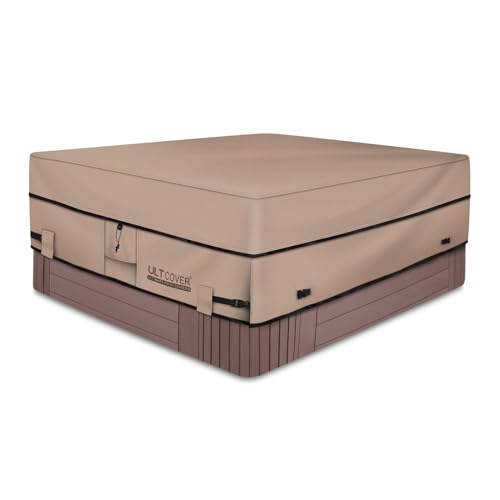
For most owners, a tapered foam-core cover with a vinyl or marine-grade skin, a vapor barrier, and a locking strap system is the best balance of insulation and durability, while owners in snowy regions should prioritize higher foam density and a steeper taper, and owners in mild climates can choose a lighter cover. The right cover must also match your tub’s exact dimensions, because a poor fit lets heat escape and shortens the cover’s life. This guide describes the main cover types and tiers without quoting prices and relies on what makers state about their products.
Our top picks


As an Amazon Associate we earn from qualifying purchases at no extra cost to you.
Cover Types at a Glance
| Type | Best for | Typical stated features | Limits |
|---|---|---|---|
| Custom-ordered tapered foam cover | Year-round use in cold or snowy climates | Foam core with taper, vapor barrier, marine-grade vinyl, reinforced hinge, locks | Premium tier; needs accurate measurements and lead time |
| Standard-size replacement cover | Common square or round tubs | Foam core, vinyl skin, straps, basic hinge | May not fit older or unusual shapes exactly |
| Lightweight or economy cover | Mild climates and occasional use | Lower-density foam, thinner skin | Less insulation; may absorb water faster |
| Cover lifter or cover-caddy system | Anyone who struggles with heavy covers | Mount or rolling stand for the cover | Needs extra space and sometimes assembly |
| Thermal blanket or floating cover | Adding insulation under the main cover | Thin insulating layer that sits on the water | Not a replacement for a solid, locking cover |
| Round or specialty-shaped cover | Round tubs, swim spas, unusual shapes | Often custom made | Longer lead times |
What Matters Most When Choosing a Cover
Foam density and taper
Most cover makers describe their foam cores by density in pounds per cubic foot and by thickness. A common description is a tapered design such as 5 inches at the center tapering to 3 inches at the edge, which helps shed water and snow. Higher density usually resists water absorption and gives better insulation, but also makes the cover heavier. Cold-climate owners are generally advised to choose higher density, while owners in mild climates can accept a lighter cover.
Vapor barrier
The foam core is wrapped in plastic to keep moisture out. A damaged vapor barrier is the usual reason a cover becomes waterlogged and heavy. Makers differ in how they seal the barrier, and a heavier-gauge barrier is typically listed on higher-tier covers.
Skin material
Marine-grade vinyl is the common skin and is described by makers as resistant to UV and chemical exposure. Thicker or higher-denier fabrics typically cost more and last longer. A lighter color shows less sun fade but can show dirt more readily.
Hinge and fold
A reinforced hinge, often a sewn or taped seam, keeps the cover from tearing where it folds. Some covers are two-piece, which makes them easier to handle than one heavy piece and are generally recommended for owners who lift the cover alone.
Locks and straps
Straps and locking clips attach the cover to the tub’s skirt. They keep children and pets out and keep the cover from blowing off in wind. Follow the manufacturer’s installation instructions and use the locks whenever the tub is not in use. A cover is not a safety barrier on its own, so supervise children around any hot tub.
Budget Tier: Standard-Size Replacements
Standard-size replacement covers are sold for common tub dimensions and are the lowest-cost route. They usually come with a foam core, vinyl skin, and basic straps. They suit tubs with standard square or rectangular outlines and moderate climates. The trade-offs are fit and insulation: if the tub is slightly larger or smaller than the cover, gaps can appear, and thinner foam means more heat loss in winter.
Mid-Range Tier: Better Foam and Hardware
Mid-range covers usually add higher-density foam, a thicker vapor barrier, and sturdier locks. Several makers in this tier offer a choice of colors and taper options. This tier is a reasonable fit for most year-round owners who do not face heavy snow loads.
Premium Tier: Custom-Made Covers
Premium covers are generally ordered to match the tub’s exact dimensions, including corner radius, skirt height, and any cutouts for equipment. Makers list thicker foam, high-density cores, heavy-duty marine-grade skins, and reinforced hinges. These covers are the best match for owners in cold climates or with unusual tub shapes. They require careful measuring and take longer to deliver.
Fit, Measuring, and Safety Notes
- Measure the tub: Measure the length and width of the outside edge of the tub’s top rim, the corner radius, and the skirt height. Follow the cover maker’s measuring guide closely, since errors are the most common reason for returns.
- Check the shape: Square, rectangular, round, and octagonal tubs all need different patterns. Rounded corners must match the cover’s corner radius.
- Weight: Covers can be heavy, especially when waterlogged. Use a lifter or ask for help instead of risking back strain.
- Lock when not in use: A locking cover helps reduce the risk of unsupervised access. Never rely on a cover alone to keep children safe.
- Do not stand or sit on the cover: Most makers state that the cover is not designed to bear weight. Remove heavy snow gently.
- Chemicals: Follow the tub and sanitizer instructions. Keep the cover off while shocking the water, to let gas vent, and wipe the cover regularly to protect the vapor barrier.
- Electrical: Do not modify the tub’s wiring or controls. If your tub’s equipment must be accessed or replaced, use a qualified electrician.
Pick X If Decision Table
| If you want… | Pick | Why |
|---|---|---|
| The best insulation in cold climates | Custom tapered foam cover | Higher density, matched fit |
| A low-cost replacement for a standard tub | Standard-size foam cover | Simple fit and basic features |
| Easier lifting | Two-piece cover plus cover lifter | Lower weight per piece and less strain |
| Extra heat retention under an existing cover | Thermal blanket | Adds a layer without replacing the cover |
| Round or unusual tub | Custom specialty cover | Made to the tub’s shape |
| Occasional use in a mild climate | Lightweight cover | Lighter and easier to handle |
Alternatives Worth Considering
- Cover lifters: A lifter that mounts to the tub or stands beside it saves wear on the cover and your back.
- Cover repair kits: Small tears in the vinyl or the vapor barrier may be fixable with a repair kit from the cover maker, which is cheaper than replacing the cover if the foam is still dry.
- Gazebo or enclosure: A pergola or enclosure protects the cover from sun and rain and can extend its life.
Making a Cover Last Longer
Most cover failures trace back to moisture and sun. Keeping the water chemistry within the range your tub maker recommends reduces chemical vapor that can attack the vinyl and the vapor barrier. Lifting the cover fully off, or letting the tub air for a few minutes after adding sanitizer, lets fumes escape instead of being trapped beneath the foam.
Avoid dragging the cover across rough surfaces, and fold it at the hinge only as the maker intends. Many owners store the cover on a lifter so the edges do not rub on decking. In winter, brush off heavy snow with a soft broom rather than chipping at ice, which can crack the skin or puncture the barrier.
Clean the top two or three times a season with a mild soap and water, then apply a UV protectant intended for vinyl. Check the seams and straps for early wear, and replace broken clips quickly so wind cannot lift the cover. A small repair now often prevents a waterlogged core later, which is the most common reason owners end up buying a whole new cover.
Frequently Asked Questions
How long does a hot tub cover last?
Makers and dealers commonly suggest a lifespan of roughly five to seven years, though this depends on climate, chemical use, and care. A cover that has become heavy or waterlogged has usually lost its insulating value and should be replaced.
How do I know the cover has gone bad?
Signs include a heavy, soggy feel, a musty smell, visible sagging, or higher energy use. If the foam is wet, the vapor barrier has probably failed.
What does foam density mean?
It is the weight of the foam per cubic foot. Higher density usually means better insulation and water resistance but a heavier cover. Cold-climate owners often choose higher density.
Can I order a cover without a custom measurement?
Standard sizes are available for common tubs, but custom measurements give the best seal. If your tub is an older or unusual model, measure carefully and consult the cover maker.
Are locking covers a substitute for a fence?
No. Locks help restrict access but should not be your only safeguard. Follow local safety rules, and supervise children and pets around the tub.
How should I care for my cover?
Brush off debris, remove snow gently, wipe the cover with a mild cleaner, and apply a vinyl protectant recommended by the maker. Follow the instructions in the cover’s manual.
FAQ
How long does a hot tub cover last?
How do I know the cover has gone bad?
What does foam density mean?
Can I order a cover without a custom measurement?
Are locking covers a substitute for a fence?
How should I care for my cover?
More from Amazon
Programs that pair well with the guide above. Offers and eligibility are set by Amazon and may change.
Free shipping on eligible items, Prime Video and more. Eligible new members can start with a free trial.
Start a Prime free trialAudiobooks and podcasts to listen to on the go. Eligible new members can start with a free trial.
Try Audible freeAd-free music streaming. Eligible new subscribers can start with a free trial.
Try Music Unlimited freeA free business account with business pricing and bulk-buying tools for work, shop or home office.
Create a business accountAs an Amazon Associate we earn from qualifying purchases.







