Key takeaways
- Stand and clutch: Make sure your hi-hat stand and clutch are in good condition. A worn clutch changes how the top cymbal sits and can affect feel and sound.
- Felts and seat: Use felts on both the top and bottom, and keep the bottom cymbal level on its seat so the pair closes evenly.
- Tightness: The clutch should hold the top cymbal firmly but allow it to move freely on the rod. Follow the stand maker’s guidance.
- Cleaning: Brilliant finishes can be wiped with a soft cloth and a cymbal cleaner made for that finish. Avoid abrasive cleaners on traditional or raw finishes, as the maker may advise against them.
- Stick choice: Heavier sticks and tips shape the sound. A wood tip gives a tighter ping; a nylon tip is brighter.
- Hearing protection: Hi-hats are loud close to the ear. Consider hearing protection during long sessions.
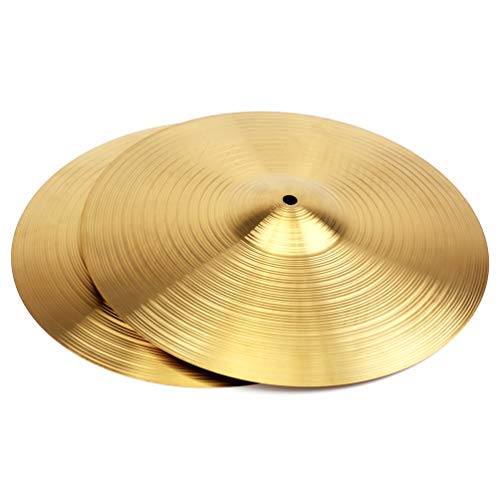
For most drummers, a 14-inch pair from the Zildjian A Custom, Sabian AAX, or Meinl Byzance families is the safest all-round choice, while Zildjian ZBT, Sabian SBR, and Meinl HCS cover beginners on a budget and Zildjian K or Istanbul Agop pairs suit players chasing a darker, drier, more vintage feel. A hi-hat is two cymbals that work as a unit, so the pairing of a thinner top and heavier bottom matters as much as the line you pick. This guide groups options by budget tier without quoting prices and relies on the makers’ stated sizes and alloys.
Our top picks


As an Amazon Associate we earn from qualifying purchases at no extra cost to you.
Hi-Hat Pairs at a Glance
| Line | Best for | Stated build | Limits |
|---|---|---|---|
| Zildjian A Custom | Bright, polished, all-round studio and stage sound | B20 bronze, brilliant finish | Brighter than many players want for quiet jazz |
| Zildjian K Custom Dark / K Zildjian | Warm, dry, complex tone for jazz, funk, and low-volume playing | B20 bronze, hand-hammered styling | Premium tier; less cut in loud rock settings |
| Sabian AAX | Bright, cutting, modern rock and pop | B20 bronze, brilliant finish | Can sound sharp in small rooms |
| Sabian HHX Evolution | Dark, controlled, expressive hybrid sound | B20 bronze, hammered and lathed | Premium tier |
| Meinl Byzance | Handmade character, warm to bright depending on the series | B20 bronze, hand-hammered | Premium tier; series vary widely in tone |
| Paiste 2002 / Signature | Classic rock tone, strong stick definition | Paiste’s proprietary 2002 bronze alloy | Distinct voice that some players find loud |
| Zildjian ZBT / Sabian SBR / Meinl HCS | Beginners and practice rooms | Brass or B8 alloy, depending on the line | Less complexity and sustain control than B20 lines |
What Matters When Choosing a Hi-Hat
Size
The 14-inch pair is the standard for good reason: it balances chick, stick definition, and foot response. Thirteen-inch pairs are quicker and tighter and are often chosen for jazz and compact kits. Fifteen-inch pairs are rare but can give a broader, heavier sound for bigger rooms. If you are unsure, 14 inches is the safest starting point.
Top and bottom weight
Most manufacturers sell pairs where the top is thinner and the bottom is heavier. A lighter top opens up easily and sounds more expressive, while a heavier bottom gives a tighter, crisper chick. Matched weights are possible but less common. Many players mix lines, for example using a thinner top from one series with a heavier bottom from another, but doing so changes the tone and pairing guidance from the maker is the best starting point.
Alloy
The makers list B20 (roughly 80 percent copper, 20 percent tin) for their professional lines and B8 or brass for entry-level lines. B20 usually offers more complexity and sustain, and takes tuning of the hammering more subtly. B8 lines are durable and well-priced but tend to sound simpler. Paiste uses its own alloys in some lines.
Finish and sound
Brilliant finishes are generally brighter and cut through a mix, while natural or traditional finishes are warmer and drier. Heavily hammered cymbals tend to have a darker, more complex wash. Reviews on manufacturer demos and independent drum channels are the best way to compare, since tone is subjective.
Budget Tier: Learners and Practice Kits
Zildjian’s ZBT line, Sabian’s SBR line, and Meinl’s HCS line are widely recommended by drum retailers and educators for beginners. They are sold as pairs or in cymbal packs, they are tough enough for repeated practice, and they let a new player learn the feel of open and closed hi-hat work without a large investment. The trade-offs are a simpler tone and less sensitivity to dynamics than higher-end bronze lines. If you are buying a full cymbal pack, check what hi-hat size and weights are included.
Mid-Range Tier: Step-Up Lines
Zildjian’s A Custom and I Family, Sabian’s AA and AAX, and Meinl’s Classics Custom and Pure Alloy lines occupy the middle ground. Reviewers often describe the A Custom as bright and polished and the AAX as punchy and modern, while Meinl’s Classics Custom has the reputation of being bright and clean. These are the lines most working drummers start with because they cover a wide range of styles and are widely available in 13-inch and 14-inch pairs.
Premium Tier: Character Lines
Zildjian K Custom Dark, K Zildjian, Sabian HHX, Meinl Byzance, and Istanbul Agop are the lines drummers move to for a more refined, expressive sound. The Byzance range alone includes several series with different tones, from dark to brilliant. Hand-hammered finishes mean each pair varies slightly, so if possible listen to the specific pair, or buy where returns are straightforward. These are not necessarily better for every player: a very dark pair can disappear in a loud band.
Fit, Compatibility, and Care Notes
- Stand and clutch: Make sure your hi-hat stand and clutch are in good condition. A worn clutch changes how the top cymbal sits and can affect feel and sound.
- Felts and seat: Use felts on both the top and bottom, and keep the bottom cymbal level on its seat so the pair closes evenly.
- Tightness: The clutch should hold the top cymbal firmly but allow it to move freely on the rod. Follow the stand maker’s guidance.
- Cleaning: Brilliant finishes can be wiped with a soft cloth and a cymbal cleaner made for that finish. Avoid abrasive cleaners on traditional or raw finishes, as the maker may advise against them.
- Stick choice: Heavier sticks and tips shape the sound. A wood tip gives a tighter ping; a nylon tip is brighter.
- Hearing protection: Hi-hats are loud close to the ear. Consider hearing protection during long sessions.
Pick X If Decision Table
| If you want… | Pick | Why |
|---|---|---|
| An inexpensive first pair | Zildjian ZBT, Sabian SBR, or Meinl HCS | Durable and widely available |
| A reliable all-round upgrade | Zildjian A Custom or Sabian AA | Balanced and versatile |
| A bright, cutting sound for rock or pop | Sabian AAX or Paiste 2002 | Strong projection |
| Warm, dry tone for jazz or funk | Zildjian K Custom Dark or Istanbul Agop | Complex, controlled response |
| Handmade tonal variety | Meinl Byzance | Several series to match different tastes |
| A tight, compact feel | 13-inch pairs | Fast response, less volume |
Alternatives Worth Considering
- Used or vintage cymbals: Older Zildjian or Paiste pairs can offer character at a lower tier, but check for cracks near the bell and edge.
- Low-volume cymbals: Perforated practice cymbals are designed to reduce volume for apartments, though feel and sound differ from standard cymbals.
- Electronic hi-hats: A pad with a dedicated controller offers silent practice and adjustable sounds if you play an electronic kit.
Buying Tips by Playing Style
Rock and pop drummers usually need projection, so brighter, heavier pairs with a firm bottom cymbal keep the hi-hat audible against guitars. Jazz and acoustic players tend to prefer thinner, darker cymbals that respond to light stick touches and a soft foot chick. Funk and R&B players often like a tight, articulate pair that opens and closes cleanly for fast patterns. Church and small-venue drummers frequently choose mid-weight pairs with controlled volume, since an overly loud hi-hat can dominate a quiet room.
If you record at home, remember that microphones exaggerate high frequencies, so a very bright pair can sound harsh on tape. Many players keep two pairs, a brighter one for loud gigs and a darker one for recording, and swap them as needed. If you can, listen to the pair on a kit in a room similar to where you will play, because cymbal tone changes dramatically with room size.
Finally, consider how a purchase fits the rest of the kit. A set of dark, thin cymbals paired with a bright, heavy hi-hat can sound mismatched, and the reverse is also true. Reviewers often suggest choosing the hi-hat first, as it is the cymbal you play most, and then matching the crash and ride to it.
Frequently Asked Questions
What size hi-hats should I buy?
Fourteen inches is the standard and works for most styles. Thirteen-inch pairs are quicker and tighter, often used in jazz and on small kits. Choose by the sound you want and how much room you have around the stand.
Should the top and bottom hi-hat be different weights?
Many makers pair a lighter top with a heavier bottom to get a more open sound with a crisp chick. Matched pairs are possible but less common. Mixing weights from different lines is a common way to tailor the tone.
Are B20 cymbals really better than B8?
B20 bronze is used in the makers’ professional lines and is generally described as offering more complexity and sustain. B8 lines are durable and good for beginners, but are usually simpler in tone. The better choice depends on your level and budget.
How do I keep hi-hats from sounding harsh?
Try a thinner top, a darker line, or a wood-tip stick, and check that your clutch is not too tight. Room acoustics and playing technique also play a big part.
Can I use hi-hats from different brands together?
Yes, many drummers do. Just confirm both are the same size and that the bottom sits evenly on the seat. The result will be a custom blend of the two tones.
How do I clean and care for them?
Wipe off fingerprints with a soft cloth after playing, and use only cleaner that is safe for your cymbal’s finish. Check the manufacturer’s care guidance, since some finishes are not meant to be polished.
FAQ
What size hi-hats should I buy?
Should the top and bottom hi-hat be different weights?
Are B20 cymbals really better than B8?
How do I keep hi-hats from sounding harsh?
Can I use hi-hats from different brands together?
How do I clean and care for them?
More from Amazon
Programs that pair well with the guide above. Offers and eligibility are set by Amazon and may change.
Free shipping on eligible items, Prime Video and more. Eligible new members can start with a free trial.
Start a Prime free trialAudiobooks and podcasts to listen to on the go. Eligible new members can start with a free trial.
Try Audible freeAd-free music streaming. Eligible new subscribers can start with a free trial.
Try Music Unlimited freeA free business account with business pricing and bulk-buying tools for work, shop or home office.
Create a business accountAs an Amazon Associate we earn from qualifying purchases.