Key takeaways
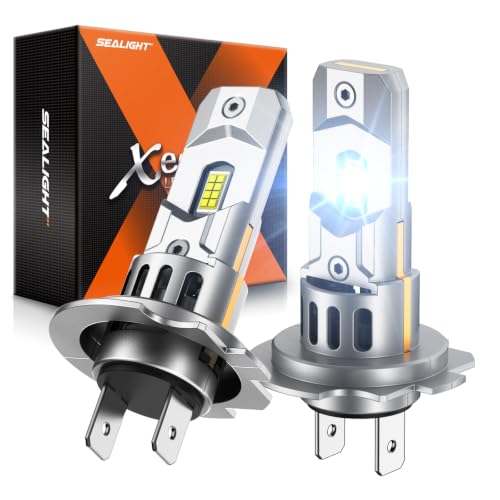
- Space behind the housing: LED bulbs have a driver or heat sink at the base. Some are noticeably longer than a halogen, and a dust cover may not close over them.
- Cooling style: Some bulbs use a fan, others use a passive heat sink or braided heat conductor. Fans add a small noise and a moving part; passive designs need airflow around the base.
- Electrical compatibility: Many modern vehicles monitor the headlight circuit. A bulb that draws far less current than a halogen can trigger a bulb-out warning or flicker, and some makers sell a separate decoder or adapter for those cases.
- Single versus dual-beam: H4 and 9003 bulbs combine low and high beams in one unit, which makes LED conversion more complicated than with separate bulbs.
For most drivers the best LED headlight choice is a reputable brand bulb sold for your exact bulb size, with a compact heat-management design and a beam that keeps its cutoff, while drivers who want the lowest-risk upgrade are often better served by a brighter halogen or a complete LED-ready housing. The right pick depends on the bulb size your vehicle uses, how the headlight housing is built, and whether the bulb is marketed for road use in your region.
Our top picks



As an Amazon Associate we earn from qualifying purchases at no extra cost to you.
At a Glance: LED Headlight Options Compared
| Option | Best for | Stated characteristics | Limits |
|---|---|---|---|
| Philips Ultinon Pro series LED bulbs | Drivers who want a mainstream brand with wide size coverage | Philips lists plug-and-play designs in common sizes such as H7, H11, 9005 and 9006, with a heat-dissipation body | Fit depends on space behind the housing; availability varies by size |
| Sylvania ZEVO LED bulbs | Buyers who want a long-established lighting brand | Sylvania lists a range of sizes and a long rated life; some versions are described as for off-road or show use | Read the packaging: not every version is marketed for public roads |
| Hikari LED bulbs | Enthusiasts replacing halogen bulbs who want a compact build | Hikari lists compact, fan-cooled designs in popular sizes | Fan noise and clearance behind the bulb can matter |
| Cougar Motor LED bulbs | Shoppers comparing newer specialist brands | The maker lists several body styles and common bulb sizes | Fewer long-term owner reports than older brands |
| Brighter halogen (Philips X-tremeVision, Sylvania SilverStar style) | Anyone who wants more light with no housing change | Makers list improved output over a standard halogen of the same size | Shorter life and warmer color than LED |
| Factory-style LED headlight housings | Owners of vehicles that offer an LED-equipped trim | Optics are designed around the LED source | Higher cost tier and more involved installation |
Why Housing Type Matters More Than Brightness
A headlight housing is engineered around the light source it was designed for. A reflector or projector housing built for a halogen filament places the light source at a precise point so the optics can shape a cutoff line. An LED bulb whose chips sit in a slightly different position can scatter light upward, which shows up as glare for oncoming drivers and a weaker, patchier beam for you. Reviewers who study beam patterns often point out that a bulb with higher raw lumen figures on the box does not necessarily put more usable light on the road.
Projector housings usually handle LED swaps better than open reflector housings because the lens and shield help control the cutoff. If your car uses a reflector, expect the beam to be more sensitive to bulb design, and take extra care to aim the headlights after installation.
Bulb Size and Fit Notes
Start by identifying your bulb size. Common sizes include H11 and 9005 for many low and high beams, 9006 for some low beams, H7 for many European models, and H4 or 9003 for dual-beam bulbs. Your owner’s manual or the bulb-finder tool on a lighting maker’s site will confirm the correct size for your year and trim.
- Space behind the housing: LED bulbs have a driver or heat sink at the base. Some are noticeably longer than a halogen, and a dust cover may not close over them.
- Cooling style: Some bulbs use a fan, others use a passive heat sink or braided heat conductor. Fans add a small noise and a moving part; passive designs need airflow around the base.
- Electrical compatibility: Many modern vehicles monitor the headlight circuit. A bulb that draws far less current than a halogen can trigger a bulb-out warning or flicker, and some makers sell a separate decoder or adapter for those cases.
- Single versus dual-beam: H4 and 9003 bulbs combine low and high beams in one unit, which makes LED conversion more complicated than with separate bulbs.
Legality and Safety Notes
Safety regulators in many regions, including the United States, certify headlight assemblies as complete units. Reviewers and regulators commonly note that fitting an LED bulb into a housing designed for halogen may not meet those rules, and some LED bulb makers state on their packaging that products are for off-road or show use only. Local laws differ, so read the maker’s own wording and your local requirements before installing. If your vehicle offers an LED-equipped headlight assembly as a factory option or an approved aftermarket assembly, that route avoids the compliance question.
Whatever you choose, aim the headlights after any change. A beam pointed too high can dazzle other drivers even when the bulb itself is well designed. If you are not comfortable with the work, a qualified technician can fit and aim the lights.
Picks by Need
Best mainstream brand choice: Philips Ultinon Pro series
Philips lists its Ultinon Pro LED range in several common bulb sizes, with a heat-dissipating body and plug-and-play installation in many applications. Philips has a long history in automotive lighting, so documentation and size coverage tend to be easier to follow than with newer sellers. Reviewers generally advise reading the specific product page, because some versions are intended for road use where permitted while others are not.
Best for brand familiarity: Sylvania ZEVO
Sylvania is another long-standing name, and its ZEVO line is aimed at drivers upgrading from halogen. The maker lists a long rated lifespan and multiple sizes. As with other brands, the packaging wording about intended use deserves a careful read.
Best compact option for tight housings: Hikari
Hikari bulbs are often discussed by enthusiasts because of their small bodies and fan-assisted cooling. A smaller base can help in vehicles with limited space behind the lamp, but a fan means one more part that could wear over time.
Best for experimenting at a modest budget tier: Cougar Motor and similar newer brands
Newer specialist brands often offer varied body styles at budget and mid-range tiers. They can be appealing for older vehicles, though long-term durability reports are thinner. Choose a seller with a clear return and warranty policy.
Budget Tiers and Trade-offs
| Tier | What you typically get | Trade-off |
|---|---|---|
| Budget | Basic LED bulbs, often with minimal documentation | Beam pattern and long-term reliability vary widely; legality wording can be vague |
| Mid-range | Established brands with size-specific designs and warranties | Still a conversion in a halogen housing, so beam control is not guaranteed |
| Premium | Complete LED-ready assemblies or approved replacement housings | Higher cost and more labor, but optics match the light source |
Pick X If You Want Y
| Pick this | If you want |
|---|---|
| Philips Ultinon Pro series | A mainstream brand with wide size coverage and clear documentation |
| Sylvania ZEVO | A familiar lighting brand and a long stated service life |
| Hikari | A compact body for tight housings and you accept a cooling fan |
| A newer budget brand | A low-risk trial on an older vehicle and a good return policy |
| Brighter halogen | Better light with no electrical or compliance questions |
| Complete LED housing | The best beam control and road-legal peace of mind |
Alternatives Worth Considering
- Upgraded halogen bulbs: Philips X-tremeVision and Sylvania SilverStar style bulbs are made for the exact socket your car already uses. They do not match LED life, but they keep the original beam pattern intact.
- Headlight restoration: Foggy or yellowed lenses can reduce light output dramatically. A restoration kit or professional polish can improve visibility more than a bulb swap on an older car.
- Complete assemblies: If your model offers LED headlights as an option, an assembly from the manufacturer or a recognized aftermarket maker avoids many conversion headaches.
Installation and Care Tips
Disconnect the battery or switch the lights off, follow the vehicle manual for access to the bulb, and avoid touching glass or electronics with bare hands. Seat the bulb so its chips face the direction the maker specifies, usually side to side rather than up and down. After installing, park facing a wall at night and look at the cutoff line; if it looks scattered or high, adjust the bulb orientation or aim. Keep the dust cover or seal in place where possible, because moisture inside a housing shortens bulb and lens life.
Frequently Asked Questions
Are LED headlight bulbs legal on the road?
It depends on where you drive and on how the bulb is certified. In many regions, headlights are certified as complete assemblies, and an LED bulb placed in a halogen housing may not meet that rule. Check the maker’s stated intended use and your local regulations.
Will LED bulbs fit my car without changes?
Many are plug-and-play for the right bulb size, but clearance behind the housing and electrical monitoring can cause problems. Measure available space and read the maker’s fitment notes. Some vehicles need an adapter or decoder to avoid warnings.
Do brighter bulbs always improve night visibility?
No. Beam shape matters as much as output. A bulb that scatters light can reduce useful range and dazzle other drivers, while a well-focused beam puts light where it is needed.
Why does one of my LED headlights flicker?
Flicker commonly occurs when the vehicle’s electronics detect lower current draw than a halogen and pulse the circuit. A maker-recommended decoder or a different bulb design may solve it. If it persists, a qualified technician can inspect the wiring.
How long do LED headlight bulbs last?
Makers list rated lifespans that are often much longer than halogen, but real life depends on cooling, vibration and electrical quality. Fan failures and heat are the usual weak points. Warranty length is a useful indicator of the maker’s confidence.
Is it better to buy a complete LED housing?
For beam control and compliance, a complete assembly designed for LEDs generally gives the most predictable results. It costs more and may require more work, so many drivers weigh it against a quality bulb conversion.
FAQ
Are LED headlight bulbs legal on the road?
Will LED bulbs fit my car without changes?
Do brighter bulbs always improve night visibility?
Why does one of my LED headlights flicker?
How long do LED headlight bulbs last?
Is it better to buy a complete LED housing?
More from Amazon
Programs that pair well with the guide above. Offers and eligibility are set by Amazon and may change.
Free shipping on eligible items, Prime Video and more. Eligible new members can start with a free trial.
Start a Prime free trialAudiobooks and podcasts to listen to on the go. Eligible new members can start with a free trial.
Try Audible freeAd-free music streaming. Eligible new subscribers can start with a free trial.
Try Music Unlimited freeA free business account with business pricing and bulk-buying tools for work, shop or home office.
Create a business accountAs an Amazon Associate we earn from qualifying purchases.