Key takeaways
- Check the stated cooking surface against the number of people you feed; makers list this in square inches or by portions.
- Check the wattage, and avoid running a high-wattage grill on the same circuit as other heavy appliances.
- Leave clearance behind and above the unit, especially for models with lids or vents.
- Do not place an electric grill under low cabinets, since rising heat and steam can damage surfaces.
- Check whether the plates or grates are dishwasher-safe or only hand-wash, as the maker states.
For most kitchens, a countertop contact or open-plate electric grill from a known maker such as Cuisinart, Ninja or Weber suits casual weeknight cooking; a smokeless-style grill with a built-in fan suits apartment cooks who dislike smoke; and a stovetop grill pan suits small kitchens and tight budgets. The best choice depends on the cooking style, the space on the counter, and how much cleanup you will tolerate. This guide covers the main types, the specs makers publish, and the care and safety points that matter for indoor use.
Our top picks


As an Amazon Associate we earn from qualifying purchases at no extra cost to you.
Indoor Grills at a Glance
| Type | Best for | Key stated features | Limits |
|---|---|---|---|
| Contact grill (Cuisinart Griddler line, George Foreman-style) | Sandwiches, burgers, quick meals | Two heated plates; some makers list open-flat use as a griddle | Less sear on thick steaks; plates vary in removability |
| Open electric grill (Weber Lifestyle-style, Ninja Foodi Grill line) | Steaks, chicken, vegetables | Makers list high-heat grates, temperature controls, some with lids | Heavier; takes counter space |
| Smokeless-style grill (Ninja Foodi smart grill, Instant, Tefal) | Apartments, low smoke preference | Built-in fan, drip tray, air-fry or roast modes on some models | Larger footprint; some smoke still appears with fatty foods |
| Stovetop grill pan (Lodge cast iron, Le Creuset-style) | Small kitchens, no extra appliance | Ridged cast iron or enameled steel, works on a range | Needs a good vent hood; heavy; manual care |
| Raclette or Korean-style tabletop grill | Social cooking at the table | Shared hot plate, often with ridged side | Uses table space; not for large cuts |
Contact Grills: Fast and Simple
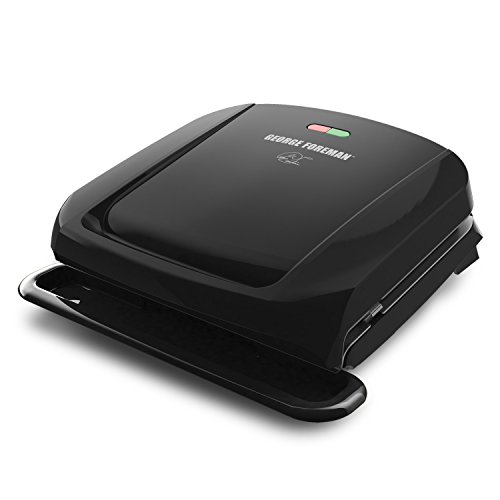
A contact grill closes over the food and cooks both sides at once. Brands such as Cuisinart and George Foreman sell models with removable or fixed plates, and some convert to an open griddle layout. They suit paninis, burgers, chicken breasts and vegetables, and they heat quickly. Reviewers who cover small appliances often note that plate removability and non-stick quality decide long-term satisfaction, since scrubbing fixed plates is the main complaint. Avoid metal tools on non-stick plates unless the maker says it is safe.
Open Electric Grills for Better Searing
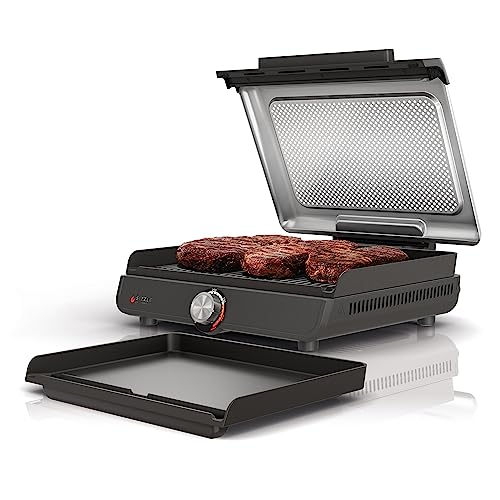
Open grills leave the top exposed, so the food sits on a grate and you can watch it brown. Weber’s Lifestyle electric grill line and similar models from other makers list higher maximum temperatures than contact units, which helps steaks and skin-on chicken. Look at the stated grate area and heat zones, as a small grate cooks two portions at a time while larger ones handle a family dinner. Because they run hot, they also produce more splatter and smoke, so a vent hood or an open window helps.
Smokeless-Style Grills
Smokeless-style grills, such as the Ninja Foodi smart grill series, use a fan and a lower airflow design to reduce visible smoke, and many add air-fry, roast and bake functions. The makers describe these as reducing smoke, not eliminating it. Fatty cuts and heavy marinades still smoke, and reviewers frequently report that the best results come from patting food dry and using oils with a high smoke point. These models are larger and heavier than contact grills, so check your counter and cabinet space.
Stovetop Grill Pans
A cast-iron grill pan adds ridges and sear marks without another plug-in appliance. Lodge sells seasoned cast iron pans, and enameled options from other makers reduce the seasoning chore. They work on gas, electric and many induction ranges, but check the base and the maker’s induction note. They produce the most smoke of the options in this guide, so use a vent fan and keep the pan from overheating empty.
Size, Power and Fit Notes
- Check the stated cooking surface against the number of people you feed; makers list this in square inches or by portions.
- Check the wattage, and avoid running a high-wattage grill on the same circuit as other heavy appliances.
- Leave clearance behind and above the unit, especially for models with lids or vents.
- Do not place an electric grill under low cabinets, since rising heat and steam can damage surfaces.
- Check whether the plates or grates are dishwasher-safe or only hand-wash, as the maker states.
Budget Tiers
Budget: basic contact grills and grill pans. They work for sandwiches and weeknight meals but offer limited temperature control. Mid-range: open grills and entry-level smokeless models with adjustable temperature and removable parts. This tier covers most home cooks. Premium: large smokeless grills with probes, multiple cooking functions and sturdy lids, aimed at people who plan to use one appliance for many tasks.
Decision Table: Pick X If
| Pick | If you want |
|---|---|
| Contact grill | Quick sandwiches and burgers with simple cleanup |
| Open electric grill | Better sear, steaks, and the ability to watch the food |
| Smokeless-style grill | Apartment cooking and extra modes like air-frying |
| Cast-iron grill pan | A low-cost option with no extra appliance |
| Tabletop grill | Shared cooking at the dining table |
Alternatives
- Air fryer or toaster oven with a broil setting: not grills, but they handle many of the same weeknight foods.
- Cast-iron skillet: sears without ridges and doubles as an everyday pan.
- Outdoor grill: if you have a balcony or patio that allows it, check building rules first, since many apartment buildings and local codes restrict open-flame and charcoal use.
Cleaning, Care and Safety
Unplug and cool the unit before cleaning, and follow the manual for removable parts. Clean grease trays after each use, since built-up fat is a smoke and fire concern. Keep the cord away from hot surfaces and the counter edge, and never submerge the base. Use the grill on a heat-safe surface, and do not leave it running unattended. Because food contact surfaces may use non-stick coatings, avoid overheating them empty and replace plates that are chipped or flaking. Poultry and ground meat should reach the safe internal temperature that food safety agencies publish, so a probe thermometer is a worthwhile companion. If a cord is damaged or the unit trips a breaker, stop using it and contact the maker or a qualified electrician.
How to Choose Between Types
Start with the meals you cook most. If sandwiches, burgers and quick chicken dominate, a contact grill covers it with minimal fuss. If you want steaks with visible browning, an open or smokeless-style model is a better match. Think about storage too: a large smokeless grill is bulky, and if it lives in a cabinet you may use it less. Reviewers often say the best grill is the one that is easy enough to pull out on a weeknight. Check how many parts need washing, whether the drip tray is easy to remove, and whether the lid or hood cleans easily. Also consider noise, since fan-based models are louder than simple plate grills.
Cooking Tips for Better Results
Pat food dry before cooking to reduce splatter and help browning. Brush a little high smoke point oil on the food rather than the plates. Avoid crowding the surface, since steam prevents searing. Let meat rest after cooking so juices stay in. Thinner cuts and evenly sized pieces cook more predictably on indoor models than thick roasts. Vegetables such as peppers, zucchini and onions do well, and so do fish fillets on non-stick plates. Follow the maker’s cooking charts as a starting point, then adjust for your own taste and the internal temperatures published by food safety agencies.
Quick Buying Checklist
- Decide how many people you usually cook for and match the stated cooking surface.
- Choose a type that matches your main foods, whether sandwiches, steaks or mixed meals.
- Check that removable parts fit your sink or dishwasher as the maker states.
- Confirm you have counter space and a vent or window nearby.
- Read the warranty terms and the maker’s cleaning guidance before buying.
- Think about whether you will really use extra modes such as air frying or baking.
Reviewers commonly say that people who cook for one or two do well with a compact unit, while families benefit from a larger surface even if it takes more room. Keeping expectations realistic helps: an indoor grill is a convenient way to cook many foods, not a direct copy of a charcoal flavor.
Frequently Asked Questions
Are indoor grills really smokeless?
Not entirely. Makers describe smokeless-style models as producing less smoke through a fan or drip tray design, but fatty foods and sugary marinades can still smoke. Ventilation is still a good idea.
Can an indoor grill replace an outdoor grill?
It can cover many everyday meals, but it will not produce the same flavor as charcoal or gas. Indoor models are limited by size and maximum heat, so large cuts and big gatherings are harder.
Which type is easiest to clean?
Models with removable, dishwasher-safe plates or grates are usually easiest, as the maker states. Fixed non-stick plates take more wiping, and cast iron needs oil and hand washing.
Can I use a grill pan on an induction cooktop?
Only if the pan is magnetic and the maker lists it as induction-compatible. Cast iron generally works, while some aluminum pans do not.
Do I need to preheat an electric grill?
Most makers recommend preheating, and many models have an indicator for when it is ready. Preheating helps with browning and reduces sticking.
How do I check that meat is cooked safely?
Use a probe thermometer and compare the reading with the internal temperatures published by food safety agencies for each type of meat. Color alone is not a reliable guide.
FAQ
Are indoor grills really smokeless?
Can an indoor grill replace an outdoor grill?
Which type is easiest to clean?
Can I use a grill pan on an induction cooktop?
Do I need to preheat an electric grill?
How do I check that meat is cooked safely?
More from Amazon
Programs that pair well with the guide above. Offers and eligibility are set by Amazon and may change.
Free shipping on eligible items, Prime Video and more. Eligible new members can start with a free trial.
Start a Prime free trialAudiobooks and podcasts to listen to on the go. Eligible new members can start with a free trial.
Try Audible freeAd-free music streaming. Eligible new subscribers can start with a free trial.
Try Music Unlimited freeA free business account with business pricing and bulk-buying tools for work, shop or home office.
Create a business accountAs an Amazon Associate we earn from qualifying purchases.