Key takeaways
- Natural or brush blind: built from local vegetation and cheap, but time-consuming and subject to local rules.
- Layout blind: a low, coffin-style blind often used for waterfowl and field hunting.
- Tree stand: gives elevation and scent control, but requires safety harness use per the maker.
- Camo netting and a chair: a lightweight option where blinds are not allowed.
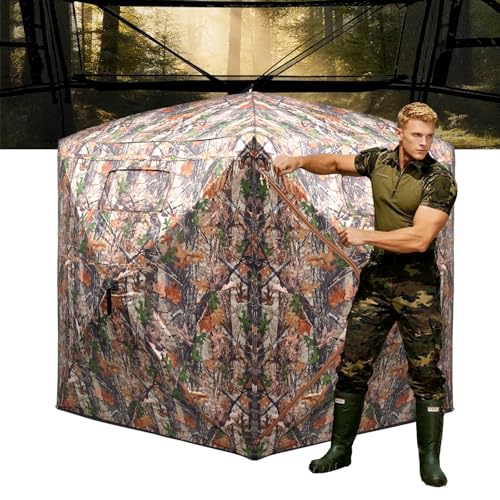
The best ground blind for most hunters is a hub-style pop-up with blackout interior and windows that open and close quietly: choose a lightweight pop-up for run-and-gun bowhunting, a larger hub blind with see-through mesh for a family or photographer, and a heavier, insulated or box-style blind for fixed spots and cold seasons. This guide explains how to match blind type, size and features to how and where you hunt, without relying on prices.
Our top picks


As an Amazon Associate we earn from qualifying purchases at no extra cost to you.
Ground Blinds at a Glance
| Type or model | Best for | Key traits stated by makers | Limit |
|---|---|---|---|
| Ameristep Doghouse | Budget pop-up use | Popular pop-up hub blind with a compact carry design | Material is lighter; may not hold up in strong wind without staking |
| Primos Double Bull Surround View | Hunters who want a wide view | The maker describes see-through mesh panels with a camouflage print on the outside | Heavier; mesh view works best with a dark interior |
| Barronett Blinds pop-up models | Hunters who want a blackout interior | The maker uses a dark interior fabric and a range of sizes | Bulky to carry; read each model’s capacity |
| Rhino Blinds series | Bowhunters who want roomy interiors | The maker lists large hub designs with multiple windows | Heavy; check the pack size |
| Muddy and Hunter Specialties blinds | Hunters wanting mid-range options | Both offer pop-up and box styles | Features vary by model |
| Hard-sided or box blinds | Fixed locations and cold climates | Insulated or hard walls per the maker | Not portable, may need permission to install |
How to Choose a Ground Blind
Size and capacity
Makers list the number of hunters a blind fits, but interior space shrinks quickly when chairs, backpacks and gear are inside. Reviewers often suggest buying a blind one capacity step above your expected group. A solo bowhunter needs room to draw a bow without hitting the walls, which usually means a blind that fits two or three adults, not one. A family hunt with kids needs a roomy hub plus chairs and a small heater placed only as the maker allows.
Weight and setup
Hub-style pop-up blinds use flexible poles that spring into shape. Most pack into a round or oval case that sits on your back. Setup is quick, but takedown can be fiddly the first time, so practice at home. Heavier blinds are sturdier but harder to carry into a remote spot.
Interior color and visibility
A dark interior hides your movement and silhouette. Blinds with black or very dark lining are sold as blackout models. Surround-view or see-through mesh blinds trade some concealment for visibility, so they perform best with dark clothing and low light levels.
Windows and shoot-through mesh
Look for windows that open and close with quiet fasteners and sliding panels rather than loud hook-and-loop. Some blinds include shoot-through mesh that a hunter can use with a bow or firearm where legal. Read the maker’s guidance and your local regulations. In many states, blind and shooting rules differ for archery, firearms and public land.
Weather and ground
Most pop-up blinds are made of polyester and designed for fall seasons. They are water-resistant but not always waterproof, and the maker usually recommends staking the corners and using a guy line. In strong wind, a lightweight blind can collapse or lift off. Choose a model with a sturdy stake system, and brush it in with natural cover to blend it with the surroundings.
Safety and Legal Notes
Blinds can reduce visibility for both you and other people nearby. Wear hunter orange where the law requires it, even when seated in a blind, and know what is behind your target. Regulations on blind use, marking and permanent installation differ by state and by public or private land, so read your local wildlife agency’s rules before the season. Never use a fuel-burning heater inside a fabric blind unless the heater’s maker explicitly approves that use. Carbon monoxide and fire are real hazards in enclosed spaces.
Budget Tiers
| Tier | What to expect | Trade-off |
|---|---|---|
| Budget | Basic pop-up hubs such as the Ameristep Doghouse | Thinner fabric, weaker poles, fewer windows |
| Mid-range | Larger hub blinds with blackout liners and more windows | More weight, larger carry case |
| Premium | Heavier-duty or box-style blinds, some insulated | Much less portable; may need a permanent spot |
Pick X If You Need Y
| Pick | If you need |
|---|---|
| Ameristep Doghouse or similar | An easy first blind at a modest tier |
| Primos Double Bull Surround View | Wide views with a camouflage exterior |
| Barronett pop-up blinds | A dark interior and quiet windows |
| Rhino Blinds | Extra room for bowhunting or two hunters |
| Box or hard-sided blind | A fixed stand for cold weather |
Alternatives to a Pop-up Ground Blind
- Natural or brush blind: built from local vegetation and cheap, but time-consuming and subject to local rules.
- Layout blind: a low, coffin-style blind often used for waterfowl and field hunting.
- Tree stand: gives elevation and scent control, but requires safety harness use per the maker.
- Camo netting and a chair: a lightweight option where blinds are not allowed.
Care and Setup Tips
Set the blind up days before the season so animals can get used to it. Stake all corners, clear sticks and leaves from the floor so you do not make noise, and brush the exterior with local grass and branches. Dry the fabric before storing it, since mildew can ruin a blind in a closet. Keep zippers clean and lubricated as the maker advises.
Practical Buying Tips
Read the maker’s listed dimensions, not just the capacity number. Floor area, peak height and window height all affect whether you can sit, stand or draw a bow comfortably. If you hunt from a chair, measure your chair’s height with you in it and compare that to the windows. A blind with windows too low or too high will force awkward movement that animals can see.
Think about the pack-out. A blind that weighs a lot can turn a half-mile walk into a chore, and some makers sell backpack-style carry cases that help. Consider how many seasons you expect to use it: lightweight fabrics wear out sooner with brush and thorns, while heavier ones last longer but are harder to carry. Practice folding it at home and keep the original sleeve or bag, since returning it to its case is often the hardest part. A little practice saves frustration in the field and reduces the noise you make when you take it down in the dark.
Finally, think about scent and sound. Fabric blinds hold odors, so store yours outdoors or in a sealed bag, and oil any squeaky zippers. Bring a small bag for gear so nothing rattles on the floor, and keep movement slow when game is near.
One more consideration is access. If you need to enter before dawn, pick a blind that unzips quietly and has a door on the side away from the animals’ approach. Look for a floor that is either absent or removable, since a sewn-in floor can catch on brush. Hunters with mobility limits often prefer taller blinds that allow a standing or high-seat position, and those with kids usually want extra interior room for a second chair and a snack bag. Match the blind to the person with the most demanding needs.
Always read the maker’s manual for the specific model, since pole layouts, stake counts and window systems differ between brands and even between generations of the same line.
Frequently Asked Questions
How many people fit in a ground blind?
Makers list a capacity, but real space is smaller once you add chairs and gear. If you plan to bowhunt, buy a blind rated for one or two more people than you expect to carry. This gives you room to draw.
Do I need a blackout ground blind?
A dark interior helps hide your movement, so it is a common choice. See-through models offer more visibility but need dark clothing and low interior light. Choose based on how close you expect animals to come.
How should I stake a pop-up blind in wind?
Use the stakes supplied by the maker through every anchor point, and add guy lines if they are included. Place the blind with its lower profile facing the wind direction. In very high winds, take the blind down because a collapsing frame can be unsafe.
Can I use a heater in a ground blind?
Only if the heater’s maker states it is approved for use in enclosed or fabric spaces. Fuel-burning heaters can release carbon monoxide and ignite fabric. Dress in layers and use hand warmers rather than risking a fire.
When should I set up a blind before hunting?
Many hunters set it up at least a week or two before the season. This lets wildlife get used to the shape. Brush it in with natural material to blend it with the area.
Are ground blinds legal on public land?
Rules differ by state and by land manager. Some places limit how long you can leave a blind in place, or require a label with your name. Read your wildlife agency’s current regulations before you hunt.
FAQ
How many people fit in a ground blind?
Do I need a blackout ground blind?
How should I stake a pop-up blind in wind?
Can I use a heater in a ground blind?
When should I set up a blind before hunting?
Are ground blinds legal on public land?
More from Amazon
Programs that pair well with the guide above. Offers and eligibility are set by Amazon and may change.
Free shipping on eligible items, Prime Video and more. Eligible new members can start with a free trial.
Start a Prime free trialAudiobooks and podcasts to listen to on the go. Eligible new members can start with a free trial.
Try Audible freeAd-free music streaming. Eligible new subscribers can start with a free trial.
Try Music Unlimited freeA free business account with business pricing and bulk-buying tools for work, shop or home office.
Create a business accountAs an Amazon Associate we earn from qualifying purchases.