Key takeaways
- Have both feet measured, preferably late in the day when feet are largest.
- Logger boots often run narrower and sit higher than casual boots. Try them with the socks you plan to wear.
- Expect a stiff break-in period. Wear them in short sessions at first.
- Heel slip suggests the boot is too large; pressure across the ball of the foot suggests it is too tight.
- If you have foot pain, ankle problems or circulation issues, ask a podiatrist about suitable footwear.
For most buyers, a leather logger boot with a tall lace-up shaft, a pronounced heel and a lug outsole from makers such as Chippewa, Wesco, Georgia Boot or White’s suits outdoor and yard work best, while people who mainly want the look on pavement are better off with a lighter, lower-heeled work boot. Logger boots are built for steep, slippery ground and chainsaw-adjacent work, so fit, heel height and sole choice matter more than fashion.
Our top picks


As an Amazon Associate we earn from qualifying purchases at no extra cost to you.
What Is a Logger Boot?
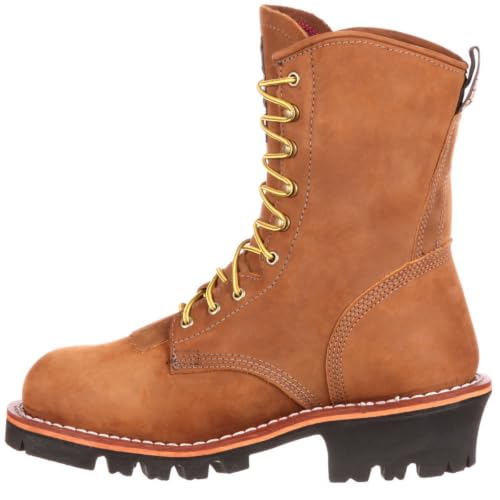
A logger boot is a tall, lace-up leather work boot with a distinctive high heel, often called a “logger heel”, designed to give grip on logs, slopes and uneven ground. The shaft usually rises 8 to 10 inches or more, and many styles have steel or composite toe options, though not all do. Traditional versions are handcrafted and resolable, while modern production models trade some of that heritage for a lower cost.
Safety note: logger boots are not the same as certified chainsaw-protective footwear. If you operate a chainsaw, look for boots that meet the relevant protective-footwear standards for your region, and follow your employer’s and the equipment maker’s guidance.
Logger Boots at a Glance
| Brand / style | Best for | Stated traits | Limits |
|---|---|---|---|
| Wesco Highliner / Jobmaster | Buyers who want a handcrafted, resolable boot | Made-to-order construction with a variety of leathers and heights, per the maker | Premium tier; long lead times; needs break-in |
| White’s Smokejumper / Logger styles | Heritage Pacific Northwest craftsmanship | Handmade in the United States, per the maker | Premium tier; heavy; specialized |
| Chippewa logger boots | Mid-range to premium traditional look | Leather uppers with Goodyear-style construction on many models, per the maker | Fit can be narrow; stiff at first |
| Georgia Boot logger-style work boots | Budget to mid-range working boots | Leather uppers, lug outsoles, per the maker | Heavier, less refined than heritage makers |
| Thorogood logger styles | Comfort-minded work boots | Leather uppers with optional safety toe on some models | Less traditional heel than classic loggers |
| Danner and Red Wing | Hybrid work and outdoor use | Leather and rugged outsole options | Not true loggers in the strict sense |
Model names, safety ratings and construction methods change, so confirm details on each maker’s current listing.
Key Features to Compare
Heel Height
The signature logger heel is typically around 1.5 to 2 inches, tall and angled to dig into sloping ground and logs. It changes your posture and walking gait, which some wearers find tiring on flat surfaces. If you spend most of the day on level concrete, a lower heel may be more comfortable.
Construction
Goodyear welt and stitchdown constructions allow resoling, which extends the life of a boot. Cemented constructions are lighter and cheaper but typically cannot be rebuilt as easily. Makers state their construction method, so look for it in the product description.
Outsole
Lug soles provide grip on mud and dirt. Some outsoles are marked as oil- or slip-resistant, but these claims vary by model. Hard, deep lugs can be slippery on wet smooth floors, so match the sole to your work surface.
Toe Protection
Steel, composite and alloy safety toes are offered on some models and absent on others. If your job requires protective footwear, check that the specific model carries the required rating.
Leather and Waterproofing
Full-grain leather is common in quality loggers, and some makers add waterproof membranes. Waterproof liners can reduce breathability, so consider your climate. Leather needs periodic cleaning and conditioning, following the maker’s instructions.
Brand Notes
Wesco
Wesco is known for custom-built boots with many options for height, leather, sole and toe. Reviewers regard them as long-term investments because they are designed to be resoled. The trade-off is cost, wait times and a lengthy break-in period.
White’s
White’s has built boots for loggers and wildland firefighters for generations, according to the company. Buyers who want a heritage American-made boot often shortlist it alongside Wesco.
Chippewa
Chippewa offers a range of tall lace-up boots with a more accessible tier than the handmade specialists. They are a common choice for people who want traditional looks and real leather without full custom pricing.
Georgia Boot
Georgia Boot sells working boots including logger-style models at a lower tier. They are practical for yard work and farm use, though most reviewers do not regard them as heirloom pieces.
Thorogood
Thorogood is known for comfortable work boots, with some logger-influenced styles. If you want a cushioned insole and wide fit options, they are worth a look.
Fit and Break-In Notes
- Have both feet measured, preferably late in the day when feet are largest.
- Logger boots often run narrower and sit higher than casual boots. Try them with the socks you plan to wear.
- Expect a stiff break-in period. Wear them in short sessions at first.
- Heel slip suggests the boot is too large; pressure across the ball of the foot suggests it is too tight.
- If you have foot pain, ankle problems or circulation issues, ask a podiatrist about suitable footwear.
Care
- Brush off dirt and let wet boots dry naturally, away from direct heat.
- Condition leather following the maker’s instructions.
- Replace worn laces and rotate between pairs when possible.
- Resole when treads are worn rather than waiting for the midsole to fail.
Pick X If… Decision Table
| If you… | Pick |
|---|---|
| Want a lifetime, resolable boot and accept the premium tier | Wesco or White’s |
| Want a traditional look at a mid-range tier | Chippewa |
| Need an affordable boot for yard or farm work | Georgia Boot |
| Prioritize comfort over classic styling | Thorogood |
| Spend most time on flat ground | Lower-heeled work boot from Red Wing or Danner |
| Work around chainsaws | Certified chainsaw-protective boots |
Budget Tiers
Budget tier: Georgia Boot and similar brands. Good for light-duty work, with less refined construction.
Mid-range tier: Chippewa, Thorogood and comparable models with better leather and more repairable construction.
Premium tier: Wesco and White’s, built to last and be resoled many times.
Alternatives
- Lineman or wedge-sole boots: Better for walking on level surfaces.
- Hiking or hunting boots: Lighter and more flexible for trail use.
- Rubber boots: Suitable for wet and muddy yards.
Using Logger Boots Safely
Tall heels and stiff shafts change the way you walk, so give yourself time to adapt before heading onto steep or slippery ground. On wet logs, moss or icy surfaces, no boot guarantees grip, and the lug pattern only improves traction. Replace worn soles promptly, because worn lugs reduce grip.
For work involving heavy objects, sharp tools or electrical hazards, protective footwear standards apply. Look for the rating marks on the boot, such as safety-toe and electrical-hazard markings, and confirm that they meet your employer’s or region’s requirements. If you are unsure, ask your safety officer or the maker.
Socks and Insoles
Wool or wool-blend socks wick moisture and cushion the foot inside a stiff leather boot. Aftermarket insoles can improve arch support, especially when the stock footbed is basic, but they also take up volume, so you may need to size accordingly.
Lacing Tips
Tall boots can be laced in zones: snug across the instep and ankle, a little looser at the top of the shaft to allow calf movement. Heel lock lacing helps limit heel slip on slopes. If the laces rub, loosen the top eyelets rather than the whole boot.
Buying New Versus Used
Used boots from reputable makers can be good value if the midsole, welt and leather are in sound shape. However, a boot molds to its previous owner’s foot, and a poor fit may never feel right. A local cobbler can inspect the structure and advise on whether a resole is worthwhile.
Storage
Keep boots in a cool, dry place with cedar shoe trees or crumpled paper to hold the shape. Do not store leather boots in sealed plastic for long periods, because trapped moisture can encourage mold.
Frequently Asked Questions
Are logger boots comfortable for everyday wear?
They can be after a break-in period, but the tall heel and stiff structure are designed for rough terrain. Many wearers find them tiring on flat concrete and prefer a lower heel for daily walking.
Do logger boots protect against chainsaws?
Not unless the specific model is rated for it. Standard leather loggers are not substitutes for certified chainsaw-protective boots, so check the label and follow safety guidance.
Can logger boots be resoled?
Many traditionally made models with Goodyear welt or stitchdown construction can be resoled by a cobbler or the maker. Cemented boots generally cannot be rebuilt.
How should I size logger boots?
Get a proper foot measurement and try them with work socks. Allow for some toe room and make sure the heel stays seated. Sizing differs between brands, so consult each maker’s guide.
Are logger boots waterproof?
Only some are, depending on the leather treatment or liner. Check the specification and apply conditioning products recommended by the maker.
How long do logger boots last?
Quality leather boots that are cared for and resoled can last many years. Lifespan depends on use, construction and maintenance.
FAQ
What Is a Logger Boot?
Are logger boots comfortable for everyday wear?
Do logger boots protect against chainsaws?
Can logger boots be resoled?
How should I size logger boots?
Are logger boots waterproof?
How long do logger boots last?
More from Amazon
Programs that pair well with the guide above. Offers and eligibility are set by Amazon and may change.
Free shipping on eligible items, Prime Video and more. Eligible new members can start with a free trial.
Start a Prime free trialAudiobooks and podcasts to listen to on the go. Eligible new members can start with a free trial.
Try Audible freeAd-free music streaming. Eligible new subscribers can start with a free trial.
Try Music Unlimited freeA free business account with business pricing and bulk-buying tools for work, shop or home office.
Create a business accountAs an Amazon Associate we earn from qualifying purchases.