For most dorm rooms, offices and bedrooms, a compact fridge of about 3.2 to 4.5 cubic feet with a small freezer compartment or a true-freezerless design from brands such as Midea, Frigidaire, Danby or Insignia is the right size, while people who want drinks only should consider a dedicated beverage cooler. The best mini fridge is the one that fits your space, stays quiet and suits what you actually store.
Our top picks


As an Amazon Associate we earn from qualifying purchases at no extra cost to you.
Choosing the Right Type
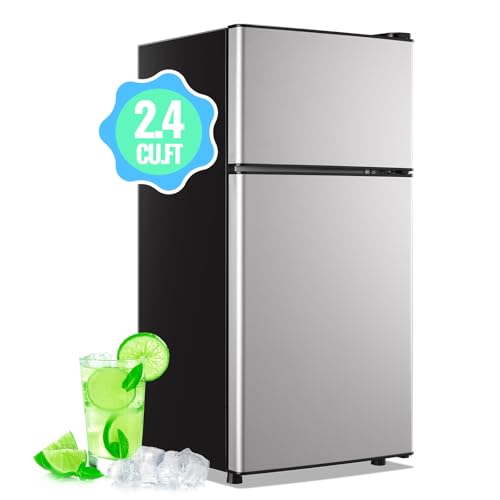
Mini fridges differ more than they appear. The main categories are the compact refrigerator with a built-in freezer box, the freezerless “all-fridge” design, the under-counter model and the beverage cooler. Before comparing brands, decide which type suits your needs.
- Compact fridge with freezer box: Offers a small icebox, though these boxes are usually modest and may frost over.
- Freezerless compact fridge: Provides more refrigerated volume per footprint and is better for drinks, snacks and leftovers.
- Under-counter fridge: Designed for built-in use and often has ventilation planned for tight spaces.
- Beverage cooler: Intended for cans and bottles, often with glass doors and adjustable shelving.
Mini Fridges at a Glance
| Brand / type | Best for | Typical stated traits | Limits |
|---|---|---|---|
| Midea compact fridges | Dorms and bedrooms on a budget | Capacities in the 1.6 to 4.5 cubic foot range, reversible doors on many models, per the maker | Small freezer boxes; some noise reports |
| Frigidaire compact fridges | Familiar brand with retro-styled options | Capacities around 3 to 4.5 cubic feet, per the maker | Cooling consistency varies by model |
| Danby compact fridges | Wide choice of sizes and designs | Includes designer and under-counter options, per the maker | Quality varies across the line |
| Insignia compact fridges | Home-office and small-room use | Basic compact designs, per the maker | Limited availability depending on region |
| Under-counter fridges | Built-in installations | Front-venting designs on many models | Higher tier; larger |
| Beverage coolers | Canned drinks and bottles | Glass door, adjustable shelves | Not designed for general food storage |
Capacities, features and model names change often, so confirm them on the maker’s page before ordering.
Key Features to Compare
Capacity and Footprint
Measure the space first, including clearance behind and beside the fridge. A 1.7 cubic foot cube is much smaller than a 4.5 cubic foot unit, and a mismatch is the most common purchasing regret. Remember that door swing also needs room.
Freezer or No Freezer
Small freezer boxes inside compact fridges are often limited to ice trays and a few frozen items. Many reviewers advise buying a separate unit if you need real freezer capacity. Freezerless designs usually give more usable refrigerated space.
Noise and Cycling
Compact compressors can click, hum and cycle on and off. In a bedroom or office, check owner and reviewer reports about noise levels. Thermoelectric mini coolers are quieter but cool less effectively and are sensitive to room temperature.
Temperature Control and Frost
Adjustable thermostats help you tune cooling. Manual defrost models need periodic maintenance, while frost-free designs are rare in compact sizes.
Energy Rating
Some models carry an ENERGY STAR certification, which the program awards to products meeting its efficiency criteria. Check the product’s listing for this rather than assuming it.
Door and Shelving
A reversible door lets you adapt to the room layout. Adjustable shelves and door bins increase flexibility, especially for tall bottles.
Brand Notes
Midea
Midea is among the most common picks in compact-fridge roundups. The company offers a range from tiny cubes to larger compact units, with reversible doors on many models. Reviewers highlight value, but some mention cooling variation and compressor noise.
Frigidaire
Frigidaire offers compact fridges, including retro-styled designs. It suits buyers who want a recognizable name and a familiar look.
Danby
Danby covers a broad range, including designer-colored compact fridges and under-counter units. This breadth means you should read the specific model details carefully.
Insignia
Insignia sells straightforward compact models for dorms and offices, with simple controls and basic features.
Placement and Safety Notes
- Leave the clearance recommended in the manual for airflow. Blocking vents can cause overheating and reduce efficiency.
- Plug directly into a wall outlet rather than a power strip or extension cord unless the manual allows it.
- Let the unit stand upright for the time the maker recommends before plugging it in after transport.
- Place on a level, stable surface away from heat sources and direct sunlight.
- Do not store medication, insulin or other temperature-sensitive items in a mini fridge unless the product is designed for that and your doctor or pharmacist approves.
- For electrical concerns such as a hot cord or tripped breaker, stop using the appliance and consult a qualified electrician.
Pick X If… Decision Table
| If you… | Pick |
|---|---|
| Need a compact fridge for a dorm at a budget tier | Midea compact model |
| Want retro styling from a known brand | Frigidaire compact |
| Want choice in colors and sizes | Danby |
| Need an under-counter installation | Under-counter fridge with front ventilation |
| Mostly cool canned drinks | Beverage cooler |
| Want a silent unit for a bedroom | Thermoelectric cooler, accepting lower cooling power |
Budget Tiers
Budget tier: Small cube fridges and basic compact models. Expect modest build quality and limited freezer function.
Mid-range tier: Larger compact fridges with better shelving and quieter operation.
Premium tier: Under-counter and designer models with better insulation and finish.
Alternatives
- Thermoelectric coolers: Quiet and lightweight but limited in cooling capacity.
- Portable car fridges: Designed for travel and 12-volt use.
- Full-size second fridge: Better for families needing larger capacity.
Where Mini Fridges Work Best
A compact fridge suits spaces where a full-size appliance is impractical: dorm rooms, home offices, garages, guest rooms and workshops. In each setting, the priorities differ. Dorm users care about size limits and noise; office users want quiet and a tidy look; garage and workshop users should check the ambient temperature range printed in the manual, because many indoor fridges struggle in very hot or very cold rooms.
Food Safety Basics
Refrigerated food should be kept cold enough to slow bacterial growth. Food-safety agencies commonly advise keeping the fridge at or below 40 degrees Fahrenheit, which is about 4 degrees Celsius, and a small appliance thermometer is a cheap way to check. Compact fridges can have warm spots near the door or the freezer box, so place perishable items toward the back and avoid overpacking.
Loading and Airflow
Leave gaps between items so cold air can circulate. Do not put hot food straight into a mini fridge, as it raises the interior temperature and makes the compressor work harder. Allow leftovers to cool before storing and use covered containers to limit odor transfer.
Door Seals and Maintenance
A worn or dirty door gasket lets warm air in. Wipe it with mild soapy water, and check that a sheet of paper closed in the door resists being pulled out. Clean the condenser coils or vents if the manual calls for it, and always unplug the fridge first.
Moving and Storing
If you need to transport a mini fridge, empty it, defrost it and secure the door. Many makers advise keeping the appliance upright during transport and letting it stand upright for several hours before turning it on. Follow the instructions in your manual for exact timing.
When to Replace
Constant running, rising interior temperature, heavy frost or an unusual smell are signs that the unit may be failing. Compact fridges are usually not worth major repair, so compare the cost of a service call to that of a new unit.
Frequently Asked Questions
How big should a mini fridge be for a dorm?
Many students find 3 to 4.5 cubic feet works for snacks, drinks and a few meals. Check your school’s rules and room dimensions, since some dorms limit appliance size or power use.
Are mini fridge freezers any good?
The built-in freezer compartments in compact fridges are usually small and suited to ice trays and a few items. They may not hold food at deep-freeze temperatures, so read the maker’s guidance on storage times.
Why is my mini fridge noisy?
Compressors cycle on and off and can hum or click. Make sure the fridge is level and not touching walls, and consult the manual. If noise suddenly changes, contact the maker or a technician.
Can I put a mini fridge in a cabinet?
Only if it is designed for built-in use. Freestanding models need ventilation space, and enclosing them can lead to overheating.
Do mini fridges use a lot of electricity?
Compact fridges are generally modest in consumption, but older or inefficient models can use more than their size suggests. Look for the energy label or ENERGY STAR certification on the specific model.
How do I defrost a mini fridge?
Follow the manual: unplug the unit, remove food, allow ice to melt on towels and wipe it dry. Never use sharp tools to chip ice as they can puncture refrigerant lines.
FAQ
How big should a mini fridge be for a dorm?
Are mini fridge freezers any good?
Why is my mini fridge noisy?
Can I put a mini fridge in a cabinet?
Do mini fridges use a lot of electricity?
How do I defrost a mini fridge?
More from Amazon
Programs that pair well with the guide above. Offers and eligibility are set by Amazon and may change.
Free shipping on eligible items, Prime Video and more. Eligible new members can start with a free trial.
Start a Prime free trialAudiobooks and podcasts to listen to on the go. Eligible new members can start with a free trial.
Try Audible freeAd-free music streaming. Eligible new subscribers can start with a free trial.
Try Music Unlimited freeA free business account with business pricing and bulk-buying tools for work, shop or home office.
Create a business accountAs an Amazon Associate we earn from qualifying purchases.