
Key takeaways
- Bag or bagless: bagged systems let you seal dust away without exposure when you dispose of it, which many allergy-conscious buyers prefer. Bagless designs avoid ongoing bag purchases, but emptying the bin can release dust, so empty outdoors or into a bag.
- Floor type: a motorized brush roll works well on carpet but may scatter debris on bare floors. Look for brush-off settings or soft rollers on hard floor heads.
- Pet hair: pet-focused models often include anti-tangle brush rolls. Check how easy they are to clean.
- Weight and maneuverability: consider stairs, narrow spaces and storage. A heavy vacuum you dread using will not get used often.
- Noise: makers list sound levels on some models. Canisters can be quieter than uprights but vary.
- Filter care: some HEPA filters are washable, others need replacement on a schedule. Factor in the ongoing cost and effort.
- Attachments: crevice tools, upholstery heads and extension wands help clean mattresses, curtains, vents and car interiors.
For households with allergy concerns, a sealed-system canister such as the Miele Complete C3 line suits hard floors and mixed flooring with long-term filtration, a Shark Navigator or Stratos upright suits budget to mid-range buyers wanting a HEPA-labeled filter, and a cordless Dyson or Samsung Bespoke Jet suits people who value convenience over maximum capacity. The best HEPA vacuum is the one with a sealed filtration path that fits your floors, your storage space and your willingness to maintain filters.
A note on health: a vacuum with a HEPA filter can reduce dust circulating back into the room, but it does not treat allergies or asthma. People with respiratory conditions should follow their doctor’s advice on cleaning routines and consider wearing a mask while emptying the bin.
Our top picks



As an Amazon Associate we earn from qualifying purchases at no extra cost to you.
HEPA Vacuums at a Glance
| Brand line | Best for | What makers describe | Main limit |
|---|---|---|---|
| Miele Complete C3 / Classic C1 canisters | Allergy-conscious homes, hard floors and low-pile carpet | Canister with bagged dust collection, sealed-system design and HEPA-type filtration, depending on model | Larger and heavier to move around stairs; bags are an ongoing purchase |
| Miele Boost and CX1 lines | Compact households wanting a canister | Smaller canister designs with filtration options by model | Features differ by model; check the filter type listed |
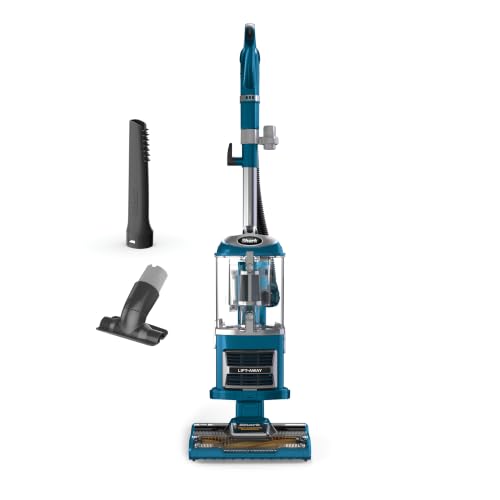
| Shark Navigator and Stratos uprights | Budget to mid-range, pet owners | Uprights with HEPA-labeled filters and anti-allergen seals on selected models | Filter claims differ by model; plastic build |
| Dyson cordless (V-series) and Ball uprights | Convenience, quick cleanups, bagless | Bagless designs with whole-machine filtration described by the maker on selected models | Limited cordless runtime; bin capacity is small |
| Samsung Bespoke Jet | Cordless cleaning with a station that evacuates dust | Cordless stick with a clean station and multi-stage filtration, depending on model | Station takes space; battery runtime varies with mode |
| Bissell and Hoover uprights | Budget buyers with carpet | HEPA-labeled filters on selected upright models | Some models use HEPA-style filters without a fully sealed path |
| SEBO and Oreck lines | Buyers wanting a durable, filtration-focused upright or canister | Designs with filtration stages and sealed bags on certain models | Niche availability; model lineup changes |
Filter ratings, bin capacities, runtimes and weights change from model to model. Always read the specific model’s filtration description before buying.
What “HEPA” Means in a Vacuum
True HEPA filters are defined by a standard that requires capturing a very high share of tiny particles, commonly cited as 99.97 percent of particles at 0.3 micrometers. Vacuum makers often use terms like “HEPA-type”, “HEPA-style” or “HEPA filter” in differing ways. A filter alone is not enough. If dust leaks around seams before reaching the filter, it can escape into the room. For this reason, a sealed system, in which air is forced through the filter and cannot bypass it, matters as much as the filter itself.
When comparing models, look for language such as “sealed system” or “whole-machine filtration”, and check whether the maker names the filter grade and whether it can be washed or must be replaced. Independent testing standards exist, and some makers cite certification from allergy-related organizations. Read what is claimed and by whom.
Choosing a Vacuum Type
Canister vacuums
Canisters, including Miele’s, are often favored for sealed filtration and for hard floors and low-pile carpets. They have a separate floor head and hose, which makes them versatile for stairs, upholstery and above-floor cleaning. They need storage space and can be awkward on stairs because you carry the canister body.
Upright vacuums
Uprights from Shark, Bissell, Hoover and SEBO tend to be efficient on medium to thick carpet and cover large areas quickly. HEPA-labeled models are widely available at moderate budgets. They are often heavier than cordless sticks and can be harder to use under furniture, though many offer lift-away designs.
Cordless stick vacuums
Dyson and Samsung cordless vacuums are quick to grab and good for daily cleanups. Runtime depends on power mode and attachments, and small bins need frequent emptying. Filtration descriptions differ by model, so look for details on sealing and filter type.
Robot vacuums
Some robot vacuums include HEPA-style filters in the bin. They help with daily upkeep but are not a substitute for a thorough weekly clean with a full-size vacuum.
Features That Matter
- Bag or bagless: bagged systems let you seal dust away without exposure when you dispose of it, which many allergy-conscious buyers prefer. Bagless designs avoid ongoing bag purchases, but emptying the bin can release dust, so empty outdoors or into a bag.
- Floor type: a motorized brush roll works well on carpet but may scatter debris on bare floors. Look for brush-off settings or soft rollers on hard floor heads.
- Pet hair: pet-focused models often include anti-tangle brush rolls. Check how easy they are to clean.
- Weight and maneuverability: consider stairs, narrow spaces and storage. A heavy vacuum you dread using will not get used often.
- Noise: makers list sound levels on some models. Canisters can be quieter than uprights but vary.
- Filter care: some HEPA filters are washable, others need replacement on a schedule. Factor in the ongoing cost and effort.
- Attachments: crevice tools, upholstery heads and extension wands help clean mattresses, curtains, vents and car interiors.
Budget Tiers
Budget tier
Budget uprights from Shark, Bissell and Hoover often include HEPA-labeled filters. They are good for carpet-heavy homes at a modest budget, but confirm whether the model has a sealed path and how often filters need replacement.
Mid-range tier
Mid-range options include higher-end Shark models, Dyson cordless sticks and entry Miele canisters. They offer better build quality and more attachments.
Premium tier
Premium choices are Miele’s higher-end canisters, Samsung’s station-based cordless sticks and top-of-line Dyson models. They emphasize filtration, durability and convenience. They cost more up front and may require more expensive replacement parts.
Pick X If You Want…
| Pick this | If you… |
|---|---|
| Miele Complete C3 or similar canister | Want sealed-system filtration and mostly hard floors or low-pile carpet |
| Shark Navigator or Stratos | Want a HEPA-labeled upright at a lower budget, with pet-focused options |
| Dyson cordless | Want quick cleanups and a lightweight stick |
| Samsung Bespoke Jet | Want a cordless vacuum with a station that handles emptying |
| Bissell or Hoover upright | Have mostly carpet and want a basic HEPA-labeled model |
| SEBO canister or upright | Want a durable, filtration-focused machine and plan to keep it long term |
Maintenance Notes
- Follow the manual for filter cleaning and replacement. Washing a filter that is not washable can damage it.
- Let washable filters dry completely before reinstalling.
- Empty bins before they are full to keep suction strong.
- Clean the brush roll regularly by cutting away hair and thread.
- Check hoses and seals for cracks or leaks, which can reduce filtration.
- Replace bags and filters according to the maker’s schedule.
- If you have allergies, consider having someone else empty the vacuum or use a mask and empty it outdoors.
Alternatives
- Standalone HEPA air purifiers: they clean airborne particles between vacuuming sessions and complement a vacuum.
- Central vacuum systems: vent exhaust outside the living area in some designs.
- Steam or wet-dry cleaners: for hard floors where wiping up is more effective than suction.
- Doormats and shoe-free homes: reducing what comes in lowers the amount you need to vacuum.
Buying Checklist
List your floor types, whether you have stairs, how much storage space you can spare and whether anyone in the home is sensitive to dust. Then compare the filtration description of each shortlisted model, the weight, the cost and availability of replacement bags and filters, and the warranty terms. Look at how the bin or bag is emptied and whether you will be comfortable doing it. A vacuum that suits your home and gets used weekly will do more for dust control than a premium model that sits in a closet.
Frequently Asked Questions
Is a HEPA vacuum worth it for allergies?
A vacuum with a sealed system and a HEPA-grade filter can reduce the amount of fine dust returned to the air while you clean. It does not cure or treat allergies, and results depend on the model and how well you maintain it. Ask your doctor about broader steps for managing allergies at home.
What is the difference between HEPA and HEPA-type filters?
True HEPA refers to filters that meet a defined standard for capturing very small particles. HEPA-type or HEPA-style labels may describe filters that do not meet the same standard. Read the manufacturer’s description and look for details on the filter grade.
Do I need a sealed system?
If dust can leak around seams before it reaches the filter, the filter cannot catch it. A sealed system keeps the air path closed so that air passes through the filter. For allergy-focused buyers, it matters about as much as the filter rating.
Are bagged or bagless vacuums better?
Bagged vacuums let you remove dust in a sealed bag with less exposure. Bagless models avoid buying bags but can release dust when you empty the bin. If dust exposure is a concern, a bagged model or careful emptying outdoors is often preferred.
How often should I replace HEPA filters?
It depends on the model and your usage. Some filters are washable and last longer, others need replacement every several months to a year as the manual suggests. Follow the maker’s schedule, and replace sooner if suction drops or odors appear.
Can a cordless vacuum have a HEPA filter?
Some cordless models include HEPA-style filtration, but specifics vary. Look for details about sealing and the filter grade in the maker’s description, and keep in mind that smaller bins need frequent emptying.
FAQ
Is a HEPA vacuum worth it for allergies?
What is the difference between HEPA and HEPA-type filters?
Do I need a sealed system?
Are bagged or bagless vacuums better?
How often should I replace HEPA filters?
Can a cordless vacuum have a HEPA filter?
More from Amazon
Programs that pair well with the guide above. Offers and eligibility are set by Amazon and may change.
Free shipping on eligible items, Prime Video and more. Eligible new members can start with a free trial.
Start a Prime free trialAudiobooks and podcasts to listen to on the go. Eligible new members can start with a free trial.
Try Audible freeAd-free music streaming. Eligible new subscribers can start with a free trial.
Try Music Unlimited freeA free business account with business pricing and bulk-buying tools for work, shop or home office.
Create a business accountAs an Amazon Associate we earn from qualifying purchases.







