The best medicine ball for most home gym users is a durable rubber or PVC-shell ball in a weight that lets you complete a full set with good form, while wall-ball workouts call for a soft-shell ball that tolerates impact and slam work calls for a dead-bounce ball that will not rebound. Choose the weight and shell first, then compare brands on durability, grip, and how the ball behaves when thrown against a wall or floor.
Our top picks


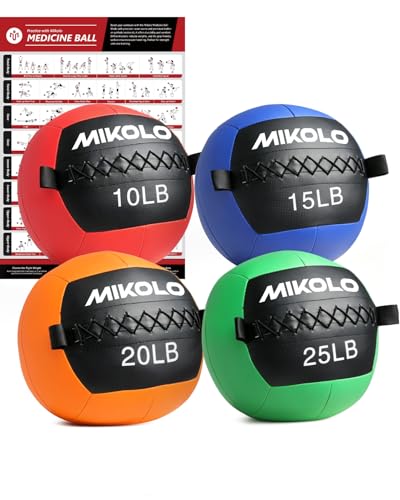
As an Amazon Associate we earn from qualifying purchases at no extra cost to you.
At a Glance: Medicine Ball Types Compared
| Type | Best for | Typical features | Limits |
|---|---|---|---|
| Wall ball (soft shell, such as Rogue, Dynamax, or Rep Fitness styles) | Wall-ball shots, squat throws, partner passes | Makers list soft, stitched or molded covers and a range of weights | Not designed to be slammed hard onto concrete |
| Slam ball (dead bounce) | Overhead slams and conditioning | Thick rubber shell with sand or similar filling, minimal rebound | Poor for catching or passing |
| Bouncing rubber medicine ball with handles | Rotational throws and floor work | Rubber shell, some with handles for grip | Handles can be awkward for some exercises |
| Leather or vinyl traditional ball | Partner passing and core drills | Smooth cover, classic look | Surface can be slick when sweaty |
| Textured rubber ball | General home use | Grippy surface and consistent bounce | Can leave marks on walls or floors |
Choose the Right Weight First
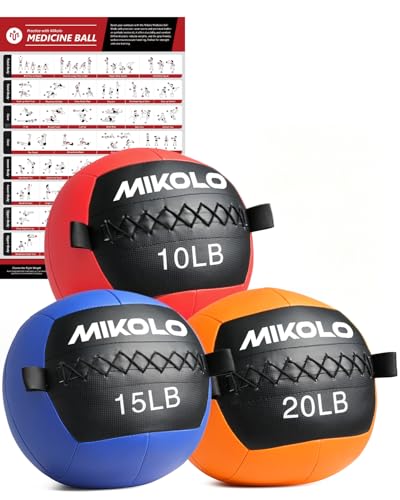
Weight matters more than brand. A medicine ball that is too heavy forces compensations in your back and shoulders, while one that is too light will not challenge the movement. Coaches commonly suggest picking a weight that lets you complete the planned repetitions with the same technique on the last rep as on the first. Beginners often start with a lighter ball for overhead throws and a heavier ball for slams, since slams use larger muscle groups and gravity assists the movement.
- Wall balls: Choose a weight you can squat and press overhead with clean form.
- Slam balls: You can often use a heavier ball than for overhead presses, because the motion is ballistic and the ball travels downward.
- Rotational throws: Lighter balls help you maintain speed and control.
If you have shoulder, back, or other injuries, speak with a clinician or qualified trainer before adding ballistic throws to your routine.
Shell and Grip
Medicine balls use several shell materials. Soft leather-style covers feel comfortable and absorb impact, which makes them popular for wall balls. Rubber shells resist abrasion and are easy to wipe clean. Textured surfaces add grip, which helps when hands are sweaty or chalked. Reviewers who cover fitness gear often warn that a ball that feels perfect in a dry hand can become slippery during a long session, so a textured or tacky cover tends to be more forgiving.
Seams and stitching are the usual failure points. A ball that is stitched, double-stitched, or molded as a single piece will generally last longer than one with a thin glued seam. Makers sometimes state impact ratings or recommended surfaces, so read those notes before slamming a ball on concrete or against brick.
Size and Bounce
Heavier balls often have a larger diameter, which affects grip and the movements you can do. A very large ball can be hard to hold for overhead throws, while a smaller dense ball suits slams. Bounce also differs. A slam ball is built to stay on the floor so you do not have to chase it, whereas a wall ball is expected to return from a target. Make sure you buy the type matched to your workout rather than assuming they are interchangeable.
Picks by Need
Best for wall-ball workouts: Rogue, Dynamax, or Rep Fitness style wall balls
Wall balls from Rogue, Dynamax, and Rep Fitness are commonly named by reviewers for functional fitness training. Makers list soft covers and weight steps to suit conditioning workouts. They are intended for repeated impact against a padded target rather than abuse on hard floors.
Best for slams: dead-bounce slam balls from Rogue, TRX, or similar
Slam balls from Rogue, TRX, and other fitness makers feature thick rubber shells and a dense filling designed to stay put. They are usually sold in a range of weights, and the thick shell resists the repeated impacts of slam training. Because they do not bounce, they are poor choices for passing.
Best for general home use: textured rubber balls with a consistent bounce
A medicine ball from a general fitness brand such as Champion Sports, Aerobic Fit, or similar offers an all-purpose option at budget and mid-range tiers. These are suitable for partner passes and core drills. They may not endure intense slam use, so read the maker’s recommended uses.
Best for rotational work with grip: balls with handles
Medicine balls with handles are common in rehabilitation and rotational drills. The handles help with grip but can feel awkward when the ball is held against the chest. Treat them as a specialty tool rather than an all-rounder.
Budget Tiers and Trade-offs
| Tier | What you typically get | Trade-off |
|---|---|---|
| Budget | Basic rubber or vinyl balls in several weights | Seams and surface wear faster; quality control can vary |
| Mid-range | Reinforced stitching or molded construction, consistent weights | Heavier weights take more storage space |
| Premium | Gym-grade covers and tight tolerances for fitness competitions | Higher cost tier; may be more than a casual user needs |
Pick X If You Want Y
| Pick this | If you want |
|---|---|
| Wall ball | Squat-and-throw workouts against a target |
| Slam ball | High-intensity overhead slams without bounce |
| Textured rubber ball | One affordable ball for general use |
| Ball with handles | Controlled swings and rotational drills |
| Leather-style ball | A classic feel for partner passing |
| Lighter ball set | Progressions for beginners or recovery work |
Alternatives Worth Considering
- Sandbags: Sandbags are adjustable and tolerant of rough surfaces, and they suit carries, cleans, and slams.
- Kettlebells: A kettlebell offers a compact weight for swings and presses, though it is not meant to be thrown.
- Weighted vests and plates: These add resistance for bodyweight work without throwing.
Safety and Care Tips
Clear space around you before throwing and use a wall or target rated for impact. Do not throw at windows or thin partitions. Keep the floor clean and dry because a wet ball can slip. Warm up with light movement, begin with a lighter weight, and stop if you feel pain. Store balls away from direct heat and sunlight, which can degrade rubber and covers, and wipe them down after use to remove sweat. Check seams and the cover regularly and retire a ball that shows tears or leaks filling.
Frequently Asked Questions
What weight medicine ball should I buy?
Pick a weight that lets you maintain good technique for the last repetition of a set. Beginners often start lighter for overhead and rotational work and heavier for slams. A trainer can help match weight to your goals.
Can I use a wall ball for slams?
Generally no. Wall balls have softer covers that are not made for hard impact on concrete, and they can bounce back at you. A dedicated slam ball is built for that use.
Do medicine balls bounce?
Some do and some do not. Slam balls are built to stay down, while rubber and some wall balls return from a hard surface. Read the maker’s description before you buy.
Are medicine balls safe for beginners?
They can be when used with light weights, clear space, and good form. Ballistic throws put stress on joints, so beginners may benefit from guidance from a trainer. Anyone with an injury should speak with a clinician first.
How do I clean a medicine ball?
Wipe rubber and vinyl covers with a damp cloth and mild soap, then dry them. Leather-style covers may need a gentler approach, so follow the maker’s care notes. Avoid soaking and harsh solvents.
Where should I store medicine balls?
Keep them in a cool, dry place away from direct sunlight. A rack or a low shelf keeps them from rolling underfoot. Heat can weaken rubber over time.
FAQ
What weight medicine ball should I buy?
Can I use a wall ball for slams?
Do medicine balls bounce?
Are medicine balls safe for beginners?
How do I clean a medicine ball?
Where should I store medicine balls?
More from Amazon
Programs that pair well with the guide above. Offers and eligibility are set by Amazon and may change.
Free shipping on eligible items, Prime Video and more. Eligible new members can start with a free trial.
Start a Prime free trialAudiobooks and podcasts to listen to on the go. Eligible new members can start with a free trial.
Try Audible freeAd-free music streaming. Eligible new subscribers can start with a free trial.
Try Music Unlimited freeA free business account with business pricing and bulk-buying tools for work, shop or home office.
Create a business accountAs an Amazon Associate we earn from qualifying purchases.