Our Short List of 3

- Link: https://www.amazon.com/dp/B0B1N5FK48

- Link: https://www.amazon.com/dp/B0CJX8VLCY

- Link: https://www.amazon.com/dp/B0C67X3J5F
All 4 Picks at a Glance
| Product | Specs | Action |
|---|---|---|
| Blink Outdoor 4 — The Battery Life Pick |
| Check price on Amazon |
| eufy SoloCam S340 with HomeBase 3 — The Pan and Tilt Pick |
| Check price on Amazon |
| Arlo Essential 2K Outdoor Camera (2nd Gen) — The Spotlight Pick |
| Check price on Amazon |
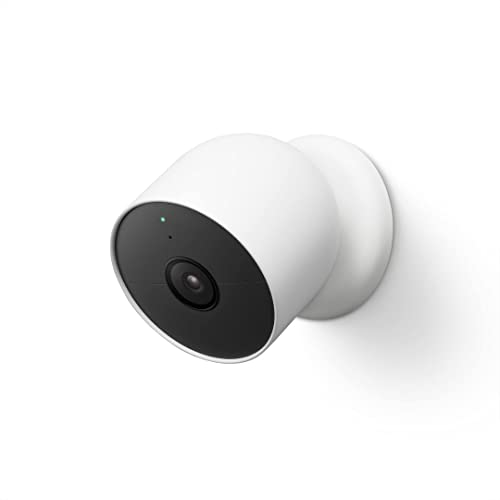 Google Nest Cam (Battery) — The Smart Alerts Pick |
| Check price on Amazon |
Our Top Picks
- Google Nest Cam Outdoor or Indoor1 Count (Pack of 1)3.27 x 3.27 x 3.27 inches0.9 poundsCheck on Amazon
The best outdoor camera battery powered buyers can choose is the one that still has charge left in the month they actually need the footage. Wire-free cameras removed the hardest part of outdoor security — running cable to eaves, fences and detached garages — but they replaced it with a new discipline: battery management. Every model in this guide trades the same currencies differently. Some stretch a set of replaceable cells across seasons of quiet coverage. Some burn through a rechargeable pack quickly in exchange for sharper video, color night vision and constant smart detection. Two of them sidestep the problem with solar panels that top the battery up daily.
This guide is deliberately focused. Every pick is a battery powered outdoor camera, not a wired model with a battery backup and not an indoor camera in a weather shell. The existing general outdoor camera coverage on this site spans wired and PoE systems as well; here the question is narrower — which wire-free camera belongs on a wall where no cable will ever reach.
As an Amazon Associate we earn from qualifying purchases.
The Picks at a Glance
| Model | Video | Power approach | Storage approach |
|---|---|---|---|
| Blink Outdoor 4 (3 Camera System) | 1080p HD | AA lithium cells, up to two years per maker | Sync Module local storage or Blink plan |
| Reolink Argus 4 Pro (Black, with Solar Panel) | 4K, dual lens | Rechargeable battery plus included 6W solar panel | Local microSD or Reolink Home Hub, no subscription required |
| eufy SoloCam S340 with HomeBase 3 | 3K, dual camera, pan and tilt | Battery plus solar panel | HomeBase 3 local storage, no monthly fee |
| Arlo Essential 2K Outdoor Camera (2nd Gen) | 2K | Integrated rechargeable battery | Arlo Secure cloud plan focus |
| Google Nest Cam (Battery), 1 Pack | 1080p HDR | Rechargeable battery, optional wired power | Google Home app, event history with Nest Aware |
Blink Outdoor 4 — The Battery Life Pick
- Link: https://www.amazon.com/dp/B0B1N5FK48
Blink built its reputation on a single idea: a camera you install and then ignore for a very long time. The Outdoor 4 runs on AA lithium batteries, and Blink rates battery life at up to two years under its default settings assumptions. Real life varies with motion traffic, live view use and temperature, but even a fraction of that figure means this is the camera for high mounts, rental properties and second homes where climbing a ladder to recharge is a genuine chore. When the cells finally fade, replacements are ordinary AA lithium batteries rather than a proprietary pack.
Video is 1080p HD with infrared night vision, and the field of view is a wide 143 degrees, so one camera covers a driveway or a side yard without panning hardware. Two-way talk is built in, motion detection is adjustable, and the system works through a Sync Module, which also opens the door to local storage on compatible modules instead of relying entirely on a Blink subscription plan. Person detection and extended cloud history sit behind that plan, which is the main ongoing-cost consideration.
The trade-offs are resolution and immediacy. At 1080p, faces and plates at distance are less detailed than the 2K and 4K cameras below, and Blink’s motion-triggered clip model is designed for events rather than continuous recording. For a quiet property where the goal is knowing that something happened, with a camera that asks almost nothing of you, that trade is usually the right one.
Reolink Argus 4 Pro — The Wide View, No-Fee Pick
The Argus 4 Pro attacks coverage from the opposite direction: two lenses stitched into a single 180-degree panoramic image at 4K resolution, so one camera watches an entire front yard or a wide terrace without a blind spot at the edges. Its ColorX night vision is designed to keep nighttime footage in color using a large aperture lens rather than relying only on infrared, which helps when the detail you need is the color of a jacket or a car.
Power is a rechargeable battery paired with the included 6W Reolink solar panel, so a sensibly sited panel keeps the camera topped up through normal use and recharging trips become rare. The camera connects over dual-band Wi-Fi, offers smart detection for people, vehicles and animals, and records locally to a microSD card or to a Reolink Home Hub, with no subscription required for those core functions. That fee-free local model is the heart of its appeal: the camera keeps working, and keeps its footage on your property, without a monthly payment.
The cautions are placement and appetite. A 180-degree stitched view needs a mounting spot that can actually see the whole area, and a busy street scene will wake the camera often, which is where the solar panel earns its place. Owners in deeply shaded spots should expect to charge the battery manually now and then. For a wide, sunlit aspect, though, this is the most self-sufficient camera in the guide.
- Link: https://www.amazon.com/dp/B0D8HY411D
eufy SoloCam S340 with HomeBase 3 — The Pan and Tilt Pick
- Link: https://www.amazon.com/dp/B0CJX8VLCY
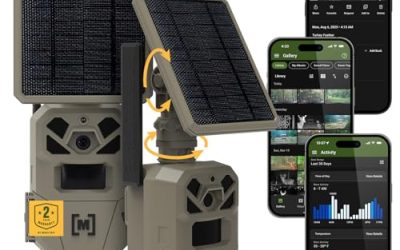
A fixed camera sees what it was pointed at on installation day. The SoloCam S340 instead pans and tilts through a full 360-degree surveillance range, following detected motion across a yard rather than letting it walk out of frame. It pairs two cameras in one body — a wide view and a telephoto view — at 3K resolution, so the camera can watch a whole area and zoom toward the detail that triggered it. The listing for this kit pairs the camera with the HomeBase 3 hub, which provides local storage and the processing for eufy’s on-device detection, with no monthly fee for that local model.
Power comes from a built-in battery supported by a solar panel, following the same logic as the Reolink: daylight does the routine charging so the owner does not have to. The camera connects over 2.4 GHz Wi-Fi, which generally reaches farther through walls than a 5 GHz link, a practical detail for cameras mounted on outbuildings. Two-way talk, night vision and app control through eufy’s ecosystem round out the package.
Moving parts are the consideration. A pan and tilt mechanism has more to wear and more to drain than a fixed lens, and tracking works best where the camera has a clear, unobstructed sweep. Mounted under an eave with a clean view of a driveway or garden, it replaces what would otherwise take two fixed cameras to cover.
Arlo Essential 2K Outdoor Camera (2nd Gen) — The Spotlight Pick
- Link: https://www.amazon.com/dp/B0C67X3J5F
Arlo’s Essential line is the straightforward single-camera route into a mature app ecosystem. This second-generation model records in 2K, carries an integrated spotlight that enables color night vision when motion is detected, and includes two-way audio and a siren function within the Arlo app experience. The battery is integrated and rechargeable with the included charging cable; Arlo notes the battery cannot be removed, so charging means either bringing the camera in or using an outdoor charging cable or compatible solar accessory.
The listing highlights person recognition and package detection, features that live within the Arlo Secure plan, and a trial of that plan is included. That subscription lean is the key buying consideration: the hardware is capable on its own for live view and motion alerts, but the smartest identification features and cloud history are plan features, so the long-term cost of ownership includes the plan if you want them. Buyers comfortable with that model get polished notifications and a camera that also works indoors, which makes it easy to redeploy.
Weather resistance and the integrated design suit renters and first-time buyers who want one camera over a door or gate without a hub to set up. Add cameras later and they join the same app, which keeps the Essential a sensible starting point for a growing system.
Google Nest Cam (Battery) — The Smart Alerts Pick
- Link: https://www.amazon.com/dp/B09FCMSJZG
Google’s Nest Cam takes a software-first approach. It records 1080p video with HDR, sees a 130-degree field of view, and uses on-device intelligence to distinguish people, animals and vehicles, sending alerts for what matters through the Google Home app without requiring a subscription for those basic intelligent alerts. Longer event video history and continuous recording options belong to the Nest Aware plans, which is where the camera’s offering expands for households already in Google’s ecosystem.
The design is the most domestic in this guide: a clean white body on a magnetic mount that makes aiming and removing the camera for charging genuinely simple, with a wall plate included for a more fixed install. The battery is a rechargeable 6 amp-hour pack, and the camera can also run wired with an optional cable for those who later decide a particular spot deserves permanent power. Night vision is infrared, with a listed range suited to porches, paths and small yards rather than long driveways.
Choose this camera when the household already runs on Google Home and values calm, well-sorted notifications over maximum resolution. Skip it if local storage matters to you, because the Nest model is cloud-centered by design, and check your Wi-Fi strength at the mounting point, as with every camera here.
How to Choose a Battery Powered Outdoor Camera
Battery Strategy Comes First
Decide how you want to feed the camera before comparing video specs. Replaceable cells, as in the Blink, suit cameras mounted high or far from the house, because a swap takes minutes and the interval between visits is measured in seasons. Rechargeable packs suit cameras within easy reach. Solar-supported cameras suit sunny walls and fences and can stretch recharge intervals dramatically, but only where the panel genuinely sees direct sun for part of the day; a north-facing, tree-shaded mount quietly turns a solar camera into a manual-charging camera.
Resolution Versus Runtime
Sharper sensors, color night vision, spotlights and pan motors all spend battery. A 4K camera on a busy street may record hundreds of events a day and need its solar panel or a recharge far sooner than a 1080p camera watching a quiet side gate. Match the camera’s appetite to the location’s traffic: put the high-resolution models where identification actually matters, typically the driveway and front door, and let simpler cameras watch low-traffic boundaries.
Storage and Subscriptions
Three models dominate. Cloud plans offer convenience and off-site footage at a recurring cost, and several smart features live behind them. Local storage on a hub or memory card avoids the fee and keeps footage at home, at the cost of managing the hardware. The Blink system straddles both through its Sync Module options. Before buying, add up the plan cost for the number of cameras you realistically plan to own, because per-camera or per-home pricing changes the comparison between brands more than any hardware difference.
Night Vision Style
Infrared night vision is monochrome, efficient and proven. Color night vision, whether from a large-aperture lens like the Reolink’s ColorX approach or from a spotlight like the Arlo’s, preserves clothing and vehicle colors that often matter most in an incident description. Spotlights also act as a visible deterrent but spend more battery per event. For a porch with a light already nearby, infrared may be all you need; for an unlit driveway, color night vision earns its power budget.
Wi-Fi Reality Check
No battery camera outperforms the Wi-Fi at its mounting point. Check signal strength with a phone where you intend to mount before ordering, favor 2.4 GHz range for distant outbuildings where the camera supports it, and remember that every wall between router and camera costs signal. A camera that drops offline saves its battery beautifully and records nothing, which is the worst trade in this category.
Placement and Power Habits
Mount battery cameras around eight to ten feet up, angled down across the area people must cross rather than along it, so motion crosses the sensor’s field instead of walking straight at it. Keep the busiest possible scene out of frame where you can — a camera triggered by every passing car on a main road will drain any battery and bury real events in noise. Use activity zones and sensitivity settings in the first week, while you are still paying attention, rather than accepting defaults.
For solar models, mount the panel where it receives the longest direct sun, even if that is a few feet from the camera on its cable, and wipe the panel when you are up the ladder for any other reason. For rechargeable models, pick a charging rhythm tied to something you already do — checking the app battery percentage monthly is enough for most quiet locations. And for every model, update firmware through the maker’s app when prompted, since battery optimization and detection improvements commonly arrive that way.
Frequently Asked Questions
How long do battery powered outdoor cameras really last?
It depends on event traffic, live view use, temperature and settings. Makers’ headline figures assume moderate motion and default settings. A quiet side gate can approach long intervals; a camera over a busy driveway will need attention far sooner. Solar-supported models in good sun can run indefinitely in practice, barring long overcast stretches.
Can a battery camera record continuously?
Continuous recording is generally a wired-camera feature. Battery models record motion-triggered clips to protect their charge, and some offer short pre-event capture or longer clip lengths within that model. If a location truly needs uninterrupted recording, that location needs wired power, whatever camera sits on it.
Do these cameras work without a subscription?
Each camera here provides live view and motion alerts without one, but the details differ. Local-storage models from Reolink and eufy keep event recording fee-free at home. Arlo and Google reserve extended cloud history and some identification features for their plans, and Blink offers local storage through its Sync Module alongside its plan. Read the current plan terms for the exact features you care about before buying.
Will cold weather kill the battery?
Lithium batteries lose capacity in deep cold and rechargeable cameras may pause charging at very low temperatures to protect the pack. In harsh winters, expect shorter intervals, mount cameras where a midday recharge is physically easy, and prefer models whose makers publish an operating temperature range that covers your climate.
The Bottom Line
Pick the Blink Outdoor 4 when the overriding goal is to install cameras and forget them. Pick the Reolink Argus 4 Pro for a wide view with color night vision and no subscription, provided its panel gets sun. Pick the eufy SoloCam S340 kit when one camera must cover an area that would otherwise need two, with local storage in the HomeBase 3. Pick the Arlo Essential 2K for a spotlight camera inside a polished app, accepting its plan for the smartest features. Pick the Google Nest Cam when a Google Home household wants the calmest alerts. In every case, the battery strategy that fits your property matters more than any single specification — the best outdoor camera battery powered for you is the one that is still awake on the night it matters.
FAQ
How long do battery powered outdoor cameras really last?
Can a battery camera record continuously?
Do these cameras work without a subscription?
Will cold weather kill the battery?
More from Amazon
Programs that pair well with the guide above. Offers and eligibility are set by Amazon and may change.
Free shipping on eligible items, Prime Video and more. Eligible new members can start with a free trial.
Start a Prime free trialAudiobooks and podcasts to listen to on the go. Eligible new members can start with a free trial.
Try Audible freeAd-free music streaming. Eligible new subscribers can start with a free trial.
Try Music Unlimited freeA free business account with business pricing and bulk-buying tools for work, shop or home office.
Create a business accountAs an Amazon Associate we earn from qualifying purchases.