
Key takeaways
- Over a kitchen island or counter: many guides suggest hanging the bottom of the shade roughly 30 to 36 inches above the work surface, adjusting for the height of people who use the space.
- Over a dining table: a similar range, often around 30 to 34 inches above the tabletop, so diners can see across the table.
- Spacing multiple pendants: leave enough room that shades do not crowd each other. A common suggestion is to keep the group shorter than the surface below it.
- Diameter over a table: a pendant roughly a third to a half of the table width is a widely used proportion.
- Entry or hallway: keep at least seven feet of clearance below the lowest point so people can walk under without ducking.
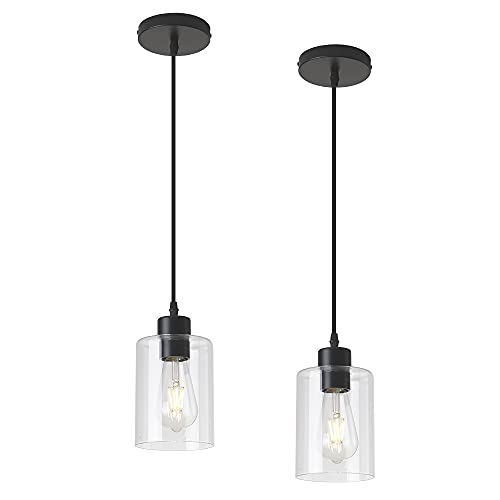
A single large drum or dome pendant suits a dining table or entry where you want one focal fixture, a row of two or three smaller globe or cone pendants suits a kitchen island, and a plug-in or swag-chain style suits renters who cannot wire a ceiling box. Size, hanging height, bulb compatibility and your ceiling height decide the result more than the finish.
Our top picks


As an Amazon Associate we earn from qualifying purchases at no extra cost to you.
Pendant Lights at a Glance
| Style | Best for | Key considerations | Limits |
|---|---|---|---|
| Dome or bowl pendant | Kitchen islands, task lighting | Directs light downward; metal shades are common | Less ambient spread |
| Globe or glass pendant | Dining rooms, entries, modern spaces | Soft spread; sizes from small to oversized | Glass can show dust and is fragile |
| Drum shade pendant | Bedrooms, living rooms, dining tables | Fabric diffuses glare | Bulky; fabric collects dust |
| Cone or mini pendant | Low-profile islands, bars | Slim silhouette; sold singly or in sets | Narrow beam |
| Linear or multi-light pendant | Long tables and islands | One canopy, several lamps; check length | Heavier, needs strong support |
| Plug-in pendant | Renters, quick updates | Cord and plug with hook | Visible cord; outlet position limits placement |
| Rattan or woven pendant | Warm, textured rooms | Diffuses light with a patterned glow | Check bulb heat limits |
Sizing and Hanging Height
Designers and lighting retailers commonly offer rules of thumb, which are guides rather than requirements.
- Over a kitchen island or counter: many guides suggest hanging the bottom of the shade roughly 30 to 36 inches above the work surface, adjusting for the height of people who use the space.
- Over a dining table: a similar range, often around 30 to 34 inches above the tabletop, so diners can see across the table.
- Spacing multiple pendants: leave enough room that shades do not crowd each other. A common suggestion is to keep the group shorter than the surface below it.
- Diameter over a table: a pendant roughly a third to a half of the table width is a widely used proportion.
- Entry or hallway: keep at least seven feet of clearance below the lowest point so people can walk under without ducking.
Ceiling height matters. Eight-foot ceilings suit shorter drop lengths or semi-flush styles, while nine- or ten-foot ceilings allow longer cords or chains. Most makers include a chain or cord and sell extension kits, so check the maximum drop listed.
Bulbs, Brightness and Colour
Makers state the socket type and maximum wattage for each fixture. Use only the bulb type and wattage listed, since overheating can damage shades and wiring. LED bulbs run cooler and use less power, which helps with fabric or woven shades. Brightness is measured in lumens, and colour temperature in kelvins: roughly 2700K is warm white for living and dining spaces, 3000K slightly crisper, and 4000K neutral for task areas. Check whether the fixture is dimmable and whether your bulb and dimmer are compatible.
A fixture that uses integrated LEDs has no replaceable bulb, so its lifespan is tied to the LED module. Makers state the rated hours, but treat that as a general estimate rather than a guarantee.
Wiring, Safety and Installation
- Hardwired pendants connect to a ceiling junction box and should be installed by a licensed electrician if you are not experienced with household wiring.
- Turn off the circuit at the breaker before any work, and follow the instruction manual.
- Check that the ceiling box is rated to support the fixture weight. Heavy glass or multi-light pendants may need a reinforced box.
- Look for a recognised safety listing such as UL, ETL or the local equivalent where the maker states it. For bathrooms and covered porches, look for the correct damp or wet rating.
- Plug-in pendants avoid wiring but must be used with cord management following the maker’s instructions, and cords should not be run under rugs or in walkways.
Choosing by Budget Tier
Budget
Budget pendants, from brands such as Globe Electric and many home-improvement store lines, are usually metal or plastic shades with basic finishes. They are suited to rentals, children’s rooms and quick refreshes. Expect basic hardware and possibly thinner shades.
Mid-range
Mid-range lines from companies like Progress Lighting, Kichler, Hinkley and West Elm typically offer better finishes, heavier glass or metal, and a wider range of sizes, with matching sets for islands. Reviewers often describe this as the best balance of look and durability for a main living area.
Premium
Premium and designer options from houses such as Visual Comfort, Tech Lighting and Hubbardton Forge use hand-finished materials, adjustable cords and made-to-order sizing. They are worth considering for statement installations or when you want a particular finish and long-term parts availability.
Style and Room Notes
- Kitchen islands: matching pendants in sets of two or three, with downward light for prep work. Pair with dimmers for evening use.
- Dining rooms: a larger single fixture or a linear pendant centred on the table. Diffused shades reduce glare.
- Bedrooms: smaller pendants beside the bed free up nightstand space. Use dimmable bulbs for a softer mood.
- Entries and hallways: choose a modest drop so the fixture stays out of the way.
- Bathrooms: only fixtures rated for damp or wet locations, and keep them away from direct water.
Finish choices such as matte black, brushed brass, nickel and white can match cabinet hardware and faucets. Mixed metals work if one finish dominates.
Pick X If You Want…
| Pick this | If you want… | Watch out for |
|---|---|---|
| Dome or bowl pendants in a set | Focused task light over a kitchen island | Spacing and drop length |
| Globe or glass pendant | Soft ambient light, modern style | Glass weight and cleaning |
| Drum shade pendant | Diffused, glare-free room light | Bulk and dust on fabric |
| Linear multi-light pendant | One fixture over a long table | Ceiling box support and size |
| Plug-in pendant | Renter-friendly installation | Visible cord and outlet location |
| Woven rattan pendant | Natural texture and warm glow | Bulb heat limits and humidity |
Alternatives Worth Considering
- Semi-flush or flush-mount fixtures: better for low ceilings where a hanging fixture would sit too low.
- Track lighting with pendants: offers adjustable positions without cutting new ceiling openings.
- Chandeliers: suited to formal dining rooms and high ceilings, with more bulbs and more installation work.
Cleaning and Care
Switch off and let bulbs cool, then dust shades with a soft cloth or a feather duster. Wipe glass with a damp cloth and dry it. Fabric shades can be cleaned with a lint roller or gentle vacuum brush attachment. Follow the maker’s care instructions for painted, brass or woven finishes, since some can mark with strong cleaners.
Frequently Asked Questions
How high should a pendant light hang over a kitchen island?
Many design guides suggest around 30 to 36 inches from the countertop to the bottom of the shade. Adjust for the height of the people using the island and for sightlines across the room. Mock up the height with a string before cutting the cord or chain.
How many pendants do I need over an island?
Two or three is the typical choice for common island lengths, spaced evenly. Longer islands can take more, or a single linear fixture. The grouping should look balanced rather than stretch the full length of the counter.
Can I install a pendant light myself?
Plug-in models need no wiring. Hardwired pendants involve household circuits, so a licensed electrician is the safest choice, especially if the ceiling box needs replacing or the wiring is older. Follow local electrical codes and the maker’s instructions.
What bulb should I use in a pendant light?
Use the socket type and maximum wattage listed by the maker. LED bulbs generate less heat and suit enclosed or fabric shades. For dimming, choose bulbs labelled dimmable and compatible with your dimmer.
Are pendant lights suitable for low ceilings?
They can be, but choose a shorter drop or a semi-flush style so the lowest point stays above head height. Keep at least seven feet of clearance in walking areas. Over a table or island, you can hang slightly lower since nobody walks beneath.
Can I use a pendant light in a bathroom?
Only if the maker rates the fixture for damp or wet locations, and only in positions allowed by local electrical codes. Keep fixtures away from direct water spray and consult an electrician for installation.
FAQ
How high should a pendant light hang over a kitchen island?
How many pendants do I need over an island?
Can I install a pendant light myself?
What bulb should I use in a pendant light?
Are pendant lights suitable for low ceilings?
Can I use a pendant light in a bathroom?
More from Amazon
Programs that pair well with the guide above. Offers and eligibility are set by Amazon and may change.
Free shipping on eligible items, Prime Video and more. Eligible new members can start with a free trial.
Start a Prime free trialAudiobooks and podcasts to listen to on the go. Eligible new members can start with a free trial.
Try Audible freeAd-free music streaming. Eligible new subscribers can start with a free trial.
Try Music Unlimited freeA free business account with business pricing and bulk-buying tools for work, shop or home office.
Create a business accountAs an Amazon Associate we earn from qualifying purchases.







