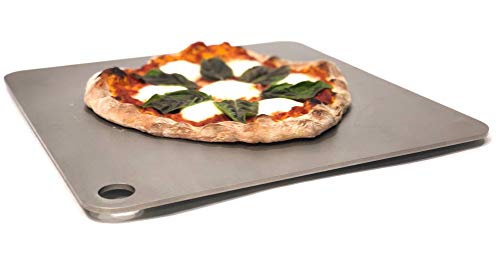
A pizza steel suits the home baker who wants a crisper, faster-baking crust from an ordinary oven, and the best choice depends mostly on oven size, how much weight you can handle, and how often you bake. Thick, heavy plates from specialist brands such as Baking Steel and Nerd Chef suit people who bake pizza weekly and want maximum heat storage. Lighter, thinner plates from brands such as Hans Grill and Dough-Joe suit smaller ovens, tighter budgets and anyone who dislikes lifting a heavy slab. This guide explains how steels work, which specs matter, and how the main current options differ.
Our top picks



As an Amazon Associate we earn from qualifying purchases at no extra cost to you.
Why a Steel Instead of a Stone?
A pizza steel is a flat plate of steel that sits on an oven rack, preheats for a long time, and then passes heat quickly into the dough. Steel conducts heat much faster than ceramic or cordierite, so the base of the pizza browns sooner and the crust can finish before the toppings dry out. Reviewers who compare the two commonly report that steel gives more leopard-spotting on the underside and a shorter bake time, while stone gives a gentler, drier bake. Steel is also far less likely to crack from thermal shock, which is the most common complaint about stones.
The trade-offs are weight and care. Steel is heavy, it can rust if left wet, and many makers sell it either pre-seasoned or bare, which changes how you care for it. A steel also takes time to preheat, and makers generally advise an extended preheat at the highest oven setting before the first pizza goes on.
At a Glance: Main Options
| Product | Best for | Key stated traits | Limits |
|---|---|---|---|
| Baking Steel (original line) | Frequent bakers wanting maximum heat storage | Thick plate; the maker offers several thicknesses and sizes, and sells pre-seasoned plates | Heavy; premium tier; needs oven rack that can bear the weight |
| Nerd Chef StoneSteel | Bakers who want a professional-style plate in a choice of sizes | Maker lists American-made carbon steel in several thicknesses and a range of dimensions | Premium tier; heavy; some models are bare steel that needs seasoning |
| Hans Grill pizza steel | Mid-range buyers wanting a rectangular plate | Maker lists a pre-seasoned plate in a standard rectangular size | Thinner options hold less heat than the thickest plates |
| Dough-Joe pizza steel | Budget-conscious bakers and smaller ovens | Maker markets a lighter plate with a seasoned finish | Less thermal mass than thick competitors |
| Cast iron pizza pan or griddle (alternative) | Those who own a pan already | Heavy cast iron holds heat well | Smaller, often with lips that block peel access |
Specific thicknesses, dimensions and weights change between product runs, so read the maker’s own listing for the exact figures before buying. The descriptions above are deliberately general.
What to Look for in a Pizza Steel
Thickness and heat storage
Thickness is the main driver of performance. Plates are commonly sold in thicknesses ranging from roughly a quarter inch up to around three-eighths of an inch, and thicker plates store more heat, which keeps the surface hot from one pizza to the next. A thinner plate preheats faster and weighs less but can lose heat sooner when you bake several pizzas in a row. If you bake a single pizza now and then, a thinner plate is usually enough. If you host pizza nights, a thicker plate is the safer choice.
Size and oven fit
Measure the inside of your oven, not just the rack. The plate needs clearance on all sides so air can circulate, and it must fit through the door at an angle. Many home ovens are around 24 to 27 inches wide inside, but depths vary, and small ovens, toaster-oven-style ovens and wall ovens often cannot take a full-size rectangular plate. Round steels suit people who bake ten to twelve inch pizzas, while large rectangles allow bigger pies or two small ones.
Weight and rack strength
A large, thick steel can be a considerable load. Check the oven manual for rack weight limits and make sure the rack is fully seated on its supports. Leaving the steel on a lower rack permanently is common, but some ovens warn against heavy loads on the bottom surface or against covering the oven floor. Follow the manufacturer’s manual for your oven rather than assuming a heavy plate is safe.
Pre-seasoned versus bare
Some makers sell steel pre-seasoned with oil; others ship bare metal with a protective coating that must be washed off. Pre-seasoned plates are ready sooner, but seasoning on any steel will darken and change with use. That darkening is normal and not a defect. Bare plates need a seasoning routine before first use, and the maker’s instructions should be followed closely.
Flatness and surface finish
Buyers sometimes report warping or uneven surfaces on thin or poorly finished plates. A slight bow can make launching a pizza awkward. Thicker plates tend to stay flat, and reputable makers describe how they finish the surface. Look for return policies in case a plate arrives bent.
Budget Tiers and Trade-offs
Budget tier
Lighter plates such as those sold under the Dough-Joe name aim at buyers who want the steel effect without a large spend. The trade-off is lower thermal mass, so recovery between pizzas is slower, and finish quality can vary. For a household baking one or two pizzas per week this is often adequate.
Mid-range
Hans Grill and similar brands sit in the middle: thicker than the cheapest plates, usually pre-seasoned, and sold in familiar rectangular sizes. They are a reasonable compromise for people who want better heat storage without paying specialist-brand prices.
Premium tier
Baking Steel and Nerd Chef focus on thicker plates, wider size ranges and longer track records among pizza enthusiasts. Reviewers at major outlets often single these brands out for consistent browning. The cost is price and weight, and the thickest options are more than most casual bakers need.
Pick X If… Decision Table
| If you… | Pick | Why |
|---|---|---|
| Bake pizza most weeks and want best heat storage | A thicker Baking Steel or Nerd Chef plate | More thermal mass and steadier results across several pizzas |
| Have a standard oven and moderate budget | Hans Grill or a similar mid-range plate | Pre-seasoned and sized for typical ovens |
| Want to try steel cheaply | Dough-Joe or a similar light plate | Lower cost and lighter to handle |
| Have a small or older oven | A smaller or thinner plate, after measuring | Fit and rack strength matter more than thickness |
| Dislike heavy lifting | A thinner plate or a stone | Weight is the main drawback of steel |
| Already own a pizza stone | Keep the stone unless you want faster, crisper bakes | Switching is a preference, not a necessity |
Using and Caring for a Pizza Steel
Place the steel on a rack positioned according to your preference. Many bakers use an upper-middle rack for a hotter top, but follow the oven manual. Preheat for the time the maker recommends, often a long preheat at the highest setting, because the plate must be thoroughly hot to work as intended. Use a peel dusted with flour or semolina, or parchment if preferred, to launch the pizza. Handle the hot plate only with proper oven mitts, and never leave it where children can reach it while hot.
After baking, let the steel cool fully inside the oven or on a safe surface. Scrape off residue with a spatula and wipe it with a dry or barely damp cloth. Avoid soaking it or putting it in a dishwasher, because water leads to rust. If rust appears, makers typically suggest scrubbing it off and re-seasoning with a thin layer of high-smoke-point oil. Do not use a self-cleaning oven cycle with the plate inside unless the maker says it is safe, because extreme heat can damage the surface and the plate.
Seasoning smoke is normal on first uses, so ventilate the kitchen. Do not clean with harsh abrasives that scratch a seasoned surface, and do not pour cold water onto a hot plate.
Alternatives to Consider
Pizza stone
A cordierite or ceramic stone is lighter, usually cheaper, and gives a drier, gentler bake. It suits bakers who want a simple upgrade over a sheet pan and are willing to accept slower browning and some risk of cracking.
Cast iron pan or griddle
Cast iron holds heat well and many households already own some. A flipped cast iron griddle can work as a baking surface, though its size is limited and raised edges can interfere with the peel.
Outdoor pizza oven
If your goal is a very hot bake in a few minutes, a dedicated outdoor pizza oven reaches temperatures a home oven cannot. These ovens carry their own fuel, ventilation and placement requirements and should be used strictly according to their manuals. They are a separate purchase category from a steel.
Frequently Asked Questions
Is a pizza steel better than a pizza stone?
Steel conducts heat faster, so reviewers commonly report quicker bakes and crisper bases. Stone is lighter and gentler, and it can suit thick or bread-style crusts. The better option depends on the style of pizza you make.
How long should I preheat a pizza steel?
Makers generally advise a long preheat at the oven’s highest setting, often at least 45 minutes to an hour. Check the instructions that come with your plate, since thickness affects how long it needs to reach full temperature.
Which rack should the steel go on?
Many bakers use an upper-middle position so the top of the pizza browns well, while some prefer a lower rack for more bottom heat. Your oven manual and your own results are the best guide, and you may need to adjust after the first bake.
Can I leave the steel in the oven all the time?
Many people do, because it avoids lifting it. Check that the rack is secure and that the oven manual allows the extra weight. Remove it before running a self-cleaning cycle unless the maker states otherwise.
How do I stop a pizza steel from rusting?
Keep it dry, never soak it, and wipe it clean after it cools. If rust forms, scrub it away and re-season with a thin coat of oil following the maker’s instructions.
Is a thicker steel always better?
Not always. Thicker plates store more heat but are heavy, slow to preheat and may not fit smaller ovens. For occasional baking, a thinner plate is often a more practical choice.