Key takeaways
- 3-channel: Up and down, rotation and forward/back. Common on toy and entry models.
- 4-channel: Adds sideways movement (roll), more realistic and harder to master.
- 6-channel and above: Collective pitch, found on hobby-grade helicopters.
- Gyro and stabilisation: A gyro helps hold heading. Systems such as Blade’s SAFE and AS3X, as described by the maker, assist beginners by limiting angles and smoothing wind effects. Reviewers generally treat these systems as the largest factor in whether a beginner keeps a helicopter in one piece.
The best RC helicopter for a beginner is a small, stabilised ready-to-fly model with a gyro and a rugged body, such as the Syma S107 style or the Blade Nano S3 for those who want a more capable micro, while experienced pilots should look at larger collective-pitch models like the Blade 230 S Smart or Align T-Rex series. The right choice depends on your skill, your flying space and your budget, and a model that is too advanced will usually end in crashes. This guide compares the main categories and explains the specifications and safety notes that matter.
Our top picks

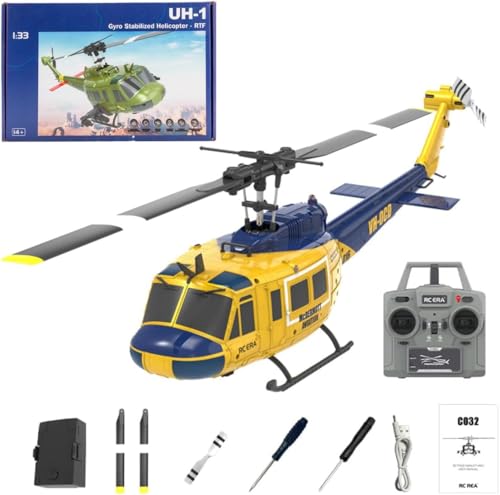

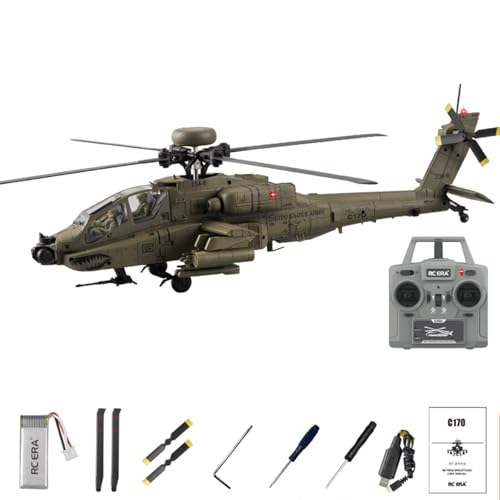
As an Amazon Associate we earn from qualifying purchases at no extra cost to you.
RC Helicopters at a Glance
| Model / line | Best for | Key stated features | Limits |
|---|---|---|---|
| Syma S107 / S107G style micro | First-time pilots, indoor flying | Coaxial rotors, 3-channel infrared or radio control, built-in battery, gyro on many versions | Light, struggles outdoors in wind; limited upgrade path |
| Blade Nano S3 | Beginners who want a progression | Maker lists AS3X stabilisation, SAFE technology, flybarless design, bind-and-fly format | Small size; best indoors or on calm days |
| Blade mCP X BL2 | Intermediate indoor aerobatics | Micro collective-pitch design, brushless motors, optional stabilisation | Requires a compatible transmitter and some setup experience |
| Blade 230 S Smart | Intermediate to advanced outdoor flyers | Maker lists SAFE and AS3X technology, collective pitch, larger rotor head | Needs space and a charged larger battery |
| Align T-Rex 150 / 250 / 470L | Hobbyists building and tuning | Kit and RTF versions, high-performance flybarless heads | Kit builds need electronics, setup skills, spare parts |
| Cheap coaxial toy helicopters (various brands) | Kids and casual indoor fun | Simple controls, rechargeable battery | Short flight times, limited durability |
Check the maker’s current product page for exact specifications, since versions and bundles change between releases.
Coaxial vs Single-Rotor Helicopters
Coaxial helicopters have two counter-rotating rotors on one mast, which makes them naturally stable. They are the standard choice for beginners and for toy-grade models. Single-rotor helicopters resemble real ones, with a main rotor and a tail rotor. They can fly faster and perform aerobatics but require more skill, and models with fixed pitch behave differently from collective-pitch models, which can change blade pitch for inverted flight. If you are new, starting with a coaxial model is typically the quickest way to learn throttle and orientation control.
Channels, Controls and Stabilisation
- 3-channel: Up and down, rotation and forward/back. Common on toy and entry models.
- 4-channel: Adds sideways movement (roll), more realistic and harder to master.
- 6-channel and above: Collective pitch, found on hobby-grade helicopters.
- Gyro and stabilisation: A gyro helps hold heading. Systems such as Blade’s SAFE and AS3X, as described by the maker, assist beginners by limiting angles and smoothing wind effects. Reviewers generally treat these systems as the largest factor in whether a beginner keeps a helicopter in one piece.
Battery, Charging and Safety
Most RC helicopters use lithium polymer (LiPo) or lithium-ion cells. These batteries need care: use only the charger supplied or approved by the maker, never charge unattended, avoid puncturing or crushing and stop using a swollen or damaged pack. Charge on a non-flammable surface and follow the manual’s storage instructions. Rotor blades can cause injury, so keep fingers, hair and loose clothing away, and fly away from people, pets and breakable items. Check the maker’s age rating and adult supervision recommendations, especially for models above toy grade. Many micro helicopters list recommended minimum ages; follow them.
Where Will You Fly?
Indoor flying needs a clear room with no ceiling fans and space for a few metres of movement. Outdoor flying requires calm weather: small helicopters are easily pushed by wind. Larger models like the Blade 230 S Smart are designed for outdoor use but still need open space away from trees, power lines and roads. Local rules for model aircraft can apply to heavier models, so check regulations in your area before flying outdoors.
Budget, Mid-Range and Premium Tiers
| Tier | What you get | Typical pilot |
|---|---|---|
| Budget | Toy-grade coaxial, built-in battery, short flights | Kids, curious first-timers |
| Mid-range | Hobby-grade micro with stabilisation, replaceable parts, proper transmitter | Learners who want to progress |
| Premium | Collective-pitch, brushless motors, larger airframes, spare part support | Experienced hobbyists |
Spare parts availability should influence your choice. Hobby-grade lines from Blade and Align publish parts lists, while many toy models do not.
Pick X If You Want
| If you want… | Pick |
|---|---|
| A cheap first helicopter for indoors | Syma S107 style coaxial |
| A beginner model with stabilisation and growth | Blade Nano S3 |
| Indoor 3D practice | Blade mCP X BL2 |
| A bigger outdoor model with assisted flight | Blade 230 S Smart |
| A hobby project you can tune | Align T-Rex kit |
| A gift for a young child | Simple coaxial with maker’s age guidance and adult supervision |
Common Beginner Tips
- Practise hovering low and short, then extend time and height.
- Learn nose-in flight in small steps; reversed controls confuse most beginners.
- Buy a few spare blades and a spare battery before the first flight.
- Use a flight simulator if the transmitter supports it; many hobby transmitters can connect to computer simulators.
- Check the rotor head and screws after any crash.
Alternatives
Quadcopter drones are easier to fly for many beginners thanks to GPS or optical stabilisation, and they carry cameras. Fixed-wing foam planes are another gentle option if you have open space. For collectors or kids who just want something to hold, a scale static model avoids battery and rotor risks altogether.
Learning to Fly: A Simple Progression
Most hobbyists advise a staged approach. Begin with a stabilised coaxial or micro model and learn to hover steadily at knee height. Next practise slow turns, then forward and backward movement, always keeping the helicopter in front of you. Nose-in hovering, where the helicopter faces you and controls reverse, is the hardest early skill, so practise it at low altitude. Only once these are comfortable should you move to a collective-pitch model with limited stabilisation. A flight simulator on a computer is a low-cost way to build muscle memory without breaking parts.
Spare Parts and Repairs
Crashes are part of learning. Hobby lines like Blade and Align publish parts lists and sell blades, gears, canopies and motors individually, so a crash often means a small repair rather than a new helicopter. Toy-grade models rarely have parts available, and a broken gear usually ends the product’s life. Keep spare main blades, tail blades and a battery on hand, and learn how to adjust trim on the transmitter if the helicopter drifts. Replace bent or cracked blades immediately since they create vibration and unpredictable flight.
Common Buying Mistakes
- Buying a large collective-pitch model first and damaging it in the first minute.
- Ignoring battery care instructions and charging without supervision.
- Flying small models outdoors in wind.
- Forgetting that some bundles lack a transmitter or charger.
- Skipping the manual’s pre-flight checks for loose screws and damaged blades.
Quick Pre-Purchase Checklist
- Confirm whether the helicopter is ready to fly, bind-and-fly or a kit; each needs different extras.
- Check that the transmitter, charger and battery are included, and note the stated flight time per charge.
- Look at the age guidance on the maker’s page and plan adult supervision where it is advised.
- Decide where you will fly: a clear indoor room, a garage or a calm outdoor field.
- Look for spare parts listings from the maker so a crash is not the end of the model.
- Read the battery safety section of the manual before the first charge.
Spending a little time on this list prevents the most common disappointments: a model that arrives without a controller, a helicopter too big for the room or a battery that cannot be replaced. Hobby shops and flying clubs are also useful, since experienced pilots often help new flyers trim a helicopter and practise safely.
Frequently Asked Questions
What is the easiest RC helicopter to fly?
Coaxial models with a gyro and stabilisation are generally the easiest. The Blade Nano S3, which the maker describes as having SAFE and AS3X technology, is often discussed by reviewers as a beginner-friendly step into hobby-grade flying.
How long do RC helicopter batteries last?
Flight time varies by model, from a few minutes on toy helicopters to longer on larger hobby-grade packs. The maker’s specification lists the expected time, and real results depend on weight, wind and flying style.
Can RC helicopters be flown outdoors?
Larger, stabilised models can, in calm weather. Light micro and toy helicopters are better kept indoors because even light wind can push them off course.
Are RC helicopters safe for children?
Spinning blades and lithium batteries mean adult supervision is advised. Follow the maker’s stated minimum age and keep the flying area clear of people and pets.
What does the number of channels mean?
Each channel is a separate control: throttle, rotation, forward and back, and sideways. More channels allow more precise flight but make learning harder.
Do I need a licence to fly an RC helicopter?
Small hobby models often do not, but rules depend on country, aircraft weight and location. Check your local aviation authority and any local park rules before flying outdoors.
FAQ
Where Will You Fly?
What is the easiest RC helicopter to fly?
How long do RC helicopter batteries last?
Can RC helicopters be flown outdoors?
Are RC helicopters safe for children?
What does the number of channels mean?
Do I need a licence to fly an RC helicopter?
More from Amazon
Programs that pair well with the guide above. Offers and eligibility are set by Amazon and may change.
Free shipping on eligible items, Prime Video and more. Eligible new members can start with a free trial.
Start a Prime free trialAudiobooks and podcasts to listen to on the go. Eligible new members can start with a free trial.
Try Audible freeAd-free music streaming. Eligible new subscribers can start with a free trial.
Try Music Unlimited freeA free business account with business pricing and bulk-buying tools for work, shop or home office.
Create a business accountAs an Amazon Associate we earn from qualifying purchases.