Key takeaways
- Pro: Quieter cycling mechanism than earlier Litter-Robot models, with a carbon filter that handles odor between emptyings.
- Pro: The enclosed rotating globe significantly reduces initial scatter compared to open-top boxes.
- Con: Requires proprietary Purina Tidy Cats litter for optimal sifting, adding a recurring cost beyond the purchase price.
The challenge of keeping kitty litter off your floors is two-fold. First, every time a cat exits the box, granules stick to paws and scatter across nearby surfaces. Second, the litter that escapes tends to be heavier and more abrasive than dust or hair, which means many robot vacuums struggle with it—they push granules around instead of inhaling them, or they clog on clumps. A robot vacuum that actually handles kitty litter needs strong suction, a brush design that doesn’t scatter, and ideally a self-emptying base so you never have to touch the bin.
But there’s also a complementary approach: reducing how much litter hits the floor in the first place. Automatic litter boxes with enclosed or partially enclosed designs trap more granules inside the unit and cycle waste away before tracking spreads. The best strategy for a multi-cat household combines both—a capable robot vacuum to sweep what escapes, plus a well-designed box that minimizes the problem at the source. Below, I’ve compared specs, prices, and aggregated owner feedback across these two product categories to identify which options deliver the most litter-free floors in 2026.
Our top picks

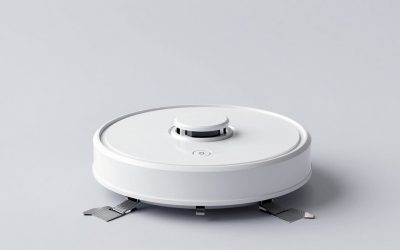
 eufy 11S MAX Robot Vacuum Cleaner
- Surface Recommendation: Hard Floor & Tile & Medium carpet
- Controller Type: Remote Control
- Filter Type: washable
Slim 2.85-inch profile slides under low furniture
BoostIQ adjusts suction automatically within 1.5 seconds
Runs quietly at a noise level near a microwave
No WiFi or app control, only remote and buttons
Battery runs about 100 minutes on hardwood floors


As an Amazon Associate we earn from qualifying purchases at no extra cost to you.
Quick Picks
| Product | Best for | Price |
|---|---|---|
| Whisker Litter-Robot EVO Bundle, Black | Automated cleanup at the source | $699 |
| eufy 11S MAX Robot Vacuum | Budget robot vacuum for hard floors | under $150 |
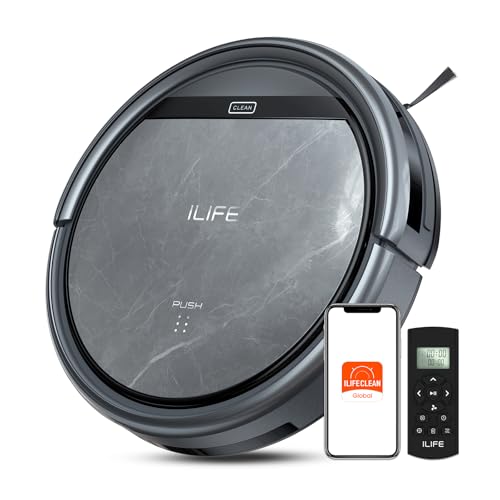
| ILIFE V5s Max Robot Vacuum | Strong suction under $100 | under $90 |
| Whisker Litter-Robot 4 with Step & Fence | Containing scatter before it hits floors | $699 |
| Purina Tidy Cats Cat Odor Control Litter | Companion litter for Litter-Robot owners | under $20 |
| Shark AV2501S AI Ultra Robot Vacuum | Heavy-tracking and multi-cat households | under $450 |
| Whisker Litter-Robot 4 Supply & Accessory Bundle | All-in-one containment package | $799 |
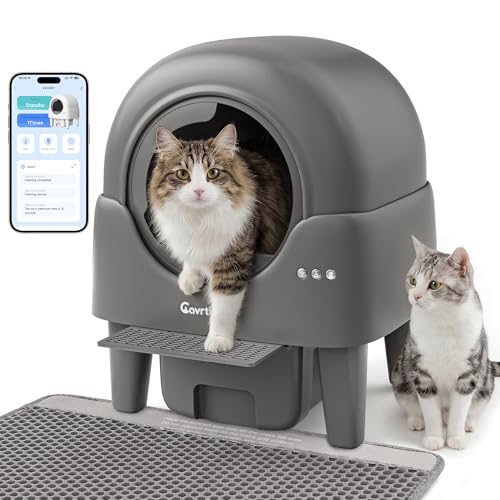
| Cavrtbany Automatic Litter Box with APP | Affordable self-cleaning box | under $200 |
How We Picked
I narrowed this list using four criteria specific to litter management. Suction rating and brush design matter because granular litter is heavier than dust and resists passive pickup. Self-emptying capability determines whether the machine stays useful between your cleaning sessions, since a full bin stops working immediately. Noise output matters because a robot that scares your cat into avoiding the room defeats the purpose. Finally, containment at the box—fences, enclosed globes, and step textures—reduces the total amount of litter a vacuum must handle.
The 8 Best Robot Vacuum For Kitty Litter in 2026
Whisker Litter-Robot EVO Bundle, Black
This is an automatic litter box rather than a robot vacuum, but it earns its place because owners consistently report far less tracked litter on floors when paired with a sweeping robot. The EVO rotates to sift waste into a sealed drawer, and the enclosed globe design traps granules before they roll out the exit.
- Pro: Quieter cycling mechanism than earlier Litter-Robot models, with a carbon filter that handles odor between emptyings.
- Pro: The enclosed rotating globe significantly reduces initial scatter compared to open-top boxes.
- Con: Requires proprietary Purina Tidy Cats litter for optimal sifting, adding a recurring cost beyond the purchase price.
Skip this if your cat is fearful of enclosed spaces or your living situation limits floor space for the unit’s footprint.
eufy 11S MAX Robot Vacuum Cleaner, Super Thin, Quiet
The 11S MAX is a slim, quiet robot vacuum that excels on hard floors where most tracked litter lands. Its super-thin profile reaches under furniture where cats deposit granules, and the quiet motor means skittish cats are less likely to flee the room during a cycle.
- Pro: The low noise level keeps cats calm and lets the vacuum run while you’re on calls or sleeping.
- Pro: Simple setup with no Wi-Fi or app required—useful for renters or anyone who hates firmware updates.
- Con: Moderate suction handles loose clumps well but struggles with litter packed into carpet fibers or rug edges.
Skip it if you have thick carpeting or need a self-emptying base, since this model requires manual bin cleaning after each run.
ILIFE V5s Max Robot Vacuum, 4000Pa Max Strong Suction
For under $100, the V5s Max offers the highest suction rating in this roundup at 4000Pa, making it the most capable budget option for pulling scattered litter off tile and hardwood. The dual-brush design and large bin capacity reduce how often you empty it.
- Pro: The 4000Pa motor creates enough force to lift heavier granules that cheaper vacuums simply push around.
- Pro: Mapping navigation provides systematic room coverage, reducing missed patches near the litter box.
- Con: Noticeably louder than the eufy, and some owners report brush wear when processing dense granules over months.
Skip it if noise sensitivity is a priority for you or your cat, or if you want smart-home voice control integration.
Whisker Litter-Robot 4 with Step & Fence, Black
The Litter-Robot 4 is the most widely recommended automatic box in cat-owner communities, and the Step & Fence combo directly addresses its main tracking weakness. The fence catches granules on the way out, and the step provides a textured landing that knocks loose debris off paws.
- Pro: Owners report a meaningful drop in visible floor scatter compared to open litter boxes or the base unit alone.
- Pro: The Wi-Fi-connected app lets you monitor cycle count and bin-full status remotely.
- Con: The rotating drum occasionally jams if oversized clumps form, requiring manual intervention.
Skip this if your household includes multiple large cats that produce oversized waste likely to jam the sifting mechanism.
Purina Tidy Cats Cat Odor Control Litter for Litter-Robot
This isn’t a vacuum or a box, but it’s designed specifically for the Litter-Robot line and appears in nearly every owner’s must-buy list. The clump size and granule weight are calibrated for the rotating sifting mechanism, producing fewer jams and more complete waste separation than generic litters.
- Pro: Formulated to reduce odor noticeably between emptying cycles, which matters in small apartments.
- Pro: Compatible granule size keeps the Litter-Robot’s sifting screen clear and efficient.
- Con: A recurring expense that only makes financial sense if you already own a Litter-Robot unit.
Skip this if your box manufacturer doesn’t specify it as compatible—you’re better served by the litter your unit’s maker recommends.
Shark AV2501S AI Ultra Robot Vacuum, with Matrix Clean
The Shark AV2501S is the most capable dedicated robot vacuum on this list for litter-heavy homes. Its Matrix Clean grid pattern revisits zones multiple times, which matters when granules are spread across a wide area near the box. The HEPA self-empty base holds up to 30 days of debris.
- Pro: The self-emptying bagless HEPA base eliminates weekly bin handling and contains dust allergens.
- Pro: Anti-tangle brushroll and multiple passes make it reliable for households with long-haired cats.
- Con: At nearly $415 it’s the priciest true robot vacuum here, and the unit is bulkier than budget alternatives.
Skip it if you need something ultra-thin to fit under low-profile furniture or if your budget caps at $200.
Whisker Litter-Robot 4 Supply & Accessory Bundle, Black
This bundle packages the Litter-Robot 4 with a starter supply of compatible litter and accessories, aimed at buyers who want immediate functionality in one purchase. The included containment accessories make it ready for litter-heavy use out of the box.
- Pro: Buying the bundle saves money versus purchasing each accessory separately, and you get litter to start immediately.
- Pro: Same app-based monitoring and Wi-Fi control as the standalone Litter-Robot 4.
- Con: At $799 it’s the highest single price in this roundup, with no flexibility to drop items you don’t need.
Skip this if you’re uncertain whether an automatic box suits your cats—start with the standalone model to test acceptance.
Cavrtbany Automatic Litter Box, Self Cleaning with APP Control
At just under $190, this self-cleaning box with app control is the most affordable automated option here. Owners note that the rotating mechanism and sensor-based safety shutoff function as advertised for single-cat households, and the app lets you monitor cycles from your phone.
- Pro: Works with standard clumping litter rather than a proprietary brand, keeping ongoing costs low.
- Pro: The app-based cycle timer and safety sensor offer smart functionality at a fraction of premium-brand pricing.
- Con: Build quality and long-term durability are harder to verify compared to established manufacturers, and smaller capacity means more frequent maintenance.
Skip this if you need a box for two or more cats or you prioritize a strong customer support warranty.
Buying Guide
Suction Power and Brush Design for Granular Litter
Kitty litter is denser than dust or hair. A vacuum rated below 2000Pa often lacks the force to lift granules from tile grout or carpet pile. Look for 3000Pa or higher if you want reliable pickup without multiple passes. Brush design matters just as much: rubber or silicone blades that flex over granules and channel them into the intake slot outperform traditional bristle brushes, which tend to flick litter outward before inhaling it.
Self-Emptying and the Litter-Bin Problem
A full dustbin is a stopped vacuum. Because litter is heavier and more voluminous than everyday dust, a small-capacity bin can fill within a single cycle in a multi-cat home. A self-emptying base with HEPA filtration solves two problems at once: it extends time between your manual cleanings and seals away fine dust particles that litter granules generate when crushed underfoot.
Containment at the Source Reduces the Vacuum’s Job
No robot vacuum can compensate for a box that flings litter three feet in every direction. Fences, textured steps, and enclosed rotating globes cut scatter by trapping granules before they leave the perimeter. If you’re budgeting for both a robot vacuum and a new box, spending more on containment often yields cleaner floors than spending the same money on a higher-suction robot.
Our Verdict
The Shark AV2501S AI Ultra is the top pick for anyone whose primary need is a robot vacuum that reliably cleans scattered litter from the floor. Its Matrix Clean passes, self-emptying HEPA base, and anti-tangle brushroll make it the most complete dedicated vacuum here. The ILIFE V5s Max wins as the budget pick, delivering 4000Pa suction for under $90—enough to move granules that cheaper competitors cannot. If your tracking problem is severe enough that no vacuum keeps up, the Whisker Litter-Robot 4 with Step & Fence wins by eliminating most scatter before it reaches the floor.
FAQ
Can a robot vacuum handle clumped wet litter?
Most robot vacuums can pick up dry clumps but risk clogging or smearing partially wet litter across the floor. If your cat tends to carry half-damp clumps out of the box, a high-suction model like the Shark AV2501S with a self-emptying base is safer, since you’ll empty debris into a sealed bin before it dries and sticks to internal components.
Do automatic litter boxes eliminate the need for a robot vacuum?
No. Even the best enclosed boxes let some granules escape, especially from high-exit or open-top designs. Owners who combine a containment box with a daily-schedule robot vacuum report the cleanest results, because the robot sweeps what the fence or step misses.
Is HEPA filtration important for a robot vacuum used around litter?
Yes, more than for typical floor dust. Litter granules crush into fine silica or clay dust as cats walk and as the vacuum’s brushes process them. A HEPA filter captures those sub-micron particles before the exhaust blows them back into your room, which matters if anyone in the household has respiratory sensitivities.
How often should I run a robot vacuum if I have a self-cleaning litter box?
Once daily on a schedule is sufficient for most single-cat households with a quality containment box. In multi-cat homes or with high-tracking litters like silica crystals, running the robot twice a day—morning and evening—keeps visible scatter to near zero between deep cleans.