Key takeaways
- Follow the manual on minimum fill levels, whether frozen food can go in (many makers advise thawing meat first) and whether the insert can be used on a stovetop or in an oven.
- Let a hot ceramic insert cool before washing, and avoid thermal shock.
- Keep the cord away from hot surfaces and place the unit on a heat-resistant surface with clear space around it.
- Do not leave cooked food on warm for long periods; refrigerate leftovers promptly according to food-safety guidance.
- If a cord, plug or element looks damaged, stop using the appliance and contact the maker or a qualified repairer.
- Dried kidney beans need proper boiling before slow cooking, according to common food-safety guidance; check a trusted recipe.
For most households a programmable 6-quart oval slow cooker with a keep-warm setting, such as the Hamilton Beach Set ‘n Forget or a comparable Crock-Pot, is the sensible default, while buyers who want to sear, steam or pressure cook in the same pot will be happier with a multi-cooker like the Ninja PossibleCooker, Instant Pot or Breville Fast Slow Pro. Small households and people who just want a simple low-and-high dial can stay with a basic manual model in the 3 to 4 quart range. The right choice depends less on brand than on capacity, controls, lid design and how much counter space you can spare.
Our top picks


As an Amazon Associate we earn from qualifying purchases at no extra cost to you.
Slow Cookers at a Glance
| Type / Example | Best for | Key stated features | Limits |
|---|---|---|---|
| Hamilton Beach Set ‘n Forget (programmable, 6 quart) | Travel, potlucks, hands-off cooking | The maker lists a temperature probe, programmable time and a lid that clamps for transport on its portable versions | Probe cooking suits some recipes only; stoneware is heavy |
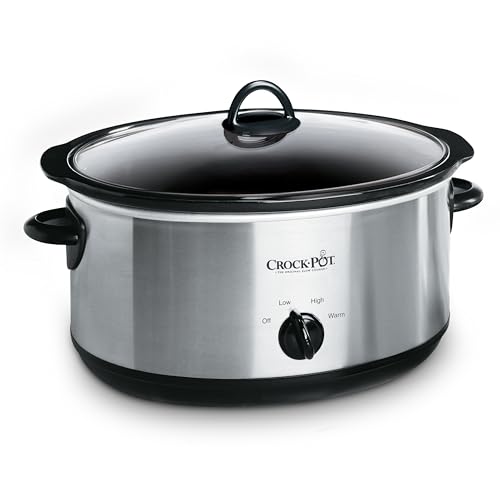
| Crock-Pot 6 to 7 quart manual or programmable | Families, simple recipes, large cuts | Removable stoneware insert, glass lid, low/high/warm settings | Cannot sear; heat varies between models |
| Ninja PossibleCooker (multi-function) | One-pot cooks who want searing and braising | The maker describes several cooking modes including sear/sauté and slow cook in a large pot | Larger footprint; more parts to clean |
| Instant Pot multi-cooker (slow cook function) | People who already want a pressure cooker | Slow cook is one of several programs | Reviewers often say the slow cook mode runs differently from a dedicated unit |
| Breville Fast Slow Pro | Buyers wanting pressure plus slow cooking with fine control | Maker lists pressure and slow cook programs with adjustable settings | Premium tier; bulky |
| Cuisinart 3-in-1 Cook Central (6 quart) | Counter-space savers who like to brown first | Maker lists slow cook, brown/sauté and steam in one vessel | Metal-style pot heats differently from stoneware |
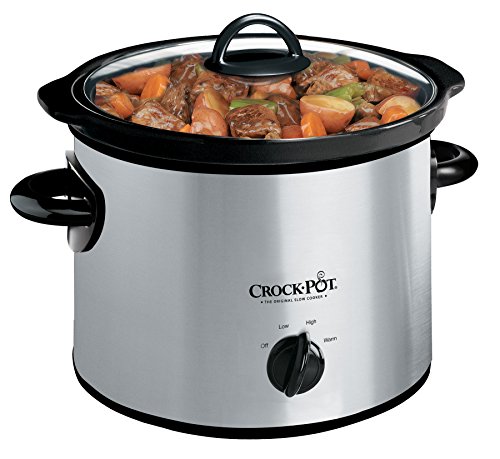
| Basic 2 to 4 quart dial model | Dips, singles, couples, small apartments | Low/high and sometimes warm; compact | Too small for roasts or batch cooking |
How to Choose a Slow Cooker
Capacity
Makers generally suggest filling a slow cooker between roughly one half and three quarters full. Under-filling can lead to scorching or fast cooking, while overfilling can slow cooking and risk spills. As a rough guide, a 3 to 4 quart cooker serves two to four people, a 6 quart model handles a family of four to six and a typical roast, and 7 to 8 quart units are for crowds or large cuts. If you meal prep or host, size up; if you cook for one or two, a large cooker may rarely reach the fill level the manual advises.
Shape: round versus oval
Oval inserts fit roasts, whole chickens, ribs and brisket pieces better. Round inserts tend to suit soups, dips and chili. If you only choose one, an oval 6 quart is the more versatile shape.
Manual, programmable or multi-cooker
Manual cookers have a low, high and warm dial. They are cheap to run, easy to clean and have few parts to fail, but they will keep cooking until you switch them off. Programmable cookers count down a set time and then switch to warm, which is useful if you are out for most of the day. Multi-cookers add searing and sometimes pressure functions. They reduce the number of pots you wash, but reviewers often note that their slow-cook performance is not identical to a traditional stoneware pot, and the extra functions mean extra price and bulk.
Insert material
Ceramic or stoneware inserts retain heat and are the classic choice; they are heavy and can crack if subjected to sudden temperature changes, so manuals typically warn against moving a hot insert to a cold surface or adding cold liquid to a hot empty insert. Metal inserts are lighter and often can be used on the stovetop if the maker states so, which removes the extra browning pan. Many inserts are dishwasher safe, but check the manual for your specific model.
Lid and transport
A glass lid lets you see progress without lifting it, which matters because each lift lets heat escape. For potlucks, look at portable versions with a gasket and latching clamps. Hamilton Beach and Crock-Pot both sell clamp-lid designs, according to their product listings. These are meant for carrying a sealed cooker upright; follow the maker’s guidance on transporting hot food and spills.
Probe, timer and warm setting
A probe, where offered, lets the cooker shift to warm once a set internal temperature is reached, which is useful for roasts. A warm setting is valuable if dinner time can slip. Food-safety agencies advise against leaving cooked food on warm indefinitely, so treat the warm mode as a short holding stage, not a storage method.
Picks by Need
Best all-rounder: a programmable 6 quart oval
A programmable oval at this size is the most common recommendation across review outlets for general use. It fits a roast or pot of chili, switches to warm automatically and costs less than a multi-cooker. The Hamilton Beach Set ‘n Forget line and the larger Crock-Pot programmable models are the usual examples. Differences between them come down to lid style, probe inclusion and how hot each runs on the low setting.
Best for portability: clamp-lid models
If the cooker leaves the house for gatherings, a locking lid and handles built for carrying are worth paying for. Look for a lid gasket and secure latch, and confirm that the insert is rated for the way you plan to carry it.
Best for fewer pots: a searing multi-cooker
The Ninja PossibleCooker and Cuisinart Cook Central target people who want to brown meat and then slow cook in the same vessel. The Breville Fast Slow Pro and Instant Pot go further and add pressure cooking. If you often cook beans, stews or tough cuts in a hurry, the added mode can replace a second appliance. If you only ever make pulled pork and chili, a plain slow cooker does the job with fewer parts.
Best budget pick: a basic manual model
Budget-tier manual cookers with a stoneware insert do the core job well. You give up the timer, the probe and the automatic warm transition, so they suit recipes where timing is forgiving and someone is home to switch them off.
Best for small spaces: 2 to 4 quart
Compact cookers suit dips, sauces, oatmeal and small-batch soup. They are quick to wash and easy to store but cannot accommodate a whole chicken or large roast.
Pick X If …
| Pick this | If you … |
|---|---|
| Programmable 6 quart oval | Want one cooker that handles most recipes and goes to warm automatically |
| Clamp-lid portable model | Regularly bring food to gatherings |
| Searing multi-cooker (Ninja, Cuisinart) | Dislike washing a skillet as well as a cooker |
| Pressure plus slow cook (Instant Pot, Breville) | Want speed on some nights and all-day cooking on others |
| Basic manual 3 to 4 quart | Cook for one or two or keep a tight budget |
| 7 to 8 quart | Batch cook, host or cook large roasts |
Safety and Care Notes
- Follow the manual on minimum fill levels, whether frozen food can go in (many makers advise thawing meat first) and whether the insert can be used on a stovetop or in an oven.
- Let a hot ceramic insert cool before washing, and avoid thermal shock.
- Keep the cord away from hot surfaces and place the unit on a heat-resistant surface with clear space around it.
- Do not leave cooked food on warm for long periods; refrigerate leftovers promptly according to food-safety guidance.
- If a cord, plug or element looks damaged, stop using the appliance and contact the maker or a qualified repairer.
- Dried kidney beans need proper boiling before slow cooking, according to common food-safety guidance; check a trusted recipe.
Budget Tiers
| Tier | What you typically get | What you give up |
|---|---|---|
| Budget | Manual dial, stoneware insert, glass lid | Timer, probe, searing, sometimes dishwasher-safe lid |
| Mid-range | Programmable timer, auto-warm, larger capacity, clamp lid or probe options | Searing and pressure modes |
| Premium | Multi-cooker functions, searing, pressure, precise controls | Space, simplicity, and sometimes true slow-cooker feel |
Alternatives to a Dedicated Slow Cooker
- Enameled cast-iron Dutch oven: Cooks low and slow in a low oven, sears on the stovetop, and works for braises. It needs oven supervision and is heavy.
- Electric pressure cooker: Cuts hours from stews and beans, though flavor development differs from long slow cooking.
- Sous vide circulator: Excellent temperature control for meat but is a different technique and needs bags and a container.
Frequently Asked Questions
What size slow cooker should I buy?
A 6 quart oval suits most households of four to six and fits a roast. Choose 3 to 4 quarts for one or two people and 7 to 8 quarts for batch cooking or hosting. Most makers suggest keeping the pot between roughly half and three quarters full.
Is a multi-cooker as good as a regular slow cooker?
For many recipes it is good enough, and it adds searing and sometimes pressure cooking. Reviewers often report that slow-cook modes on multi-cookers heat differently than a traditional stoneware pot, so timing may need adjusting. If you cook mostly traditional slow-cooker recipes, a dedicated unit is simpler.
Can I put frozen meat in a slow cooker?
Many makers and food-safety agencies advise thawing meat first because frozen food can spend too long in the temperature range where bacteria grow. Check your manual, which may give specific guidance for your model.
Can the ceramic insert go in the oven or on the stove?
Only if the maker says so. Some inserts are oven-safe without the lid, while others are not, and most ceramic inserts should not be used directly on a burner. Check your manual before moving an insert.
Is it safe to leave a slow cooker on while I am out?
Slow cookers are designed for extended unattended cooking when used as the manual describes, on a stable surface with the cord clear of heat. If you have concerns, use a model with a timer and auto-warm, and check the unit for damage before each use.
How do I stop food from drying out or turning mushy?
Match the setting to the cut: tougher cuts tolerate long cooking, while chicken breast and fish are quicker. Avoid lifting the lid often, and use a programmable timer or probe so the cooker does not run past the point the recipe needs.