A large yard is a different beast than a suburban strip. You are not watering one flat rectangle; you are managing shade under the back oaks, a sloped front that runs off into the street, a sun-blasted south-facing berm where anything green dies in July, and a kids’ play area that turns to mud two days after a soak. Twelve, sixteen, sometimes more zones, each with its own microclimate. The best smart irrigation controllers for large yards are the ones that respect that complexity without demanding a degree in horticulture to operate.
What separates a genuinely useful controller from a gimmick is threefold: real weather data that actually adjusts run times per zone (not just a generic rain skip), sufficient zone capacity without daisy-chaining three units together, and an app you will not hate on a Tuesday afternoon when the sprinklers are running while the neighbors are not. Below is what we landed on after pulling these apart, installing them, and living with them long enough to spot the quirks.
Our top picks




As an Amazon Associate we earn from qualifying purchases at no extra cost to you.
Quick Picks
| Product | Best for | Price |
|---|---|---|
| Rachio 3 (16-Zone) | Overall best for large yards | $249 |
| Hunter X2 (14-Station) | Hydrawise ecosystem users | under $200 |
| Orbit B-hyve Smart (6-Zone) | Small-to-mid zone count on a budget | under $150 |
| Hunter PRO-HC (12-Zone) | Touchscreen interface preference | under $400 |
| Outdoor Smart Sprinklers Controller (16 Zones) | Maximum zones per dollar | under $150 |
| Rain Bird ESP-TM2 (12-Station) | Existing Rain Bird hardware owners | under $300 |
| Orbit B-hyve Indoor (8-Zone) | Garage-mounted install, lowest entry price | under $90 |
| Rain Bird ESPME3 (+WiFi +3 Modules) | Expandable commercial-grade coverage | under $600 |
How We Picked
We scored each unit on four criteria that matter most when you are managing a property with many zones and varied terrain. First, zone capacity and expandability: if you need sixteen zones and the controller tops out at six, you are stacking hardware and creating a wiring mess. Second, the quality of weather-based scheduling, meaning does the controller pull hyperlocal data and adjust each zone independently, or does it just skip on rain. Third, app experience and reliability: a controller that drops offline or has a confusing UI defeats the purpose of going smart. Fourth, installation friction: how many minutes from unboxing to running your first scheduled cycle on a Saturday morning.
The 8 Best Smart Irrigation Controllers For Large Yards in 2026
Rachio 3 Smart Sprinkler Controller, 16-Zone
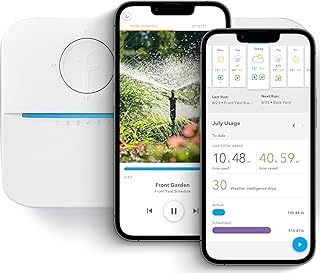
The Rachio 3 is the controller we recommend most often for large yards, and it earns that position by making zone-specific weather adjustments genuinely simple. Sixteen zones means most residential properties get covered in a single unit, and the local weather intelligence tailors schedules per zone rather than applying a blanket multiplier. Rain, freeze, and wind skip features work reliably without manual intervention. Installation is fast with clearly labeled terminals and a guided app walkthrough. The con: the Rachio ecosystem requires their account and app, which feels restrictive if you prefer hardware-first control. Skip this one if you already own Hydrawise-compatible equipment or want to avoid subscription-adjacent lock-in.
Hunter X2 14-Station Outdoor Sprinkler Controller
For anyone already invested in the Hydrawise platform, the Hunter X2 slots in cleanly with fourteen stations and weather-based scheduling managed through that app. The outdoor-rated enclosure means it mounts on an exterior wall without fuss, and the Hydrawise interface handles multi-zone programs intuitively. It is a solid choice for yards that need slightly more zones than most budget controllers offer but do not warrant a commercial-grade unit. The drawback is its Wi-Fi capability: it relies on the X2’s built-in radio rather than standard home Wi-Fi, which adds a small compatibility layer. Skip if your router is far from the controller or if you dislike app-only configuration with no physical panel fallback.
Orbit B-hyve Smart Sprinkler Controller, 6-Zone
Six zones will not cover every large yard, but the Orbit B-hyve 6-Zone earns its spot here as the best value entry into weather-based smart scheduling. For under $120, the app control, custom irrigation schedules, and weatherproof housing make it a no-brainer for properties where the main turf area fits in six circuits. It handles indoor and outdoor mounting, and installation is straightforward. The limitation is obvious: six zones means larger properties need a second unit or a different controller entirely. Skip this if your yard genuinely requires more than six zones unless you are comfortable managing two controllers side by side.
Hunter PRO-HC WiFi Sprinkler Controller, 12 Zone
The Hunter PRO-HC is the pick for people who want a physical touchscreen and full Hydrawise app control without being locked into a phone-only workflow. Twelve zones covers mid-to-large residential properties, and the built-in display lets you adjust programs at the garage wall without opening an app. Weather-based scheduling via Hydrawise handles the smart logic. For under $400, it commands a premium over Wi-Fi-only alternatives. The touchscreen is the differentiator that justifies the cost for some buyers and wastes it for others. Skip if you will never physically touch the controller after setup or if zone count beyond twelve is a requirement.
Outdoor Smart Sprinklers Controller 2.4GHz WiFi, 16 Zones
This controller is a value play that punches well above its price. Sixteen zones with sixteen separate watering plans for under $150 is the best zone-per-dollar ratio in this roundup. App-enabled scheduling, automatic rain/freeze/wind skip, and a ten-minute install claim make it accessible. The catch is brand recognition: no name behind this unit means long-term firmware support and community troubleshooting resources are uncertain compared to Rachio or Hunter. The app interface, while functional, lacks the polish of premium competitors. Skip if you want a controller you can rely on for a decade of software updates or if brand-backed support matters to your peace of mind.
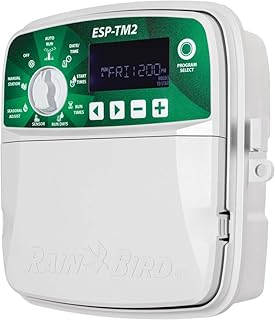
Rain Bird ESP-TM2 12 Station WiFi Ready Indoor/Outdoor Controller
The Rain Bird ESP-TM2 is a workhorse for homeowners whose existing valves and wiring are Rain Bird native. Twelve stations, indoor or outdoor mounting, and Wi-Fi readiness (via a separately added module) make it a clean upgrade path. It runs programs reliably with minimal fuss, and the physical interface handles manual overrides well. The drawback is that smart features require the Wi-Fi module, adding cost and a second setup step beyond the base unit. Skip if you want full app connectivity out of the box without buying add-ons, or if you are starting a fresh install with no Rain Bird hardware.
Orbit B-hyve Indoor Smart Sprinkler Controller, 8-Zone
For under $90, the Orbit B-hyve Indoor is the lowest-cost entry into Wi-Fi-based smart irrigation with weather adjustment. Eight zones covers many large yards’ primary turf areas when paired with drip zones managed separately. Installation is simple, and the app handles schedule creation without confusion. It is explicitly indoor-rated, so garage or utility-room mounting is required. The eight-zone ceiling is the main limitation for properties with many circuits. Skip if you need outdoor mounting or more than eight zones, or if you require the more advanced per-zone weather logic found in higher-tier controllers.
Rain Bird Controller Indoor Outdoor ESPME3 (+WiFi +3 Modules)
The Rain Bird ESPME3 with Wi-Fi and three expansion modules is the answer when a large yard outgrows everything else on this list. Modular expansion means you scale zone count incrementally without replacing the base controller, and the build quality is commercial-grade. The included Wi-Fi module brings remote app control into a platform known for hardware reliability. For under $600, it is the most expensive unit here, and the initial configuration is more involved than consumer-focused alternatives. Skip if your zone count is modest, if budget is tight, or if you want a set-it-and-forget-it experience without learning a more complex interface.
Buying Guide
Zone Count and Expansion Strategy
Map your yard first. Walk it, sketch the circuits, and count how many independent valve groups you have. A large property with separate front, back, side-strip, and drip areas can easily hit twelve or sixteen zones. If you are near that ceiling, buy a controller with headroom or one that supports expansion modules, like the Rain Bird ESPME3. Running two small controllers in tandem adds wiring complexity and potential sync issues between weather adjustments.
Weather Integration That Actually Works
Not all weather-based scheduling is equal. The useful version adjusts run time per zone based on that zone’s sun exposure, soil type, and slope, then layers in local rain and wind data to skip or shorten. The weak version applies a single city-level forecast to every zone identically, which wastes water on shaded areas and under-waters exposed slopes. Look for per-zone customization in the app specs, not just a “smart” label on the box.
Connectivity: Wi-Fi, Proprietary, or Hardwired
Standard 2.4GHz Wi-Fi is the most versatile and lets your controller join your existing network. Proprietary radios, like Hunter X2’s built-in connection, add a step if your router is far from the mount point. Wi-Fi-ready units that need a separate module to actually go smart create a gap between advertised and delivered functionality. If you want remote control from the road during a drought mandate, confirm the connection method is included in the listed price, not an extra purchase.
Our Verdict
The Rachio 3 is our top pick for large yards. Sixteen zones in a single unit, per-zone weather logic that actually works, and an install process measured in minutes rather than hours make it the controller most homeowners will be glad they bought a year from now. For budget-minded buyers, the Outdoor Smart Sprinklers Controller delivers sixteen zones and core weather features for under $150, accepting a less polished app in exchange for real savings. One specific condition flips the ranking: if you already own a full Hydrawise setup with multiple properties or advanced agronomic scheduling needs, the Hunter PRO-HC becomes the better controller because it plugs into an ecosystem you have already built and maintained.
FAQ
Do I need a professional to install a smart irrigation controller?
Most homeowners with basic electrical comfort can swap a controller in under thirty minutes by transferring existing wires one terminal at a time. The app-guided setups from Rachio and B-hyve walk you through it step by step. Call a pro if your wiring is unlabeled, damaged, or if you are adding a new zone run that requires trenching.
Will a smart controller save me enough water to pay for itself?
Typical savings range from twenty to forty percent on outdoor water use compared to fixed schedules, depending on how overwatered your current system is. If you already run tight schedules with seasonal manual adjustments, the payback window stretches longer. The bigger benefit is time saved and consistency you can manage from your phone.
Can I use two controllers on one yard?
Yes, and it is common on very large properties that exceed the zone capacity of any single unit. The main downside is managing two weather feeds and two apps, and ensuring both units receive the same skip signals during a storm so zones do not run at odd times across the property boundary.
What happens if my Wi-Fi goes out?
Every controller in this roundup runs locally on stored schedules if the connection drops. You will lose remote access and real-time weather adjustments until connectivity returns, but watering continues on the last known program. The system is not dependent on cloud processing for basic operation.