Key takeaways
- Nozzles and filters need periodic cleaning, and hard water may call for descaling.
- Seat heaters and tankless water heaters draw electricity, but standby consumption is generally modest.
- Electronics usually have shorter warranties than the ceramic body.
- Installation by a plumber and an electrician is recommended for hardwired models.
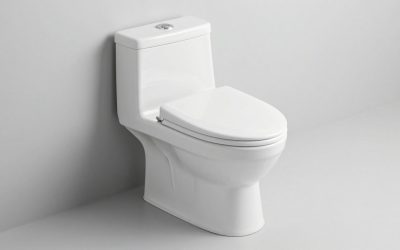
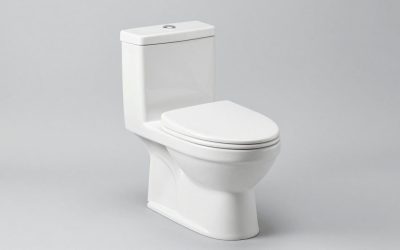
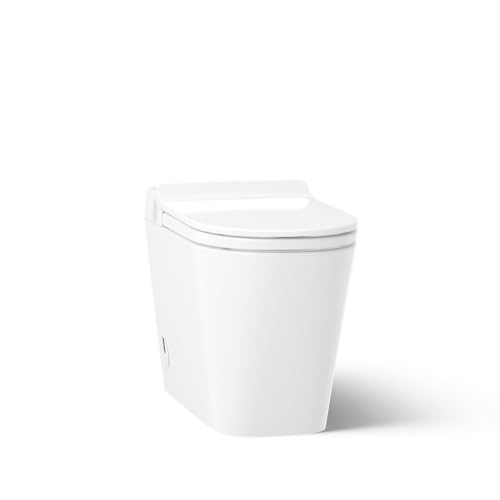
The best smart toilet for most buyers in 2026 is the TOTO Neorest, which combines a strong flush with self-cleaning and hygiene technology, while the Kohler Veil Intelligent is the best design-forward pick and the Woodbridge smart toilets deliver the most features per dollar. A smart toilet is a toilet with an integrated bidet, heated seat, warm-air dryer and often an automatic lid, night light and deodorizer, controlled by a remote, panel or app. Most are tankless, which means they need both an outlet and a water line.
Our top picks



As an Amazon Associate we earn from qualifying purchases at no extra cost to you.
Quick Comparison of Smart Toilets
| Pick | Best for | Notable features | App or voice | Flush | Price range |
|---|---|---|---|---|---|
| TOTO Neorest | Best overall | Tornado Flush, EWATER+, UV self-cleaning, hidden manual flush lever on some models | Varies by model | Dual flush | Premium |
| Kohler Veil Intelligent | Best design | Tankless, auto lid, heated seat, warm dryer, deodorizer, UV and electrolyzed water cleaning | Wi-Fi on some versions | 0.8 / 1.28 GPF | Premium |
| Kohler Numi | Best for smart-home integration | Voice control, motion-activated features | Yes | Dual flush | Premium |
| Woodbridge B0960S | Best value | 5 seat heat levels, wireless remote, dryer, auto lid | No app | Dual flush | Upper-mid |
| Woodbridge T-0008 | Best budget smart | Heated seat, posterior and feminine wash, night light | No app | Dual flush | Upper-mid |
| TOTO Washlet C5 on a TOTO toilet | Best modular alternative | Bidet seat on a standard bowl | No | 1.28 GPF | Mid to upper-mid |
Best Overall: TOTO Neorest
The Neorest line is TOTO’s flagship, available in several models such as the NX1, NX2 and 700H series. Reviews highlight Tornado Flush with a 1,000 gram MaP result on the NX1, EWATER+ technology that uses electrolyzed water to clean the wand, and UV light for the bowl. The NX2 includes a hidden mechanical flush lever so it still flushes without power. Some Neorest versions have no app, and prices sit at the top of the market.
Best Design: Kohler Veil Intelligent
The Veil Intelligent is a narrow, skirted, tankless one-piece with an auto-open lid, ambient bowl light, heated seat, on-demand water heating, warm-air dryer and a carbon-filter deodorizer. Dual flush is listed at 0.8 and 1.28 GPF and the toilet is WaterSense certified. A version adds Wi-Fi connectivity with per-user presets and leak alerts. Drawbacks include a skirted design that makes leaks harder to spot, and sources disagree on its MaP result, so check Kohler’s spec sheet.
Best for Smart-Home Integration: Kohler Numi
The Numi is Kohler’s high-tech line, with voice control through Alexa and Google Assistant, motion-activated features and customizable user presets. It is an expensive, design-driven choice for fully connected bathrooms.
Best Value: Woodbridge B0960S
Woodbridge’s smart toilets offer a heated seat with five levels, a wireless remote, a dryer and automatic lid. They have no app, but they cover the features most buyers actually use for a small fraction of the price of TOTO or Kohler. Long-term reliability data is thinner and service is mostly handled through the vendor.
Best Budget Smart: Woodbridge T-0008
The T-0008 and related models bring posterior and feminine wash, warm-air drying and night lights to a more affordable position. They are a sensible entry point if you want to try the category.
Best Modular Alternative: TOTO Washlet C5 on a TOTO Toilet
If you do not want to commit to an all-in-one, the Washlet C5 on a TOTO Drake II or similar bowl gives you most of the smart-toilet experience: warm water, heated seat and EWATER+ cleaning. You can replace the seat or toilet separately, which makes repairs easier.
Smart Toilet Requirements
| Requirement | What you need | Why it matters |
|---|---|---|
| Power | Grounded GFCI outlet within reach of the cord | Required for heating, bidet and electronics |
| Water | Standard supply line, adequate pressure | Tankless units need steady water pressure |
| Rough-in | 12 inch is typical; check model | Mismatched rough-in will not fit |
| Space | Often 28 to 31 inches of projection | Smart toilets are usually elongated and larger |
| Wi-Fi (optional) | For app and voice features | Only some models use it |
How to Choose a Smart Toilet
Decide which features you will use
The core features are bidet wash, heated seat, dryer and automatic lid. Features like app control, UV lights and voice assistants add cost and complexity. List what you will use daily and ignore the rest.
Check the power-outage behavior
Tankless smart toilets need power to flush unless a manual override exists. Look for a mechanical flush lever or a battery backup.
Look at flush performance
A MaP score of 800 grams or higher is a reasonable floor. Toilets with strong bidet features but weak flushing are a poor trade.
Plan for service
Electronics fail more often than porcelain. Look for a clear warranty, parts availability and local service support, and keep the model number.
Ownership Realities
- Nozzles and filters need periodic cleaning, and hard water may call for descaling.
- Seat heaters and tankless water heaters draw electricity, but standby consumption is generally modest.
- Electronics usually have shorter warranties than the ceramic body.
- Installation by a plumber and an electrician is recommended for hardwired models.
Which Smart Toilet Should You Buy?
| Your situation | Best choice |
|---|---|
| Want the best performance and hygiene technology | TOTO Neorest |
| Design is the priority | Kohler Veil Intelligent |
| Want voice control and presets | Kohler Numi |
| Best features per dollar | Woodbridge B0960S |
| Prefer to upgrade stepwise | Washlet C5 on a TOTO toilet |
Total Cost of Ownership
A smart toilet costs more than the sticker price suggests. Beyond the unit, plan for a licensed plumber, an electrician if no GFCI outlet is nearby, and the occasional service call on electronics. The table summarizes what to plan.
| Cost item | Smart toilet | Bidet seat on standard toilet |
|---|---|---|
| Fixture | Premium (thousands) | Mid-range (hundreds) |
| Installation | Plumber, possibly electrician | DIY in about 30 minutes |
| Power use | Standby plus heating | Standby plus heating |
| Repairs | Electronics and sensors | Seat swap only |
| Replacement | Whole unit | Seat or toilet separately |
Worked example: is it worth it?
Suppose a smart toilet costs about 4,000 dollars more than a good 1.28 GPF toilet plus a Washlet C5 combination priced near 1,000 dollars. The 3,000 dollar gap buys a tankless one-piece body, an automatic lid, a UV and electrolyzed-water cleaning system and usually a longer warranty on the ceramic. Whether that gap is worth it depends on design priorities and budget. For many households the modular option delivers the practical benefits at a fraction of the cost.
Decision Matrix
| Priority | Choose |
|---|---|
| Performance and hygiene technology | TOTO Neorest |
| Design and a slim profile | Kohler Veil Intelligent |
| Voice control and presets | Kohler Numi |
| Features per dollar | Woodbridge B0960S or T-0008 |
| Lower cost, easier service | TOTO Washlet C5 on a standard bowl |
Step-by-Step: Replacing a Toilet and What to Check
- Shut off the supply valve, flush, and sponge out the remaining water. Reason: a wet bowl is heavy and messy to lift.
- Disconnect the supply line and remove the closet bolt caps and nuts. Reason: stuck nuts are the most common cause of a cracked base, so cut them with a hacksaw blade if they will not turn.
- Lift the old toilet straight up and scrape off the old wax. Reason: leftover wax prevents a new seal from seating.
- Inspect the flange. It should sit on top of the finished floor, not below it, and the metal ring should be solid. A damaged flange needs a repair ring before the new toilet goes on.
- Set a new wax ring or a wax-free gasket, lower the toilet straight down onto the bolts, and press firmly. Reason: lifting it again to reposition breaks the seal.
- Tighten the nuts alternately, a little at a time, until the toilet is snug and does not rock. Reason: ceramic cracks under uneven pressure.
- Reconnect the supply line, open the valve, let the tank fill, and flush several times while looking for leaks at the base and the tank connection.
- Run a bead of caulk around the front and sides of the base, leaving the back open so a leak would show.
Maintenance schedule
| Task | How often | Why |
|---|---|---|
| Check for rocking and base leaks | Twice a year | A loose toilet breaks the wax seal |
| Inspect flapper and fill valve | Every 2 to 3 years | Worn rubber causes silent leaks and extra water use |
| Dye-tablet leak check | Yearly | Color in the bowl without flushing means a flapper leak |
| Clean under the rim and jets | Every few months | Mineral buildup weakens the flush |
| Replace supply line | Every 5 to 10 years | Braided lines can corrode and fail |
Bathroom Fit: Measurements to Confirm Before You Order
Smart toilets are usually bulkier than a standard two-piece, so a model that looks right in photos can fail on a tape measure. Verify each dimension against the manufacturer’s spec sheet, not just the product title.
| Measurement | Typical requirement | Why it matters |
|---|---|---|
| Rough-in (wall to drain center) | 12 in is standard; 10 in and 14 in exist | A mismatch means the bowl will not line up with the floor flange or will sit off the wall |
| Space from toilet center to side wall or fixture | At least 15 in under the International Plumbing Code | Tight side clearance blocks the seat and the access panel |
| Clear space in front of the bowl | At least 21 in under the same code | Long, elongated, tankless bodies push the usable room out further |
| Bowl length | Round or elongated, listed on the spec sheet | Elongated shapes extend farther into the room and need more depth |
| Seat height | Accessible “comfort height” is 17 to 19 in | Matters for knees, hips, and anyone who needs a higher seat |
Local codes can differ, and accessible installations often need more space than the minimums above, so confirm with your jurisdiction or installer.
Reading the Spec Sheet: Flush and Safety Details
Water Use Per Flush
The federal maximum for toilets is 1.6 gallons per flush, and WaterSense-labeled models must use 1.28 gallons or less while meeting a flush performance requirement. A smart toilet that lists no flush volume at all deserves extra scrutiny, since integrated bidet and dryer features are no substitute for a competent bowl.
Electrical Listing and Outlet
These units run on household current, so look for a recognized safety listing on the spec sheet and plan for a ground-fault protected outlet within reach of the power cord. Bathroom outlets are generally required to have GFCI protection, but an older home may not have one near the toilet location. Needing a new outlet turns a simple swap into an electrician job.
Water Supply Needs
Tankless models draw water directly from the supply line, and their manuals list a minimum and maximum water pressure. Low pressure can weaken the flush; very high pressure can stress internal valves. Compare the manual’s range with your home’s actual pressure before buying.
Order-Day Sequence
- Measure the rough-in, side clearances, and front clearance, and write the numbers down.
- Locate the nearest outlet and confirm it has ground-fault protection.
- Find the supply shutoff and note the pipe type and connection size.
- Read the manual’s pressure range and flush volume for the model you are considering.
- Compare the manual’s dimensions with your notes, and only then order.
Common Mistakes When Buying a Smart Toilet
- Skipping the outlet check. No GFCI outlet near the toilet means added electrical work that is not in the sticker price of the fixture.
- Assuming every drain is a 12 inch rough-in. Measure from the finished wall to the center of the flange bolts first.
- Paying for features you will not use. Auto-lid, night light, and app control add convenience but also add parts that can fail.
- Ignoring the manual’s pressure limits. The fixture may flush poorly or trigger a warning in homes with low supply pressure.
- Forgetting service access. A heavy one-piece body is difficult to lift, so check that you can reach the shutoff valve and the filter without pulling the unit.
- Treating the seat and bowl as one decision. Modular seats can be replaced separately, while integrated units need a whole-fixture service call.
Frequently Asked Questions
What is a smart toilet?
A smart toilet integrates a bidet, heated seat, dryer and often an automatic lid and deodorizer into one fixture, controlled by a remote, panel or app.
Do smart toilets work without power?
Many tankless models do not flush without power. Some, such as certain TOTO Neorest versions, include a manual override lever.
Do smart toilets need a plumber and electrician?
A plumber for water and an electrician for a GFCI outlet are the safest route, especially for hardwired units.
Are smart toilets worth it?
For buyers who value hygiene, comfort and accessibility, yes. For others, a bidet seat on a standard toilet delivers most of the benefit for much less.
How long do smart toilets last?
The ceramic can last decades, but electronics have a shorter life. Warranty terms and service access matter.
FAQ
Worked example: is it worth it?
What is a smart toilet?
Do smart toilets work without power?
Do smart toilets need a plumber and electrician?
Are smart toilets worth it?
How long do smart toilets last?
More from Amazon
Programs that pair well with the guide above. Offers and eligibility are set by Amazon and may change.
Free shipping on eligible items, Prime Video and more. Eligible new members can start with a free trial.
Start a Prime free trialAudiobooks and podcasts to listen to on the go. Eligible new members can start with a free trial.
Try Audible freeAd-free music streaming. Eligible new subscribers can start with a free trial.
Try Music Unlimited freeA free business account with business pricing and bulk-buying tools for work, shop or home office.
Create a business accountAs an Amazon Associate we earn from qualifying purchases.