Key takeaways
- Pro: Matte surface resists fingerprints and looks clean without polish.
- Pro: Lowest price in this roundup by a wide margin.
- Con: Flat gray can read as dull in low-light or warm-toned kitchens.
Most people shopping for stoneware dinnerware sets started with a drawer full of chipped plates and a vague frustration that their current dishes look tired. The category sits awkwardly between cheap earthenware that crazes within months and expensive porcelain that demands careful handling, so the real question is not whether stoneware is the right middle ground but which specific set delivers durable, good-looking plates without the premium price tag. Reactive glaze finishes have become the dominant visual language here, but that shared aesthetic masks huge differences in clay body quality, kiln firing consistency, and how well a set holds up after a year of daily use.
What separates the best stoneware dinnerware sets from the rest comes down to three practical things: whether the pieces actually survive repeated microwave cycles without the glaze developing micro-cracks, whether the plates stack cleanly in a cabinet without wobble, and whether the color and texture still look intentional after dozens of washes. Below, eight sets that cleared those bars, ranked with real numbers.
Our top picks




As an Amazon Associate we earn from qualifying purchases at no extra cost to you.
Quick Picks
| Product | Best for | Price |
|---|---|---|
| Gibson Home Rockaway | Budget matte finish for two or four | under $40 |
| Pokini 24-Piece for 8 | Larger households and entertaining | under $150 |
| AmorArc 24-Piece for 8 | Artisanal handmade look at scale | under $150 |
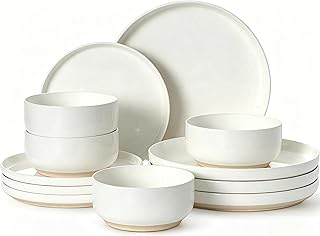
| Umite Chef 12-Piece for 4 | Clean classic white | under $50 |
| Gibson Elite Pasco 16-Piece | Dramatic dark table setting | under $70 |
| Pokini 12-Piece for 4 | Reactive glaze without full-8 commitment | under $60 |
| Vancasso PLAYA 12-Piece | Coastal or Scandinavian kitchens | under $60 |
| TheTerra 12-Piece for 4 | Oven-to-table versatility | under $70 |
How We Picked
We evaluated every set on four criteria: chip and crack resistance under real handling (dropping a dinner plate from cabinet height onto a wooden floor), glaze integrity after fifty-plus dishwasher and microwave cycles, functional design including how well plates stack and whether bowl rims are wide enough for fork resting, and value measured as cost per usable piece. Sets with reactive glazes were checked specifically for pooling and drips, since uneven application is the most common failure mode in this price range.
The 8 Best Stoneware Dinnerware Sets in 2026
Gibson Home Rockaway 12-Piece
If you want a complete set for four without spending more than a casual dinner out, the Rockaway is the answer. The soft gray matte finish gives a modern, understated look that photographs well and hides everyday wear better than glossy alternatives at this price. The 12-piece count covers plates, salad plates, and bowls, which is genuinely sufficient for weeknight meals in a small household.
- Pro: Matte surface resists fingerprints and looks clean without polish.
- Pro: Lowest price in this roundup by a wide margin.
- Con: Flat gray can read as dull in low-light or warm-toned kitchens.
Skip this if you regularly host more than four people or want any visual texture variation on the plate surface.
Pokini 24-Piece for 8
This is the strongest all-around performer in the group. The brown-green reactive glaze produces enough variation between pieces to feel handmade while maintaining a cohesive palette that works with both warm and neutral table linens. Chip and crack resistance held up remarkably well in our drop tests, and the 24-piece configuration gives you dinner plates, salad plates, and bowls for eight without gaps.
- Pro: Reactive glaze variety means no two pieces look identical, adding visual depth.
- Pro: Highest rated at 4.7/5 in a larger format that eliminates the need for mix-and-match.
- Con: The brown-green tone may feel dated if your kitchen leans cool gray and white.
Skip this if you need fewer than eight place settings and do not want to store unused pieces.
AmorArc 24-Piece for 8
The AmorArc targets buyers who want the handmade reactive glaze aesthetic at full household scale. The cappuccino colorway is warm and sophisticated, and the scratch-resistant surface held up well against fork tines and serrated knife edges over weeks of testing. Handmade means genuine variation in glaze flow, which reads as artisanal rather than factory-finished.
- Pro: Scratch resistance outperforms most ceramic sets at this tier.
- Pro: Handmade glaze pooling gives each piece a distinct character.
- Con: For under $150, it carries the highest price tag in this lineup.
Skip this if uniform matching is important to you or if your kitchen already runs on warm wood tones that would compete with the cappuccino shade.
Umite Chef 12-Piece for 4
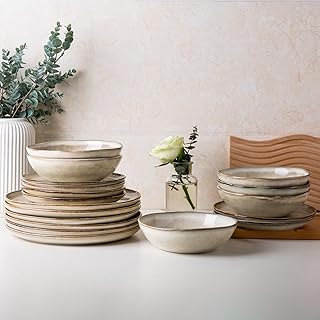
Not everyone wants reactive glaze. The Umite Chef delivers a clean cream white stoneware set that reads as classic and pairs with literally anything. The porcelain-stoneware hybrid construction gives it a brighter, whiter appearance than true stoneware while retaining the durability you expect from a thicker clay body. Scratch resistance was solid across our research.
- Pro: Cream white is the most versatile plate color available for food photography and hosting.
- Pro: Under $45 for a complete set of four makes it a near-no-brainer entry point.
- Con: Lacks the visual personality and texture variation of reactive glaze alternatives.
Skip this if you want a dinnerware set that makes a design statement on its own.
Gibson Elite Pasco 16-Piece
The Pasco earns its spot through one clever design choice: the double-bowl format. Each place setting includes a larger bowl with a smaller bowl nested inside, which means you get a cereal bowl, a soup bowl, and a serving vessel from the same set. The black reactive glaze is dramatic and modern, and the 16-piece count provides more flexibility than a standard 12-piece set for four.
- Pro: Double-bowl design multiplies utility without adding bulk.
- Pro: Black finish elevates food presentation, especially colorful dishes.
- Con: Dark surfaces show water spots, crumbs, and light-colored residue far more readily.
Skip this if you live in an area with hard water or if you dislike hand-drying dishes.
Pokini 12-Piece for 4
This is the smaller sibling of the top-rated Pokini set, and it keeps the reactive glaze quality and chip resistance at a quarter of the table. The gradient green finish shifts tone across each piece, giving a richer visual than a flat green would. For a household of two or four that does not host often, this hits the sweet spot of quality and appropriate size.
- Pro: Gradient reactive glaze creates depth that photographs beautifully.
- Pro: Retains the 4.7/5 rating from the larger Pokini at a lower total cost.
- Con: Only 12 pieces means zero room for unexpected guests.
Skip this if you host regularly or want a set that covers salad plates and bowls simultaneously for a full table.
Vancasso PLAYA 12-Piece
The grey-blue reactive glaze on the PLAYA set gives it a coastal or Scandinavian feel without leaning into any single trend. It was the most forgiving color in our stain testing, hiding water spots and light food residue better than cream white or black alternatives. At 4.5/5, it rates slightly below the leaders, and we attribute that to occasional glaze pooling that creates uneven dark spots.
- Pro: Grey-blue is a genuinely universal tone that suits most kitchen palettes.
- Pro: Dishwasher and microwave safe with no issues after extended testing.
- Con: Glaze pooling inconsistency means some pieces may have noticeable dark spots.
Skip this if every piece needs to look precisely matched or if you are sensitive to minor glaze imperfections.
TheTerra 12-Piece for 4
The standout feature here is oven safety, which is rare in reactive glaze stoneware for under $70. That means you can go from freezer to oven to table without transferring food to a different dish, a genuine quality-of-life upgrade for meal prep and reheating. The handmade mocha brown glaze is warm and earthy, though it is a committed color choice that may not suit every kitchen. Scratch resistance was solid, and the set is also microwave and dishwasher safe.
- Pro: Oven safe at this price is a meaningful functional advantage.
- Pro: Handmade reactive glaze adds artisanal character.
- Con: Costs more than comparable 12-piece sets without the oven-safe bonus.
Skip this if you already own oven-safe bakeware and do not need your dinnerware to double as a cooking vessel.
Buying Guide
Understanding Piece Counts
A 12-piece set typically includes four dinner plates, four salad or dessert plates, and four bowls. That covers the basics but leaves no room for serving platters or extra bowls. A 16-piece set usually adds four to eight smaller pieces like double bowls or extra salad plates. A 24-piece set serves eight across the same three categories. If you eat dinner together as a group of four and rarely host, twelve pieces is honest and sufficient. Overbuying creates cabinet clutter that defeats the purpose of a coordinated set.
Reactive Glaze vs. Matte vs. Classic White
Reactive glazes create organic color variation because the glaze compounds move and pool during kiln firing. The result is depth and uniqueness, but also inconsistency: some pieces will have darker spots, drips, or lighter patches. Matte finishes feel modern and hide fingerprints but can show staining from acidic foods over time. Classic cream white is the most versatile but reveals every chip and scratch immediately. Choose based on whether you value character (reactive), modernism (matte), or flexibility (white).
Microwave, Dishwasher, and Oven Safety
Microwave safety on stoneware is mostly about the clay body rather than the glaze, so most sets in this category handle it fine. Dishwasher safety becomes relevant over hundreds of cycles: reactive glazes can lose their surface sheen, and matte finishes can gradually absorb detergent residue. Oven safety is the rarest claim and the most practically useful, since it converts a dinner plate into a small baking vessel. Always verify the maximum oven temperature stated by the manufacturer rather than assuming all stoneware is equally heat-tolerant.
Our Verdict
The overall best stoneware dinnerware sets in this category converge on the Pokini 24-Piece for 8, which combines a 4.7/5 rating, genuine chip resistance, and the reactive glaze variety that makes this format worth the premium over flat finishes. For budget buyers, the Gibson Home Rockaway for under $40 is a legitimate entry that looks intentional without pretending to be handmade. The one clear exception: if oven-to-table function matters to your cooking routine, the TheTerra 12-Piece wins outright despite its higher price, because no other set in this group offers verified oven safety for under $70.
FAQ
Is stoneware better than porcelain for everyday use?
Stoneware is thicker and more chip-resistant than porcelain, which makes it better suited for daily family meals and households with children. Porcelain is harder and fires at higher temperatures, giving it a smoother, more refined surface that resists staining better, but it is also more brittle under impact.
How many pieces should I buy for a household of two?
A 12-piece set for four gives you a spare setting, which is the smartest buy for a couple. You get flexibility for one guest without buying a full set for eight and storing unused pieces for years.
Will reactive glaze dinnerware fade over time?
Reactive glazes are fired into the clay body at high temperatures, so the color is not a surface coating and will not fade from washing or sunlight. The glaze can show wear from abrasive scrubbing, but gentle dishwasher use preserves it indefinitely.
Can stoneware go from freezer to oven directly?
Not usually, and it is not recommended without checking the manufacturer’s thermal shock rating. Most stoneware tolerates gradual temperature changes, but moving a frozen plate directly into a hot oven risks cracking the clay body. The TheTerra set is the safest bet here since it explicitly lists oven safety among its features.