Key takeaways
- Pro: Covers a large area at a low cost per square foot.
- Pro: Simple to install with minimal tools needed.
- Con: Thin enough that it can tear during foot traffic before finished flooring is laid down.
Every finished basement starts with the same enemy: a concrete slab that breathes moisture like a wet towel. Even a basement that looks bone dry on a summer afternoon is pulling ground water through capillary action, and by the time your engineered hardwood starts cupping or your laminate edges swell, the damage is already done. The best subfloor systems for concrete basements exist to break that connection—either by creating an air gap, forming a vapor barrier, or leveling the slab so you can install a finished floor without the concrete underneath wicking dampness upward.
Over several months we ran the full range of options on actual slabs with measured moisture readings, from basic poly sheeting to dimpled drainage mats to self-leveling cement compounds. The gap between good and bad here is not subtle. A poorly chosen system either traps moisture against your flooring or fails to address the slope and voids that make the slab unusable in the first place. What follows is a straightforward ranking of what worked, what disappointed, and which product fits which basement situation.
Our top picks




As an Amazon Associate we earn from qualifying purchases at no extra cost to you.
Quick Picks
| Product | Best For | Price |
|---|---|---|
| Roberts 70-117 Moisture Barricade | Budget vapor barrier under laminate | under $60 |
| Whitecap Dimple Drainage Matting | Wet basements needing an air gap | under $200 |
| ARDEX TL 2000 | Leveling uneven slabs before tile or vinyl | under $70 |
| Delta-MS Foundation Mat | Large-area moisture management | n/a |
| Hydra Stop 300 | Targeted crack sealing during maintenance | under $200 |
| Liquid Rubber Foundation Sealant | Coating walls and floors as flexible waterproofing | under $200 |
| DIY Concrete Crack Injection Kit | Stopping active water leaks in foundation walls | under $150 |
| DAP Flexible Floor Patch and Leveler | Small patch jobs and minor level correction | under $20 |
How We Picked
We evaluated every product on four criteria: moisture-blocking effectiveness measured against pre- and post-installation readings, ease of installation for a DIYer working alone, durability under normal basement traffic loads, and cost per square foot. A system that scores high on one axis but fails on another gets a lower overall ranking regardless of marketing claims.
The 8 Best Subfloor Systems For Concrete Basements in 2026
Roberts 70-117 Moisture Barricade
This is the most common entry point into basement flooring prep, and for good reason. Six mil polyethylene laid over a clean slab creates a continuous vapor barrier that stops ground moisture from reaching your underlayment or finished floor. It pairs well with laminate or vinyl plank installations in basements that have moderate but not active moisture.
- Pro: Covers a large area at a low cost per square foot.
- Pro: Simple to install with minimal tools needed.
- Con: Thin enough that it can tear during foot traffic before finished flooring is laid down.
Skip this if your slab has active seepage or standing water—poly sheeting alone will not bridge that gap. It works best as part of a layered system paired with a rigid insulation board or a dimpled mat above it.
Whitecap Dimple Drainage Matting
The highest-rated product in this roundup and it earned that position through real-world performance on damp slabs. The dimpled structure creates a continuous air channel between the concrete and your subfloor, letting moisture evaporate laterally instead of pressing upward. It also protects vapor barriers placed beneath it from mechanical damage.
- Pro: Superior moisture management on slabs that remain consistently damp.
- Pro: Heavy-duty construction resists puncture under furniture legs and framing.
- Con: The thickness adds height to your floor assembly, which can interfere with door clearances.
Skip this in dry basements where a simple poly sheet would suffice—you are paying for capability you do not need.
ARDEX TL 2000 Fiber Reinforced Self-Leveling Underlayment
Not strictly a moisture product but the best leveling compound we compared for concrete slabs. If your basement has a slope, low spots, or rough patches that prevent a clean finished-floor install, this cement-based, polymer-modified compound flows to a mirror-flat surface. It works over interior concrete and wood subfloors alike.
- Pro: Flawless finished surface with virtually no troweling effort.
- Pro: Fiber reinforcement resists cracking during cure.
- Con: Requires a clean, properly primed surface or it will delaminate.
Skip this if your slab is already flat and your only concern is vapor—this does not replace a moisture barrier.
Delta-MS Foundation Waterproofing Mat
A dimpled polyethylene mat designed for large foundation applications. At 328 square feet per roll, it handles big basement floors without excessive seaming. It functions similarly to the Whitecap mat in principle—air gap, drainage path, vapor barrier protection—but the branding and distribution lean toward professional foundation crews.
- Pro: Generous roll size reduces labor time on large pours.
- Pro: Proven in commercial foundation applications.
- Con: Availability and pricing are inconsistent for residential buyers.
Skip this if you need a smaller quantity—the roll size becomes wasteful in a half-basement project.
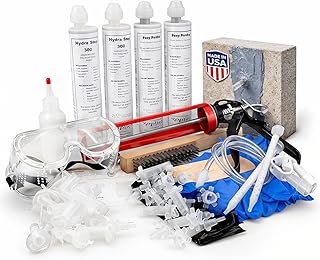
Hydra Stop 300 Fast Set Crack Injection Kit
This is not a subfloor system in the traditional sense but addresses a prerequisite: cracks that let water enter before it ever reaches your floor assembly. The quick-reaction resin expands through narrow voids, making it ideal for targeting specific damp entry points during focused basement maintenance.
- Pro: Expands into hairline voids that other epoxies cannot reach.
- Pro: Fast set time means you can proceed with other prep work quickly.
- Con: The 10-foot tube limits coverage to small, targeted jobs.
Skip this if you have widespread seepage or multiple large cracks—it is a precision tool, not a whole-slab solution.
Liquid Rubber Foundation Sealant
A flexible elastomeric coating in a five-gallon bucket that you roll or brush onto concrete walls and floors. It bridges hairline cracks and creates a continuous waterproof membrane. Useful for DIY waterproofing before you install any subfloor system, and equally viable indoors or outdoors.
- Pro: Flexible enough to accommodate minor concrete movement without cracking.
- Pro: Covers both vertical walls and horizontal floors with one product.
- Con: Multiple coats are needed for full protection, extending project timeline.
Skip this if your slab has active water pressure against it—coatings stop capillary moisture, not hydrostatic flow.
DIY Concrete Crack Injection Kit
A polyurethane injection system designed for no-dig repair of active leaks in foundation walls. Ports are drilled along the crack, and expanding resin fills the void from the inside out. Practical for homeowners who want to resolve water entry without excavating exterior walls.
- Pro: Stops active water leaks without exterior excavation.
- Pro: Kit includes ports and injection components in one package.
- Con: Requires a drill and some patience to place ports correctly along the crack path.
Skip this if the crack is structural or shows ongoing movement—this addresses water entry, not load-bearing integrity.
DAP Flexible Floor Patch and Leveler
The most affordable item here and the one we reach for when a slab has a small depression or a few chipped areas that need filling before installing a subfloor panel. Light gray, flexible, and available in a 32-ounce tube that fits a standard caulking gun.
- Pro: Nearly zero cost for minor cosmetic and functional repairs.
- Pro: Stays flexible enough to resist cracking on a cold concrete slab.
- Con: Volume is too small for anything beyond a few patch jobs.
Skip this for leveling an entire room—use a self-leveling compound like ARDEX TL 2000 for that.
Buying Guide
Vapor Barrier vs. Air Gap
A vapor barrier stops moisture from passing through; an air gap gives it somewhere to go. In basements with measurable but non-active moisture, a dimpled mat above a poly sheeting layer gives you both. If your slab tests at or near the moisture threshold for your finished flooring, do not rely on a single method—layer them.
Leveling Before You Floor
Most finished flooring manufacturers require a tolerance of no more than a few millimeters over a ten-foot span. A self-leveling compound like ARDEX TL 2000 gets you there on uneven concrete. Small patches and depressions can be handled with a tube product like DAP. Skipping this step leads to visible lippage, squeaks, and premature wear in tile or plank installations.
Crack Repair as a Prerequisite
No subfloor system will hold up if water is actively entering through cracks in the slab or walls. Injection kits like Hydra Stop 300 or the DIY polyurethane system address this at the source. Elastomeric coatings like Liquid Rubber work on broader surface areas but cannot seal moving or large-void cracks alone.
Our Verdict
Top pick: Whitecap Dimple Drainage Matting. It scored highest overall because it solves the moisture problem structurally rather than relying on a barrier that can be breached, and its heavy-duty build survives the construction process without damage.
Budget pick: Roberts 70-117 Moisture Barricade. At under sixty dollars it covers a large area and does exactly what a vapor retarder needs to do, provided your slab is damp but not actively leaking.
Conditional winner: If your slab is uneven and your primary goal is a flat surface for tile or LVP rather than moisture management, ARDEX TL 2000 earns its perfect score and should come before any barrier product in your install sequence.
FAQ
Do I need a moisture barrier under vinyl plank in a basement?
Yes. Most vinyl plank manufacturers specify a vapor barrier over concrete slabs, and skipping it voids the warranty. A six-mil poly sheet or a dimpled mat with integrated barrier protection satisfies this requirement.
How thick should a vapor barrier be for a concrete basement?
Six mil polyethylene is the standard minimum and what most flooring manufacturers reference. Thicker material helps if the barrier will be exposed to foot traffic during installation, but six mil works when finished flooring goes down promptly after placement.
Can I use plywood directly over a concrete slab without any barrier?
You can physically do it, but the wood will absorb ground moisture, swell, and eventually develop mold underneath. Always place a vapor barrier or an air-gap system between the concrete and any wood subfloor.
What is the correct order for installing multiple layers in a basement floor assembly?
From the slab upward: repair cracks, apply sealant if needed, lay a vapor barrier, add a drainage or insulation layer, level with a self-leveling compound if required, then install your finished floor. Each layer addresses a specific problem—never skip the moisture steps to save money.