Key takeaways
- Budget: basic externals and handhelds. Fine for occasional sealing of dry or frozen foods, with limited bar width and fewer modes.
- Mid-range: the sweet spot for most households. Reliable pumps, dry and moist modes, accessory ports and a roll cutter or storage in the better versions.
- Premium: heavy-duty externals and chamber sealers. Stronger pumps, longer duty cycles and, for chamber models, true liquid sealing.
For most households, a mid-range external (edge) vacuum sealer such as a FoodSaver model or the NESCO Deluxe is the practical pick, while buyers who seal liquids, marinades or large batches of soup should look at a chamber sealer such as the VacMaster VP215, and sous-vide cooks who want a compact, tidy machine often lean toward the Anova Precision line. The right choice depends on what you seal, how often, and how much counter or drawer space you can give up.
Our top picks


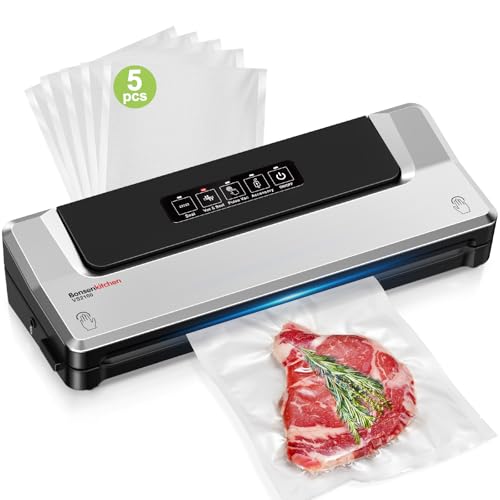
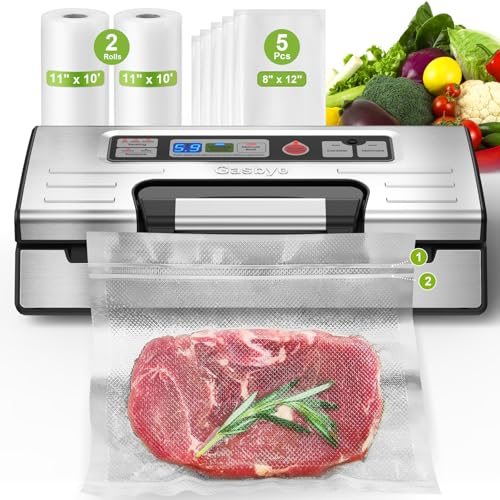
As an Amazon Associate we earn from qualifying purchases at no extra cost to you.
Vacuum Sealers at a Glance
| Model or type | Best for | Style | Main limit |
|---|---|---|---|
| FoodSaver (multi-use countertop series) | Everyday freezer bags, meal prep, wide bag and canister compatibility | External, bags with textured channels or rolls | Struggles with very wet foods unless pre-frozen |
| NESCO VS-12 Deluxe | Budget-minded home users who want manual control | External, dry and moist modes | Heavier use may need breaks to let the motor cool |
| Anova Precision Vacuum Sealer | Sous-vide cooking, compact storage | External, slim body | Smaller footprint means less sealing-bar reach than larger machines |
| Weston Pro-2300 / similar heavy-duty external | Hunters, bulk buyers, frequent large-volume sealing | External, double-piston pump, wide bar | Large and heavy, still not ideal for liquids |
| VacMaster VP215 (chamber) | Soups, sauces, marinades, enthusiasts and small kitchens that batch cook | Chamber, uses smooth pouches | Bulky, heavy and needs more counter space |
| Handheld sealers with zipper bags | Occasional use, small kitchens, snack storage | Handheld pump | Weaker vacuum and bags are less airtight over long storage |
How Vacuum Sealers Work and Why It Matters
An external sealer draws air out of a bag whose open end sits outside the machine, then melts the plastic to close it. Because the bag is pulled flat by suction from one end, liquids can be drawn toward the pump, which is why moist foods are usually frozen first or handled with a built-in moist setting. A chamber sealer places the whole bag inside a sealed chamber, removes air from the whole space, then seals it. Pressure inside and outside the bag stays balanced during the cycle, so liquids do not get pulled out. That is the central trade-off in this category: external machines are smaller, lower in cost and use inexpensive bags, while chamber machines are larger, costlier and use plain pouches.
Reviewers who cover kitchen equipment commonly point out that the sealer itself is only half the system. Bag quality, how cleanly the open edge is kept, and whether the food is dry at the seal line all affect results as much as pump power.
Picks by Type of Buyer
FoodSaver: the mainstream household choice
FoodSaver is the best-known name in home vacuum sealing, and its countertop models are sold in several tiers. The maker lists features such as automatic bag detection, a built-in roll cutter on many models, and a handheld sealer attachment on some for use with zipper bags and canisters. The brand has the widest ecosystem of rolls, pre-cut bags and accessories, which is a practical advantage when you need replacements. Reviewers tend to say the cheaper models are fine for occasional use, while upper-tier versions add features such as a wider range of food settings, quieter operation, or a more robust sealing strip. Compare the tier that matches your use rather than defaulting to the top model.
NESCO Deluxe: manual control on a budget
The NESCO VS-12 Deluxe is a frequent entry in budget roundups because it offers dry and moist food modes and a manual seal option for delicate items such as bread or chips, according to the maker. It also accepts standard embossed bags, so you are not locked into one bag brand. Reviewers note that it is not built for non-stop duty cycles, so batch sealing a whole day of hunting or harvest may need pauses between cycles.
Anova Precision: compact and sous-vide friendly
Anova is better known for sous-vide circulators, and its vacuum sealers are marketed to the same audience. The Precision line is slimmer than many competitors, which matters in small kitchens. Outlets that review it tend to praise the tidy design and say it is well suited for sealing proteins before a water bath, while noting that bar width and bag-roll storage are more limited than on larger machines. Check the maker’s stated bag compatibility before buying a different brand of roll.
Heavy-duty externals for volume users
Weston and similar brands target game processors and bulk food buyers. The maker typically lists a wider sealing bar, a heavier pump and the ability to run long cycles. These units are meaningfully bigger and louder than a countertop FoodSaver. If you routinely seal large cuts, whole fish or wide bags, this class avoids the frustration of undersized bars.
Chamber sealers: the choice for liquids
The VacMaster VP215 is widely cited in reviews as an entry point to chamber sealing for home users and small food businesses. Reviewers say it handles soups, brines and wet marinades without the liquid-handling workarounds an external model needs. The trade-offs are weight, a footprint that does not fit easily in a drawer, and a need for a dedicated space. Chamber pouches are generally cheaper per bag than textured external bags, which partly offsets the machine cost over time for frequent users.
Key Features That Separate Models
Sealing method and bar width
Check the sealing bar length against the bags you plan to use. Standard home rolls often come in 8-inch and 11-inch widths; a machine rated for one may not accommodate the other. Wider bars help with larger cuts of meat and flat bundles of vegetables.
Moist and dry modes
Dry and moist settings change how long the machine pulls air and how long it seals. Moist mode allows a little more time for sealing but does not eliminate the problem of liquid being pulled toward the pump. Many sealers also include a pulse or manual mode that lets you stop vacuuming at the right moment for fragile items.
Drip tray and cleanup
A removable drip tray catches stray liquids and is a practical feature if you seal marinated foods. Machines with fixed trays can be harder to wipe clean. Always unplug and let heating elements cool before cleaning, and follow the maker’s cleaning instructions.
Accessory ports and canisters
Many externals offer an accessory port for sealing canisters, jar sealers and marinating containers. These are useful for crackers, coffee beans and dry goods, as well as for quick marinating. If you want jar sealing for mason jars, look for a model that lists regular and wide-mouth jar attachments.
Noise, weight and storage
Vacuum pumps are loud. Owners and reviewers often mention that heavy-duty machines are noticeably louder than slim models. Weight and shape determine whether the machine lives on the counter or in a cabinet. If storage is the sticking point, a slim external or handheld unit is easier to live with.
Budget Tiers and What to Expect
- Budget: basic externals and handhelds. Fine for occasional sealing of dry or frozen foods, with limited bar width and fewer modes.
- Mid-range: the sweet spot for most households. Reliable pumps, dry and moist modes, accessory ports and a roll cutter or storage in the better versions.
- Premium: heavy-duty externals and chamber sealers. Stronger pumps, longer duty cycles and, for chamber models, true liquid sealing.
Pick X If…
| Pick this | If you… |
|---|---|
| FoodSaver countertop | want a widely supported brand with easy-to-find bags and accessories |
| NESCO Deluxe | want manual control and standard bag compatibility on a tighter budget |
| Anova Precision | cook sous-vide and value a slim, tidy design |
| Weston-style heavy-duty external | process large batches of game, fish or garden harvest |
| VacMaster VP215 chamber | seal soups, sauces or marinades regularly and have room for a bigger machine |
| Handheld sealer | seal occasional snacks or leftovers and want minimal storage |
Food Safety Notes
Vacuum sealing slows spoilage from oxygen but does not make food safe on its own. Perishable foods must still be kept refrigerated or frozen, and the low-oxygen environment inside a sealed bag is not a substitute for proper cooking, curing or canning methods. Food safety agencies caution that some bacteria can grow without oxygen, so sealed fresh foods should be handled with normal cold-chain practices. Follow the maker’s guidance and national food safety guidance for storage times and for any sous-vide cooking temperatures.
Bags, Rolls and Running Costs
External machines generally need textured or embossed bags so air can escape along channels. Using bags from the machine maker is the safest route for fit, though many third-party rolls are labeled as compatible with major brands. Chamber sealers use smooth pouches, which tend to cost less per bag. Make sure the bag material is rated for freezer use and, if you plan to sous-vide, for the temperatures involved.
Alternatives to a Dedicated Sealer
- Zipper-lock vacuum bags with a hand pump: cheap and compact, suitable for short-term storage and travel but less reliable for long freezer storage.
- Water displacement method: some sous-vide cooks use standard zipper freezer bags and lower them into water to push air out. It works for cooking, not long-term storage.
- Canisters and jar sealers: good for dry goods such as flour, coffee and dried fruit when you already own a sealer with an accessory port.
Care and Maintenance
Wipe the sealing gasket and the bar after use, because crumbs and moisture prevent a clean seal. Keep spare gaskets in mind: makers typically list them as replaceable parts, and a worn gasket is a common reason for sealing failure. Do not seal bags with wet edges, and trim any bag that has a wrinkle at the seal line. Store the machine unlatched if the maker says so, since leaving the lid locked can compress gaskets over time.
Frequently Asked Questions
Can a vacuum sealer handle soup or marinade?
External machines struggle with liquids because suction can pull the liquid toward the pump. The usual workaround is to freeze the liquid in a container first, then seal the frozen block. Chamber sealers handle liquids directly because pressure is balanced inside and outside the bag.
Are chamber sealers worth it for home use?
They suit people who seal wet foods regularly or who batch cook in large amounts. For dry or frozen foods, a good external sealer is usually sufficient and takes up less space. Consider your storage space, since chamber units are bulky and heavy.
Do I need brand-name bags?
Not always, but fit matters. Many third-party bag rolls are labeled as compatible with major brands. Confirm the width and the embossing pattern in the maker’s specification before buying a large quantity.
How long does vacuum-sealed food last?
Storage times depend on the food and on whether it is refrigerated or frozen. Makers often claim that sealed foods stay fresh several times longer than in standard storage, but those are marketing estimates. Follow food safety guidance for each type of food and keep perishables cold.
Can I reuse vacuum bags?
Some makers say that bags can be washed and reused after dry foods or vegetables, but raw meat bags should not be reused for food safety reasons. Seams weaken after repeated cutting, so reuse is limited. If in doubt, discard the bag.
Can I use a sealer for sous-vide cooking?
Yes, many cooks seal food in bags before a water bath. Use bags rated for the temperature of your cook, and follow the maker’s and food safety guidance for cooking temperatures and times.
FAQ
Can a vacuum sealer handle soup or marinade?
Are chamber sealers worth it for home use?
Do I need brand-name bags?
How long does vacuum-sealed food last?
Can I reuse vacuum bags?
Can I use a sealer for sous-vide cooking?
More from Amazon
Programs that pair well with the guide above. Offers and eligibility are set by Amazon and may change.
Free shipping on eligible items, Prime Video and more. Eligible new members can start with a free trial.
Start a Prime free trialAudiobooks and podcasts to listen to on the go. Eligible new members can start with a free trial.
Try Audible freeAd-free music streaming. Eligible new subscribers can start with a free trial.
Try Music Unlimited freeA free business account with business pricing and bulk-buying tools for work, shop or home office.
Create a business accountAs an Amazon Associate we earn from qualifying purchases.