Key takeaways
- Helmets: pediatric and safety organizations commonly advise children to wear a helmet designed for winter sports or a properly fitted bike or ski helmet while sledding. Follow your pediatrician’s advice if unsure.
- Choose the hill: pick a slope with a flat, open run-out, free of roads, trees, fences, water and parking lots. Avoid hills crossed by traffic.
- Sit or lie feet-first: many safety groups advise riding sitting up or lying on the back with feet first, not head-first.
- Supervision: an adult should watch younger children, keep the lanes clear and make sure kids walk back up beside the run rather than across it.
- Conditions: icy hills make sleds faster and harder to stop. Skip sledding in low visibility or at dusk.
- Towing: do not tow sleds behind cars, snowmobiles or ATVs. Pull ropes are intended for walking.
- Cold: dress children in layers, waterproof mittens and boots, and take warm-up breaks. Seek medical advice for any head injury, or if a child seems unwell after a fall.
For most children, a simple molded plastic sled such as the Lucky Bums line or a classic steel-runner Flexible Flyer fits best, depending on age and the hill; toddlers do better with a low, pull-along sled with a seat, and older kids who want speed should choose steerable or tube-style models only on safe, open slopes. The sled matters less than the hill, the supervision and the helmet.
Our top picks


As an Amazon Associate we earn from qualifying purchases at no extra cost to you.
Kids’ Sleds at a Glance
| Type and example | Best for | Key stated traits | Limits |
|---|---|---|---|
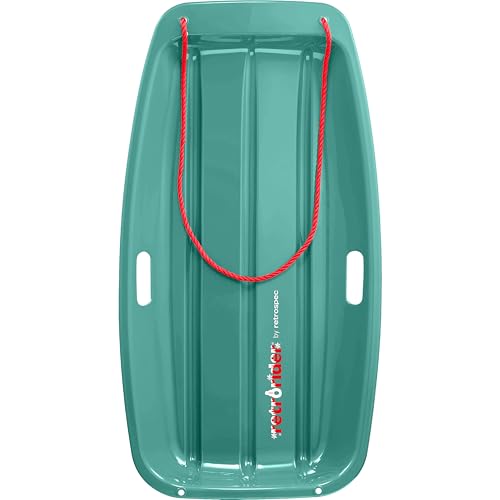
| Molded plastic sled (Lucky Bums, Emsco Sno Storm style) | Ages roughly 3 to 8, general play | Makers list lightweight HDPE bodies, molded handles and pull ropes | Limited steering; can crack in extreme cold |
| Steel-runner sled (Flexible Flyer) | Ages roughly 6 and up on packed snow | Maker lists a steering handlebar with metal runners | Heavier, needs hard-packed snow, and faster |
| Toddler seat sled (Hamax Sno Glider and similar) | Ages roughly 1 to 4 with an adult pulling | Maker lists a seat with a back, a safety strap and a pull rope | For flat or gentle terrain; not for steep hills |
| Foam or inflatable snow tube | Older kids on groomed tube hills | Makers list inflatable or foam builds | Cannot be steered; spins; needs a clear run-out |
| Foam board or sled with handles (Slippery Racer style) | Kids who want a prone or seated ride | Makers list lightweight bodies and hand grips | Fast on icy snow; helmet important |
Match the Sled to Age and Size
Every maker lists an age range and a weight limit on the box or listing, and those two figures are the first filter. A sled meant for older children may not hold a toddler securely. A toddler sled can be outgrown quickly by a bigger child who tips the rated weight. Where a model states a recommended age or weight, follow it and do not let two children share a sled unless the maker allows it.
Children under about three should generally ride a pulled sled on flat ground with a back support and a harness if the maker provides one. A parent should stay within arm’s reach. Slopes, even gentle ones, introduce speeds that toddlers cannot control.
Materials and Construction
Plastic
Plastic sleds are the standard family choice. Reviewers often say they are inexpensive, light for a small child to drag uphill and tolerant of rough use. Cold-brittle plastic can crack, especially when stored outside, so store sleds indoors or in a garage between uses. Flat-bottomed designs glide on fresh powder but can spin out on ice.
Steel runners and wood
The Flexible Flyer is the classic steerable sled with a wood or composite deck and steel runners. It tends to perform best on packed snow and gives the rider some control by pushing the steering bar. It is heavier and sturdier but not as forgiving if it hits an obstacle.
Inflatable and foam
Tubes are comfortable and bouncy, and they handle bumps well. They also spin freely and cannot be steered. Fun on a groomed tubing park, less suited to a public hill with trees at the bottom.
Safety Notes
- Helmets: pediatric and safety organizations commonly advise children to wear a helmet designed for winter sports or a properly fitted bike or ski helmet while sledding. Follow your pediatrician’s advice if unsure.
- Choose the hill: pick a slope with a flat, open run-out, free of roads, trees, fences, water and parking lots. Avoid hills crossed by traffic.
- Sit or lie feet-first: many safety groups advise riding sitting up or lying on the back with feet first, not head-first.
- Supervision: an adult should watch younger children, keep the lanes clear and make sure kids walk back up beside the run rather than across it.
- Conditions: icy hills make sleds faster and harder to stop. Skip sledding in low visibility or at dusk.
- Towing: do not tow sleds behind cars, snowmobiles or ATVs. Pull ropes are intended for walking.
- Cold: dress children in layers, waterproof mittens and boots, and take warm-up breaks. Seek medical advice for any head injury, or if a child seems unwell after a fall.
Features Worth Comparing
Steering
Steerable sleds (steering handles or foot pedals) let kids change direction, which is helpful but also invites higher speeds. Non-steerable sleds rely on the weight shift of the rider. For younger kids, simplicity usually helps.
Handles and pull rope
Molded handles give small hands something to hold. A long, soft pull rope helps adults drag the sled uphill, and a short rope can become a hazard if looped around a rider’s neck or arm, so look for ropes sold with a design suitable for kids, and remove them if the maker advises.
Seat depth and padding
A seat with a slight bowl keeps toddlers from sliding off. Padded seats add comfort but add weight and can hold water. Some makers include a footrest or a back.
Stackability and storage
Plastic sleds often nest, which helps for a family with several riders. Wooden and steel models take more space.
Budget Tiers
Budget: basic molded plastic sleds that suit occasional snow days. Mid-range: sleds with sturdier plastic, built-in handles and better pull ropes, plus Hamax-style toddler sleds with harnesses. Premium: steel-runner classics and specialty sleds meant to be used for years and passed between children.
Pick X If…
| If your child is… | Pick | Why |
|---|---|---|
| A toddler on flat ground | Hamax Sno Glider or another seat sled with a harness | Back support and a pull rope for adult towing |
| Four to eight and new to sledding | Lucky Bums plastic sled | Light, simple and forgiving |
| Older and comfortable on packed snow | Flexible Flyer steel-runner sled | Steering control and durable build |
| Interested in speed and thrills | Slippery Racer-style foam sled or a tube at a groomed park | Fast on slick snow, helmet strongly advised |
| Sharing with siblings | Two or three nesting plastic sleds | Cheaper and avoids overloading a single sled |
Alternatives
- Saucer or disc sleds: spinning ride, popular with kids, hard to control and best on gentle slopes.
- Snow slides and sled ramps: some families build a short pack in the backyard, where the run-out is safe and supervised.
- Tubing parks: groomed lanes with lifts and rules, removing the problem of a hill with hidden hazards.
- Borrowed or secondhand sleds: check for cracks, loose runners, sharp edges and worn ropes before use.
Buying Checklist Before You Order
Read the age and weight range on the listing first, then think about where the sled will be used. A sled for a small backyard hill can be simple and light. A sled for a public hill with variable snow should be sturdier, with a molded edge or handle to hold. Compare the dimensions against your car trunk, since long steel-runner sleds often do not fit in a small hatchback. Consider how the sled will be pulled: a sturdy rope and a comfortable grip make the climb easier for tired kids, and a short tether prevents the sled from running away from a child on a flat section. Bright colors are easier to spot against the snow in a crowd of children. Inspect for sharp edges, rough seams and loose screws, particularly on steel and wood models, and replace any sled with cracks or bent runners rather than patching it.
Finally, set rules before the first run: one rider per sled unless the maker says otherwise, no sledding head-first, a clear lane at the bottom, and a break when kids get cold or tired. A few clear rules prevent many of the collisions that cause injuries. Teach children to bail out by rolling off to the side if the sled heads toward an obstacle, and to move away from the bottom of the run as soon as they stop so the next rider has room.
Frequently Asked Questions
What age can a child start sledding?
Toddlers can ride a pulled seat sled on flat ground with an adult close by. Independent sledding down slopes usually starts from about age four or five, depending on the child. Follow the age range the maker prints on the sled.
Do kids really need a helmet for sledding?
Many pediatric and safety groups recommend one, because head injuries are among the more serious sledding injuries. A helmet made for winter sports or a snug bike helmet is commonly advised. Ask your child’s doctor if you have questions about fit.
Plastic sled or steel-runner sled?
Plastic suits young kids and varied snow because it is light and simple. Steel-runner sleds steer better on packed snow but are heavier and faster. Younger children often do better with plastic.
How do I choose a safe hill?
Look for a gentle slope with a long, flat run-out and no roads, water, trees or fences in the path. Avoid slopes near parking lots or traffic. If you are unsure, use a designated sledding hill or tubing park.
How should I store a sled?
Keep it indoors or in a garage when not in use, because cold and sunlight can make plastic brittle. Dry steel runners and wooden parts after use to reduce rust and warping. Inspect for cracks before each season.
Can two kids ride one sled?
Only if the maker states the sled is built for two and the combined weight is within the stated limit. Otherwise, one rider per sled keeps weight and balance within design limits. Two smaller sleds are usually safer and more fun.
FAQ
What age can a child start sledding?
Do kids really need a helmet for sledding?
Plastic sled or steel-runner sled?
How do I choose a safe hill?
How should I store a sled?
Can two kids ride one sled?
More from Amazon
Programs that pair well with the guide above. Offers and eligibility are set by Amazon and may change.
Free shipping on eligible items, Prime Video and more. Eligible new members can start with a free trial.
Start a Prime free trialAudiobooks and podcasts to listen to on the go. Eligible new members can start with a free trial.
Try Audible freeAd-free music streaming. Eligible new subscribers can start with a free trial.
Try Music Unlimited freeA free business account with business pricing and bulk-buying tools for work, shop or home office.
Create a business accountAs an Amazon Associate we earn from qualifying purchases.