Key takeaways
- Handlebar height should sit around waist to chest level when the child stands on the deck, as many makers advise.
- Check the minimum and maximum rider weight listed by the maker.
- Deck width should allow both feet to stand comfortably.
- Look at wheel size: bigger wheels are smoother, smaller ones are lighter.
- Test the folding mechanism, since stiff latches can be hard for small hands and loose ones can be unsafe.
- Consider how much the scooter weighs, because kids often need to carry it.
For toddlers and young preschoolers, a three-wheel lean-to-steer scooter such as the Micro Mini or Globber lines is the usual starting point; for school-age kids, a two-wheel folding scooter from makers like Razor or Micro suits daily rides; and a stunt or larger-wheel model suits older kids who want speed and tricks. The right scooter depends on the child’s age, height, balance and where they will ride. This guide compares the main types, the specs makers list, and the fit and safety points that matter before you buy.
Our top picks



As an Amazon Associate we earn from qualifying purchases at no extra cost to you.
Kids Scooters at a Glance
| Type | Best for | Key stated features | Limits |
|---|---|---|---|
| Three-wheel lean-to-steer (Micro Mini, Globber Primo) | Ages roughly 2 to 5, as makers state | Two wheels at the front or back, lean steering, low deck, many with height-adjustable handlebars | Outgrown within a few years; less speed |
| Three-wheel with seat or convertible (Globber Evo-style) | Very young riders learning to balance | Seat option, converts to scooter, makers list weight limits | Bulkier; more parts |
| Two-wheel kick scooter (Razor A, Micro Sprite-style) | Ages roughly 5 to 10 | Folding frame, rear fender brake, adjustable height on many models | Needs balance; folding joint wear |
| Larger-wheel commuter scooter (Micro Flex, Razor A5-style) | Older kids and short commutes | Bigger wheels for smoother roll; makers list rider weight limits | Heavier to carry |
| Stunt scooter (Fuzion, Razor Pro-style) | Skate parks and tricks | Reinforced deck and bars, small hard wheels | Not for casual commuting; riders need pads |
| Electric kids scooter (Razor E-style) | Short rides on smooth ground | Motor, age and speed limits listed by the maker | Needs charging; supervision and local rules apply |
Three-Wheel Scooters for the Youngest Riders
For children under about five, makers such as Micro and Globber design lean-to-steer scooters with two wheels on one end and one on the other. The child leans to turn, which many parents find easier than turning handlebars. Look for a low deck, a stable base and handlebars that adjust as the child grows. Makers list age ranges and maximum rider weight, so check these against your child. Reviewers who compare scooters often mention that smooth wheels and a stable frame build confidence quickly, while a wobbly stem can frustrate beginners.
Two-Wheel Scooters for School Age
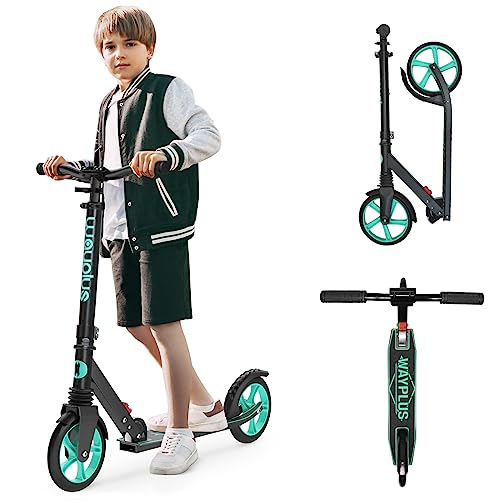
When a child can balance and push confidently, a two-wheel kick scooter gives more speed and a smoother ride. Razor and Micro make folding models with a rear fender brake that the rider presses with a foot. Look for adjustable handlebar height, a deck that fits the child’s shoe, and a folding latch that stays locked. A scooter that is too tall or heavy leads to poor control, so check the stated weight and handlebar range against the child’s height.
Larger Wheels and Stunt Models
Larger wheels roll over cracks and rough pavement better, which helps on typical sidewalks. Stunt scooters trade that for strength and a compact frame, built for ramps and tricks. They are not meant for casual commuting and are best matched with a helmet and pads. Check that the scooter is rated for the child’s weight and riding style.
Electric Kids Scooters
Some makers sell electric scooters designed for children, with listed minimum ages, weight limits and top speeds. They are a bigger commitment: battery charging, storage and local rules on where they can be ridden all matter. Follow the maker’s age guidance and supervise young riders. A standard kick scooter is often the better first purchase.
Fit and Sizing Notes
- Handlebar height should sit around waist to chest level when the child stands on the deck, as many makers advise.
- Check the minimum and maximum rider weight listed by the maker.
- Deck width should allow both feet to stand comfortably.
- Look at wheel size: bigger wheels are smoother, smaller ones are lighter.
- Test the folding mechanism, since stiff latches can be hard for small hands and loose ones can be unsafe.
- Consider how much the scooter weighs, because kids often need to carry it.
Safety and Care
A well-fitted helmet is the most important accessory, and many pediatric organizations also suggest knee and elbow pads for new riders. Follow local rules about where children may ride, and keep young riders away from roads and driveways. Before each ride, check the handlebars, folding latch, wheels and brake for looseness or wear. Wipe the wheels and bearings free of grit, and store the scooter indoors to avoid rust. Replace worn wheels and any damaged parts with the maker’s recommended parts. If your child has a medical condition or balance difficulty, ask a doctor or physiotherapist about a suitable ride-on.
Budget Tiers
Budget: basic two-wheel folding scooters and simple three-wheelers, suited to casual use. Mid-range: Micro, Globber and Razor models with better bearings, adjustable bars and sturdier frames. Many families settle here. Premium: higher-end Micro and stunt models, large-wheel commuters and electric versions, aimed at frequent riders or specific uses.
Decision Table: Pick X If
| Pick | If your child is |
|---|---|
| Three-wheel lean-to-steer | Just learning balance and aged about 2 to 5 |
| Convertible seat scooter | Very young or hesitant on a standing scooter |
| Two-wheel folding scooter | School age with good balance |
| Large-wheel commuter | Older and riding on rougher pavement |
| Stunt scooter | Into skate parks and tricks with proper protection |
| Electric kids scooter | Old enough per the maker, with supervision and local rules in order |
Alternatives
- Balance bikes: a strong option for toddlers learning to balance before a pedal bike.
- Pedal bikes with training wheels or without: better for longer rides and eventual road cycling.
- Skateboards and ride-on toys: a different feel and not a direct substitute for a scooter.
How to Choose Between Types
Match the scooter to the child’s current ability instead of age alone. A confident four-year-old may be ready for a two-wheel model, while a cautious six-year-old might enjoy a stable three-wheeler a little longer. Weight matters as well: a scooter the child cannot lift or fold easily becomes a chore for the parent. Reviewers often point out that smooth bearings and a decent brake make a bigger difference to the ride than extra features such as lights. Check whether replacement parts such as wheels and brakes are available from the maker.
Where to Ride
Smooth, flat surfaces such as park paths, quiet driveways and playgrounds suit beginners. Avoid roads, steep slopes and wet or gravelly surfaces until the child has strong control. Teach the child to put a foot on the brake before slowing and to look ahead for pedestrians. Check local rules about riding on sidewalks and in public spaces, as these vary. Supervise young riders closely, and agree on boundaries before each ride.
Quick Buying Checklist
- Check the maker’s stated age range and maximum rider weight.
- Pick three wheels for beginners and two wheels for confident riders.
- Look for adjustable handlebars that can grow with your child.
- Test the folding latch and brake so a child can operate them.
- Buy a properly fitted helmet and consider knee and elbow pads.
- Check that replacement wheels and parts are available.
Reviewers often say that a scooter used regularly beats a fancier one left in the garage. Letting the child try a few models in a shop, if possible, helps with choosing the right height and feel.
Growing Room and Resale
Adjustable handlebars extend the life of a scooter, and sturdy models from established makers often pass to younger siblings or resell well. Keep the manual, check that bolts stay tight, and replace worn grips and wheels. A child who is between sizes can use a scooter for longer if the maximum handlebar height is generous, so compare the stated range with your child’s current height and expected growth.
Finally, let the child help choose the color or design. Kids who like their scooter tend to ride it more, which builds balance and confidence, and that is the best measure of whether the purchase worked.
Frequently Asked Questions
What age is right for a first scooter?
Makers of three-wheel scooters generally list ages around two or three and up, but readiness depends on the child. Check the maker’s age and weight guidance, and choose a model with a stable base.
Are three-wheel scooters safer than two-wheel ones?
They are more stable at low speeds, which helps beginners. Safety also depends on helmets, supervision and where the child rides.
Should my child wear protective gear?
Yes. A helmet that fits correctly is widely advised, and knee and elbow pads help new riders. Follow guidance from pediatric and safety organizations.
How do I choose the right handlebar height?
Many makers suggest handlebars between waist and chest height while the child stands on the deck. Choose a model with adjustable bars so it grows with the child.
Are electric scooters appropriate for children?
Some makers list minimum ages and speed limits for kids’ electric models. Follow those limits, supervise riding, and check local rules about where they can be used.
How long will a kids scooter last?
That depends on use and care. Regular checks of bolts, wheels and brakes, indoor storage and timely replacement of worn parts help it last, and many families pass scooters on to younger siblings.
FAQ
What age is right for a first scooter?
Are three-wheel scooters safer than two-wheel ones?
Should my child wear protective gear?
How do I choose the right handlebar height?
Are electric scooters appropriate for children?
How long will a kids scooter last?
More from Amazon
Programs that pair well with the guide above. Offers and eligibility are set by Amazon and may change.
Free shipping on eligible items, Prime Video and more. Eligible new members can start with a free trial.
Start a Prime free trialAudiobooks and podcasts to listen to on the go. Eligible new members can start with a free trial.
Try Audible freeAd-free music streaming. Eligible new subscribers can start with a free trial.
Try Music Unlimited freeA free business account with business pricing and bulk-buying tools for work, shop or home office.
Create a business accountAs an Amazon Associate we earn from qualifying purchases.