
Key takeaways
- Lean over the sink and let water flow out of the mouth rather than swallowing it.
- Start with the lowest setting and work up gradually.
- Guide the tip along the gumline and between teeth, pausing at each gap.
- Use warm water if you have sensitive teeth. Water temperature should not be hot.
- If you have braces, implants, bridges or periodontal disease, ask your dentist or hygienist about the right tip and pressure.
- Bleeding that lasts beyond the first week or two of regular use, or any pain, should be discussed with a dentist.
For most people who want a countertop water flosser with strong pressure control and a large reservoir, the Waterpik Aquarius is the long-standing benchmark; for travel and small bathrooms, a cordless model such as the Waterpik Cordless Advanced is more practical; and for buyers who already use a Philips or Oral-B brush and want a matching system, the Sonicare Power Flosser or Oral-B Water Flosser Advanced are worth a look. Water flossers complement brushing and do not replace it, and anyone with gum disease, implants, braces or bleeding gums should ask a dentist which settings suit them.
Our top picks


As an Amazon Associate we earn from qualifying purchases at no extra cost to you.
Water Flossers at a Glance
| Model | Best for | Type | Limit to know |
|---|---|---|---|
| Waterpik Aquarius (WP-660 series) | Daily home use with adjustable pressure | Countertop | Needs counter space and a power outlet |
| Waterpik Cordless Advanced (WP-560 series) | Small bathrooms and travel | Cordless, rechargeable | Smaller reservoir means refills during a session |
| Waterpik Cordless Select / Pearl | Compact, simpler cordless use | Cordless | Fewer pressure settings |
| Waterpik Ion | Minimal footprint and cord-free bathroom counter | Cordless, wall or counter dock | Compact reservoir design |
| Philips Sonicare Power Flosser | Sonicare users and quiet-minded buyers | Countertop or compact versions | Fewer accessory options than Waterpik |
| Oral-B Water Flosser Advanced | Oral-B ecosystem users | Countertop | Brand-specific tips |
| Budget cordless brands (such as Nicefeel, Cremax and similar) | Entry-level cordless use | Cordless | Quality, batteries and warranties vary |
How Water Flossers Work
A water flosser pushes a narrow, pulsing stream of water between teeth and along the gumline to flush out food debris and plaque. Makers describe the pulse as a combination of pressure and pause, which lets the stream dislodge debris and then let it clear away. Dental organisations generally describe water flossers as a helpful supplement or alternative for people who find string floss difficult to use, such as those with braces, bridges, implants or limited dexterity, but they do not describe them as a complete replacement for brushing with fluoride toothpaste. Always follow your dentist’s advice about oral care routines.
Picks by Type of Buyer
Waterpik Aquarius: the countertop reference
The Waterpik Aquarius is the model that many outlets use as a reference point. The maker lists ten pressure settings, a built-in timer and a range of tips for different needs, including tips for orthodontics, periodontal pockets and tongue cleaning. It sits on the counter, plugs into an outlet, and has a large reservoir that typically covers a full session without refilling. Reviewers tend to say it is the best fit for people who floss at home at the same time each day and have a sink with space. The trade-offs are size and the cord.
Waterpik Cordless Advanced: portable and practical
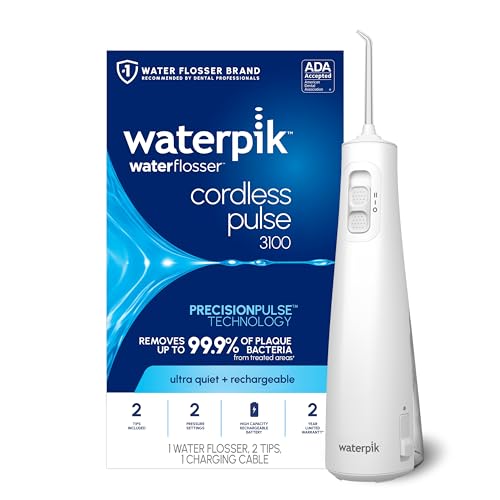
The cordless Waterpik models use a rechargeable battery and a smaller reservoir. The maker lists multiple pressure settings and a design that is easy to store. Reviewers say these units are well suited to small bathrooms, dorm rooms and travel. The main limitation is capacity: a smaller reservoir may need a refill partway through a full session, especially at the highest settings.
Waterpik Cordless Select and similar simpler models
Waterpik’s more compact cordless models trade features for a smaller footprint or a lower budget tier. Fewer pressure settings and simpler controls make them approachable for first-time users who want to try water flossing without committing to a larger unit.
Philips Sonicare Power Flosser
Philips offers countertop and compact Power Flosser models designed to pair with Sonicare toothbrushes. The maker lists a quiet motor and several modes. Reviewers say the units work well for users already in the Philips ecosystem, though the accessory range is less extensive than Waterpik’s.
Oral-B Water Flosser Advanced
Oral-B’s countertop model is aimed at people who already use Oral-B brushes and want similar styling. The maker lists adjustable pressure and brand tips. As with other brands, check tip availability before you commit.
Budget cordless flossers
A wide range of unbranded and lesser-known cordless flossers is sold at lower budget tiers. Outlets that cover this category note that battery life, pump durability, waterproof ratings and warranty terms vary widely. If you try one, confirm what the maker states about charging, water resistance and replacement tips.
Countertop vs Cordless
| Factor | Countertop | Cordless |
|---|---|---|
| Reservoir size | Large; usually one fill per session | Smaller; may need a refill |
| Pressure range | Often wider, with finer steps | Fewer settings on some models |
| Portability | Low | High |
| Counter space | Needs a spot near an outlet | Minimal |
| Typical noise | Moderate, motor hum | Varies, often similar |
| Best for | Daily home routine | Travel, small spaces, quick sessions |
Features That Matter
Pressure settings
Adjustable pressure lets new users start gently and increase over time. Dentists commonly advise beginning at a lower setting, particularly if you have sensitive or inflamed gums. Higher settings are not automatically better; the best setting is the one you can use comfortably and consistently.
Reservoir size and run time
Countertop reservoirs are designed to cover a full session, often around a minute or so of continuous use according to makers. Cordless reservoirs are smaller. Check the maker’s stated capacity if you tend to floss slowly or have many teeth to cover, and consider a larger tank if you dislike pausing to refill.
Tips and attachments
Standard tips suit most users, while orthodontic tips have a small brush to help around braces. Periodontal pocket tips have a soft tip designed to deliver the stream under the gumline. Tongue-cleaning tips are included in some kits. Tips need replacing periodically, so check how easy they are to buy.
Power source and battery life
Cordless models charge via USB or a dock. The maker lists the number of uses per charge; real-world numbers vary with pressure level. Plan to recharge regularly if the unit lives in a humid bathroom.
Cleaning and hygiene
Empty the reservoir after use and follow the maker’s cleaning instructions, since standing water can foster bacteria. Many makers advise running a vinegar solution or a cleaning cycle periodically, but follow the specific instructions in the manual rather than improvising. Replace tips as the maker suggests.
Fit and Use Notes
- Lean over the sink and let water flow out of the mouth rather than swallowing it.
- Start with the lowest setting and work up gradually.
- Guide the tip along the gumline and between teeth, pausing at each gap.
- Use warm water if you have sensitive teeth. Water temperature should not be hot.
- If you have braces, implants, bridges or periodontal disease, ask your dentist or hygienist about the right tip and pressure.
- Bleeding that lasts beyond the first week or two of regular use, or any pain, should be discussed with a dentist.
Budget Tiers
- Budget: simple cordless units. Good for a trial, with variable build quality.
- Mid-range: established cordless and countertop models from Waterpik, Oral-B and Philips with wider tip support.
- Premium: full-feature countertop units with more pressure steps, larger tanks and extra tips.
Pick X If…
| Pick this | If you… |
|---|---|
| Waterpik Aquarius | want the large reservoir and fine pressure control of a countertop unit |
| Waterpik Cordless Advanced | have limited space or travel often |
| Waterpik Ion or Cordless Select | want a simple, small cordless device |
| Sonicare Power Flosser | already use Sonicare and want a consistent ecosystem |
| Oral-B Water Flosser Advanced | use an Oral-B brush and want a familiar interface |
| Budget cordless | want to try water flossing before committing |
Alternatives
- String floss and floss picks: the traditional option, well documented by dental bodies, and often more effective at scraping plaque off tooth surfaces for people who can use it comfortably.
- Interdental brushes: small brushes for gaps between teeth, often favored by people with wider spaces.
- Air flossers: compact devices that use bursts of air and microdroplets, a less messy choice for some users.
Frequently Asked Questions
Can a water flosser replace brushing or string floss?
No. Dental organisations describe water flossers as a useful addition or a practical alternative to string floss for some people, not a replacement for brushing with fluoride toothpaste. Ask your dentist what routine suits your teeth.
How often should I use a water flosser?
Many makers suggest once a day, often in the evening before or after brushing. Your dentist may advise a different routine if you have braces, implants or gum issues.
Is a cordless water flosser as effective as a countertop model?
Cordless models deliver a similar stream but have smaller reservoirs and sometimes fewer pressure settings. For short daily sessions they work well, while people who prefer long sessions or higher pressure may like a countertop unit.
Why do my gums bleed when I use a water flosser?
Gums that are inflamed from plaque buildup can bleed at first. If bleeding continues beyond the first week or two or comes with pain, swelling or bad breath, see a dentist.
Can I add mouthwash to the reservoir?
Some makers allow a small amount of mouthwash diluted with water, while others advise water only. Follow the instructions in your device’s manual, as some additives can damage internal parts.
How do I keep a water flosser clean?
Empty the tank after use, let it air dry and follow the maker’s cleaning steps. Replace tips as directed, typically every few months. If you see residue or notice odors, clean it more often.
FAQ
Can a water flosser replace brushing or string floss?
How often should I use a water flosser?
Is a cordless water flosser as effective as a countertop model?
Why do my gums bleed when I use a water flosser?
Can I add mouthwash to the reservoir?
How do I keep a water flosser clean?
More from Amazon
Programs that pair well with the guide above. Offers and eligibility are set by Amazon and may change.
Free shipping on eligible items, Prime Video and more. Eligible new members can start with a free trial.
Start a Prime free trialAudiobooks and podcasts to listen to on the go. Eligible new members can start with a free trial.
Try Audible freeAd-free music streaming. Eligible new subscribers can start with a free trial.
Try Music Unlimited freeA free business account with business pricing and bulk-buying tools for work, shop or home office.
Create a business accountAs an Amazon Associate we earn from qualifying purchases.






