
Key takeaways
- Switch off power at the breaker before touching any pump or pressure switch. Wells, water and electricity are a dangerous mix.
- Use a licensed electrician for wiring and a licensed well or plumbing contractor for installation where required by local code.
- Use materials rated for potable water, such as parts that carry NSF/ANSI 61 or similar certification if the maker lists it.
- Keep the well cap sealed and the surrounding area clear of chemicals to protect the water supply.
- Have your water tested periodically, as recommended by local health authorities, particularly after pump work.
- Never run a pump dry. Check that the pump has the protection the maker specifies.
The best well pump depends first on your well, not the brand: a submersible pump from a maker such as Goulds, Franklin Electric or Grundfos suits most deep wells, while a shallow-well jet pump from Red Lion, Wayne or Flotec suits wells where the water level is shallow. Horsepower, flow rate in gallons per minute, pumping depth and the well casing diameter decide what fits, so measure and record those before you shop. This guide explains the pump types, compares well-known lines and gives safety notes, with a decision table at the end.
Our top picks


As an Amazon Associate we earn from qualifying purchases at no extra cost to you.
Quick Answer: Which Pump for Which Well
If the water level in your well is deep, a submersible pump sits down in the water and pushes it up. If the water level is shallow, a jet pump above ground pulls water up. A third group, the booster pump, raises pressure in the house plumbing after the main pump. Because well systems involve electricity and water, installation is best handled by a licensed well contractor, plumber or electrician, and local rules may apply.
At a Glance: Well Pump Options Compared
| Brand / line | Best for | Key points from makers and reviewers | Limits |
|---|---|---|---|
| Goulds Water Technology (Xylem) submersibles | Deep residential wells wanting a long-established brand | The maker offers 4-inch submersible pumps in various horsepower and flow ratings; installers widely use them | Installation needs proper equipment and a licensed pro |
| Franklin Electric submersibles | Deep wells, with a well-known motor line | The maker is known for submersible motors and pumps in several sizes | Needs correct sizing to the well |
| Grundfos SQ / SQE | Buyers wanting variable-speed or soft-start efficiency | The maker lists 3-inch pumps with soft start and some with constant pressure options | Premium tier; needs matching controls |
| Red Lion shallow-well jet pumps | Shallow wells and sprinkler or transfer duty | The maker lists cast-iron and thermoplastic jet pumps in a range of horsepower | Practical lift limits for jet pumps |
| Wayne and Flotec jet pumps | Budget-conscious shallow-well users | Offered in cast iron or plastic bodies at entry level | Entry-level materials and duty cycles |
| Zoeller and similar utility pumps | Non-potable water and utility tasks | The maker focuses on sump and utility pumps; check suitability for drinking water | Not all models are designed for potable well water |
Know Your Well Before Choosing
Water depth and pump setting
Know the static water level, the depth to which the pump will be set and the pumping level when water is drawn. Submersible pumps hang below the water level on a drop pipe. Well records or the driller’s report often list depth and yield. If you lack those, a contractor can measure.
Casing diameter
Pumps must fit the casing. Four-inch submersibles are common in homes, and some slimmer 3-inch designs suit narrower wells. Do not guess; check the casing diameter and the pump’s stated outside diameter.
Well yield and flow rate
A pump should not draw more water than the well can provide. Pumping a well dry can damage the pump. Choose a flow rate in gallons per minute that matches household demand without exceeding the well’s sustainable yield.
Pressure and total dynamic head
Pump capacity is expressed on a performance curve showing flow at various head values. Total dynamic head combines vertical lift, pressure at the house and friction loss. Makers publish pump curves; installers use them to select a model.
Pump Types Explained
Submersible pumps
These are the standard for deep wells. Because the motor sits underwater, the pump pushes water upward, which is more efficient than pulling. They are usually quiet because they are below ground. Replacing one means pulling it from the well, often with a hoist or pump puller, so it is generally a job for professionals.
Shallow-well jet pumps
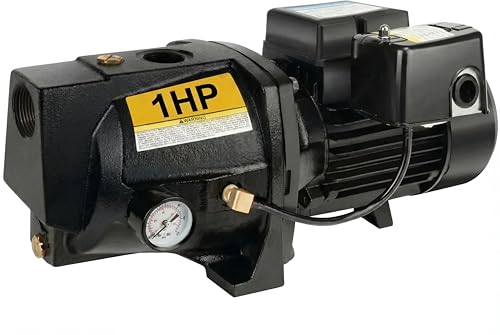
A single-pipe jet pump sits above ground and draws water by suction. Makers commonly state that they work when the water is within a limited lift, often around 25 feet or less, though exact limits depend on the model and elevation. They are easier to service than submersibles, but noisier.
Deep-well jet pumps
These use a two-pipe system with the jet assembly down in the well to reach deeper water than a shallow jet. They are less common now that submersibles are widely available.
Booster pumps
A booster raises pressure after the water leaves the main pump or the pressure tank. It does not draw from a well by itself. It suits homes with low pressure upstairs or long pipe runs.
Horsepower, Voltage and Controls
Residential submersible pumps commonly come in fractions of a horsepower up to a few horsepower, and run on 115 or 230 volts, depending on the pump. Larger pumps and deeper settings usually need 230 volts. Three-wire pumps use a separate control box, while two-wire pumps have the starting components inside the motor. These are details the installer and electrician must match to the wiring. A pressure switch and pressure tank complete the usual household system. Variable-speed drives or constant pressure controllers from makers such as Grundfos hold a steady pressure at the taps, and cost more.
Safety and Water Quality
- Switch off power at the breaker before touching any pump or pressure switch. Wells, water and electricity are a dangerous mix.
- Use a licensed electrician for wiring and a licensed well or plumbing contractor for installation where required by local code.
- Use materials rated for potable water, such as parts that carry NSF/ANSI 61 or similar certification if the maker lists it.
- Keep the well cap sealed and the surrounding area clear of chemicals to protect the water supply.
- Have your water tested periodically, as recommended by local health authorities, particularly after pump work.
- Never run a pump dry. Check that the pump has the protection the maker specifies.
Budget Tiers
Budget tier
Entry-level jet pumps from Wayne, Flotec and similar makers cover shallow wells and sprinkler duty. Bodies may be plastic, and the life cycle is shorter in demanding use. Expect basic warranties.
Mid-range tier
Red Lion cast-iron jets and standard submersibles from Goulds and Franklin Electric sit here. These are the common workhorse choices, with replacement parts and installers who know them.
Premium tier
Premium systems include Grundfos SQ and SQE pumps, constant-pressure controls and stainless components. They offer smoother pressure and, per the makers, energy savings at the cost of higher purchase price and professional commissioning.
Pick X If… Decision Table
| Pick this | If you… |
|---|---|
| Goulds 4-inch submersible | have a deep well and want a widely serviced pump |
| Franklin Electric submersible | want a well-known motor line for a deep residential well |
| Grundfos SQ / SQE | want soft start or constant pressure and have a suitable well |
| Red Lion jet pump | have a shallow well and want a rugged above-ground pump |
| Wayne or Flotec jet pump | have a shallow well and a tight budget |
| Booster pump | already have water supply but low household pressure |
Signs Your Pump Needs Attention
- Short cycling, where the pump turns on and off rapidly, often points to a pressure tank or switch issue.
- Sputtering taps or air in the lines can signal a failing pump, a falling water level or a leak.
- Loss of pressure, unusual noises or tripping breakers should prompt a call to a pro.
- Muddy or discoloured water may be a well issue rather than the pump; get the water tested.
Alternatives to Replacing the Pump
- Pressure tank or switch replacement: Often cheaper than a new pump if the pump itself is fine.
- Constant pressure controller: Adds a variable-speed drive to some existing pumps; ask a pro about compatibility.
- Well inspection: A contractor can check the well’s yield and casing before you invest in a new pump.
- Municipal water connection: An option in some areas when a well has failed.
Frequently Asked Questions
Should I choose a submersible or a jet pump?
Submersibles suit deeper wells and are quieter, while jet pumps suit shallow wells and are easier to reach for service. Your well’s depth and water level decide which type is practical.
What horsepower do I need?
It depends on the depth, the required flow and the pressure. Makers publish pump curves to match horsepower to a given depth and flow, and a contractor can size it.
Can I replace a well pump myself?
Wiring and lifting a submersible pump are risky and often require tools and licensing. Hire a qualified well contractor or plumber and an electrician where local rules apply.
How long does a well pump last?
Lifespan varies with pump type, water quality, duty and installation. Makers publish warranty periods, and short cycling or sediment can shorten life.
Why does my pump keep turning on and off?
Short cycling often points to a faulty pressure tank, pressure switch or a leak. Have a professional diagnose it rather than guessing.
Is a constant-pressure system worth it?
It gives steadier showers and appliance pressure, and makers say it can save energy. It costs more, so it is most appealing for larger homes and those with pressure complaints.
FAQ
Should I choose a submersible or a jet pump?
What horsepower do I need?
Can I replace a well pump myself?
How long does a well pump last?
Why does my pump keep turning on and off?
Is a constant-pressure system worth it?
More from Amazon
Programs that pair well with the guide above. Offers and eligibility are set by Amazon and may change.
Free shipping on eligible items, Prime Video and more. Eligible new members can start with a free trial.
Start a Prime free trialAudiobooks and podcasts to listen to on the go. Eligible new members can start with a free trial.
Try Audible freeAd-free music streaming. Eligible new subscribers can start with a free trial.
Try Music Unlimited freeA free business account with business pricing and bulk-buying tools for work, shop or home office.
Create a business accountAs an Amazon Associate we earn from qualifying purchases.







