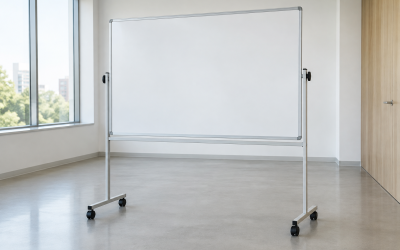
When you are leading a dynamic presentation, training session, or collaborative workshop, the last thing you want is a wobbly, ghosting, or poorly sized writing surface distracting your audience. Mobile rolling whiteboards have become absolute staples in modern workspaces, offering the ultimate flexibility to transition a conference room into a brainstorming zone within seconds. However, not all rolling boards are engineered equally, and buying the wrong one can lead to frustration, premature surface wear, and stability issues right in the middle of a crucial pitch.
Navigating the market requires looking past flashy marketing claims and focusing on the core engineering elements that dictate daily performance. Whether you are outfitting a corporate boardroom, a university lecture hall, or a flexible agile workspace in 2026, understanding what actually matters will save you time, money, and professional embarrassment. This guide breaks down the critical decision-making factors so you can invest in a mobile presentation board that performs reliably for years.
As an Amazon Associate we earn from qualifying purchases at no extra cost to you.
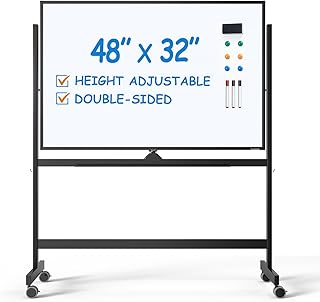
Surface Material: Melamine vs. Painted Steel vs. Porcelain
The writing surface is the single most important component of any mobile whiteboard, dictating how smoothly markers glide, how cleanly the board erases, and how long it resists permanent staining. Melamine is the most budget-friendly option, but its resin-infused paper surface is porous and prone to ghosting (faint marker residue that refuses to wipe away) within a year of heavy daily use. It is best suited for light, occasional note-taking rather than high-frequency presentations.
Painted steel offers a massive step up in durability. By baking enamel onto a steel core, manufacturers create a non-porous writing plane that resists staining much better than melamine while still providing a magnetic backing. Porcelain on steel represents the gold standard for heavy-use environments. Baked at extremely high temperatures, porcelain is virtually indestructible, scratch-resistant, impervious to ghosting, and backed by long multi-year warranties. If your board will see multiple presentations a day, skipping the budget surface and investing in porcelain is always the right financial choice long-term.
Frame Stability and Base Design
Because mobile whiteboards are designed to move, their support structures must combat the natural physics of writing pressure. A flimsy base will cause the entire board to shake violently every time you press down with a marker, creating an irritating experience for your audience and making neat handwriting nearly impossible. Look for sturdy steel frames with wide footprints.
Base geometry matters significantly. H-frame bases and wide-stance T-leg bases distribute weight effectively and prevent tipping during vigorous erasing sessions. Avoid ultra-lightweight aluminum frames unless portability is your absolute highest priority and you intend to treat the board with extreme care. Furthermore, examine the weight distribution of the upright pillars; a heavy central mast paired with a narrow base is a recipe for a tip-over hazard.
Size and Aspect Ratio Selection
Choosing the correct dimensions involves balancing your presentation style with the physical architecture of your rooms. Standard mobile boards typically range from smaller personal sizes up to expansive multi-foot wider surfaces. If you are presenting complex workflows or dense data sets, a wider format (approaching widescreen aspect ratios) allows you to map out concepts horizontally without constantly erasing your previous thoughts.
Before purchasing, measure your physical doorways and elevator clearances. A massive presentation board is useless if it cannot physically roll out of the storage closet and into the conference room. If you work in multiple tight spaces, consider dual-purpose or modular sizing that delivers ample writing space without requiring a wide-load corridor to transport.
Reversible vs. Single-Sided Boards
Reversible (double-sided) whiteboards give you the ability to flip the board 360 degrees, effectively doubling your uninterrupted writing area or letting you hide pre-written notes on the back side until the ideal moment in your presentation. This feature is incredible for multi-stage workshops where you need to preserve data from the first half of the session.
However, the flipping mechanism adds moving parts that can wear out over time. Cheaper reversible boards use plastic pivot pins and flimsy locking levers that strip or loosen after a few months of flipping. If you choose a double-sided model, ensure the rotation axis features a heavy-duty steel locking mechanism with a positive-click foot pedal or hand knob that securely immobilizes the board at a perpendicular angle during high-pressure presentations.
Mobility and Caster Quality
The phrase “rolling whiteboard” loses its value quickly if the casters refuse to roll smoothly over low-pile commercial carpet or get jammed on doorway thresholds. Caster wheel diameter is the primary indicator of rolling performance. Small, hard plastic wheels under two inches in diameter catch on every tiny bump, cord, or floor seam.
Look for commercial-grade casters measuring at least three inches in diameter, preferably made of soft rubber or polyurethane that glides effortlessly across both hard floors and carpeting without leaving marks. Crucially, at least two (and ideally all four) of the wheels must feature reliable locking brakes. A wheel lock that slips under writing pressure will cause your presentation board to slide slowly away from you mid-sentence, derailing your professional momentum.
Frame Adjustability and Height Ergonomics
Not all presenters are the same height, and not all audiences are positioned at eye level. While most traditional mobile whiteboards feature fixed heights, height-adjustable frames offer distinct ergonomic advantages. Gas-spring or counterbalanced pneumatic lift systems allow you to raise or lower the board effortlessly to match the presenter or to drop the board down so seated participants can collaborate during interactive workshop segments.
If you primarily present standing up in standard corporate settings, a fixed ergonomic height of around seventy inches total height usually positions the top writing zone comfortably within reach. However, if your team includes diverse users or requires children or seated wheelchair users to participate, investing in a vertically adjustable model is an essential accessibility requirement.
When to Spend More on Premium Presentation Boards
Understanding when to open your wallet wider depends entirely on your usage frequency and environment. If you need a board for a home office where it will be used once a week to sketch a quick idea, a mid-range painted steel board with standard casters will serve you wonderfully without breaking your budget.
Conversely, if you manage a high-traffic corporate training room, educational facility, or collaborative agency where multiple teams use the board daily, spending more on commercial-grade porcelain surfaces, heavy-gauge steel H-frames, and reinforced locking casters is mandatory. Premium boards reduce long-term replacement costs, protect your brand image during client presentations, and eliminate the hidden productivity taxes of dealing with broken equipment.
Related Guides
If you are ready to make a purchase, take a look at our Best Mobile Rolling Whiteboards for Presentations in 2026: Compared and Ranked guide to see top-performing models.
FAQ
Do mobile whiteboards wobble when writing aggressively?
They can if you choose an ultra-light model with a narrow base. To prevent annoying vibrations during presentations, look for heavy-gauge steel frames, H-base or wide T-leg designs, and make sure all assembly bolts are fully tightened.
Can I use magnetic accessories on all rolling whiteboards?
No, magnetic functionality depends entirely on the core material beneath the surface. Melamine and non-magnetic glass boards do not accept magnets, whereas painted steel and porcelain-on-steel boards are universally magnetic.
How do I prevent ghosting and stains on the surface?
Always use high-quality dry-erase markers and erase your notes regularly rather than leaving them on the board for weeks. Clean the surface weekly with a specialized whiteboard conditioning cleaner and microfiber cloth to remove microscopic ink residue.
Are double-sided reversible whiteboards top-heavy?
Some poorly engineered reversible boards can feel top-heavy or awkward to rotate if the center of gravity is off. Quality models feature a balanced pivot axis and a weighted base to ensure smooth, safe flipping without risking a tip-over.