Our Top Picks
 The Basement Watchdog Special CONNECT Battery Backup SumpNo Size5 x 9 x 7.63 inches12 PoundsCheck on Amazon
 Wayne Preassembled Primary & Battery Backup Sump PumpNo Size23.5 x 18.25 x 14 inches44 PoundsCheck on Amazon
 The Basement Watchdog Combo Preassembled Primary & Battery11.75 x 8.75 x 18 inches27 poundsCheck on Amazon
 2500W Sump Pump Battery Backup System for Basement400W Pack of 2816.93 x 7.87 x 4.33 inches10.9 PoundsCheck on Amazon
The best battery backup sump pump for most basements is a complete system with a DC backup pump or a proven combo, and an inverter kit only makes sense if you want your existing pump to keep running. This guide covers ten listings and splits them plainly: six are pump systems, and four are inverter-style kits that power an existing pump but are not pumps themselves.
No one on the team handled these units, so the profiles rely on published titles and general sump pump knowledge. Where a title leaves out something important, such as whether a battery is included, the profile tells you to check the listing.
Top picks at a glance
The Basement Watchdog Special CONNECT Battery Backup Sump Pump System w/Copper-Wound Motor, 2,890 GPH (BWSP); WiFi-Capable w/Add-on Module


As an Amazon Associate we earn from qualifying purchases. Product prices and availability are accurate as of the date/time indicated.
Wayne Preassembled Primary & Battery Backup Sump Pump Combo System | 1/2 HP, Integrated Vertical Float Switch, 12 Volt Battery Back Up Capability, 5,100 Gallons Per Hour


As an Amazon Associate we earn from qualifying purchases. Product prices and availability are accurate as of the date/time indicated.
The Basement Watchdog Combo Preassembled Primary & Battery Backup Sump Pump System w/Monitoring Controller (CITE-33); Copper-Wound PSC Motor


As an Amazon Associate we earn from qualifying purchases. Product prices and availability are accurate as of the date/time indicated.
2500W Sump Pump Battery Backup System for Basement Flood Protection | 5000W Peak,Pure Sine Wave Inverter with Charger, 25A Fast Charging, Auto Transfer Switch, 3AC Outputs, for Outage Emergency


As an Amazon Associate we earn from qualifying purchases. Product prices and availability are accurate as of the date/time indicated.

1500W Sump Pump Battery Backup System for Basement Flood Protection | 3000W Peak,Pure Sine Wave Inverter with Charger, 25A Fast Charging, Auto Transfer Switch, 3AC Outputs, for Outage Emergency


As an Amazon Associate we earn from qualifying purchases. Product prices and availability are accurate as of the date/time indicated.

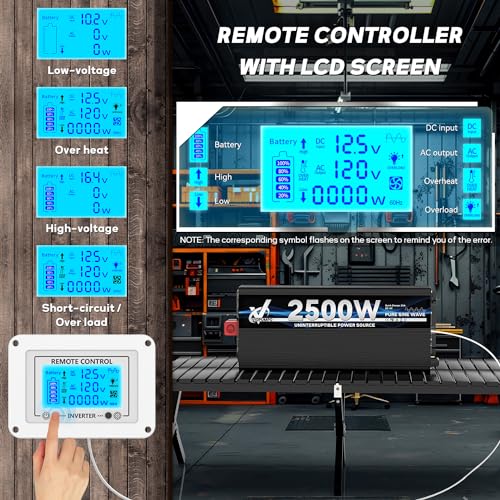
2500 Watt Sump Pump Backup Battery System, Automatic Switching to Battery Inverter Power, Professional Backup System in Case of Power Failure, Pure Sine Wave Output Remote Controller with LCD Screen




As an Amazon Associate we earn from qualifying purchases. Product prices and availability are accurate as of the date/time indicated.

WAYNE 12 Volt Battery Backup Sump Pump Coated Steel ESP25n | 2,700 GPH Submersible Reed Float Switch Automatic Water Removal Basement Flood Protection 2-Yr Warranty


As an Amazon Associate we earn from qualifying purchases. Product prices and availability are accurate as of the date/time indicated.

Zoeller 508-0006 AquaNot Spin 508 ProPak | Complete Sump Pump System with M53 Primary Pump & 12 V Battery Backup, Check Valve & Float Switch - Basement Flood Protection


As an Amazon Associate we earn from qualifying purchases. Product prices and availability are accurate as of the date/time indicated.
| Model | Key point from title | Price tier | Best for |
|---|---|---|---|
| Basement Watchdog Special CONNECT (BWSP) | 2,890 GPH, copper-wound motor, WiFi with add-on | Mid-range | Adding a backup pump to a pit |
| Wayne primary and backup combo | 1/2 HP, 5,100 GPH, 12 volt capable | Premium | New installs wanting a preassembled pair |
| Basement Watchdog Combo (CITE-33) | Preassembled, monitoring controller | Mid-range | Combo with monitoring |
| OLTEANP 2500W inverter kit | 5000W peak, pure sine wave, 25A charger | Mid-range | Keeping an existing AC pump running |
| OLTEANP 1500W inverter kit | 3000W peak, auto transfer switch | Budget | Smaller pumps on a budget |
| VEVOR 1500W inverter system | LCD display, battery not included | Budget | Lowest-cost inverter option |
| VIOPUMPO 2500W system | Remote controller with LCD, pure sine wave | Mid-range | Remote monitoring of an inverter kit |
| Wayne ESP25n | 12 volt, 2,700 GPH, reed float, 2-year warranty | Mid-range | Standalone backup pump |
| Briidea WiFi system | Dual-band WiFi, water level sensor, alarm | Budget | Smart monitoring on a budget |
| Zoeller 508-0006 ProPak | M53 primary pump, 12 volt backup, check valve | Premium | Complete professional-style system |
Where battery backup is heading
The listings reveal a few broad patterns, offered as general observations. Connected monitoring is spreading: WiFi modules, remote controllers and alarm systems are now common even at modest prices, because a silent failure in a basement is exactly what owners fear.
The second pattern is the rise of the inverter kit. Instead of a second DC pump, these systems keep your existing AC pump running from a battery, which some owners prefer because they avoid changing the pit. The risk is that they depend on a battery you buy separately and on matching it to the pump’s startup demand.
Finally, battery chemistry is shifting. Sealed AGM batteries remain the usual match, while lithium iron phosphate options are becoming more common because they are lighter and allow deeper discharge. None of these titles say which batteries they support, so verify compatibility before buying any charger or inverter.
How we picked these
We compared the listings using their published titles and general knowledge of sump pumps and battery systems. We looked at pump type, claimed flow, motor, charger and inverter details, monitoring features and warranty mentions, and noted where titles were unclear or off-type. Nobody on the team used or measured these units. Prices appear only as relative tiers, and anything a title does not say is flagged for you to check on the listing.
The ten listings, one by one
The Basement Watchdog Special CONNECT Battery Backup System (BWSP)
The title describes a battery backup sump pump system with a copper-wound motor, 2,890 gallons per hour and WiFi capability through an add-on module. The brand is widely known in this category, though the title gives no detail beyond that.
This is a DC backup pump that sits in the pit beside your primary. The GPH figure is a seller rating, normally quoted at minimal lift, so real output at your discharge height will be lower. The WiFi module is a separate add-on, so the smart feature is not included out of the box. A battery is not mentioned, so assume you supply it.
Think of a house with a working primary pump and a basement that has flooded once. Adding this as a standby gives you a second pump on a separate power source.
- Pro: dedicated backup pump with named motor type.
- Pro: optional WiFi alerts.
- Con: monitoring requires an add-on.
- Con: battery and charger inclusion unclear.
Check what ships in the box, the pit size it needs and the discharge fitting. Ask: does my pit have room for two pumps?
Wayne Preassembled Primary and Battery Backup Sump Pump Combo
Wayne’s title lists a 1/2 horsepower primary pump, an integrated vertical float switch, 12 volt battery backup capability and 5,100 gallons per hour. It is a preassembled system, which reduces fitting decisions.
The wording says capability, so it may be designed to accept a backup pump rather than include a battery. The 5,100 GPH is a claim for the primary pump at minimal lift, and the real number falls with height. The premium tier reflects the combo and the pump power.
It suits a new installation or a full replacement, where you are rebuilding the pit setup and would rather start with a matched pair than piece it together.
- Pro: preassembled primary and backup arrangement.
- Pro: high claimed flow.
- Con: battery not clearly included.
- Con: premium price tier.
Check whether the battery, charger and check valve are in the box. Ask: what will my installer need to add?
The Basement Watchdog Combo Preassembled System with Monitoring Controller (CITE-33)
This combo lists a copper-wound PSC motor and a monitoring controller. The title calls it a preassembled primary and battery backup system, with the CITE-33 model reference.
The monitoring controller is the main selling point, since it tracks system status and warns you when something is off. A PSC motor is a common choice in household pumps, though the title gives no horsepower or flow number, so you must find them elsewhere. It sits above the single BWSP in capability and below the Wayne combo in price tier.
It fits a homeowner who travels, where a basement alarm and status check matter more than raw pumping numbers.
- Pro: preassembled pair with a controller.
- Pro: copper-wound motor named.
- Con: no flow or horsepower figure in the title.
- Con: battery details unclear.
Check the controller’s alarm type, battery type and warranty. Ask: how will I be alerted when I am away?
OLTEANP 2500W Sump Pump Battery Backup System, 5000W Peak
This is an inverter and charger kit, not a pump. The title lists 2500W, 5000W peak, a pure sine wave inverter, a 25A fast charger, an auto transfer switch and 3 AC outputs for outage emergencies.
Such a kit lets your existing pump keep running from a battery. The high peak rating helps with pump startup surges, and pure sine wave output is generally gentler on motors. Whether a battery is included is not stated, so assume you buy one separately and size it for your pump.
Imagine a home with a well-regarded AC primary pump that you do not want to replace. An inverter kit adds power resilience without touching the pit.
- Pro: large inverter capacity for startup surges.
- Pro: automatic transfer and a built-in charger.
- Con: not a pump and may not include a battery.
- Con: needs correct battery sizing and wiring.
Check the battery requirement, surge rating and installation instructions. Have a qualified electrician install it according to local codes.
OLTEANP 1500W Sump Pump Battery Backup System, 3000W Peak
The smaller sibling lists 1500W, 3000W peak, pure sine wave, a 25A charger, auto transfer and 3 AC outputs. It is the same type of kit, with less capacity.
Lower capacity can be enough for small pumps, but the startup surge of larger pumps may exceed it. You need to compare the nameplate of your pump with the inverter ratings. The title does not mention a battery, so plan for that cost. It sits in the budget tier, which makes it the entry point.
It fits a modest pit with a small primary pump and a homeowner who wants low-cost insurance.
- Pro: lower price than the 2500W model.
- Pro: same transfer switch and charger approach.
- Con: may be too small for bigger pumps.
- Con: battery not clearly included.
Check your pump’s running and startup power. Ask: is 1500W enough for my pump?
VEVOR 1500W Sump Pump Battery Backup System with LCD Display
VEVOR’s title lists 1500W, an LCD display, automatic switching to battery inverter power, pure sine wave output and a plain note that the battery is not included.
That honesty is helpful: you need to budget separately for a deep-cycle battery. The LCD adds visibility on status. It is one of the least expensive kits in the group, so it suits cost-conscious owners who understand batteries and installation.
A homeowner comfortable with battery wiring and who already owns a suitable battery is the natural buyer.
- Pro: low price tier with a display.
- Pro: battery status stated clearly.
- Con: battery sold separately.
- Con: not a pump.
Check the battery voltage, charge current and installation guide. A good question: which battery will I buy and where will it sit?
VIOPUMPO 2500 Watt Sump Pump Backup Battery System
The VIOPUMPO title promises automatic switching to battery inverter power, a professional backup system, pure sine wave output and a remote controller with an LCD screen. Capacity is 2500 watts.
The remote controller is the distinguishing feature, since it lets you view status from a distance. Like the other inverter kits, it supports a pump you already own, and the title does not say whether a battery is included. The words professional backup system are marketing, not a certification.
It could suit a basement utility room that is far from where you spend time, where a remote screen helps.
- Pro: remote controller with LCD.
- Pro: large inverter capacity.
- Con: marketing language is vague.
- Con: battery inclusion unclear.
Check the remote’s range, the battery requirement and the warranty. Ask: how far does the remote work?
WAYNE 12 Volt Battery Backup Sump Pump ESP25n
Wayne’s ESP25n lists a coated steel body, 2,700 GPH, a submersible reed float switch, automatic water removal and a two-year warranty. It is a 12 volt DC pump for basement flood protection.
This is a classic standalone backup pump, designed to sit alongside an AC primary. The warranty figure is useful and rare among these titles. The 2,700 GPH rating is a claim at minimal lift. Whether a battery or charger ships with it is not stated.
It is a good fit for a homeowner who wants a simple second pump and plans to supply a battery and charger.
- Pro: stated two-year warranty.
- Pro: simple standalone design.
- Con: battery and charger not described.
- Con: reed float is a mechanical part to check.
Check the discharge size, pit fit and charger needs. Ask: which charger is compatible with my battery?
Briidea Battery Backup Sump Pump System with WiFi Monitoring
The title describes a battery backup sump pump system for basements, compatible with a 12 volt battery that is not included, with dual 2.4G and 5G WiFi, an electronic water level sensor and a smart alarm.
It is unclear whether this includes a pump, since the wording emphasizes the system and sensing. If it is a monitoring and control unit, it is closer to the inverter kits than the DC pumps. The electronic sensor avoids a mechanical float, which can be a plus.
It suits a buyer interested in phone alerts and who can confirm exactly what the box includes.
- Pro: WiFi alerts and an electronic sensor.
- Pro: budget tier.
- Con: contents are unclear from the title.
- Con: battery not included.
Check whether a pump is included, the app’s reputation and the alarm volume. The key question: is this a pump or a controller?
Zoeller 508-0006 AquaNot Spin 508 ProPak
The title describes a complete sump pump system with an M53 primary pump and 12 volt battery backup, along with a check valve and float switch for flood protection.
It is the most expensive listing and the most complete in its description, which is why it suits an installer or an owner who wants a matched professional-style kit. The title does not state flow, horsepower or whether the battery is included.
A home with a history of flooding, where the owner wants a premium system installed once, is the natural fit.
- Pro: complete system described, with a check valve.
- Pro: recognized pump model named.
- Con: highest price tier.
- Con: battery inclusion unclear.
Check the pit dimensions, discharge size and battery details. Ask: is the premium justified by my risk?
Buying guide: how battery backup works
How it works
A primary pump runs on household power and removes water as the pit fills. When power fails or the primary cannot keep up, a backup either runs a DC pump from a 12 volt battery or an inverter feeds AC to your existing pump. A float or sensor triggers the switch, and a charger keeps the battery topped up when mains power returns.
Sizing flow and lift
Flow ratings in gallons per hour are normally quoted with almost no vertical lift. As water must climb higher to reach the discharge point, real output falls, sometimes by a large margin. Measure from the bottom of the pit to the highest point of the discharge line, then compare that figure with the pump curve in the manual, if the maker publishes one. A backup that moves only a trickle at your lift height is little better than none. Pit diameter matters too, since a second pump and float need room to move without touching the walls or each other.
Battery types: AGM, flooded lead-acid and LiFePO4
Sealed AGM batteries are a common match for sump systems because they do not need topping up with water, handle occasional deep discharge reasonably well and are easy to find. Flooded lead-acid batteries often cost less per amp-hour, but they release gas while charging, so they need ventilation and periodic checks of fluid level. LiFePO4 batteries are lighter and allow deeper discharge for the same rated capacity, but cost more upfront, and the charger must be designed for that chemistry. A charger tuned for lead-acid can undercharge or stress a lithium pack. None of the listings here tells you which chemistry it supports, so read the manual before buying a battery.
Installation
Installation involves pit space, discharge plumbing, a check valve and electrical connections. A backup pump usually sits beside the primary, with its own discharge line or a tee into the existing one, and a check valve to stop water falling back. An inverter kit adds a battery, a transfer switch and wiring between the household circuit and the pump. Gas, electrical and plumbing work should be done by a qualified professional who follows the manufacturer’s instructions and local codes, and some areas require a permit. Keep lead-acid batteries ventilated and away from sparks, and place any battery on a surface that cannot be flooded.
Maintenance and warning signs
Every few months, pour water into the pit to confirm the float rises, the pump switches on and the water discharges. Check terminals for corrosion, the charge state and any alarms. Common problems include a stuck float, a dead battery, a clogged intake and a failed check valve. Warning signs include a pump that cycles constantly, a humming motor that does not move water, a beeping alarm, or a battery that no longer holds charge. Replace batteries on the maker’s schedule, since an old one can fail exactly when needed. If you add a generator for long outages, run it outdoors only, as the manual directs, and see our overview of portable generator deals for home backup.
| Spec concept | What to look for | Why it matters |
|---|---|---|
| GPH rating | Flow at your lift height | Headline figures assume little lift |
| Battery | Included or not, type supported | Often the biggest hidden cost |
| Inverter surge | Above your pump’s startup draw | Motors need extra power to start |
| Alarm and monitoring | Audible alert or app alert | Tells you before water rises |
| Warranty | Stated term and exclusions | Batteries may be excluded |
Worked example: estimating battery runtime
Assume a 12 volt, 100 amp-hour battery holds about 1,200 watt-hours of nominal energy. If you use about 50 percent for lead-acid, you have roughly 600 usable watt-hours. Suppose an AC pump draws 600 watts while running and cycles for one minute in every five. The average draw is then about 120 watts, plus perhaps 20 watts of inverter overhead. Dividing 600 watt-hours by 140 watts, and trimming for inverter losses, gives roughly 3.5 to 4 hours. A heavy storm that keeps the pump running continuously could drain the battery in about an hour. These are our own estimates from stated assumptions, so check your pump’s nameplate and the battery’s rating.
Mistakes buyers make
The first mistake is assuming a battery is included. Several titles here say not included or say nothing at all, and the battery can cost as much as the unit.
Second, buyers confuse pumps and inverters, and the confusion is understandable because several titles use the same words for both. A kit that powers your existing pump will not help if that pump has failed, so match the product to the risk. Third, they trust GPH figures, which assume little lift. Fourth, they skip alarms. Without a loud alert, a dead battery can go unnoticed for months. The last mistake is never trying the system after installation: pour water into the pit once and follow the manufacturer’s test procedure to confirm the backup actually starts. Many owners discover a loose connection or flat battery only during the first storm.
One more error is ignoring the discharge side. A backup pump that shares a frozen or blocked outlet pipe with the primary will fail in the same way, so check the outdoor end of the line each season and keep it clear of leaves, ice and debris. Also remember that a backup system protects against a power cut, not against a flood that exceeds what the pumps can handle, so grading, gutters and downspouts still matter.
Verdict by use case
For a standalone backup pump, the Wayne ESP25n and the Basement Watchdog BWSP are the clearest choices. For a matched new installation, the Wayne combo, Watchdog Combo and Zoeller ProPak cover the mid to premium range. If your existing pump is reliable, the OLTEANP and VIOPUMPO kits can keep it running, while the VEVOR is the budget entry, with the warning to buy a battery. The Briidea suits those who want WiFi alerts, once its contents are confirmed. For a house with a finished basement and expensive contents, the complete systems from Wayne, Watchdog and Zoeller deserve the extra budget, while a cheaper kit may be enough for a utility basement with little stored. Whatever you pick, confirm the battery, check the lift and have the work done to code.
Battery backup sump pump questions
Do I need a backup if my sump pump already works fine?
A working pump still stops when the power goes out, and storms that cause outages are often the same ones that raise groundwater. A battery backup, or a second pump on its own power, covers that gap. Whether you need one depends on how often your basement takes on water, how long outages last in your area, and how much is stored below. Ask a plumber if you are unsure.
What is the difference between a backup pump and an inverter kit?
A backup pump is a second, DC-powered pump that sits in the pit and runs from a 12 volt battery. An inverter kit turns battery power into household AC so your existing primary pump keeps running, with a charger and switch that handle the changeover. Both need a battery, and the right choice depends on whether you want a separate pump or want your current pump to continue working.
How long will a backup battery run my pump?
It depends on battery capacity, pump draw, how often water enters the pit, and battery condition. A larger amp-hour battery lasts longer, and a pump that cycles briefly lasts far longer than one running continuously. Titles do not state runtime, so use the worked example in this guide to estimate, and treat the result as a rough planning number, not a promise.
Which battery type is best for a sump pump?
Sealed AGM batteries are popular because they do not need topping up and are widely sold. Flooded lead-acid batteries are often cheaper but need venting and maintenance. LiFePO4 batteries are lighter and allow deeper discharge, but they cost more and some chargers are not designed for them. Always match the battery chemistry to what the charger or controller supports.
Can I install a backup system myself?
Some people handle pump placement, but the electrical connections, wiring to a battery and any plumbing changes carry risk. A qualified electrician or plumber who follows the manufacturer’s instructions and local codes is the safer route, and a permit may be required. Never improvise battery connections, and keep a lead-acid battery in a ventilated spot as the instructions require.
How often should I check the system?
A common habit is to pour water into the pit every few months to confirm that the float rises, the pump switches on and the water discharges. Check the battery terminals, charge status and alarm at the same time, and note the battery age. Replace batteries on the schedule the maker suggests, since a battery that sat unused for years may fail when needed.
Related guides
- Rechargeable Electric Toothbrush With Travel Case
- Countertop Water Filters Without Installation
- Skin Lifting And Tightening Devices