
Key takeaways
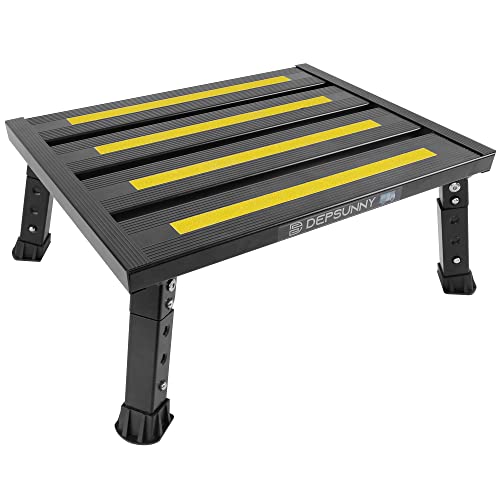
- Folding portable steps. Aluminum or steel steps that fold flat for storage. Good for travel trailers and occasional use, easy to move between rigs.
- Fixed-leg stair steps. Free-standing steps with a sturdy frame, often with a wider tread. Reviewers describe them as stable but bulkier to carry.
- Bi-fold and tri-fold mounted steps. Steps that fold up against the door or frame when not in use. Common on factory-installed setups.
- Electric steps. Motor-driven steps that extend when the door opens and retract when it closes. Lippert (Kwikee) and Stromberg Carlson sell electric and manual versions.
- Platform and landing steps. Wide, flat platforms for larger rigs and multi-step entries.
Most RV owners are best served by a folding or fixed-leg aluminum step that matches their door height and rated load, with an electric slide-out or bi-fold step from Lippert, Kwikee or Stromberg Carlson as the choice for those who want built-in convenience and a portable folding step for those who want a low-cost add-on. This guide covers the main types, what to read on the spec sheet, and how to fit a step safely.
Our top picks


As an Amazon Associate we earn from qualifying purchases at no extra cost to you.
RV step types
- Folding portable steps. Aluminum or steel steps that fold flat for storage. Good for travel trailers and occasional use, easy to move between rigs.
- Fixed-leg stair steps. Free-standing steps with a sturdy frame, often with a wider tread. Reviewers describe them as stable but bulkier to carry.
- Bi-fold and tri-fold mounted steps. Steps that fold up against the door or frame when not in use. Common on factory-installed setups.
- Electric steps. Motor-driven steps that extend when the door opens and retract when it closes. Lippert (Kwikee) and Stromberg Carlson sell electric and manual versions.
- Platform and landing steps. Wide, flat platforms for larger rigs and multi-step entries.
At a glance
| Type | Example makers | Best for | Limits |
|---|---|---|---|
| Folding portable | Stromberg Carlson, Lippert, others | Occasional use and budget buyers | Not attached; can slip without a good setup |
| Fixed-leg stair | Various aluminum step makers | Stable entry for taller doorways | Bulky to store |
| Manual mounted step | Lippert (Kwikee), Stromberg Carlson | Replacing a worn factory step | Needs correct mounting dimensions |
| Electric step | Lippert (Kwikee), Stromberg Carlson | Everyday convenience and mobility | Needs wiring; motor and sensors need maintenance |
What to read on the spec sheet
- Weight rating. Makers publish a load rating for each step. Pick one that comfortably exceeds the heaviest person plus whatever they carry.
- Step height and number of steps. Measure the distance from the ground to the door threshold with the RV level. The step set should divide that rise into even, comfortable increments.
- Tread width and depth. Wider, deeper treads are easier on feet and joints. Check the maker’s dimensions.
- Tread surface. Slip-resistant treads matter in rain, mud and snow.
- Mounting pattern. Mounted steps use specific bolt patterns and bracket positions. Match the pattern to your door frame and RV model.
- Material. Aluminum is common because it is light and resists rust. Steel may be used for strength but can corrode if the coating fails.
- Electric specifics. Voltage, amp draw, wiring harness and whether the step supports a manual override.
Fit and compatibility
Fit is the largest source of returns. Check the RV make, model year and door position, then compare to the step maker’s fitment list or dimensions. Replacement steps for factory units are often specific to a brand or model line, and universal mounting kits exist for others. If you cannot match a bolt pattern, ask the maker or a service center before drilling.
For portable steps, the main fit question is height. A step that is too short leaves an awkward final stride; one that is too tall can rest against the door sill. Measure the rise with the RV on level ground and any leveling jacks in the position you normally use.
Budget tiers
| Tier | What you typically get | Trade-offs |
|---|---|---|
| Budget | Basic folding or fixed-leg portable steps | Lower load ratings, simpler treads, may shift on soft ground |
| Mid-range | Quality aluminum portable steps and manual mounted steps | Fitment needs checking; no motor assistance |
| Premium | Electric steps and wider platform systems | More cost, wiring and upkeep; depends on the RV’s power system |
Safety and care
A step is a load-bearing part you rely on every day, so check it before each trip. Look for bent legs, loose bolts, cracked welds and worn treads. Wipe off mud and snow, and keep the tread surface clean for grip. Never exceed the load rating and never use a step on soft or sloping ground without a stable footing such as a flat board or leveling pad.
Electric steps should be checked for corrosion on connectors and tested for correct extend and retract action. If a step motor, wire or sensor shows damage, have it repaired by a qualified RV technician, and follow the manual when retracting the step before driving. Most makers warn against driving with an extended step, and some systems include a warning indicator.
Makers worth knowing
Lippert (Kwikee)
Lippert owns the Kwikee name and supplies both manual and electric steps used on many factory RVs. Replacement parts and compatible models are widely stocked, which helps when you need an exact match.
Stromberg Carlson
Stromberg Carlson sells RV steps, including folding portable and mounted designs, aimed at owners replacing or upgrading entry steps.
Other aluminum folding step brands
Several outdoor and utility brands make folding aluminum steps rated for RV or truck use. These can be a sensible budget pick if the load rating and height suit your rig.
Pick X if
| Pick this | If you |
|---|---|
| Folding portable step | want a low-cost, removable option and your door rise is modest |
| Fixed-leg stair step | want maximum stability and a wider tread |
| Manual mounted step | need to replace a worn factory step with a close match |
| Electric step | want automatic deployment and use the RV frequently |
| Platform step | have a tall entry or reduced mobility needs |
Alternatives
- Grab handle upgrade. A sturdy, well-placed handle improves safety on any step type.
- Leveling pad under the step. A flat base reduces sinking on soft ground.
- Entry ramp. For mobility needs, a ramp or lift system from an accessibility specialist may be better than steps.
Installation tips
- Park on level ground and measure the rise from the ground to the threshold.
- Compare the rise with the step maker’s height range.
- For mounted steps, confirm the bracket and bolt pattern match.
- Use the hardware the maker supplies and tighten to the manual’s torque.
- For electric steps, have a qualified technician check wiring if you are unsure.
Common problems and how to avoid them
Several issues come up repeatedly in owner discussions. Electric steps can stick or fail to retract when dirt, road salt or moisture reaches the linkage and electrical connectors, so periodic cleaning and the lubrication the maker lists are worth keeping up. Portable steps can wobble when the ground is uneven or soft, which is why a flat base board is a popular accessory. Worn rubber feet and loose bolts on any step should be replaced before they cause a slip.
Another recurring problem is choosing a step that is too low. A final stride that is much taller than the others is a common cause of missed footing. If your door rise is large, consider a three-step design or an extra platform rather than stretching a two-step model. Likewise, tread depth matters if you carry groceries or luggage, since a shallow tread leaves less room for the foot.
Winter, rain and rough-site use
Treads that hold water, ice or snow become hazardous. Look for surfaces the maker describes as slip-resistant and keep a brush or scraper handy. Salt and winter road chemicals can speed corrosion on steel parts and electrical contacts, so rinse them off when you return from a trip. When camping on gravel or grass, check that the step feet are not sinking and that the step has not shifted since you set it up.
Frequently Asked Questions
How do I choose the right step height?
Measure from the ground to the door threshold with the RV level, then choose a step set whose stated height range covers that distance. Evenly spaced risers are easier and safer to climb.
Are electric RV steps worth it?
They add convenience and are helpful for people with limited mobility. They also require wiring, power and maintenance, so manual steps can be a simpler choice for light users.
What weight rating do I need?
Choose a step whose maker-stated rating exceeds the heaviest person using it, plus gear. A higher rating gives margin against wear and uneven loads.
Can I replace a factory step with a different brand?
Often yes, if dimensions and mounting patterns match. Check the replacement maker’s fitment notes, and ask a service center if the bolt pattern differs.
Why does my electric step not retract?
Common causes include dirt or corrosion, a low battery, a blown fuse or a worn motor, though causes differ by model. Follow the manual and consult a qualified RV technician if a basic check does not fix it.
Is a portable step safe on soft ground?
It can sink or tilt on soft or uneven ground. Place it on a flat board or pad, and avoid using it where the surface is unstable.
FAQ
How do I choose the right step height?
Are electric RV steps worth it?
What weight rating do I need?
Can I replace a factory step with a different brand?
Why does my electric step not retract?
Is a portable step safe on soft ground?
More from Amazon
Programs that pair well with the guide above. Offers and eligibility are set by Amazon and may change.
Free shipping on eligible items, Prime Video and more. Eligible new members can start with a free trial.
Start a Prime free trialAudiobooks and podcasts to listen to on the go. Eligible new members can start with a free trial.
Try Audible freeAd-free music streaming. Eligible new subscribers can start with a free trial.
Try Music Unlimited freeA free business account with business pricing and bulk-buying tools for work, shop or home office.
Create a business accountAs an Amazon Associate we earn from qualifying purchases.







