
Key takeaways
- Wall material: Drywall alone is not enough for hardware screws on many gates. Makers typically instruct you to anchor into studs or use a mounting kit. Banisters with rounded or tapered spindles often need a separate banister adapter kit.
- Latch design: A latch that adults can operate with one hand matters when carrying a child or laundry. A latch that is too stiff tends to end up left open.
- Door swing direction: At the top of a staircase, the gate should swing toward the landing, not over the stairs. Check the manual and choose a model with a stop that prevents the door from opening over the stairs.
- Gap size: Bars should be spaced narrowly enough that a small head cannot fit through, and the bottom gap should be small. Makers state these dimensions in the manual.
For the top of a staircase, choose a hardware-mounted gate that screws into the wall or banister; for doorways and hallways, a pressure-mounted or walk-through gate is usually enough; and for wide openings or play zones, a freestanding configurable play yard gate is the better fit. That split matters more than any brand name, because the mounting type decides whether a gate is appropriate for the location at all. This guide covers the main gate types, well-known models in each group, size and fit checks, care notes and the trade-offs by budget tier.
Our top picks


As an Amazon Associate we earn from qualifying purchases at no extra cost to you.
Baby Gates at a Glance
| Gate type | Best for | Typical stated features | Limits |
|---|---|---|---|
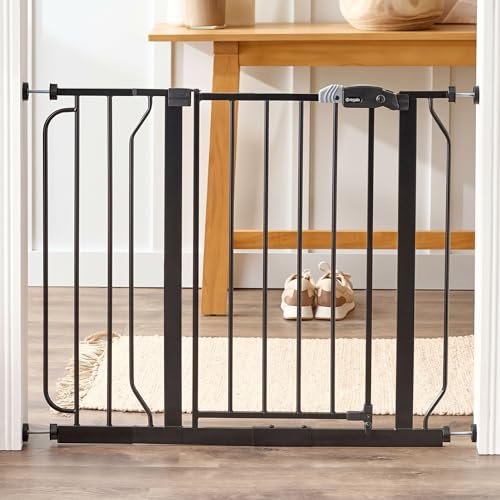
| Hardware-mounted walk-through (for example Cardinal Gates Stairway Special, Regalo Easy Step arched models in hardware form) | Top of stairs, any location needing a fixed barrier | Screws into wall studs or mounting blocks, swing door, often a one-hand latch | Leaves drill holes; installation takes longer; needs solid mounting surface |
| Pressure-mounted walk-through (for example Regalo Easy Step, Summer Infant Multi-Use Deco Extra Tall) | Doorways, hallways, bottom of stairs | Tension bars press against the frame; no drilling; swing door | Makers state these are not intended for the top of stairs; can shift if bumped |
| Retractable mesh gate | Wide or irregular openings, occasional use, rental homes | Roll-out mesh panel that tucks away when not needed | Mesh tension and wall anchors need regular checks; less rigid than a panel gate |
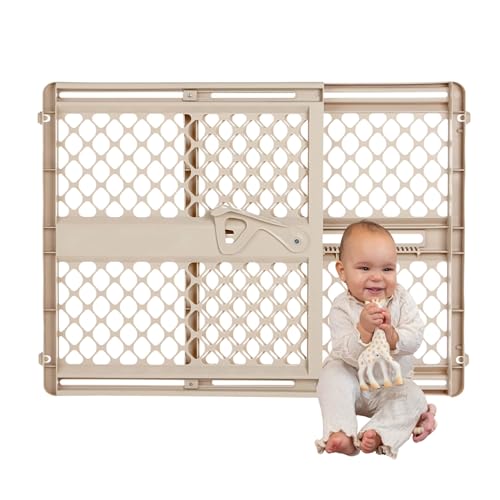
| Freestanding configurable gate (for example North States Superyard style) | Fenced-off play areas, around fireplaces, wide openings | Hinged panels that form a shape; no mounting | Large footprint; not a stair barrier; panels can be moved by a determined toddler |
| Extra-wide extension kits | Openings wider than standard gates | Add-on panels sold by the same maker for the same gate series | Only compatible within the same series; check the opening range |
First Decide Where the Gate Goes
Location should drive every other decision. Safety organizations and gate makers consistently distinguish between the top of a staircase and every other spot. At the top of stairs, a gate should be hardware-mounted so it cannot be pushed out of the frame, and it should not have a bottom threshold bar that an adult could trip over while carrying a child. At the bottom of stairs, between rooms, or across a kitchen entry, a pressure-mounted gate is generally acceptable if the maker says so in the manual.
Look for gates that carry a certification label to the current voluntary safety standard for expandable gates and enclosures, which is a standard published by ASTM International and referenced by the Juvenile Products Manufacturers Association certification program. Many makers state conformance on the box or product page. A certification label is a reasonable first filter, but it does not replace reading the installation instructions.
Hardware-Mounted Gates: The Stair Choice
Hardware-mounted gates are the type most buyers need if the home has stairs and a baby who is starting to crawl or pull up. Cardinal Gates is a long-running brand known for metal gates built specifically for stair tops, and the maker offers models with different opening widths and angled-wall accessories. Regalo and Summer Infant also sell hardware-mount walk-through gates with a swing door that closes automatically.
Points to weigh before buying:
- Wall material: Drywall alone is not enough for hardware screws on many gates. Makers typically instruct you to anchor into studs or use a mounting kit. Banisters with rounded or tapered spindles often need a separate banister adapter kit.
- Latch design: A latch that adults can operate with one hand matters when carrying a child or laundry. A latch that is too stiff tends to end up left open.
- Door swing direction: At the top of a staircase, the gate should swing toward the landing, not over the stairs. Check the manual and choose a model with a stop that prevents the door from opening over the stairs.
- Gap size: Bars should be spaced narrowly enough that a small head cannot fit through, and the bottom gap should be small. Makers state these dimensions in the manual.
The trade-off is permanence. Drilling leaves holes in trim and walls, so renters should ask the landlord first or look at a banister-mounted adapter option.
Pressure-Mounted Gates: The Flexible Choice
Pressure-mounted gates are popular because they install in minutes and move easily between rooms. The Regalo Easy Step line is a widely sold, budget-friendly example, with arched and extra-wide versions listed by the maker. Summer Infant sells extra-tall walk-through models, and Evenflo offers its Position and Lock series with an adjustable position. Munchkin and Toddleroo also make pressure-mounted walk-through designs.
Reviewers commonly note several trade-offs:
- The tension bars can loosen over time, particularly with a toddler who pushes on the gate repeatedly. Re-tighten periodically per the manual.
- Many pressure gates have a small threshold bar at the base. If you carry a child through the opening often, a no-threshold design is safer for adults on their feet.
- Makers generally state that pressure-mounted gates are not intended for the top of stairs. Use them at the bottom, in doorways or in halls.
Retractable and Freestanding Options
Retractable gates, such as models from Perma Child Safety and the Retract-A-Gate style, roll a mesh panel across an opening and tuck it away. They are useful in wide hallways, in homes where adults do not want a permanent frame, and in rentals. Check that the maker lists the gate for your intended location. Some retractable gates are rated for stair tops with proper hardware, while others are not.
Freestanding configurable gates, including the North States Superyard series, form a play area without drilling. They work for blocking a hearth, a pet area or a corner of a living room. They are not designed to be stair barriers. They also take a lot of floor space, and some makers list a minimum age or weight limit, so read the label before you buy.
Measuring and Fit Checks
- Measure the opening width at the narrowest and widest points, including trim and baseboards. Gates list a minimum and maximum width range, and results at the edge of that range are usually the least stable.
- Note the opening height. Most standard gates are around the height of an average toddler’s chest. Extra-tall gates are sold for older toddlers and for pets that jump, and they are worth considering when a child is nearing the age where climbing becomes a concern.
- Check for baseboards. Pressure-mounted gates can sit awkwardly against a thick baseboard, and some makers sell baseboard spacers.
- Look for angled walls or stairs with a banister post on one side. These setups often need an extension or adapter kit.
- Confirm the maker’s minimum and maximum age. Many gates are intended for children from about six months until roughly two years. Once a child can climb over, the gate is no longer doing its job.
Care and Safety Notes
Inspect the gate regularly. Check mounting hardware, hinges and latch for wear. Wipe plastic and metal surfaces with mild soap and water per the manual. Replace gates with cracked plastic, bent bars or damaged latches rather than repairing them yourself, and register the product with the maker so you are notified about recalls. Never use a gate designed for pets as a baby barrier unless the maker says it is suitable. Teach older children and caregivers to latch the gate every time.
Budget Tiers
| Tier | What you typically get | What you give up |
|---|---|---|
| Budget | Basic pressure-mounted walk-through with a plastic or metal frame | Often has a threshold bar; less robust latch; narrower width range |
| Mid-range | Hardware-mounted walk-through with a one-hand latch, extra-wide or tall options, extension kits | Some installation effort; occasional drilling |
| Premium | Solid metal or wood designs, auto-close, no threshold, decor-friendly finishes, retractable hardware models | Higher cost; heavier; more complex installation |
Pick X If You Need…
| Pick this | If you need |
|---|---|
| Hardware-mounted metal gate (Cardinal Gates style) | A secure barrier at the top of the stairs |
| Pressure-mounted walk-through (Regalo Easy Step style) | A quick, no-drill barrier for doorways and bottom of stairs |
| Extra-tall walk-through (Summer Infant style) | A taller gate for an older, climbing toddler or a jumping dog |
| Retractable mesh gate | A wide opening or a gate that stays out of the way when not in use |
| Freestanding configurable gate (North States style) | A play zone, hearth guard or very wide opening |
Alternatives to Consider
- Door-mounted gate extenders and custom gates: Several makers and carpenters offer custom wood or metal gates for unusual openings. These cost more but fit odd shapes.
- Playpen or play yard: For short-term containment, a standalone play yard may be simpler than gating off a whole room.
- Door knob covers and cabinet locks: A gate controls zones, while locks protect specific hazards. Many families combine them.
Frequently Asked Questions
Can I use a pressure-mounted gate at the top of the stairs?
Makers generally say no. A pressure-mounted gate can be pushed out of its frame, which is a serious risk at a drop. Use a hardware-mounted gate designed for stair tops and follow the installation manual.
How long will a child need a baby gate?
Many gates are labelled for children from around six months to about two years, but the real endpoint is when a child can climb or open the gate. Check the age range on the label and watch the child’s behavior.
What is the difference between a baby gate and a pet gate?
Baby gates follow child-safety standards for bar spacing, latches and strength. Pet gates may have wider spacing or lower height. Use a gate that is labelled for children where a child is involved.
Do I need a gate with a threshold bar?
Not necessarily. Threshold bars add stability on pressure-mounted designs but can trip adults. Hardware-mounted gates often have no bar, which is easier when carrying a child.
How do I install a gate on a banister with round spindles?
Most makers sell a banister adapter kit that creates a flat mounting surface. Using the right kit is better than forcing a gate onto an unsuitable surface, and the manual lists which adapters fit which models.
How often should I check the gate?
Look it over regularly, especially after a child leans on it or pushes it. Tighten pressure bars and screws as the manual directs, and stop using the gate if parts are damaged.
FAQ
Can I use a pressure-mounted gate at the top of the stairs?
How long will a child need a baby gate?
What is the difference between a baby gate and a pet gate?
Do I need a gate with a threshold bar?
How do I install a gate on a banister with round spindles?
How often should I check the gate?
More from Amazon
Programs that pair well with the guide above. Offers and eligibility are set by Amazon and may change.
Free shipping on eligible items, Prime Video and more. Eligible new members can start with a free trial.
Start a Prime free trialAudiobooks and podcasts to listen to on the go. Eligible new members can start with a free trial.
Try Audible freeAd-free music streaming. Eligible new subscribers can start with a free trial.
Try Music Unlimited freeA free business account with business pricing and bulk-buying tools for work, shop or home office.
Create a business accountAs an Amazon Associate we earn from qualifying purchases.







