
Key takeaways
- Budget: Lighter stainless or mixed-material mills with two or three discs. Fine for occasional sauce or mash. Expect more flex and shorter service life under heavy use.
- Mid-range: Sturdier stainless with three discs, reliable legs or grips and comfortable handles. This is where most reviewers point general buyers.
- Premium: Heavy-gauge stainless, tight tolerances, robust cranks and often better warranties and replaceable parts. Suited to frequent canners.
For most home cooks, a stainless steel food mill with three interchangeable discs and a hand crank suits tomato sauce, applesauce and mashed potatoes; a larger-capacity model suits canning season and big batches; and a compact or budget model suits occasional use. This guide explains how food mills work, what to compare in disc sizes, bowl capacity and handle design, and how makers such as OXO, Rösle and Foley position their models, so you can choose one that suits your kitchen.
Our top picks


As an Amazon Associate we earn from qualifying purchases at no extra cost to you.
Food Mills at a Glance
| Type | Best for | Features to compare | Limits |
|---|---|---|---|
| Stainless steel mill, three discs | All-round use: sauce, puree, mash | Fine, medium and coarse discs, folding legs or rim hooks | Hand effort needed on thick purees |
| Large-capacity mill (about 2 quart or more) | Canning and big batches | Bigger bowl, sturdy crank | Heavier; needs storage room |
| Compact mill | Small kitchens, small pots | Smaller bowl, lighter weight | More refills when processing a lot |
| Premium stainless mill | Frequent use, long-term buyers | Heavy-gauge metal, replaceable parts, ergonomic grips | Costs more |
| Plastic or mixed-material mill | Light use, tight budgets | Lower weight, simple construction | Less durable; can flex on stiff foods |
| Hand-powered strainer attachment | Large harvest processing | Auger and hopper, often separates skins and seeds | Separate appliance or attachment; more parts to clean |
What a Food Mill Does
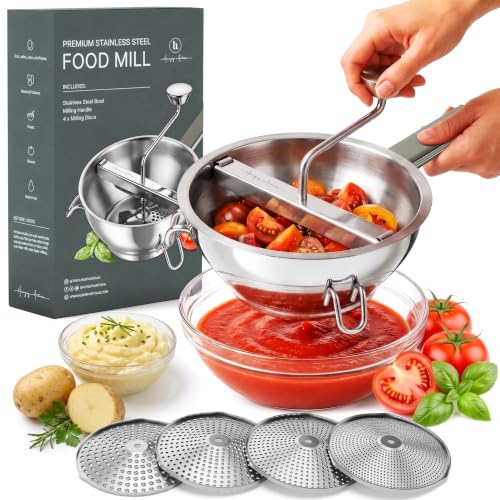
A food mill is a hand-cranked tool that forces cooked or soft food through a perforated disc while a blade scrapes it along. The skin, seeds and fibers stay behind and a smooth puree comes through. It is a classic choice for tomato sauce because it removes seeds and skins without needing to peel and de-seed beforehand. It also makes light, fluffy mashed potatoes, since it does not shear the starch the way a blender can. Cooks also use it for applesauce, pumpkin puree, berry coulis and baby food.
Compared with a blender or food processor, a food mill gives a more textured result and keeps seeds out. Compared with a ricer, it handles larger volumes of softer produce. Compared with a sieve, it is quicker and less tiring on the hands.
Discs: Fine, Medium and Coarse
Most mills ship with three discs. A fine disc, with the smallest holes, suits smooth purees such as baby food or sauces that need minimal texture. A medium disc is the general choice for tomato sauce and applesauce. A coarse disc handles chunky mash or thicker purees and works well on cooked potatoes. Check that discs are stainless steel and that the holes are cleanly punched, not rough. Rough edges can catch food and make cleanup harder. If a maker lists additional discs or replacement parts, that is a plus for long-term use.
Bowl Size, Legs and Stability
Capacity ranges from small bowls of about one quart to large ones of two quarts or more. Choose based on how much you typically cook. For a weeknight sauce, a smaller bowl works. For canning day, a larger bowl saves refills. The mill must also rest securely. Most models have folding legs or hooks that sit over the rim of a pot or bowl. Check that the legs or hooks fit the pots you own; a mill designed to fit a standard bowl may slide on a very wide or narrow pot. Some makers include a rubberized base or non-slip tips, and these help on a wet counter.
Handle and Comfort
Because the crank is turned by hand, comfort matters. A rounded, sturdy handle that does not dig into the palm reduces fatigue, and a long crank arm provides leverage. Look for a handle that turns smoothly without rattling. Some models let the user reverse direction to clear the blade; this can help when skins build up. If you have limited hand strength or joint discomfort, consider trying the tool in a store or choosing a model described as having an ergonomic grip, and discuss any pain with a health professional rather than pushing through it.
Materials and Care
Stainless steel is the standard for the bowl, blade and discs because it resists staining from acidic foods such as tomatoes and does not absorb odors. Plastic handles are common and acceptable as long as they feel solid. Many mills are listed as dishwasher safe, though makers sometimes advise hand washing handles. Rinse the parts soon after use, since tomato and berry residue dries on and stains. A soft brush clears the holes in the discs. Dry thoroughly to avoid water spots.
Brands and What They Offer
OXO’s food mill is widely discussed by reviewers for its three discs, non-slip feet and soft-grip handle. Rösle makes heavy-gauge stainless steel mills that the maker positions as premium kitchen tools. Foley’s classic steel mill has been sold for decades and appeals to home canners for its simple construction. Other brands, including Weston, offer both hand and larger-scale models. Specific models and parts can change from season to season, so check the maker’s current product page for dimensions, disc count and warranty before buying.
Budget Tiers
- Budget: Lighter stainless or mixed-material mills with two or three discs. Fine for occasional sauce or mash. Expect more flex and shorter service life under heavy use.
- Mid-range: Sturdier stainless with three discs, reliable legs or grips and comfortable handles. This is where most reviewers point general buyers.
- Premium: Heavy-gauge stainless, tight tolerances, robust cranks and often better warranties and replaceable parts. Suited to frequent canners.
Safety and Canning Notes
Handle hot food carefully. Let cooked fruit or tomatoes cool a little before milling to reduce the risk of splashes and burns. If you plan to preserve food, follow tested canning recipes from reputable sources such as university extension services or the maker of your canning equipment, since safe acidity and processing times matter. A food mill does not make a recipe safe to can by itself. Keep fingers away from the blade and the crank while it is moving.
Pick X If …
| Pick this | If you … |
|---|---|
| Mid-range three-disc stainless mill | cook sauce and mash a few times a month |
| Large-capacity mill | can tomatoes or fruit in big batches |
| Compact mill | have a small kitchen and cook for one or two |
| Premium heavy-gauge mill | use it often and want it to last |
| Strainer attachment | process very large harvests of tomatoes or apples |
| Budget mill | need it only occasionally for mashed potatoes or baby food |
Alternatives
- Potato ricer: Best for fluffy mash in small amounts.
- Immersion blender plus sieve: Faster for smooth soup, though seeds and skins still need separating.
- Fine-mesh strainer with a spoon: Low cost for small amounts of berry sauce.
Buying Checklist
Before buying, think about the foods you will process and the pots you already own. Measure the diameter of your largest and smallest pots to see whether the legs or rim hooks on the mill will sit securely. Read the stated capacity of the hopper, as well as the disc diameter, since larger discs process more food per turn. Check whether the blade is attached to the crank in a way that is easy to remove for cleaning, because fixed blades can trap food. Look for a mill with a handle that folds or detaches if storage is tight. If you plan to mill hot foods regularly, choose stainless parts and a handle that stays comfortable to hold. Think about storage: some mills nest inside a pot, while others have wide legs that do not fit a drawer. Also consider the warranty and whether the maker sells replacement discs and blades, which extends the useful life. For first-time users, start with soft, well-cooked food, work in small batches and scrape the underside of the disc to collect the puree that clings. A little added liquid, such as the cooking water, can help thick foods pass through, and reversing the crank briefly can clear stubborn skins.
Frequently Asked Questions
What can I make with a food mill?
Common uses include tomato sauce, applesauce, mashed potatoes, pumpkin and squash puree, baby food and berry coulis. The mill removes skins and seeds as it works. It suits cooked or very soft produce rather than hard raw vegetables.
Do I need to peel tomatoes first?
Usually not. Cooking the tomatoes softens them and the mill separates skins and seeds. Some cooks still remove cores or tough stems first for a cleaner result.
Which disc should I use?
Use fine for smooth purees, medium for tomato sauce and applesauce, and coarse for chunky mash. Start with the medium disc if you are unsure and switch if you want more or less texture.
Is a food mill better than a blender?
For sauces with seeds or skins, a mill gives a cleaner result without extra steps. A blender is faster for soups and smoothies but leaves seeds and skins unless you strain afterward. Many cooks use both.
Can it go in the dishwasher?
Many stainless parts are listed as dishwasher safe, but check the maker’s care instructions. Rinse promptly after use so tomato and berry residue does not stain.
Does a bigger mill work better?
A larger bowl reduces refills but adds weight and storage needs. Choose capacity to match your typical batch size and the pots you own, not simply the largest model available.
FAQ
What can I make with a food mill?
Do I need to peel tomatoes first?
Which disc should I use?
Is a food mill better than a blender?
Can it go in the dishwasher?
Does a bigger mill work better?
More from Amazon
Programs that pair well with the guide above. Offers and eligibility are set by Amazon and may change.
Free shipping on eligible items, Prime Video and more. Eligible new members can start with a free trial.
Start a Prime free trialAudiobooks and podcasts to listen to on the go. Eligible new members can start with a free trial.
Try Audible freeAd-free music streaming. Eligible new subscribers can start with a free trial.
Try Music Unlimited freeA free business account with business pricing and bulk-buying tools for work, shop or home office.
Create a business accountAs an Amazon Associate we earn from qualifying purchases.







