Key takeaways
- Wheat, spelt, rye, oats, barley: generally fine in most electric stone and impact mills.
- Corn (dry, hard dent corn): works in most, but check the manual; some impact mills limit it.
- Rice and legumes: often possible in dry form, but many makers limit beans and rice to certain models.
- Oily seeds and nuts (flax, sunflower, nuts): typically not advised in stone and impact mills because oils can gum up the burrs; makers often recommend mixing small quantities with grains or using a separate tool.
- Spices, coffee, and damp grains: do not mill unless the maker says so.
For most households that bake regularly, an electric countertop mill such as the Mockmill 100 or NutriMill Classic is the best fit, a KoMo mill suits bakers who want a wood-cased stone mill, and a hand-crank mill such as the WonderMill Junior or Victoria is the pick for power outages, camping, or a small budget. The right choice depends on how much flour you grind, what grains you use, and how much noise and counter space you accept.
Our top picks


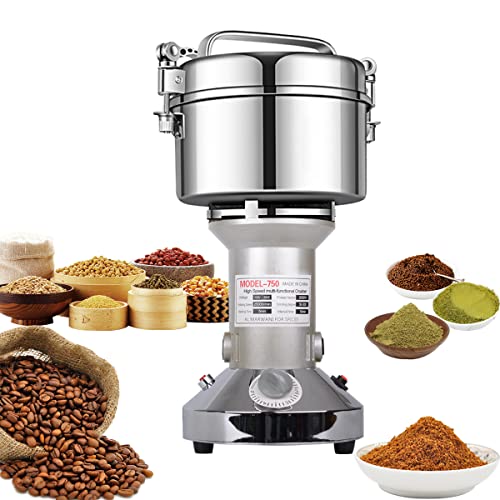
As an Amazon Associate we earn from qualifying purchases at no extra cost to you.
Grain Mills at a Glance
| Model | Type | Best for | Stated features | Limits |
|---|---|---|---|---|
| Mockmill 100 and Mockmill 200 | Electric stone burr | Bakers wanting adjustable fineness | Maker lists corundum-ceramic stones and a fineness dial; the 200 is the higher-output model | Not for oily seeds in large amounts; premium tier |
| KoMo Classic and Fidibus | Electric stone burr in wood housing | Home bakers valuing build quality | Maker lists natural stone burrs and a wood case | Premium tier; larger footprint |
| NutriMill Classic | Electric high-speed impact | Fast, fine flour from dry grains | Maker lists a fine flour output and a large hopper | Loud; can warm the flour; only dry grains |
| WonderMill Electric | Electric high-speed impact | Quick grinding of dry grain, mid-range | Maker lists a stainless steel grinding chamber | Noisy; no oily grains |
| WonderMill Junior Deluxe | Hand-crank, optional motor kit | Backup power, camping | Maker states it can be hand-cranked or motorized with an optional kit | Slow by hand; takes effort |
| Victoria cast iron grain mill | Hand-crank burr | Budget milling of corn, small grains | Clamps to a table; cast iron body | Coarse results; labor-intensive |
Motor wattage, hopper size, and output rate differ by model and revision, so read the maker’s specifications for the unit you buy. Reviewers at baking and food outlets generally group the electric options into stone mills, which are quieter and offer adjustable fineness, and impact mills, which are louder but fast.
Stone Burr vs. Impact Mills
Stone burr mills, such as Mockmill and KoMo, grind grain between two rotating stones. You can usually adjust fineness from coarse cracked grain to fine flour. They tend to run quieter and cooler than impact mills, and owners say they handle varied grains well. Impact mills, such as NutriMill and WonderMill Electric, use high-speed rotating pins or blades to shatter grain into flour. They are fast and produce very fine flour, but they are loud and typically restricted to dry, non-oily grains.
Steel burr hand mills sit in a third category, usually found on budget or off-grid models. They can crush grain into coarse meal but are not ideal for fine baking flour.
What You Can Mill
- Wheat, spelt, rye, oats, barley: generally fine in most electric stone and impact mills.
- Corn (dry, hard dent corn): works in most, but check the manual; some impact mills limit it.
- Rice and legumes: often possible in dry form, but many makers limit beans and rice to certain models.
- Oily seeds and nuts (flax, sunflower, nuts): typically not advised in stone and impact mills because oils can gum up the burrs; makers often recommend mixing small quantities with grains or using a separate tool.
- Spices, coffee, and damp grains: do not mill unless the maker says so.
Always follow the manual’s list of approved grains and moisture limits.
Budget Tiers
Premium
KoMo and Mockmill occupy this tier. Reviewers praise their build quality, quiet operation, and fineness control. They suit serious bakers who mill several times a week.
Mid-range
NutriMill Classic and WonderMill Electric offer high-speed milling at a more moderate outlay, trading noise and heat for speed.
Budget
Hand-crank mills like the Victoria and the WonderMill Junior are the budget route. They are slow, but they work without electricity and are practical emergency tools.
Fit and Counter Notes
- Noise: impact mills are commonly described as loud, comparable to a vacuum cleaner; stone mills are quieter.
- Flour temperature: impact mills may warm flour; bakers who care about it often favor stone mills, though warmth rarely affects home baking.
- Storage: freshly milled whole-grain flour has oils that go stale, so mill what you need and refrigerate or freeze the rest.
- Cleaning: do not wash stone burrs with water; clean with the brush and method in the manual. Some bakers run a small amount of rice or dry grain through to clear residue only if the maker allows it.
- Dust: flour dust is a respiratory irritant for some; a collection bag or a covered container helps.
Safety Notes
Keep fingers and utensils out of the hopper while the mill is running. Place electric mills on a stable surface and allow the motor to cool as the manual directs. Fine flour dust is combustible in high concentrations; keep the work area clean and away from open flames. People with gluten or grain allergies should dedicate and clean equipment carefully, since residue can carry over.
Pick X If… Decision Table
| Pick this | If you |
|---|---|
| Mockmill 100 | want adjustable stone-milled flour at a premium tier with a compact build |
| Mockmill 200 | mill larger quantities and want higher output |
| KoMo Classic or Fidibus | value a wood-cased stone mill and long-term use |
| NutriMill Classic | want fast, fine flour and accept noise |
| WonderMill Electric | want a mid-range electric impact mill |
| WonderMill Junior or Victoria | want a hand-crank for backup or limited budgets |
Alternatives
- High-speed blender dry containers: some blender makers sell dry-grain jars that can mill small amounts of grain, but capacity and consistency are limited.
- Stand mixer grain mill attachments: a convenient add-on if you already own the mixer; check the mixer maker’s list of grains and speeds.
- Buying fresh whole-grain flour: some regional mills sell it; useful if you only bake occasionally.
- Coffee grinders for small batches: not meant for grain; follow the manual and do not use them as a substitute.
Buying Checklist
Decide first how much flour you need per week. A household baking one or two loaves can manage with a smaller mill, while those baking daily or milling for several families may want a higher-output model. Next, list the grains you plan to use and compare them against the maker’s approved list. Think about noise tolerance, since mills are often run in the kitchen. Consider counter space and whether you can store the mill easily, as some are heavy. Finally, look at how the maker supports the product: replacement parts, warranty length, and cleaning instructions.
Common Mistakes to Avoid
- Milling oily or damp grain: this can clog the burrs and damage the machine. Follow the approved list.
- Setting the fineness too tight when starting: makers usually advise starting coarse and tightening gradually, with the mill running, as the manual describes.
- Skipping storage planning: freshly milled flour spoils faster than store-bought flour.
- Expecting identical results to commercial flour: home-milled flour differs in texture and absorbs water differently, so recipes may need adjustment.
- Buying only a hand mill for daily use: it is tiring at scale.
Many bakers start with a small quantity of wheat berries to learn how their mill performs before purchasing bulk grain.
Getting Started With a New Mill
Read the manual fully before the first run, and wash removable parts only as the maker allows. Start with a familiar grain such as hard wheat and a coarse setting, then tighten the adjustment gradually while the mill is running if the maker says this is safe. Collect a small batch and feel the flour between your fingers to judge fineness. Bread recipes written for store-bought flour may need extra water, because whole-grain flour absorbs more, and a rest period before kneading helps the bran soften. Sift if you want a lighter loaf, using a fine sieve, and save the bran for other recipes. Keep notes on settings and grain varieties so you can repeat results. Over time, many home millers buy grain in sealed buckets from a supplier and store it in a cool, dry place to keep it fresh.
Frequently Asked Questions
Is freshly milled flour worth the effort?
Many bakers prefer the flavor and the control over coarseness. It is not required for good bread, and results depend on grain quality and recipe. Fresh flour should be used or stored cold, since whole-grain oils spoil.
Which is better for bread, stone or impact?
Both can make bread flour. Stone mills offer adjustable fineness and run quieter, while impact mills are faster and very fine. Choose based on noise tolerance and how much flour you mill.
Can I grind beans or rice?
Some models allow it with restrictions, and others do not. Always consult the maker’s list of approved grains, because grinding something outside that list may void the warranty or damage the burrs.
How do I store freshly milled flour?
Use airtight containers in the refrigerator or freezer, and use it within a few weeks. Whole-grain flour contains oils that turn rancid faster than refined flour.
Are hand-crank mills practical for daily use?
They work, but they are slow and tiring for large batches, especially for fine flour. Most people treat them as backup for outages or camping, with an electric mill for regular baking.
Why is my mill getting hot or noisy?
Impact mills are naturally loud and can warm during long runs. Follow the manual’s duty cycle, allow cooling breaks, and stop if you smell burning. A grain that is damp or oily can also strain the machine.
FAQ
Is freshly milled flour worth the effort?
Which is better for bread, stone or impact?
Can I grind beans or rice?
How do I store freshly milled flour?
Are hand-crank mills practical for daily use?
Why is my mill getting hot or noisy?
More from Amazon
Programs that pair well with the guide above. Offers and eligibility are set by Amazon and may change.
Free shipping on eligible items, Prime Video and more. Eligible new members can start with a free trial.
Start a Prime free trialAudiobooks and podcasts to listen to on the go. Eligible new members can start with a free trial.
Try Audible freeAd-free music streaming. Eligible new subscribers can start with a free trial.
Try Music Unlimited freeA free business account with business pricing and bulk-buying tools for work, shop or home office.
Create a business accountAs an Amazon Associate we earn from qualifying purchases.