
Key takeaways
- Height. Tripod legs and hanging height affect how easily deer can reach the feed and how well you can keep out raccoons or hogs.
- Placement. Choose level, well-drained ground away from standing water, and avoid placing a feeder where feed and animals can contaminate water sources.
- Distance. Where regulations allow, think about how far the feeder sits from your stand or blind and from property lines.
For hunters and landowners who want a dependable, low-fuss option, a timer-controlled spin feeder from a brand such as Moultrie, Wild Game Innovations or Boss Buck suits scheduled corn feeding, a gravity feeder suits those who want a simple, battery-free setup for pellets or grain, and a protein feeder suits properties managed for year-round nutrition. Which one is best comes down to what you feed, how often you can visit, how many animals use the site, and whether your state allows feeding at all. This guide compares the main feeder types, explains the specs that matter, and gives a decision table so you can match a feeder to your property.
Our top picks


As an Amazon Associate we earn from qualifying purchases at no extra cost to you.
First, Check the Rules
Feeding and baiting deer are regulated differently across states, counties and even public versus private land. Some states ban feeding deer outright, some limit it to certain seasons, and many restrict hunting over bait. Disease-management rules, such as those tied to chronic wasting disease, can also affect what is permitted. Before buying, read your state wildlife agency’s current regulations, and ask a local game warden if anything is unclear. The rest of this guide assumes feeding is legal where you are.
At a Glance: Feeder Types Compared
| Type | Best for | How it works | Limits |
|---|---|---|---|
| Timer spin (broadcast) feeder | Scheduled feedings of shelled corn or pellets | Battery-powered motor and timer spin feed out at set times | Needs batteries, timer settings and occasional repairs |
| Gravity feeder | Low maintenance, pellets or grain | Feed drops through ports as animals eat | Open to raccoons and squirrels, feed can clump if it gets damp |
| Protein or pellet feeder | Managed nutrition programs | Larger hopper and wider trough for supplements | Heavier, usually costs more, pellets need dry storage |
| Hanging barrel feeder | Quick setup from a tree or frame | Barrel suspended with a spin or gravity mechanism | Tree damage risk, harder to refill if hung high |
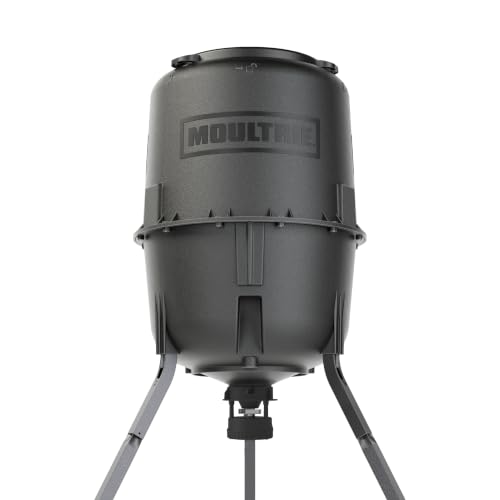
| Tripod feeder | Most open properties | Legs hold a barrel and spinner at a set height | Needs level ground and stakes in wind |
| Trough feeder | Multiple animals at once | Wide trough feeds more than one deer | Feed exposed to weather, more waste |
Timer Spin Feeders
A timer spin feeder is the most common choice on larger properties because it limits feed use and can attract animals at predictable times. The unit includes a motor, a spinner plate and a digital timer, powered by a battery. Moultrie’s Pro Hunter series, Wild Game Innovations’ Pro Series and Boss Buck’s feeder lines are widely sold examples. Makers typically list the barrel capacity, the battery type and a range of feed times. Many models accept a solar panel accessory to extend battery life, according to the makers.
Reviewers often point out that the timer’s ease of programming and the feeder’s build quality are the main differences between models. A feeder that is simple to set at the start of the season and requires few adjustments is worth more than one with extra features you never use. Make sure the motor is shielded, the lid seals well and the feed spreads evenly rather than clumping in one spot.
Gravity Feeders
A gravity feeder has no motor, timer or battery. Feed drops through ports as animals eat, which means there is nothing to program and little that can fail. These are popular for pellets and small grains. The downside is that feed is available all day, so other wildlife such as raccoons, squirrels and birds may drain it faster. Feed also needs to stay dry, because damp grain can clump, spoil and block the ports. Choose a model with a tight lid and a hopper that sheds rain.
Protein Feeders and Trough Feeders
If you manage a property with a nutrition plan, a protein feeder with a larger hopper and wide trough lets several deer feed at once, which reduces competition and waste. Manufacturers describe these as better suited to pellets than whole corn. They are heavier and more expensive, and they require a stable base. Stay on top of cleaning and keep feed dry, since moldy feed can harm animals. If you plan to feed supplements, follow the feed maker’s label and consult a wildlife biologist or local extension office for your region.
Capacity, Height and Placement
Capacity is listed in pounds by makers, and it ranges from small hanging feeders to barrels holding several hundred pounds. Bigger is not always better. A large barrel takes longer to refill, is heavier to move and holds feed that may spoil if used slowly. Match capacity to how often you plan to visit. A property you visit every few weeks can use a larger barrel, while a site you check weekly can use a smaller one.
- Height. Tripod legs and hanging height affect how easily deer can reach the feed and how well you can keep out raccoons or hogs.
- Placement. Choose level, well-drained ground away from standing water, and avoid placing a feeder where feed and animals can contaminate water sources.
- Distance. Where regulations allow, think about how far the feeder sits from your stand or blind and from property lines.
Power and Timers
Most spin feeders run on a rechargeable or standard 6-volt battery, with an optional solar panel. Check the battery type the maker lists and plan for replacements. Cold weather reduces battery life, so protect it from the elements and check it before the season starts. Timer features vary: some offer a simple on and off schedule, while others allow multiple feeding times and set durations. Choose the simplest timer you will use. Always follow the maker’s manual when wiring a solar panel, and use only the parts they list.
Predator and Pest Protection
Feeders attract more than deer. Raccoons, squirrels, hogs and bears can raid a feeder. In areas with bears or hogs, consider heavier steel or reinforced models, set the feeder higher, and use guards or baffles the maker offers. Anywhere bears are active, wildlife agencies often advise against feeding deer at all, so check local guidance. Keep spilled feed to a minimum and clean around the feeder to limit rodents and avoid attracting unwanted visitors.
Budget Tiers
Budget tier
Gravity feeders and basic hanging barrels sit here. They have few parts, and they are fine for smaller properties or casual use. Expect lighter plastic or thin steel, and plan to replace worn parts more often.
Mid-range tier
Timer spin feeders from Moultrie, Wild Game Innovations and Boss Buck are common in this range. They offer solid barrels, programmable timers and a choice of tripod or hanging setups. This tier suits most hunters.
Premium tier
Premium models add heavy-duty steel, larger capacities, protective cages and better motors. If you manage a large property, deal with hogs or bears, or want a feeder that lasts for many seasons, this tier is worth considering.
Pick X If… Decision Table
| If you want… | Pick | Why |
|---|---|---|
| Scheduled, controlled feedings | Timer spin feeder | Releases feed at set times and saves corn |
| Zero batteries or programming | Gravity feeder | Simple design with few failure points |
| A nutrition program | Protein feeder with trough | Larger hopper and wider access for pellets |
| Fast setup on a tree or frame | Hanging barrel feeder | Minimal assembly |
| Open ground with no trees | Tripod feeder | Self-supporting and height-adjustable |
| Protection from hogs or raccoons | Heavy steel feeder with guard | Resists tipping and raiding |
| Infrequent visits | Large-capacity barrel | Needs fewer refills |
Alternatives
- Food plots. Planting forage gives deer a natural food source and can reduce reliance on feeders, where permitted.
- Mineral sites. Some properties use mineral licks instead of or in addition to feeders; regulations differ, so confirm what is allowed.
- Trail cameras. A trail camera helps you see which animals visit and how quickly the feed is used, so you can adjust the schedule.
Maintenance and Safety
Refill feeders when they are cool and dry, and wear gloves when handling feed and motors. Disconnect the battery before opening the motor housing. Check the lid seal, legs and any chains or straps each season. Heavy barrels can tip if the legs are uneven, so stake or weight the base. Never climb a tripod feeder without a stable ladder, and do not work alone at height. Clean old feed out of the barrel at the end of the season to prevent mold and pests.
Frequently Asked Questions
Is it legal to use a deer feeder?
It depends on your state, county and land type. Some places ban feeding or hunting over bait, while others allow it within limits, so read your wildlife agency’s regulations or ask a local game warden before you set up a feeder.
What is the difference between a gravity and a spin feeder?
A gravity feeder releases feed through ports as animals eat and needs no power. A spin feeder uses a battery-powered timer and motor to throw feed at set times, which gives more control over when and how much feed is dispensed.
How much feed does a feeder hold?
Capacity ranges widely, from small hanging units to barrels holding several hundred pounds. The maker lists the figure for each model, and the right size depends on how often you can refill and how many animals use the site.
How can I keep raccoons and squirrels out of my feeder?
Set the feeder higher, add a baffle or guard if the maker offers one, and choose a model with tight lids and small ports. Cleaning up spilled feed also reduces the number of unwanted visitors.
Do I need a solar panel?
It is not required, but many makers sell solar panels that help extend battery life, especially in sunny, open sites. Follow the manual when connecting a panel and use only the parts the maker lists.
How often should I clean a deer feeder?
Clean it at least at the start and end of the season and whenever you see damp, clumped or moldy feed. Old feed can harm animals, so remove it and let the barrel dry before refilling.
FAQ
Is it legal to use a deer feeder?
What is the difference between a gravity and a spin feeder?
How much feed does a feeder hold?
How can I keep raccoons and squirrels out of my feeder?
Do I need a solar panel?
How often should I clean a deer feeder?
More from Amazon
Programs that pair well with the guide above. Offers and eligibility are set by Amazon and may change.
Free shipping on eligible items, Prime Video and more. Eligible new members can start with a free trial.
Start a Prime free trialAudiobooks and podcasts to listen to on the go. Eligible new members can start with a free trial.
Try Audible freeAd-free music streaming. Eligible new subscribers can start with a free trial.
Try Music Unlimited freeA free business account with business pricing and bulk-buying tools for work, shop or home office.
Create a business accountAs an Amazon Associate we earn from qualifying purchases.







