
The best batting cage for most families is a portable frame-and-net cage sized to the age of the hitters, while serious teams and facilities need a heavier, permanent or semi-permanent cage with thicker netting; the right pick comes down to space, who is hitting, whether a pitching machine will be used, and how long the cage will stay up.
Our top picks


As an Amazon Associate we earn from qualifying purchases at no extra cost to you.
Choosing by who is hitting and where
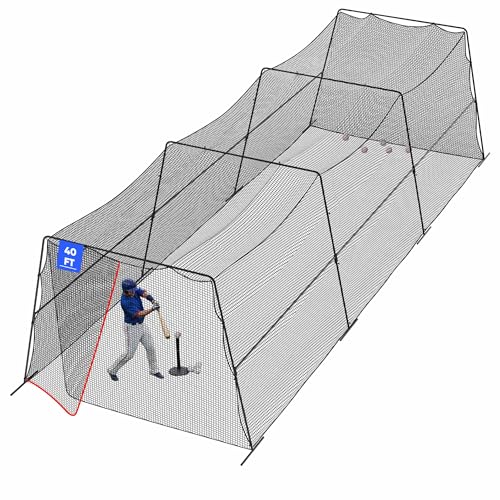
Batting cages fall into three broad groups. Pop-up hitting nets are small, fold flat and suit backyard tee work and soft-toss drills. Portable frame cages use metal or composite poles with a net and can be taken down after a session. Permanent or semi-permanent cages use heavy-duty poles, often set in the ground or on a track system, and use thick netting built for hours of daily use.
Before comparing products, answer four questions.
- How old are the hitters? Younger players using tees and light balls need far less than high school or adult hitters using hard baseballs from a machine.
- What is the space? Measure length, width and ceiling or tree clearance. A cage that is too short limits how the hitter can swing and how far a ball can travel before it hits the back net.
- Will a pitching machine be used? A machine adds ball speed and volume, which calls for heavier netting and a more stable frame.
- Is it temporary or permanent? Wind load, weather exposure and storage affect which frame and net suit you.
At a glance: popular cage options
| Option | Best for | Key points the makers describe | Limits |
|---|---|---|---|
| Rukket Sports Haymaker | Backyard hitters and youth teams | Portable frame with a net, aimed at baseball and softball practice; sold in several sizes | Lighter than permanent cages; check wind and ground anchoring |
| Cimarron Sports batting cage nets | Builders assembling a custom cage | Net and frame kits and replacement nets in multiple twine sizes | Needs poles, anchoring and tools; more setup |
| Bownet Big Mouth and portable cages | Hitters who want quick setup | Pop-up and portable designs with a wide opening and carry bag | Smaller hitting area; best with lighter balls |
| JUGS cages and machines | Teams that pair a cage with a pitching machine | Cage packages and machine-compatible netting from a long-time machine maker | Machines and packages add to the total spend |
| SKLZ and Franklin Sports hitting nets | Casual players and younger children | Compact nets for tee and soft-toss work, easy to fold | Not built for long sessions with hard baseballs from a machine |
| Custom net and pole systems | Schools, clubs and facilities | Heavy twine, ground sleeves or track hanging systems, often sized to the building | Highest budget tier; may need a contractor |
Specific dimensions, twine sizes and pole materials vary by model and change between listings, so read the maker’s current specification sheet before ordering.
The parts of a cage and what matters
Netting
Net strength is described by twine size, often with numbers such as #21, #36 or higher, where a larger number generally means a thicker, stronger twine. Lighter twine suits tee drills and younger players. Heavier twine is more common on cages that take repeated hard-hit balls. Netting can also be knotted or knotless, and sometimes it is treated for sunlight exposure; makers describe these details in their product notes. Mesh size matters too, because the openings must stay small enough that a ball cannot pass through.
Frame and poles
Steel poles are heavy and sturdy; aluminum and composite poles are lighter and easier to carry. Pop-up designs use flexible rods. For permanent cages, poles are typically set in the ground or anchored to a structure. Look for corner joints that hold their shape and a way to anchor the frame so wind cannot lift it.
Size
Cage length determines the quality of practice. Longer cages give hitters room to see the ball travel, while shorter ones are mostly for drills. Height matters for fly balls and for taller players. Many makers list dimensions in feet, so match them to your space with a tape measure and allow a margin around the cage for safe movement.
Door and entry
Walk-in cages need a door or a flap at the end. A net hung from a roof or tree line can make an entry from the side easier. Entry points should be closed or kept clear of the hitting line during sessions.
Safety and setup notes
- Use a protective screen for the pitcher or feeder when a machine or soft-toss is used, and wear helmets as the rules of your league require.
- Check that the net is not torn, that ties are secure and that stakes or weights are in place before each session.
- Keep spectators and younger siblings outside the cage and behind the net.
- Follow the maker’s manual for assembly, wind limits and the maximum ball type or speed. If the manual does not state a rating, assume a lighter-duty cage and keep use modest.
- Take portable cages down in storms or high winds.
Budget tiers
- Budget: Pop-up hitting nets and small frame cages from brands such as SKLZ, Franklin Sports and Bownet. They suit tee work, soft-toss drills and young hitters, and they store easily. Expect lighter twine and less room.
- Mid-range: Larger portable cages from Rukket Sports, Cimarron Sports and similar makers, often with thicker netting and sturdier poles. These suit travel-ball families and small teams that want a cage that can stay up for a season.
- Premium: Heavy-duty net and pole systems, track-hung cages and machine-ready packages from makers like JUGS or custom net builders. They fit schools, clubs and facilities that run daily sessions.
Matching the cage to the use
| Use case | Cage type to look at | Notes |
|---|---|---|
| Tee and soft-toss in a small yard | Pop-up net or small frame net | Easy storage; use soft or training balls if the maker advises |
| Youth team practice | Mid-size portable cage | Choose a width that allows a left- and right-handed hitter to swing freely |
| Machine work with hard balls | Heavy-duty cage with thicker twine | Confirm the maker’s stated machine compatibility |
| Year-round facility | Track or permanent hanging cage | Plan for installation, lighting and floor surface |
| Softball | Cage rated for softball use | Softballs are larger, so mesh and rating should match |
Pick X if…
| Pick this | If you… |
|---|---|
| Rukket Sports portable cage | want a ready-to-assemble option for a yard or park and plan to move it |
| Cimarron Sports net and frame | are comfortable building a cage to your own dimensions |
| Bownet portable net | need fast setup and take the net to practice with you |
| JUGS cage package | already use or plan to buy a pitching machine |
| SKLZ or Franklin Sports net | have a young hitter or a small space and want a low-commitment start |
| Custom heavy-duty system | run a team facility with daily use |
Alternatives to a full cage
- Hitting tee with a catch net. A tee and a small net let players work on swing mechanics without a full cage. Many coaches use this for early-age development.
- Hitting mats and drills at a local facility. If you only practice occasionally, a rental cage at a training center avoids the space and setup requirements.
- Open-field setups with screens. L-screens and portable backstops provide protection during batting practice and are useful where a closed cage is not possible.
Care and maintenance
Sun and moisture wear down net fibers over time. Store portable nets dry and folded after use, and keep them out of prolonged direct sunlight when not in use. Inspect knots, seams and ties at the start of each season. Replace damaged panels promptly, since a small hole can grow quickly under impact. Rust on steel poles can be slowed by drying and storing them under cover, and by following the maker’s care tips.
Frequently Asked Questions
What size batting cage do I need for a backyard?
It depends on the hitters. A pop-up net can fit in a small yard for tee work, while a walk-in cage needs enough length and width for the hitter to swing without hitting the sides. Measure the space first and compare it to the dimensions listed by the maker.
What does twine size on a batting cage net mean?
Twine size is a number that indicates the thickness and strength of the netting, such as #21 or #36. Higher numbers generally mean stronger twine. Lighter twine is typically used for tee work and youth practice, while thicker twine is used on cages that see frequent hard-ball use.
Can I use a pitching machine in a portable cage?
Only if the maker states that the cage is suited to machine use. Machines throw many balls at speed, and light nets or frames can wear quickly or tip. Follow the manual for both the cage and the machine, and use a screen for whoever feeds the machine.
How do I keep a batting cage from blowing over?
Use the anchors, stakes or sandbags the maker supplies or suggests, and take the cage down in strong winds. Permanent cages are anchored in the ground or to structures, and the manual or installer can advise on wind limits.
Are batting cage nets safe for softball and baseball?
Many nets are made for both, but the ball type affects mesh and strength needs. Check that the maker lists the sport and ball type, and use the rated balls only. Wear helmets and keep bystanders clear.
How long does a batting cage net last?
Lifespan depends on twine thickness, sun exposure, usage and storage. Heavier twine and proper care extend life. Inspect the net regularly and replace worn sections instead of waiting for a failure during a session.
FAQ
What size batting cage do I need for a backyard?
What does twine size on a batting cage net mean?
Can I use a pitching machine in a portable cage?
How do I keep a batting cage from blowing over?
Are batting cage nets safe for softball and baseball?
How long does a batting cage net last?
More from Amazon
Programs that pair well with the guide above. Offers and eligibility are set by Amazon and may change.
Free shipping on eligible items, Prime Video and more. Eligible new members can start with a free trial.
Start a Prime free trialAudiobooks and podcasts to listen to on the go. Eligible new members can start with a free trial.
Try Audible freeAd-free music streaming. Eligible new subscribers can start with a free trial.
Try Music Unlimited freeA free business account with business pricing and bulk-buying tools for work, shop or home office.
Create a business accountAs an Amazon Associate we earn from qualifying purchases.







