
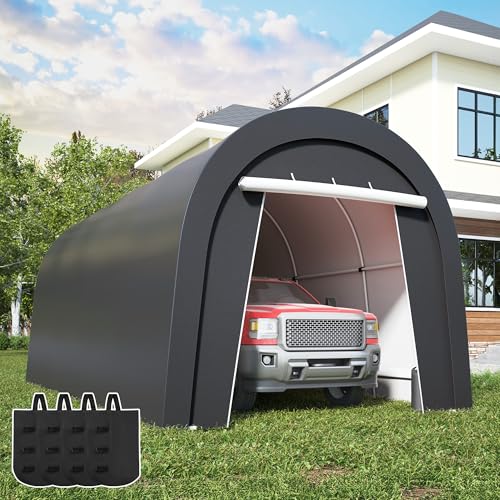
The best canopy garage for most homeowners is a steel-frame model with a UV-treated cover rated for the snow and wind of your area: ShelterLogic and King Canopy style garages suit buyers who want sturdier frames and enclosed sides, while Abba Patio and Quictent style carports suit buyers who want a lower-cost, quick-to-assemble cover for a car. This guide explains how portable canopy garages differ, what makers state about frames and covers, and the anchoring, weather and permit points that decide whether one is safe to use.
Our top picks


As an Amazon Associate we earn from qualifying purchases at no extra cost to you.
Canopy Garage Styles at a Glance
| Style (example brands) | Best for | Key stated features | Limits |
|---|---|---|---|
| Enclosed steel-frame garage-in-a-box (ShelterLogic) | Year-round vehicle or equipment storage | The maker lists powder-coated or galvanized steel frames, a roll-up or zippered door and a polyethylene cover | Cover wears with sun exposure; assembly takes time |
| Heavy-duty enclosed canopy (King Canopy) | Buyers wanting commercial-style frames | Makers describe thicker tubing and a ratchet or sliding assembly in some lines | Premium tier; heavier to assemble |
| Open-sided carport canopy (Abba Patio, Quictent) | Shielding a car from sun, rain and bird droppings | Metal frame, a polyethylene roof, and in some models removable sidewalls | Lighter frames; limited storm resistance |
| Steel-roof carport kit | Longer-term parking cover | Metal or polycarbonate roof panels on a steel frame | Often needs a foundation and a permit |
| Pop-up car canopy | Occasional or temporary use | Folding frame, quick setup | Not designed for storms or snow |
What to Look For
Frame
The frame determines how well a canopy garage stands up to weather. Makers describe powder-coated or galvanized steel frames. Tube thickness and the number of legs and cross-braces matter more than the headline size. Heavier steel frames usually cost more but resist bending in wind. A frame with additional leg and roof braces spreads load better than a basic one.
Cover
Most canopy garages use a polyethylene cover, and makers often list fabric weight in grams per square meter along with UV protection and water resistance. A heavier cover typically lasts longer, but all polyethylene fades and weakens under constant sun. Expect to replace covers periodically and look for makers that sell replacement covers for their frames.
Walls and doors
Fully enclosed models include a door, often a roll-up or zippered one, and sometimes windows or vents. Enclosed designs protect against rain, snow and animals, but they catch more wind. Open carport models have lower wind load and are easier to ventilate, which reduces condensation.
Size and fit
- Measure your vehicle. Add enough width to open doors fully and enough length for a trunk or hatch. For a full-size pickup or SUV, many buyers choose a width of around twelve feet or more and a length of around twenty feet or more, but follow the maker’s stated inside dimensions, not the outer footprint.
- Check the peak and side height. Roof pitch and side height determine whether a tall vehicle or roof rack fits.
- Allow space around the unit. You need room to assemble, to anchor, and to keep the cover clear of trees and power lines.
Weather, Anchoring and Safety
A canopy garage is a lightweight structure and is not the same as a permanent garage. Treat the following points as essential:
- Snow load and wind rating. Makers publish snow and wind ratings or advise taking the canopy down in severe weather. Read them. Many portable canopy garages are not designed to hold heavy snow, and removing snow promptly or collapsing the unit before a storm is a common maker instruction.
- Anchor it properly. Use the anchor kit matched to your ground, whether soil, gravel, concrete or asphalt. Soil augers do not hold in sand or wet ground the same way they do in firm clay, and concrete needs concrete-rated anchors. An unanchored canopy can become airborne in wind and cause injury or damage.
- Stay out in storms. Do not shelter under a lightweight canopy during high winds, lightning or heavy snow. It is not a safe shelter.
- Fire and fuel. Do not run engines, heaters or grills inside an enclosed canopy, and do not store gasoline or other flammable liquids in an enclosed fabric structure, as makers and fire authorities generally advise. Ensure ventilation, particularly if you work on vehicles. Consult your local fire authority for rules on storing fuel.
- Local rules. Many towns, counties and homeowner associations regulate temporary and portable structures, including size, location and how long they may remain. Ask your local building office or association before you buy.
Budget Tiers
Budget tier
Basic open carports and pop-up canopies, such as lighter Abba Patio or Quictent models, give sun and light rain cover. Expect thinner frames and covers, and treat them as seasonal or temporary.
Mid-range tier
Enclosed garage-in-a-box kits from ShelterLogic, and the stronger tiers from budget makers, sit here. These offer sturdier frames, doors and heavier covers, and are a typical choice for year-round parking if installed and anchored correctly.
Premium tier
Heavy-duty frames from makers like King Canopy, and steel-roof carport kits, are at the top. They aim at longer life and heavier weather loads, though they may still need permits and a proper foundation.
Pick Table: Which Canopy Garage for Which Buyer
| Pick this if you… | Choose | Why |
|---|---|---|
| Want year-round, enclosed vehicle storage | ShelterLogic-style enclosed garage | Door, sidewalls and steel frame |
| Want a heavy-duty frame for a snowy or windy area | King Canopy or steel-roof kit | Heavier tubing and roof design, subject to the maker’s ratings |
| Only need shade and light rain cover for a car | Abba Patio or Quictent open carport | Lower cost, quick setup |
| Need a temporary cover for an event or short stay | Pop-up canopy | Fast to set up and move |
| Plan to leave it up for years | Steel-roof carport kit with proper foundation | Longer-lasting roof, check local permit rules |
Alternatives to Consider
- Fitted car covers. If you only need to protect paint from sun, dust and rain, a fitted car cover costs far less and takes no space.
- Metal carport kits or a permanent garage. If you want long-term protection in a harsh climate, a permanent structure built to local code may be a better investment than a portable canopy.
- Storage sheds. For tools and equipment rather than a vehicle, a rigid shed may be a better fit.
Installation Tips
- Pick a level, clear site. A flat, well-drained spot away from overhanging branches, power lines and drainage paths makes assembly easier and reduces the chance of damage.
- Assemble in calm weather with a helper. Larger canopy frames and covers are awkward to handle alone, and a gust can turn a cover into a sail.
- Tighten the cover properly. A cover that is taut sheds water and snow better. Loose fabric can collect water and flap in the wind, which wears it faster.
- Recheck fasteners. After a few weeks and after storms, check bolts, clips and anchors. Frames settle and fittings can loosen.
- Add ventilation. Vents or partly opened doors reduce condensation, which helps protect vehicles and stored items from damp.
Seasonal Care
In summer, strong sun is the main enemy of polyethylene covers, so shade or a cover rated for UV helps. In winter, clear snow promptly with a soft broom from the outside and never climb on the roof. Before storm forecasts, follow the maker’s instruction on whether to lower or remove the cover. When covers age, look for fading, chalking and small tears, which are signs to replace the cover before it fails.
Frequently Asked Questions
How long does a canopy garage last?
It depends on the frame, cover and climate. The steel frame can last for years with care, but polyethylene covers weather in the sun and often need replacing sooner. Makers list cover materials and warranties, so read them before buying.
Can a canopy garage handle snow?
Some are rated for a limited snow load, and many are not. Follow the maker’s stated rating, clear snow promptly and take the unit down before severe storms if the manual says so.
Do I need a permit for a canopy garage?
Possibly. Local building codes and homeowner associations differ on temporary and portable structures. Contact your local building office or association before you buy or assemble.
How do I anchor a canopy garage?
Use anchors suited to your surface: augers for soil, concrete anchors for slabs, and heavy-duty options for asphalt. Follow the maker’s anchoring instructions and consider adding more anchors if you live in a windy area.
Can I store a car, tools and fuel inside?
You can store a car and tools, but avoid storing gasoline or running engines or heaters in an enclosed fabric structure. Follow the maker’s manual and local fire guidance on fuel storage.
What size canopy garage do I need?
Measure your vehicle and add room to open doors and walk around it. Compare that with the maker’s stated interior width, length and height, not just the footprint, because frames and sloped roofs reduce usable space.
FAQ
How long does a canopy garage last?
Can a canopy garage handle snow?
Do I need a permit for a canopy garage?
How do I anchor a canopy garage?
Can I store a car, tools and fuel inside?
What size canopy garage do I need?
More from Amazon
Programs that pair well with the guide above. Offers and eligibility are set by Amazon and may change.
Free shipping on eligible items, Prime Video and more. Eligible new members can start with a free trial.
Start a Prime free trialAudiobooks and podcasts to listen to on the go. Eligible new members can start with a free trial.
Try Audible freeAd-free music streaming. Eligible new subscribers can start with a free trial.
Try Music Unlimited freeA free business account with business pricing and bulk-buying tools for work, shop or home office.
Create a business accountAs an Amazon Associate we earn from qualifying purchases.







