Key takeaways
- Use proper speaker cable rated for the power level, not instrument cable.
- Turn the amplifier on last and off first to reduce speaker pops.
- Leave room around the chassis for ventilation, and do not cover vents.
- Never connect speakers below the minimum impedance listed in the manual.
- Use a grounded power supply and avoid removing ground connections.
- Protect hearing. Keep sound levels reasonable, and follow local noise rules.
- Have repairs and internal work carried out by a qualified technician, as amplifiers can store dangerous voltages.
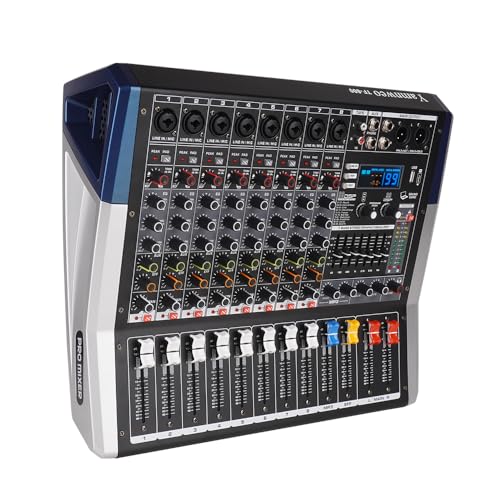
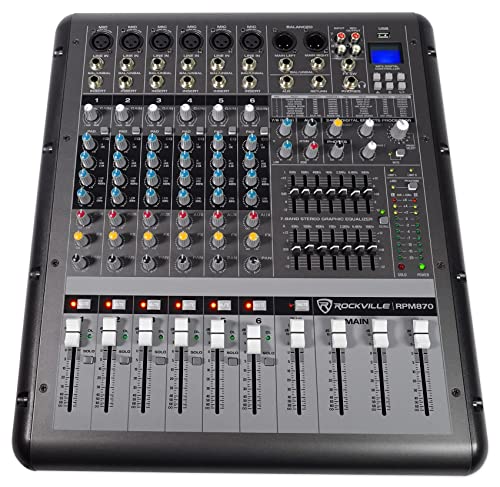
A compact powered mixer in the 8 to 12 channel range, such as a Yamaha EMX, Mackie PPM or Behringer Europower unit, suits bands, houses of worship and small venues that want one box to mix and drive a pair of passive speakers, while a modern active-speaker setup with a separate small mixer suits anyone who values flexibility and lighter loads. Channel count, power per channel, speaker impedance and effects decide the match.
Our top picks


As an Amazon Associate we earn from qualifying purchases at no extra cost to you.
Powered Mixers at a Glance
| Series | Best for | Key traits makers describe | Limits |
|---|---|---|---|
| Yamaha EMX series | Bands, small venues, fixed installs | Built-in power amplifier, onboard effects, multiple channel counts | Heavier than unpowered mixers; model line-up changes over time |
| Mackie PPM series | Mobile bands, portable PA | Powered mixer with channel strips and onboard effects, per Mackie | Fewer routing options than larger mixers |
| Behringer Europower PMP series | Budget to mid-range users | Amplifier plus mixer in one chassis; several wattage options | Check specs per model and fan noise |
| Peavey XR series | Churches, clubs, installers | Longstanding powered mixer line; consult Peavey for current models | Fewer recent updates in some models |
| Phonic Powerpod series | Value-oriented gigs | Integrated amplifier and mixer | Smaller dealer network in some regions |
| Passive speakers with external power amp | Custom rigs | Choose each part separately | More cables and setup time |
How a Powered Mixer Works
A powered mixer combines a mixing board with a built-in power amplifier. You plug microphones and instruments into the mixer, set levels and tone, and connect passive speakers directly to the speaker outputs. It replaces a separate mixer, amp and many cables, which is why it is popular for portable PA and fixed installations. The trade-off is that if the amp fails, the whole unit must be serviced, and you cannot upgrade the mixer or amp separately.
Key Specifications to Compare
Channel Count and Inputs
Count the microphones and instruments you need to mix at the same time, then add one or two spare channels. Look at how many channels offer XLR microphone inputs with phantom power, how many are line-only, and whether channel strips offer high-pass filters, EQ and aux sends. A small band might need 6 to 8 channels, while a church choir and band may require 12 or more.
Power Output and Impedance
Makers list power in watts per channel at a given speaker impedance, typically 4 or 8 ohms. Match the speakers to the amplifier ratings: the speakers should handle at least the power the amplifier can deliver at their impedance, and the amplifier should be rated for the combined load. Mismatched impedance can cause overheating or shutdown, and the manual explains safe ranges. Consult the manual or a qualified technician if unsure.
Number of Power Amp Channels
Most powered mixers have two amplifier channels for left and right speakers. Some let you use one channel for the main speakers and the other for monitors. Check the routing options in the manual, as the way you assign amplifier channels differs by model.
Effects and EQ
Many powered mixers include digital effects such as reverb and delay, plus a graphic EQ on the output to tame room feedback. Look at how many effect presets are included, whether effects can be assigned to individual channels, and whether a foot switch can mute them.
Monitor Outputs and Aux Sends
If performers need foldback, look for dedicated monitor sends and outputs. Pre-fader aux sends let performers hear their own mix independent of the main level. Not every compact model offers these, so read the specifications carefully.
Connectivity
Some models offer USB audio interfaces, Bluetooth playback or digital recording. USB lets you record the mix or play backing tracks. Confirm which of these features each model lists, since the options vary by series.
Size, Weight and Cooling
Built-in amplifiers add weight. Check the weight and whether the unit is a tabletop or rack-mountable design. Fan noise can matter in quiet rooms, so look for descriptions of fan-cooled or convection-cooled design.
Choosing by Budget Tier
Budget
Budget units, such as many Behringer Europower and Phonic models, provide basic mixing, an integrated amplifier and simple effects. They suit rehearsal rooms, small speeches and casual gigs. Expect fewer features and more basic build quality, so treat them as entry-level.
Mid-range
Mid-range includes Mackie PPM and Yamaha EMX models, with more channels, better preamps, more effects and sturdier chassis. Reviewers commonly highlight these for working bands and small venues. This tier typically offers the best balance between features and reliability.
Premium
Premium choices add higher power, more channels, better routing and digital processing, and often come from established pro audio brands. Some buyers at this level consider a separate digital mixer with powered speakers instead, which is a different architecture with its own benefits.
Safety and Setup Notes
- Use proper speaker cable rated for the power level, not instrument cable.
- Turn the amplifier on last and off first to reduce speaker pops.
- Leave room around the chassis for ventilation, and do not cover vents.
- Never connect speakers below the minimum impedance listed in the manual.
- Use a grounded power supply and avoid removing ground connections.
- Protect hearing. Keep sound levels reasonable, and follow local noise rules.
- Have repairs and internal work carried out by a qualified technician, as amplifiers can store dangerous voltages.
Powered Mixer vs Powered Speakers
A powered mixer pairs with passive speakers, which are usually lighter and simpler. Powered speakers each include their own amp, so you only need a small unpowered mixer. Powered speakers can be easier to set up and cheaper to repair one at a time, but they need AC power at each speaker. A powered mixer suits situations where cable runs to speakers are acceptable and you want a single power source and fewer parts.
Pick X If You Want…
| Pick this | If you want… | Watch out for |
|---|---|---|
| Yamaha EMX series | A familiar band and house-of-worship workhorse | Availability varies by region |
| Mackie PPM series | Portable PA for gigs and events | Routing options on smaller models |
| Behringer PMP series | A budget or mid-range powered mixer | Fan noise and model differences |
| Peavey XR series | Installer-friendly features | Older designs in some models |
| Phonic Powerpod | Value for small rooms | Regional availability |
| Small mixer with powered speakers | Flexibility and lighter transport | Power at each speaker |
Alternatives Worth Considering
- Unpowered mixer plus separate power amp: more upgrade freedom, at the cost of more cables and gear.
- Digital mixer with powered speakers: modern approach with scene recall and per-channel processing.
- All-in-one portable PA columns: simple solo performer setups with built-in mixers, suited to smaller venues.
Frequently Asked Questions
How many watts do I need from a powered mixer?
It depends on room size, speaker sensitivity and the music. Small rooms and vocals-led sets can need modest power, while loud bands in bigger rooms need more. Choose a model whose per-channel rating suits the speaker impedance and have headroom so the amp is not pushed to clipping.
Can I use any speakers with a powered mixer?
Use passive speakers with a power handling rating that fits the amplifier and an impedance within the range listed by the mixer’s maker. Do not connect powered speakers to the speaker outputs. Read the manual before connecting anything.
Is a powered mixer good for live bands?
Yes, for small to mid-size gigs. It reduces the number of boxes to carry and set up. Larger shows often benefit from separate components, more monitor mixes and digital processing.
What is the difference between a powered and an unpowered mixer?
A powered mixer includes a power amplifier that drives passive speakers directly. An unpowered mixer needs an external amplifier or powered speakers. Powered models are simpler, while unpowered mixers are more flexible.
Why does my powered mixer shut down or get hot?
Common causes include blocked ventilation, too-low speaker impedance or overdriving the amplifier. Check that the speakers match the impedance range in the manual, allow airflow and reduce levels. If problems persist, contact the maker or a qualified technician.
Can I record from a powered mixer?
Many models offer USB audio or a recording output, but not all do. Check the specification sheet for USB interface or line outputs. If a model lacks them, a handheld recorder on the main outputs works as an alternative.
FAQ
How many watts do I need from a powered mixer?
Can I use any speakers with a powered mixer?
Is a powered mixer good for live bands?
What is the difference between a powered and an unpowered mixer?
Why does my powered mixer shut down or get hot?
Can I record from a powered mixer?
More from Amazon
Programs that pair well with the guide above. Offers and eligibility are set by Amazon and may change.
Free shipping on eligible items, Prime Video and more. Eligible new members can start with a free trial.
Start a Prime free trialAudiobooks and podcasts to listen to on the go. Eligible new members can start with a free trial.
Try Audible freeAd-free music streaming. Eligible new subscribers can start with a free trial.
Try Music Unlimited freeA free business account with business pricing and bulk-buying tools for work, shop or home office.
Create a business accountAs an Amazon Associate we earn from qualifying purchases.