Our Short List of 3

- Best for: Large rooms with smoke, chemicals, VOCs and persistent odours.
- 4-stage filtration
- Filter type: HEPA and activated carbon
- Activated carbon and zeolite bed, 15-pound carbon filter
- Model B450
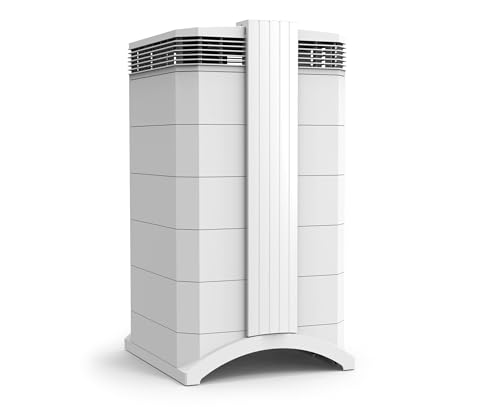
- Best for: Large rooms where both fine particles and gases need serious filtration.
- Medical-grade HyperHEPA filter
- V5-Cell granular activated carbon
- Covers large rooms up to 1,125 sq ft
- Targets viruses, bacteria, allergens, smoke, mould and odour
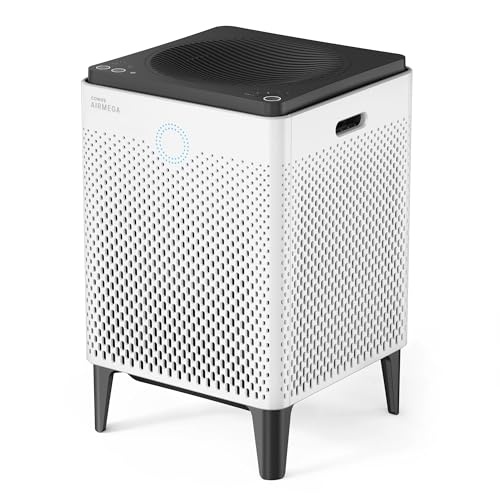
- Best for: Large living rooms with everyday cooking smells and dust.
- Covers up to 3,120 sq ft
- CADR 328 for smoke, 328 for dust, 400 for pollen
- Filter type: HEPA filter, active carbon filter, pre-filter
- Particle retention size: 0.3 micron
All 5 Picks at a Glance
| Product | Specs | Action |
|---|---|---|
| Austin Air HealthMate Plus |
| Check price on Amazon |
| IQAir HealthPro Plus |
| Check price on Amazon |
| Coway Airmega 400 |
| Check price on Amazon |
 Medify MA-112 |
| Check price on Amazon |
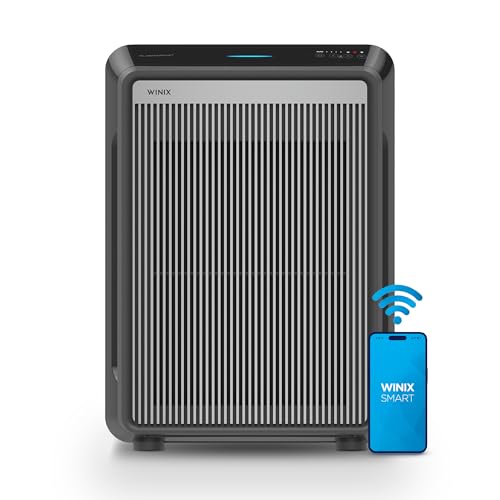 Winix 9800 |
| Check price on Amazon |
Our Top Picks
- Austin Air HealthMate Plus Air Purifier1 Count (Pack of 1)14.5 x 14.5 x 23 inches47 PoundsCheck on Amazon
- Medify MA-112 Air Purifier V3.0 with HEPA FilterXlarge Room28 x 16 x 15 inches32 PoundsCheck on Amazon
A large living room with a smell problem needs carbon, and it needs a lot of it. A thin carbon sheet will handle a bedroom for a while, yet in a big room with cooking, smoke, pets or new furniture, it saturates quickly and the smell returns while the fan is still running. The real decision is about capacity: how much activated carbon the machine carries, how deep the bed is, and how long it keeps working before it needs replacing. A purifier with a deep carbon bed costs more up front, but it is the only design that keeps a large room smelling clean for months rather than weeks.
This guide is for households with large living rooms where odours are the main problem, including homes near busy roads, homes with smokers, open kitchens and families dealing with wildfire smoke. Every model below was chosen from its Amazon title and listing details, with attention to carbon design, HEPA filtration, coverage and filter life, so the comparison shows which machines carry enough carbon for a big room.
Quick Picks
As an Amazon Associate we earn from qualifying purchases
| Product | Best for | Key spec from title |
|---|---|---|
| Austin Air HealthMate Plus | Maximum carbon for smoke and chemicals | 15-pound activated carbon filter, 4-stage filtration |
| IQAir HealthPro Plus | Granular carbon plus medical-grade HEPA | V5-Cell granular activated carbon, HyperHEPA filter |
| Coway Airmega 400 | Everyday carbon and HEPA for a large room | Covers up to 3,120 sq ft, active carbon filter |
| Medify MA-112 | Very large rooms with heavy smoke | True HEPA H13, activated carbon composite, CADR 950 |
| Winix 9800 | Large rooms with WiFi control and carbon filtration | 4-stage True HEPA, carbon filter, WiFi |
How to Choose
Carbon capacity and why weight matters
Activated carbon adsorbs gases onto its surface, and the total surface area decides how much smell it can hold before it saturates. A bed measured in pounds lasts far longer than a sheet measured in millimetres, which is why the listing language matters: look for a weight, a granular bed or a deep carbon stage, rather than a vague odour filter. In a large living room, a machine with a 15-pound carbon bed will keep working long after a thin-sheet model has stopped controlling smells. Check the carbon description before the HEPA specification, since carbon capacity is the limiting factor in a smell-heavy home.
Granular versus sheet carbon
Granular carbon, made of small pellets or grains, gives air more surface to pass over and lasts longer than a flat sheet of carbon-coated material. Pellet and granular beds also handle a wider range of gases, including VOCs, formaldehyde and smoke chemicals. A sheet filter is cheaper and lighter, yet it saturates faster and needs replacing more often. If the listing mentions granular activated carbon, a V5-Cell or a carbon and zeolite bed, the machine is built for serious odour control. If it only mentions a carbon filter without detail, assume a thinner stage and plan for more frequent replacements.
HEPA filtration alongside carbon
Carbon handles gases, yet it does nothing for fine particles such as dust, pollen, smoke particles and pet dander. A high-carbon purifier still needs a HEPA layer, and the two should work in sequence: a pre-filter catches hair, carbon adsorbs gases, and HEPA captures the particles that remain. Check the HEPA grade in the listing, whether it is True HEPA, H13 or HyperHEPA, and note the particle size it captures. A machine with a deep carbon bed and a strong HEPA layer suits a large room where both smoke particles and smoke smells are present.
Coverage, airflow and filter life
A deep carbon bed creates resistance, so the machine needs a strong fan to push air through it and across a large room. Compare CADR and coverage together, and check the noise on the fan speed you will actually use, since a carbon-heavy machine running on high all day will be loud. Filter life is the other half of the decision: a carbon bed rated for five years changes the running cost completely compared with one rated for three months. Check the replacement interval for the carbon stage specifically, not just the HEPA layer.
The 5 Best Options
Austin Air HealthMate Plus
- Best for: Large rooms with smoke, chemicals, VOCs and persistent odours.
- 4-stage filtration
- Filter type: HEPA and activated carbon
- Activated carbon and zeolite bed, 15-pound carbon filter
- Model B450
Large rooms with smoke, chemicals, VOCs and persistent odours.
Check the unit size and weight, and confirm the room size against the 1,500 sq ft rating.
The HealthMate Plus suits a large living room with a serious smell problem, because its 4-stage filtration pairs a medical-grade HEPA filter with a 15-pound activated carbon and zeolite bed. That granular carbon targets gases, chemicals, VOCs and formaldehyde, while the HEPA layer captures particles down to 0.3 microns. The filter is rated to last up to five years, which makes it the longest-lasting carbon stage in this guide. It is the pick when the room smells of smoke, paint, cooking or chemicals and you want the carbon to keep working for years.
IQAir HealthPro Plus
- Best for: Large rooms where both fine particles and gases need serious filtration.
- Medical-grade HyperHEPA filter
- V5-Cell granular activated carbon
- Covers large rooms up to 1,125 sq ft
- Targets viruses, bacteria, allergens, smoke, mould and odour
Large rooms where both fine particles and gases need serious filtration.
Check the filter replacement cost and the unit footprint, since this is a large tower.
The HealthPro Plus fits a large living room where health-grade filtration matters, because its HyperHEPA filter works alongside a V5-Cell granular activated carbon stage. The V5-Cell is a deep bed of granular carbon designed for gases and odours, while HyperHEPA captures fine particles including viruses, bacteria and smoke particles. It is rated for large rooms up to 1,125 sq ft, and its Swiss-made build suits a household that wants medical-grade air cleaning. Choose it when particle filtration matters as much as carbon capacity.
Coway Airmega 400
- Best for: Large living rooms with everyday cooking smells and dust.
- Covers up to 3,120 sq ft
- CADR 328 for smoke, 328 for dust, 400 for pollen
- Filter type: HEPA filter, active carbon filter, pre-filter
- Particle retention size: 0.3 micron
Large living rooms with everyday cooking smells and dust.
Check the carbon replacement schedule, since the carbon layer will saturate before the HEPA layer in a kitchen-adjacent room.
The Airmega 400 suits a large living room that needs everyday carbon and HEPA cleaning, because it combines a HEPA filter, an active carbon filter and a washable pre-filter, and it covers up to 3,120 sq ft. With a CADR of 328 for smoke and dust and 400 for pollen, it moves enough air for a wide room, and it runs at 22 decibels on its quietest setting. The air quality monitor and auto mode raise the fan when cooking smells drift across the room. It is a balanced choice when the smell load is moderate and quiet running matters.
Medify MA-112
- Best for: Very large rooms with smoke, wildfire haze and strong odours.
- True HEPA H13 filter
- CADR: 950
- Coverage: 5,948 sq ft in 1 hour in the title
- Coverage area: 4,455 sq ft every 60 minutes
Very large rooms with smoke, wildfire haze and strong odours.
Check the unit size and weight, and confirm the filter replacement interval for heavy use.
The Medify MA-112 fits a very large living room with heavy smoke, because its True HEPA H13 filter and activated carbon composite work with a CADR of 950, the highest in this guide. Its title lists coverage of 5,948 sq ft in one hour, with a 4,455 sq ft figure for a full hour of cleaning, and its dual air intake pulls air from both sides. Four fan speeds let you run it hard after cooking or during wildfire haze and quietly in the evening. Choose it when the room is genuinely large and the air challenge is serious.
Winix 9800
- Best for: Large rooms that want WiFi control, auto mode and carbon filtration.
- 4-stage True HEPA air purifier
- Carbon filter included
- WiFi and PlasmaWave technology
- Covers up to 2,420 sq ft in 1 hour
Large rooms that want WiFi control, auto mode and carbon filtration.
Check the carbon filter replacement interval, since it is shorter than the HEPA filter life, and confirm the PlasmaWave setting suits your household.
The Winix 9800 suits a large living room that wants smart control with carbon filtration, because its 4-stage True HEPA system includes a carbon filter, a washable pre-filter and PlasmaWave technology, plus WiFi and app control. It is rated for extra-large rooms up to 2,420 sq ft in one hour, with a 500 sq ft figure for faster air changes, and its air quality monitor adjusts the fan automatically. It is a good fit when you want a connected purifier that handles both particles and smells in a big room.
Which One Fits Your Situation
Smoke and chemicals are the main problem
Choose the Austin Air HealthMate Plus, because its 15-pound granular carbon bed is the deepest in this guide and its filter lasts up to five years. It suits a home where smells linger and a thin carbon sheet would saturate in weeks.
You want medical-grade filtration as well
Choose the IQAir HealthPro Plus, because its HyperHEPA filter and V5-Cell granular carbon handle both fine particles and gases. It is the pick when health-grade particle filtration matters as much as odour control.
The room is very large or smoky
Choose the Medify MA-112, because its CADR of 950 and dual intake give it the airflow to clean a genuinely large space. The Coway Airmega 400 is the quieter alternative for everyday use in a large room.
You want smart control with carbon filtration
Choose the Winix 9800, because its WiFi, app control and auto mode suit a household that wants to manage the purifier from a phone. Check the carbon replacement interval before buying.
Common Mistakes
- Buying a purifier by HEPA grade alone, while ignoring carbon capacity in a smell-heavy room.
- Choosing a thin carbon sheet for a large, open kitchen-living room, where it saturates quickly.
- Replacing the filter only when it looks dirty, while the carbon stopped working months earlier.
- Placing the purifier behind furniture, which blocks the intake and leaves the far side untouched.
- Sizing the machine to the seating area, while ignoring the open kitchen that shares the same air.
Frequently Asked Questions
How much carbon does a large living room need?
It needs a deep bed, not a thin sheet. A granular bed measured in pounds will last far longer than a carbon-coated sheet, especially in a room with cooking, smoke or pets. Check the listing for carbon weight or a granular bed description, and choose the deepest carbon stage you can fit in your budget and floor space.
What is the difference between granular and sheet carbon?
Granular carbon is made of small pellets or grains with a large surface area, so air passes over more carbon and the bed lasts longer. Sheet carbon is a thin layer of carbon-coated material that is cheaper and lighter, yet it saturates faster. For a large living room with strong smells, granular carbon is the better choice.
How do I know when the carbon filter is worn out?
The clearest sign is smell: when odours return despite the fan running on high, the carbon is saturated even if the HEPA layer still works. Check the filter life indicator and the listing replacement interval, and replace the carbon stage when smells persist. A washable pre-filter will not restore a saturated carbon bed.
Can a high-carbon purifier also help with allergies?
Yes, provided it also has a HEPA layer. Carbon handles gases and smells, while HEPA captures pollen, dust, pet dander and other fine particles that trigger allergies. Check the listing for both filter types, and choose a model with a HEPA grade that matches your allergy needs.
FAQ
How much carbon does a large living room need?
What is the difference between granular and sheet carbon?
How do I know when the carbon filter is worn out?
Can a high-carbon purifier also help with allergies?
More from Amazon
Programs that pair well with the guide above. Offers and eligibility are set by Amazon and may change.
Free shipping on eligible items, Prime Video and more. Eligible new members can start with a free trial.
Start a Prime free trialAudiobooks and podcasts to listen to on the go. Eligible new members can start with a free trial.
Try Audible freeAd-free music streaming. Eligible new subscribers can start with a free trial.
Try Music Unlimited freeA free business account with business pricing and bulk-buying tools for work, shop or home office.
Create a business accountAs an Amazon Associate we earn from qualifying purchases.