
Key takeaways
- 5mm to 6mm – The all-around balance: The Gaiam Premium Yoga Mat at 5mm and the Gaiam Essentials Yoga Mat at 6mm offer enough padding for knees and wrists without sacrificing stability for standing poses and transitions. This range is ideal for vinyasa, hatha, and general studio use, and keeps weight under 3 pounds for easy carrying.
- 9mm to 10mm – Maximum joint support: For sensitive joints, yin yoga, Pilates, or floor work, a thicker mat helps. The Sensu Large Yoga Mat at 9mm and the Gaiam Essentials Thick Yoga Mat in Green or Black at 10mm provide a noticeably softer landing for seated and supine poses. Expect more weight and a slightly less stable feel in one-leg balances.
- 15mm – Studio-grade cushioning: The SPRI Hanging Exercise Mat at 15mm is built for group fitness rooms and high-impact cushioning. It is the most forgiving on hard floors but is bulky and best kept in one location.
Choosing a yoga mat is more than picking a color. The right mat affects your joint comfort, balance, grip, and how consistently you practice. A mat that is too thin can leave knees aching after a single session, while one that is too soft can make standing balances feel unstable. Understanding thickness, size, texture, and material helps you match the mat to your body and your style of yoga.
In this 2026 guide, we break down exactly what to look for before you buy, with concrete measurements and real-world trade-offs. Whether you need extra cushioning for restorative work, a stable surface for power flows, or room to move for home practice, you will learn how to select the best yoga mat for your needs using proven examples from top-rated models.
Our top picks




As an Amazon Associate we earn from qualifying purchases at no extra cost to you.
⚡ Save on Your Next PC — Amazon Prime
Prime members get fast free shipping on the systems above, plus early access to Prime Day & Black Friday PC deals. New members get a 30-day free trial.
Watch: How to Select the Best Yoga Mat for Your Practice — Video Review
1. Match Thickness to Comfort and Stability
Thickness is the single biggest factor in how a mat feels. It is measured in millimeters and directly affects cushioning, weight, and stability.
- 5mm to 6mm – The all-around balance: The Gaiam Premium Yoga Mat at 5mm and the Gaiam Essentials Yoga Mat at 6mm offer enough padding for knees and wrists without sacrificing stability for standing poses and transitions. This range is ideal for vinyasa, hatha, and general studio use, and keeps weight under 3 pounds for easy carrying.
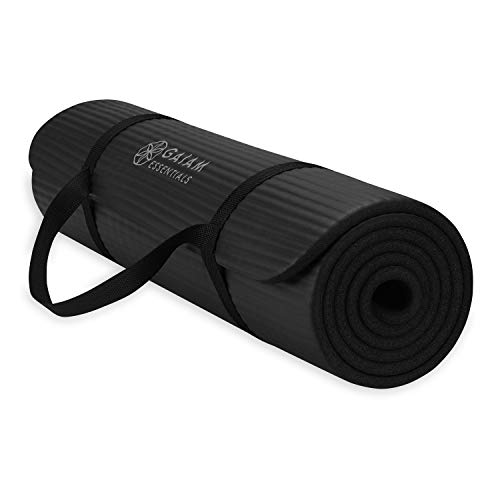
- 9mm to 10mm – Maximum joint support: For sensitive joints, yin yoga, Pilates, or floor work, a thicker mat helps. The Sensu Large Yoga Mat at 9mm and the Gaiam Essentials Thick Yoga Mat in Green or Black at 10mm provide a noticeably softer landing for seated and supine poses. Expect more weight and a slightly less stable feel in one-leg balances.
- 15mm – Studio-grade cushioning: The SPRI Hanging Exercise Mat at 15mm is built for group fitness rooms and high-impact cushioning. It is the most forgiving on hard floors but is bulky and best kept in one location.
2. Get the Right Size and Coverage
A standard yoga mat is about 68 to 72 inches long and 24 inches wide, which works for most practitioners under 6 feet tall. If you are taller, share your space, or want room for wider movements, dimensions matter more than you think.
- Length: If you are over 6 feet, look for 72 to 74 inches or longer to keep your head and heels on the mat in savasana. Most 6mm and 10mm Gaiam Essentials models come in 72-inch length, which suits the majority of users.
- Width and total area: The Sensu Large Yoga Mat stands out at 7 feet by 5 feet (84 x 60 inches). That extra width is useful for larger bodies, couples practice, family stretching, or anyone who wants complete floor coverage for grounding and meditation without repositioning.
- Storage length: The SPRI Hanging Exercise Mat is cut to 56 inches, designed to hang vertically in studios. It saves floor space but is too short for full-length lying poses at home.
3. Evaluate Grip, Texture, and Material
Grip keeps you safe when hands get sweaty, especially in hot yoga or power flows. Look at both the top surface and the bottom stability.
- Non-slip texture: Mats like the Sensu Large Yoga Mat and Gaiam Premium Yoga Mat use textured, dual-surface designs to prevent hands and feet from sliding during downward dog or lunges. A lightly embossed or etched surface provides traction even when dry.
- Material performance: Most beginner-to-intermediate mats use PVC or TPE for durability and easy cleaning. PVC, used in the Gaiam Essentials Thick Yoga Mat and SPRI Hanging Exercise Mat, is highly durable and cushions well. TPE is often lighter and lower-odor. For hot yoga, prioritize a mat with a proven non-slip surface and consider adding a towel for moisture management.
- Bottom grip: Check that the base has a raised pattern or rubberized texture to prevent the entire mat from sliding on hardwood or studio floors.
4. Consider Weight, Portability, and Care
The best mat is the one you will actually use. If you commute to class, portability can outweigh extra cushioning.
- Weight and transport: A 5mm mat typically weighs 2 to 2.5 pounds, while a 10mm mat can weigh 3.5 to 4 pounds. The Gaiam Essentials Thick Yoga Mat includes an easy-cinch strap, and the Gaiam Essentials Yoga Mat 6mm comes with a carrying sling, both of which make carrying to studios or outdoors far easier. The 9mm Sensu and 15mm SPRI mats are heavier and best for dedicated home or studio spots.
- Cleaning and durability: Wipe down with mild soap and water after each session and air dry flat. Thicker PVC mats resist compression denting better over time. Hangable designs like the SPRI Hanging Exercise Mat allow for vertical air drying and sanitizing in shared spaces.
- Odor and break-in: New PVC mats may have a slight odor for the first few days. Unroll and air out for 24 to 48 hours before first use.
Tips
- Test stability before you commit: try tree pose and plank on a new mat for 30 seconds each to feel if the cushioning compromises balance.
- Measure your space at home: ensure you have at least 6 inches of clearance around all sides of the mat for arm extensions and twists.
- Pair thickness with flooring: on hard wood or concrete, choose 6mm or thicker; on carpet, a 5mm mat will feel more stable and less wobbly.
- Plan for your primary practice: choose 5mm to 6mm for dynamic flows and hot yoga, 9mm to 10mm for gentle, restorative, and Pilates sessions where you spend more time on your back and knees.
Frequently Asked Questions
What thickness is best for beginners?
For most beginners in 2026, 6mm is the safest starting point. The Gaiam Essentials Yoga Mat at 6mm cushions joints during floor poses while still providing a firm, stable base to learn balance. If you have knee pain or practice on hard floors, consider moving up to the 10mm Gaiam Essentials Thick Yoga Mat.
Do I need an extra-large mat?
Only if standard width feels restrictive. If you are taller than 6 feet, have a broad frame, want to practice with a partner, or do wide-legged movements and meditation that go off the edge of a normal mat, the Sensu Large Yoga Mat at 7 by 5 feet gives you full coverage without adjusting your position.
How do I keep my mat from slipping during sweaty sessions?
Choose a mat marketed as non-slip with a textured top, such as the Gaiam Premium Yoga Mat or Sensu Large Yoga Mat, and keep the surface clean and dry. For hot yoga, use a microfiber mat towel on top for added absorption. Also ensure the floor underneath is dry and dust-free so the mat base can grip.
Are thick mats harder to store and carry?
Yes. Thickness adds bulk and weight. A 10mm mat rolls to about 6 to 7 inches in diameter, while a 5mm mat rolls to about 4.5 inches. If you walk, bike, or take transit to class, prioritize a 5mm to 6mm mat with a strap or sling. Reserve 9mm to 15mm options like the Sensu or SPRI for home use or a studio locker.
Conclusion
The best yoga mat balances cushioning, grip, size, and portability for how you actually practice. For versatile daily use, a 5mm to 6mm mat like the Gaiam Premium Yoga Mat or Gaiam Essentials Yoga Mat 6mm is stable and portable. For joint protection and home-based grounding or stretching, the extra thickness of the Gaiam Essentials Thick Yoga Mat at 10mm or the expansive Sensu Large Yoga Mat at 9mm is worth the added bulk. Match your mat to your body, your floor, and your most frequent practice style, and you will feel the difference in every session.










Write Your Review
No reviews yet. Be the first to share your experience!