
Best magsafe portable charger decisions hinge on a number no listing prints: usable capacity. A 10,000 mAh pack delivers roughly 60-70 percent of that to a phone after voltage conversion and wireless losses, and this guide compares seven packs on that basis.
As an Amazon Associate we earn from qualifying purchases.
By Daniel Foster
What the Capacity Number Actually Means
The best magsafe portable charger is not the one with the largest printed number. Magnetic power banks are sold on mAh, but that figure describes the cells inside at their own voltage, not what reaches the phone. Wireless transfer adds a further loss on top of the conversion, which is why a pack rated well above a phone’s battery often delivers barely more than one full charge.
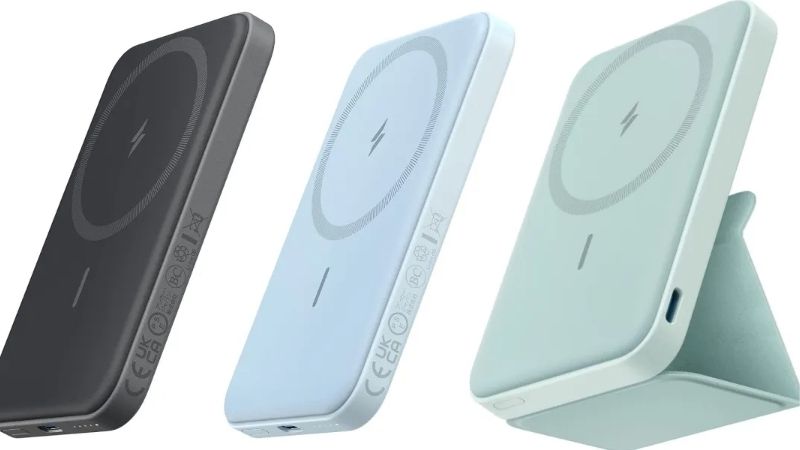
The Decisive Numbers: mAh, Real Capacity and Output Watts
Start with mAh and derate it. A 10,000 mAh pack holds about 37 Wh; after voltage conversion expect 6,000-7,000 mAh delivered by cable, and less again over the magnetic coil. Against a modern iPhone battery of roughly 3,300-4,700 mAh, that is one full charge plus a partial top-up.
Output watts decide speed and split two ways. Qi2 magnetic charging delivers up to 15 W, while the USB-C port on the same pack usually offers 20-30 W. The best magsafe portable charger for a long day is one where the wired port is fast enough to use when you are stationary.
Certification matters for alignment and heat. Qi2 and Made for MagSafe packs hold position properly and negotiate charging correctly, while generic magnetic packs frequently drop to 7.5 W or slip out of alignment in a pocket, which wastes energy as heat rather than charge.
Space and Fit: Weight, Thickness and Case Compatibility
Size decides whether the best magsafe portable charger on paper is the one you actually carry. A 5,000 mAh magnetic pack adds roughly 100-120 g and 12 mm to the back of the phone; a 10,000 mAh pack adds 200-250 g and closer to 20 mm. That difference decides whether you carry it attached while walking or only use it seated, so the smaller pack is often the one that actually gets used.
Case thickness affects magnetic hold. Cases over about 3 mm, or those without embedded magnets, weaken the attachment enough that the pack slides. If you use a thick protective case, check that it is MagSafe-compatible before buying, since the pack cannot compensate for a weak magnetic ring.
Airline Rules, Heat and Degradation
Lithium capacity limits for air travel are set in watt-hours, with 100 Wh the common threshold for carry-on without approval. A 10,000 mAh pack at 37 Wh sits comfortably inside that, and even 20,000 mAh at around 74 Wh is under it, but power banks must travel in the cabin rather than checked baggage.
Heat is the enemy of both charging speed and battery life. Wireless charging generates more heat than cable, and a phone that gets warm will throttle its own charging rate, so removing a thick case or using the cable when you need speed is the practical response. Cells also lose capacity across charge cycles, typically noticeably after two to three years of regular use.
7 Magnetic Packs Worth Carrying
The best magsafe portable charger depends on whether you carry it attached or use it seated. These picks range from pocketable 5,000 mAh units to full-day 10,000 mAh packs with stands. Amazon prices move constantly, so the tiers below are indicative.
| Model | Capacity | Magnetic output | Price tier |
|---|---|---|---|
| Anker MagGo Power Bank 10K | 10,000 mAh | Qi2 15 W | Mid |
| Belkin BoostCharge Pro Magnetic | 10,000 mAh | Qi2 15 W | Mid-premium |
| Anker 622 MagGo | 5,000 mAh | 7.5 W with kickstand | Budget-mid |
| ESR HaloLock Kickstand | 5,000-10,000 mAh | Qi2 15 W on newer models | Budget-mid |
| Mophie Snap+ Powerstation | 10,000 mAh | 15 W | Mid |
| UGREEN MagFlow | 10,000 mAh | Qi2 15 W | Mid |
| Baseus PicoGo Magnetic | 10,000 mAh | Qi2 15 W | Budget-mid |
Anker MagGo Power Bank 10K: The Default
For most iPhone owners this is the best magsafe portable charger to buy without further research: Qi2 certification, a fold-out stand and a small display showing remaining charge and estimated time make this the easiest recommendation in the category. The stand turns the pack into a desk dock, which is the use case that justifies carrying 10,000 mAh.
It is heavy enough that walking with it attached is awkward, and the price sits above generic alternatives. The display is useful but adds a small parasitic drain, which matters if the pack sits unused in a bag for weeks.
Belkin BoostCharge Pro Magnetic: Build and Alignment
Belkin’s magnetic hold is among the strongest here and the build quality is a clear step above budget brands. Qi2 15 W charging plus a fast USB-C port covers both the convenience and the speed cases properly.
It carries a premium price for capacity that others match for less, and it runs warm at sustained 15 W. There is no display, so remaining charge is indicated by LEDs rather than a percentage.
Anker 622 MagGo: Pocketable and Practical
At 5,000 mAh this is the pack you actually carry, adding modest weight and thickness while delivering roughly half to two-thirds of a phone charge. The fold-out kickstand for propping the phone in landscape is genuinely useful on a plane tray.
It predates Qi2 and charges magnetically at 7.5 W rather than 15 W, so it is slower. Capacity is enough to get through an evening rather than a full day away from power.
ESR HaloLock Kickstand: Value Qi2
ESR sells Qi2 15 W packs at prices below the major brands, usually with a kickstand and a strong magnetic array. For most people the performance difference against a premium pack is not visible in daily use.
Model naming is confusing, with older 7.5 W versions still listed alongside Qi2 ones, so verify the specification rather than the product family. Long-term durability is less proven than with established accessory brands.
Mophie Snap+ Powerstation: Case-Agnostic Magnets
Mophie includes an adhesive magnetic ring in some bundles, which makes the pack work with non-MagSafe cases and Android phones. That flexibility is the differentiator if you are not exclusively on recent iPhones.
The pack is bulky and the price sits at the higher end. Charging speed over the magnetic link is adequate rather than class-leading, and the finish attracts fingerprints.
UGREEN MagFlow: Fast Wired Port
Qi2 magnetic charging paired with a higher-wattage USB-C port makes this a good choice for someone who also wants to charge a tablet or a laptop slowly. The pass-through capability lets it charge itself and the phone simultaneously.
It is one of the heavier 10,000 mAh options and the magnetic hold is slightly weaker than Belkin’s. The app-free simplicity means no charge percentage beyond LED indicators on some variants.
Baseus PicoGo Magnetic: Slim for the Capacity
Baseus has pushed 10,000 mAh into a thinner body than most competitors, which makes it more tolerable attached to the phone while moving. Qi2 15 W and a reasonable wired output cover the essentials.
Thinner construction means less thermal mass, so it runs warmer under sustained wireless charging. Support and warranty handling are less established than with the major brands.
Getting More From a Magnetic Pack
How you use the best magsafe portable charger affects how much charge actually reaches the phone, and small habits make a measurable difference.
Wireless Convenience Versus Cable Efficiency
Magnetic charging loses meaningfully more energy as heat than a cable does, so a pack that gives 1.5 phone charges wirelessly may give closer to two by cable. When you are stationary and want maximum charge from the pack, use the USB-C port.
Remove thick cases before attaching where possible, and avoid charging in direct sun or inside a tightly packed bag. A phone that heats up will slow its own charging rate, which is why a wireless top-up sometimes seems to make almost no progress.
Travel Rules and Long-Term Care
Power banks must be carried in the cabin rather than checked, and the common threshold for carrying without airline approval is 100 Wh. Multiply mAh by 3.7 and divide by 1,000 to get watt-hours, so 20,000 mAh is about 74 Wh and remains within the limit.
For longevity, avoid storing a pack fully depleted for months and top it to roughly half charge if it will sit unused. Charge cycles are finite, and a pack used daily will show reduced capacity within two to three years, which is normal rather than a fault.
Buying Timing and Recall Awareness
Portable chargers follow the general electronics calendar, with Prime Big Deal Days in early October and Black Friday and Cyber Monday in late November as the next two windows where discounts across this category are most consistent. They are also a common gift item through December.
Lithium power banks appear periodically in safety recall notices, so it is worth checking the CPSC recall listing for a model before buying and registering the product if the manufacturer offers it. Buy from the brand’s own storefront or an authorised seller rather than an unbranded listing with the same photographs.
Frequently Asked Questions
These questions come up in every best magsafe portable charger comparison once people notice the gap between printed capacity and delivered charge.
Why does a 10,000 mAh pack not charge my phone twice?
Because the rating describes the internal cells at their own voltage, and conversion plus wireless transfer loses a substantial share. Expect roughly 60-70 percent delivered by cable and less over the magnetic coil, which for most phones means one full charge and a partial second.
Is Qi2 worth paying for?
Yes, if you charge magnetically. Qi2 delivers up to 15 W against 7.5 W on older magnetic packs, which halves the time for a comparable top-up. If you mostly use the cable, the certification matters less than the wired output figure.
Can I take one on a plane?
In carry-on baggage, yes, within the common 100 Wh limit that covers everything up to roughly 26,000 mAh. Power banks are not permitted in checked luggage, and some airlines have added rules about using or charging them in flight, so check the carrier’s current policy.
See More:
- Best noise cancelling headphones Bose
- Best deal on air fryer
- Best buy Bella air fryer
- Best deals air fryer
- Best blender bottle
Final Thoughts on Magnetic Power Banks
The best magsafe portable charger for most people is a Qi2-certified 5,000 mAh pack for carrying and a 10,000 mAh one with a stand for travel, chosen on real usable capacity rather than the headline mAh. Check case compatibility, use the cable when you need speed, and confirm the watt-hour figure before flying. Weight decides which one you actually take with you.
Our top picks


![LISEN 0.3'' Ultra Slim [Qi2 15W] for MagSafe Battery Pack Power Bank, QI2 Certified 5000mAh Wireless Portable Charger,Travel Magnetic Power Bank for iPhone 17 Pro Max Plus Air 16 15 14 13 12](https://m.media-amazon.com/images/I/71BxxN8p3oL._AC_UY218_.jpg)


As an Amazon Associate we earn from qualifying purchases at no extra cost to you.

Write Your Review
No reviews yet. Be the first to share your experience!