
Key takeaways
What's inside
Smart garage security closes the gap at one of a home’s most overlooked entries, so this smart garage security guide ranks picks by control, alerts, and reliability, not gadget appeal. Below are six options with honest drawbacks, from opener controllers to cameras and the interior-door sensors today.
As an Amazon Associate we earn from qualifying purchases at no extra cost to you. Product prices and availability are accurate as of the date shown and are subject to change.


As an Amazon Associate we earn from qualifying purchases.
By Daniel Foster
Why The Garage Deserves Attention
The garage is often the weakest entry: a door left open, an old opener that is easy to exploit, or an interior door into the house left unlocked. Deciding how you will control the opener, monitor the door, and get alerts keeps smart garage security focused on real risks rather than novelty features.
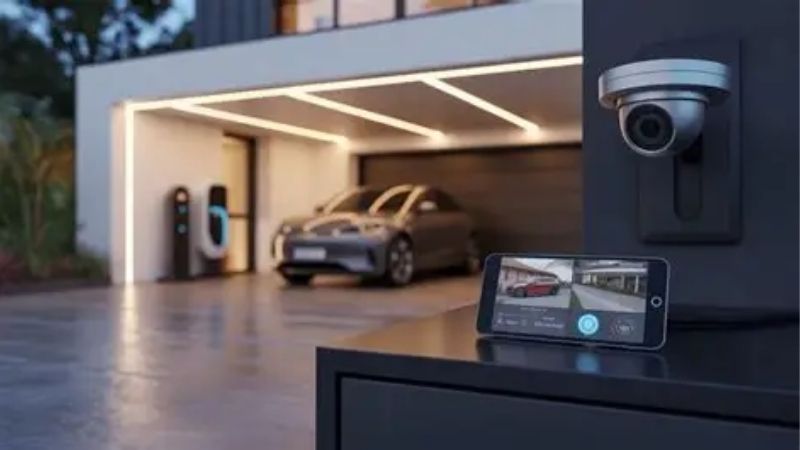
Smart Garage Security Decision Numbers
The deciding factors are the control method (a smart opener controller versus a full opener replacement), whether you get open or closed alerts and auto-close, how footage or status is stored, and whether it works offline. A controller that only acts through the cloud is a risk when the connection drops.
Then confirm compatibility with your existing opener, since retrofit controllers work with many but not all models and safety sensors. Check whether a camera is included or separate, its storage type and any fee, and whether the system can alert you if the door is left open past a set time.
Weigh integration with Alexa, Google, or your alarm, but prioritize local reliability: the door should still open with the wall button or remote if the app fails. Auto-close on a schedule or geofence is convenient, but confirm the required safety sensors are in place so the door never closes on someone.
Placement, Space, And Fit
A retrofit controller mounts near the opener motor and wires to its terminals, so confirm your opener’s brand and whether it uses the security protocol some controllers cannot bridge without an adapter. Measure the space around the motor unit and plan the sensor placement on the door itself.
A garage camera needs a vantage that sees both the vehicle bay and the interior door to the house, mounted high in a corner and angled down. Power is easier here than outdoors since outlets are usually nearby, but confirm Wi-Fi reaches the garage, which is often a signal dead zone.
For the interior door into the house, treat it like any entry with a contact sensor or smart lock, since a breached garage should not mean a wide-open home. Renters should check whether they can modify the opener at all, and favor camera-and-sensor approaches that do not alter the opener.
Control, Alerts, And Offline Behavior
Smart control ranges from a retrofit module that adds app open-close and status to an existing opener, to a full smart opener replacement. A retrofit is cheaper and renter-friendlier where allowed, while a replacement bakes in features but is a bigger install and commitment.
Alerts are the core benefit: knowing the door is open, getting a nudge to close it, and optionally auto-closing after a set time or when you leave. Confirm the system distinguishes a genuinely open door from a brief cycle, so you are not buried in notifications every time you come and go.
Offline behavior is the safety net, since garages lose Wi-Fi more than most rooms. The wall button and remote should always work, and the door’s safety sensors must remain independent of the smart layer, so a network outage or app failure never leaves you unable to open or safely close the door. Confirming the safety sensors stay independent of the smart layer is the step that keeps auto-close safe.
Top Smart Garage Security Picks
These six span opener controllers, cameras, and sensors, so you can cover control, monitoring, and the interior door. Each entry names a real drawback, because smart garage security trades off compatibility, storage fees, and offline reliability in ways worth checking before you buy for your specific opener.
| Pick | Type | Storage/alerts | Best for |
|---|---|---|---|
| myQ controller | Opener retrofit | App alerts | Wide compatibility |
| Meross controller | Opener retrofit | App + assistants | Ecosystem flexibility |
| Tailwind controller | Opener retrofit | App + auto-close | Auto-close geofence |
| Wyze/eufy garage cam | Camera | microSD/local | Fee-free monitoring |
| Contact/entry sensor | Door sensor | Hub + phone | Open-door alerts |
| Smart lock (interior door) | Lock | Local codes | Securing the house door |
myQ Controller For Wide Compatibility
myQ retrofit controllers work with a broad range of existing openers, adding app open-close, status, and open-door alerts without replacing the motor. For many homes it is the simplest path to smart control, mounting near the opener and using the door’s existing safety sensors.
The drawbacks include past limitations on some third-party integrations and features that have shifted over time, so confirm current app capabilities and any fees for specific functions. Cloud dependence also means confirming the wall button and remote still work if the app or internet is down.
For wide opener compatibility and straightforward alerts, myQ is a common choice. Verify your opener model is supported, check which integrations you need are currently offered, and treat the app as a convenience over the physical controls that must always keep the door working.
Meross Controller For Ecosystem Flexibility
Meross retrofit controllers add app control and status while supporting major assistants like Alexa, Google, and Apple Home on many models, appealing to buyers who want ecosystem flexibility. They install at the opener and use its safety sensors, keeping the physical controls intact.
The trade-off is that compatibility varies by opener and protocol, so confirm your model works, possibly with an adapter, before buying. As with any cloud-linked controller, verify offline behavior so a network outage never blocks the wall button or leaves you unable to open the door.
For a household that wants its garage in the same ecosystem as everything else, Meross is flexible and affordable. Check opener compatibility carefully, confirm the assistant support you want, and keep expectations that the smart layer supplements, not replaces, the reliable physical opener.
Tailwind Controller For Auto-Close Geofence
Tailwind controllers emphasize reliable auto-close, closing the door automatically after a set time or when your phone leaves a geofence, which directly addresses the classic left-open-garage risk. They support multiple doors and integrate with common assistants for hands-free control.
The drawback is that auto-close depends on correct safety-sensor setup, and geofence reliability can vary with phone settings, so test it thoroughly before trusting it. Compatibility and any subscription for advanced features should be confirmed, and offline fallback to physical controls verified.
For the buyer whose main worry is a door left open, the auto-close focus is genuinely useful. Confirm your opener is supported, verify the safety sensors so the door never closes on an obstacle, and treat geofencing as a helpful convenience rather than a guarantee.
Wyze Or eufy Garage Camera For Fee-Free Monitoring
A garage camera from a fee-averse brand records to a microSD card or local hub with no required subscription, letting you see the bay and the interior door. It adds visual confirmation to a controller’s status, showing not just that the door is open but who or what is inside.
The drawback is that a camera monitors rather than controls, so pair it with a controller for actual open-close ability. Garage Wi-Fi can be weak, and low light needs good night vision, so confirm signal and lighting, and place the camera to cover both the vehicle and the house door.
For fee-free eyes on the garage, these cameras add valuable context to a smart setup. Mount one high in a corner, keep footage local to avoid monthly costs, and combine it with a controller and an interior-door sensor for layered garage coverage. Placing the lens to see both the bay and the house door doubles what a single camera tells you.
Contact Or Entry Sensor For Open-Door Alerts
A simple contact or tilt sensor on the garage door reports open or closed status to a hub and your phone, a low-cost way to know if the door was left up. It integrates with many alarm systems, so the garage joins your whole-home coverage without replacing the opener.
The limitation is that a sensor only reports status; it cannot close the door, so pair it with a controller if you want remote action. Placement on the moving door section matters, and battery life should be checked, since a dead sensor silently stops reporting the door’s state.
For inexpensive open-door awareness, a contact or tilt sensor is a smart add-on. Fold it into your existing alarm for unified alerts, test it after mounting, and combine it with a controller and camera if you want to both know and act when the garage is left open.
Smart Lock For Securing The Interior Door
A smart lock on the interior door from the garage into the house treats that door as a real entry, so a breached garage does not mean an open home. Local code or fingerprint entry keeps it convenient, and it works even when the garage Wi-Fi or opener app is down.
The drawback is that it is one more lock to power and maintain, and it must fit the door’s backset and thickness like any deadbolt. It also does not secure the garage door itself, so treat it as the last line rather than the whole solution for garage security.
For layered protection, securing the house door is the step many people skip. Choose a lock with local operation and a reliable backup, confirm it fits the interior door, and pair it with door monitoring so both the garage and the entry into your home are covered.
See More:
- Best eyeshadow blender brush
- Best frozen foods for air fryer
- Best frozen food for air fryer
- Best way to reheat steak in air fryer
- Best air fryer recipes book
Choosing Your Smart Garage Security Setup
The best smart garage security for you layers control, monitoring, and the interior door: a retrofit controller for remote open-close and auto-close, a fee-free camera for visual confirmation, and a sensor or smart lock so a breached garage does not open the house. Confirm opener compatibility before anything else.
Verify the wall button and remote still work offline, place a camera to see the bay and house door, and check Wi-Fi reaches the garage. Because a left-open door and an unlocked interior door are the real risks, and porch and package theft climb late in the year, a thoughtful smart garage security setup closes a gap most homes leave wide open.


