Key takeaways
Driveway alarm system buyers want a heads-up the moment a car or visitor turns in, well before the doorbell, so this driveway alarm system guide ranks picks by detection type, range, and reliability. Below are six options with honest drawbacks, from broad PIR motion to vehicle-only magnetic metal probes.
Our top picks


As an Amazon Associate we earn from qualifying purchases at no extra cost to you.
As an Amazon Associate we earn from qualifying purchases.
By Daniel Foster
How Driveway Sensors Detect Arrivals
Driveway alarms use different sensing methods, each with strengths and blind spots: passive infrared for any warm body, magnetic probes for vehicles only, and beam sensors for anything crossing a line. Matching the method to whether you care about cars, people, or both keeps a driveway alarm system from crying wolf or missing a quiet arrival.
Driveway Alarm System Decision Numbers
The deciding factors are the detection type (PIR motion, magnetic vehicle probe, or beam break), the wireless range from sensor to receiver, and whether any fee applies, which for most standalone systems is none. PIR catches people and animals; a magnetic probe ignores everything but metal vehicles.
Then check the sensor’s weather rating, its power source, and how you are alerted, whether a chime, a voice announcement, or a phone push. Adjustable sensitivity and detection zones matter outdoors, where sun, wind, and passing wildlife are the main causes of the false alerts these systems are prone to.
Confirm the wireless range covers the real distance from your driveway to where you will hear the receiver, allowing for walls and terrain that cut signal. A long driveway or a receiver deep in the house needs more range than the open-air spec suggests, so buy margin rather than the minimum. Buying a receiver with spare range costs little and spares you missed chimes across a long drive.
Placement, Space, And Fit
Mount the sensor where it sees the entry point, aiming a PIR unit across the driveway rather than straight down it so a car crosses the beam pattern, and keep it out of direct sun that can cause heat-driven false trips. A magnetic probe buries or mounts beside the drive to catch vehicles.
Height and angle tune what triggers: aim too low and pets or blowing debris set it off, too high and a person on foot slips under. Position the receiver where you spend time, and test the wireless link at that spot, since interior walls and distance can drop the signal below the outdoor rating.
For renters or temporary setups, choose battery, no-mount options that sit on a post or stake and travel easily. Confirm the sensor clears snowbanks, tall grass, and gate swings, and that its housing is rated for your climate so seasonal weather does not disable it when you need it most.
Detection Type, Range, And False Alerts
PIR sensors are the most common and catch people, animals, and cars, but that breadth means more false alerts from wildlife and moving shade. Magnetic vehicle probes ignore everything but metal, which is ideal if you only care about cars and want to skip nuisance trips from a wandering deer.
Beam-break sensors trigger when something crosses an invisible line between a transmitter and receiver, giving precise entry detection but needing careful alignment. Choose the method by what you actually want to know about, and consider two sensors if you care about both vehicles and people on foot.
False alerts are the top complaint outdoors, so adjustable sensitivity, detection zones, and smart placement matter more than raw range. Point sensors away from a busy road, trim vegetation that sways in wind, and expect some trial and error to tune out the harmless motion your yard produces daily. A little patient tuning up front turns a nuisance chimer into a genuinely useful early warning.
Top Driveway Alarm Picks
These six span PIR motion alarms, vehicle-only probes, and connected systems, so you can match detection and range to your driveway and budget. Each entry names a real drawback, because a driveway alarm system trades off detection breadth, range, and false-alert resistance in ways no single design avoids. Weighing detection breadth against false alerts is the real balance to strike outdoors.
| Pick | Detection | Alert | Best for |
|---|---|---|---|
| Guardline | PIR motion | Chime receiver | Long-range PIR |
| Dakota Alert | PIR or probe | Chime/voice | Vehicle-only option |
| eufy/Ring outdoor sensor | PIR | Phone + hub | Smart-home link |
| Chamberlain/Mighty Mule | Magnetic probe | Chime | Cars only |
| Wireless PIR chime kit | PIR | Chime | Budget tier |
| Beam-break sensor | Beam | Chime/phone | Precise entry line |
Guardline For Long-Range PIR
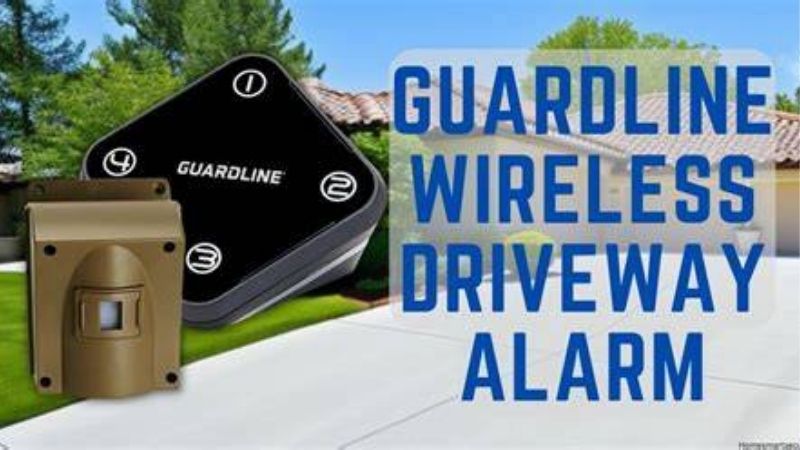
Guardline’s PIR driveway sensors are known for solid wireless range and a chime receiver with selectable tones, catching people, animals, and vehicles across the entry. Weatherproof housings and adjustable sensitivity make it a popular pick for longer driveways where reach matters most.
The drawback is that PIR’s breadth means wildlife and moving shade can false-trigger it, so tuning sensitivity and placement is essential. The advertised open-air range also shrinks through walls and terrain, so confirm the receiver still chimes reliably from your actual indoor listening spot.
For a long driveway where you want to know about any arrival, Guardline is a strong value. Aim it across the drive, trim nearby vegetation, and expect some initial adjustment to filter out the harmless motion that a broad PIR sensor inevitably picks up outdoors.
Dakota Alert For A Vehicle-Only Option
Dakota Alert offers both PIR and magnetic probe sensors, so you can choose vehicle-only detection that ignores pets and wildlife, plus voice or chime receivers. The probe option is ideal when you only care about cars and are tired of nuisance trips from animals crossing the drive.
The trade-off is that a probe detects only metal vehicles, so it will not warn you about a visitor on foot, and PIR versions carry the usual false-alert caveats. The gear is more utilitarian than app-first brands, aimed at reliability over smart-home polish.
For a rural or long driveway where vehicles are the concern, the probe is a genuinely useful choice. Pair it with a PIR unit if you also want foot-traffic alerts, and confirm the receiver’s range reaches your listening spot through any walls in between.
eufy Or Ring Outdoor Sensor For A Smart-Home Link
Connected outdoor motion sensors from smart-home brands push phone alerts and can trigger cameras or lights when someone enters the driveway, tying arrival detection into a wider system. For households already using these platforms, that integration adds context and remote awareness.
The drawbacks are the usual PIR false alerts, reliance on Wi-Fi and, for some, a subscription for the richest features, plus ecosystem lock-in. Range and reliability depend on your network reaching the driveway, which can be a stretch for a long or distant entry.
If you want driveway alerts folded into your phone and camera setup, these integrate well. Confirm Wi-Fi reaches the sensor, weigh any fees, and keep expectations realistic on false alerts, since outdoor PIR remains prone to wildlife and weather triggers regardless of brand.
Chamberlain Or Mighty Mule For Cars Only
Magnetic-probe systems from gate and opener brands detect vehicles by sensing metal, ignoring people and animals entirely, and chime when a car arrives. For a driveway where you only care about vehicles, this eliminates the wildlife false alerts that plague PIR sensors.
The limitation is exactly that focus: it will not alert you to a visitor on foot or a package courier walking up, and the probe must be placed close to the vehicle path. Installation involves running or burying the probe wire, which is more effort than a stick-and-go PIR unit.
For vehicle-only awareness on a driveway, a magnetic probe is the most nuisance-free method. Combine it with a foot-traffic sensor if you also want to know about people, and confirm the chime reaches indoors from where the probe sits at the drive.
Wireless PIR Chime Kit For Budgets
Budget wireless PIR chime kits offer basic arrival alerts at a low price, with a battery sensor and a plug-in chime that sounds when motion crosses the driveway. For a short driveway and simple needs, they cover the essentials without a hub, app, or fee.
Compromises match the price: shorter range, coarser sensitivity control, and more false alerts than premium units. Battery life and weather sealing may be modest, so check the housing rating for your climate and expect to replace cells or reposition the sensor to tame nuisance trips.
As an inexpensive way to get driveway alerts, a budget kit is fine for a small setup. Keep expectations modest on range and false alerts, and step up to a longer-range or vehicle-only system if a big driveway or wildlife make the cheap unit chime too often.
Beam-Break Sensor For A Precise Entry Line
Beam-break sensors trigger only when something crosses the invisible line between a transmitter and receiver, giving precise detection right at the driveway entrance with fewer stray triggers than a wide PIR cone. For pinpointing arrivals at a gate or entry, the precision is valuable.
The drawback is alignment: the transmitter and receiver must line up and stay aligned, and knocks, weather, or growth can break the beam and cause misses or false trips. It also detects anything crossing, so a large animal will trigger it just as a car would.
For a defined entry point where you want a clean trip line, a beam sensor is precise and effective. Mount both ends solidly, check alignment periodically, and pair it with another sensor type if you need to distinguish vehicles from people or animals crossing the same line. Mounting both ends on something solid keeps the beam aligned through weather and everyday knocks.
See More:
- Best eyeshadow blender brush
- Best frozen foods for air fryer
- Best frozen food for air fryer
- Best way to reheat steak in air fryer
- Best air fryer recipes book
Choosing Your Driveway Alarm System
The best driveway alarm system for you depends on what you want to know about and how far the signal must travel. If you care about any arrival, a long-range PIR like Guardline fits; if only cars, a magnetic probe skips wildlife false alerts; for a precise entry, a beam sensor draws a clean trip line.
Buy extra wireless range for walls and distance, aim sensors to cross the entry, and tune sensitivity to your yard’s daily motion. Because a driveway alarm gives the earliest warning of a visitor or intruder, especially useful when packages and travel peak late in the year, a well-placed driveway alarm system quietly buys you seconds that matter.