Key takeaways
What's inside
Water purification tablets disinfect water when you cannot filter or boil it, making them a staple for travel and emergency kits, so this water purification tablets guide ranks picks by what they do. Below are six options with honest drawbacks, weighed on active ingredient, organisms, wait time, and shelf life.
As an Amazon Associate we earn from qualifying purchases at no extra cost to you. Product prices and availability are accurate as of the date shown and are subject to change.


As an Amazon Associate we earn from qualifying purchases.
By Daniel Foster
When Tablets Are The Right Tool
Tablets are light, cheap, and shelf-stable, ideal for travel and emergency kits, but they disinfect microbes rather than remove sediment or chemicals. Sorting the active ingredient, the organisms covered, and the wait time first keeps water purification tablets grounded in what they actually do, since they are a disinfection step, not a full filter for cloudy or chemically contaminated water.
Purification Tablet Decision Numbers
The deciding factors are the active ingredient (chlorine dioxide, sodium dichloroisocyanurate, or iodine), which organisms each inactivates (bacteria and viruses, with chlorine dioxide also effective against Cryptosporidium given enough time), the required wait time and dose, the taste, and the shelf life.
Then match the ingredient to your situation, since chlorine dioxide handles the broadest range including Crypto but needs a longer contact time, while iodine works for bacteria and viruses but is not recommended for long-term use or during pregnancy per product labeling. Always follow the exact dose and wait time on the package.
Confirm that tablets disinfect but do not remove sediment, chemicals, or heavy metals, so pre-filter cloudy water through a cloth and pair tablets with a filter if chemicals are a concern. Note the shelf life, often several years unopened, and store them dry, replacing expired tablets in your kit on schedule. The right water purification tablets match their active ingredient to the organisms and situation you expect.
Placement, Space, And Fit
Tablets weigh almost nothing and fit any kit, pocket, or pack, which is their main advantage for travel and emergencies. Keep a supply in your bug-out bag, car kit, and hiking pack, stored dry and away from heat, and note the expiry so you rotate them before they lose potency.
Pair tablets with a way to pre-filter cloudy water, since sediment reduces effectiveness and worsens taste, so a bandana, coffee filter, or pre-filter helps. Carry a container you can measure doses against, and for chlorine dioxide, plan for the longer wait time before drinking, especially against Cryptosporidium.
For an emergency kit at home, store tablets alongside water containers and a filter, so you can disinfect stored or sourced water if the supply is compromised. Keep the instructions with the tablets, since dose and wait time vary by product, and confirm everyone in the household knows how to use them. Keeping the instructions with the tablets matters, since dose and wait time differ from product to product.
Ingredients, Organisms, And Wait Time
Chlorine dioxide tablets inactivate bacteria, viruses, and, with sufficient contact time, Cryptosporidium, making them the most broadly effective option, though they require a longer wait, often up to several hours against Crypto. They leave less taste than iodine and suit situations where the widest coverage matters.
Sodium dichloroisocyanurate (NaDCC) tablets release chlorine to inactivate bacteria and viruses quickly and cheaply, ideal for large-scale or everyday emergency use, though effectiveness against Cryptosporidium is limited. They are simple and widely used, with a modest chlorine taste that dissipates.
Iodine tablets inactivate bacteria and viruses and work quickly, but they impart a strong taste, are less effective against some parasites, and are not recommended for long-term use or during pregnancy per labeling. A neutralizer tablet can improve the taste, and iodine suits short-term travel rather than extended reliance. Choosing chlorine dioxide over iodine trades a longer wait for broader coverage, including Cryptosporidium.
Top Purification Tablet Picks
These six span chlorine dioxide, NaDCC, and iodine tablets, so this water purification tablets guide can match the active ingredient to your needs. Each entry names a real drawback, because the right tablet depends on which organisms you must address, how long you can wait, and whether taste or shelf life matters most. Reading each drawback closely helps you match the active ingredient to the organisms you expect.
| Pick | Active | Covers | Best for |
|---|---|---|---|
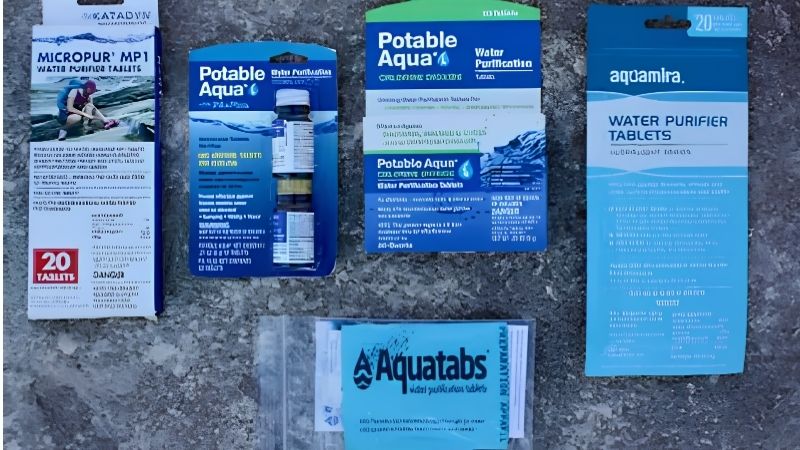
| Katadyn Micropur | Chlorine dioxide | Bacteria, viruses, Crypto | Broadest coverage |
| Aquatabs | NaDCC | Bacteria, viruses | Fast, cheap dosing |
| Potable Aqua + PA-Plus | Iodine (+ neutralizer) | Bacteria, viruses | Short-term travel |
| Potable Aqua ClO2 | Chlorine dioxide | Bacteria, viruses, Crypto | Travel + Crypto |
| Coghlan’s tablets | Iodine | Bacteria, viruses | Budget kit filler |
| NaDCC bulk tablets | NaDCC | Bacteria, viruses | Large-volume emergency |
Katadyn Micropur For Broadest Coverage
Katadyn Micropur uses chlorine dioxide to inactivate bacteria, viruses, and, with enough contact time, Cryptosporidium, making it one of the most broadly effective tablets. For backcountry water where Crypto is a concern, its wide coverage and relatively clean taste are strong advantages.
The drawback is a longer wait time, up to several hours against Cryptosporidium, and a higher cost per tablet than basic chlorine options. It disinfects but does not remove sediment or chemicals, so pre-filter cloudy water and pair with a filter where needed.
For the broadest coverage, Micropur leads this guide. Follow the dose and full wait time, especially against Crypto, pre-filter cloudy water, and keep it in your pack, treating it as the go-to when you need wide protection and can accept the longer contact time. For backcountry sources where Crypto is possible, that broad coverage is worth waiting for.
Aquatabs For Fast, Cheap Dosing
Aquatabs use NaDCC to release chlorine that inactivates bacteria and viruses quickly and cheaply, widely used for travel and emergency water treatment. For fast, affordable dosing at scale, they are a practical, lightweight staple for kits and packs.
The drawback is limited effectiveness against Cryptosporidium and a modest chlorine taste, plus they do not remove sediment or chemicals. For Crypto-prone water, pair them with a filter, and pre-filter cloudy water to improve both effectiveness and taste.
For fast, cheap dosing, Aquatabs are a strong pick here. Match the dose to your water volume, allow the stated wait time, and pre-filter cloudy water, choosing them when quick, affordable disinfection of bacteria and viruses matters more than the broadest parasite coverage.
Potable Aqua Plus PA-Plus For Short-Term Travel
Potable Aqua’s iodine tablets inactivate bacteria and viruses quickly, with an included PA-Plus neutralizer to reduce the iodine taste and color. For short-term travel where speed and simplicity matter, the two-step iodine system is a long-standing, compact choice.
The drawback is a strong taste even with the neutralizer, limited effectiveness against some parasites, and that iodine is not recommended for long-term use or during pregnancy per labeling. It disinfects but does not remove sediment or chemicals.
For short-term travel, Potable Aqua with PA-Plus fits this guide. Use the neutralizer to improve taste, follow the dose and wait time, and reserve iodine for short trips rather than extended reliance, pre-filtering cloudy water and pairing with a filter for chemicals. The neutralizer makes iodine far more drinkable, though it does not extend its short-term role.
Potable Aqua ClO2 For Travel Plus Crypto
Potable Aqua’s chlorine dioxide tablets inactivate bacteria, viruses, and, with enough time, Cryptosporidium, offering broad coverage in a travel-friendly form with less taste than iodine. For travelers wanting wide protection including Crypto, it is a strong compact option.
The drawback is the longer wait time against Cryptosporidium and a higher cost than basic chlorine tablets. Like all tablets, it disinfects rather than removing sediment or chemicals, so pre-filter cloudy water and pair with a filter where chemicals are a concern.
For travel plus Crypto coverage, Potable Aqua ClO2 is a solid pick here. Follow the full wait time for Cryptosporidium, pre-filter cloudy water, and keep it in your travel kit, choosing it when broad coverage in a light, compact form matters more than the fastest dosing.
Coghlan’s Tablets For A Budget Kit Filler
Coghlan’s iodine tablets offer a very low-cost way to inactivate bacteria and viruses, filling out a budget emergency or camping kit. For buyers who want inexpensive backup disinfection, they add a cheap layer of preparedness to a kit.
The drawback is a strong iodine taste, limited parasite coverage, the long-term and pregnancy cautions of iodine, and no sediment or chemical removal. They suit occasional backup rather than a primary method, especially where Crypto or chemicals are a concern.
As a budget kit filler, Coghlan’s tablets are a low-cost pick here. Use them as backup disinfection, follow the dose and wait time, and pair with a filter for parasites and chemicals, choosing them when a cheap emergency layer matters more than broad, long-term reliability.
NaDCC Bulk Tablets For Large-Volume Emergency
Bulk NaDCC tablets disinfect large volumes of water for bacteria and viruses at a low per-liter cost, suited to household emergency stores or group use. For treating a lot of water during an outage or disaster, the volume and affordability are the main advantages.
The drawback is limited Cryptosporidium coverage, a chlorine taste, and no sediment or chemical removal, so pair with a filter for Crypto or chemicals. Correct dosing per volume matters, so keep the instructions and a way to measure water on hand.
For large-volume emergency use, bulk NaDCC tablets are a practical pick here. Store them dry with the instructions, dose accurately by volume, and pre-filter cloudy water, choosing them when treating a lot of water affordably matters more than the broadest parasite coverage.
See More:
- Best eyeshadow blender brush
- Best frozen foods for air fryer
- Best frozen food for air fryer
- Best way to reheat steak in air fryer
- Best air fryer recipes book
Choosing Your Water Purification Tablets
The best water purification tablets for you depend on coverage and use: chlorine dioxide from Katadyn Micropur or Potable Aqua ClO2 for the broadest protection including Cryptosporidium, NaDCC like Aquatabs or bulk tablets for fast, affordable dosing, and iodine for short-term travel with its taste and labeling cautions. Always follow the exact dose and wait time. Pre-filter cloudy water and pair tablets with a filter whenever chemicals could be a concern.
Remember tablets disinfect but do not remove sediment or chemicals, so pre-filter cloudy water and pair with a filter where needed, and rotate expired tablets from your kit. Because emergencies and travel are when they matter most, keeping a fresh supply ready is wise, and the goal of this water purification tablets guide is the right tablet for the organisms and situation you face. Keep a fresh, rotated supply in every kit, since tablets matter most exactly when you need them.