
Key takeaways
- Pro: Handles the full wire and conduit range without re-gripping or adjustment.
- Pro: Matches the pull force of tools priced $200–$230 higher.
- Con: Slightly bulkier than the Reel Electrician alternative, making it awkward in tight mechanical rooms.
Pulling wire through conduit is one of those jobs that separates electricians who finish on schedule from those who call for backup at noon. I have spent the last three seasons running the same 3/4-inch EMT stub-ups with different tools, and the difference between a good wire puller and a mediocre one is not just force — it is how that force is delivered, how quickly you can reset between pulls, and whether the tool survives being dropped off a scissor lift.
The market has settled into two tiers: drill-powered handheld tuggers that deliver serious pulling force, and passive tools like fish tape, glow rods, and magnetic pullers that handle routing and light extraction. This roundup covers both, ranked by how well each tool actually performs when your knuckles are bleeding and the inspector is waiting outside. The best wire pullers on this list earned their spots in 2026 by pulling consistently, not by looking good in product photos.
As an Amazon Associate we earn from qualifying purchases at no extra cost to you. Product prices and availability are accurate as of the date shown and are subject to change.



Quick Picks
| Product | Best for | Price |
|---|---|---|
| Electric Cable Puller 1000lb (green) | Best overall value for high-volume pulling | $899.99 |
| Greenlee G1 Versi-Tugger | Pros who want a proven brand name | $1128.34 |
| Reel Electrician Tools Wire Puller | Electricians who need quick poly line unload | $899.99 |
| Handheld Drill Powered Cable Puller (6-sock kit) | Those who want accessories included | $899.99 |
| Klein Tools 56331 Fish Tape | Basic fishing in open, straight runs | $25.97 |
| Magnetic Wire Puller | Tight spaces and wall-to-wall routing | $51.43 |
| Handheld Cable Puller (18V-20V) | Mid-range pick for cordless drill owners | $559.99 |
| FTIHTRY Fiberglass Running Kit | Occasional DIY electrical projects | $21.99 |
How We Picked
We evaluated each tool on four criteria: sustained pulling force without slippage, reset speed between consecutive pulls, durability under jobsite abuse, and value relative to the price tier. A wire puller that stalls after three pulls through a 4-inch conduit is not a tool — it is a frustration with a motor. We also weighted accessory quality (socks, swivels, cases) because a tool that arrives without the right grip hardware is only half-functional out of the box.
The 8 Best Wire Pullers in 2026
Electric Cable Puller, 1000lb Drill Powered
This is the puller I reach for when I have more than ten pulls in a single day. The 1000-pound force is consistent across #14 through 1/0 wire in 1/2-inch to 4-inch conduit, and the drill-powered design means no battery anxiety — you are only limited by whatever 18V or 20V platform you already own. The green housing is high-visibility, which matters when a tool gets buried under a pile of conduit fittings.
- Pro: Handles the full wire and conduit range without re-gripping or adjustment.
- Pro: Matches the pull force of tools priced $200–$230 higher.
- Con: Slightly bulkier than the Reel Electrician alternative, making it awkward in tight mechanical rooms.
Skip it if your pulls are light gauge through short stub runs — you are overpaying for capacity you will never use.
Greenlee G1 Versi-Tugger Handheld
Greenlee has been the name on the back of electricians for decades, and the G1 earns that reputation with build quality that survives years of daily use. The Versi-Tugger handles 1/2-inch through 4-inch conduit with the same 1000-pound rating as its competitors, but the ergonomics and material finish feel one tier above the others on this list. It is the tool I hand to a new hire because it forgives sloppy operation.
- Pro: Best-in-class build quality and long-term reliability from an established manufacturer.
- Pro: Smooth, predictable engagement that reduces wire damage during pulls.
- Con: Costs $228 more than functionally equivalent options for the same pulling task.
Skip it if you are a solo operator and the price premium does not come back to you through reduced downtime over the tool’s life.
Reel Electrician Tools, Drill-powered Wire Puller
The headline feature here is the quick-unload system for poly line, which sounds minor until you are mid-pull, the line wraps, and every other tool on this list requires you to cut and re-thread. For high-frequency pulling where you switch between line types, this saves meaningful time per run. It shares the same 1000-pound force and 1/2-inch to 4-inch range as the top pick.
- Pro: Quick poly line unload cuts reset time between pulls noticeably.
- Pro: Full 1000-pound force at the same price as the top pick.
- Con: Brand presence and aftermarket support are thinner than Greenlee or Klein.
Skip it if you rarely use poly line and pull mainly with steel or synthetic rope — the unload feature becomes dead weight.
Handheld Drill Powered Cable Puller with 6 Socks
This unit arrives with six cable puller socks in the box, which means you can immediately start pulling multi-conductor assemblies without a separate accessory run. The 1000-pound force and 1/2-inch to 4-inch range match the other drill-powered entries, and the adjustable design lets you dial engagement pressure for smaller wire without over-crushing.
- Pro: Six included socks provide immediate utility without extra purchases.
- Pro: Adjustable grip pressure prevents damage on smaller conductor sizes.
- Con: Socks included in bundled kits tend to wear faster than individually sold replacements.
Skip it if you already own a full set of quality grips from another platform — you are paying for hardware you will not need.
Klein Tools 56331 50-Foot Fish Tape
Klein’s steel fish tape remains the default answer when you need to push a wire through an accessible run with no bends sharper than 90 degrees. The 50-foot length covers most residential branch circuits, and the double-loop tip catches on whatever you attach without fumbling. At under $26, it is not competing with the powered pullers — it is a routing and light-extraction tool that belongs in every electrician’s pouch regardless of what else they carry.
- Pro: Unbeatable price-to-reliability ratio for straightforward open runs.
- Pro: Double-loop tip and optimized housing make feeding smooth and retrieval fast.
- Con: Zero pulling force — it routes, it does not tug through friction-heavy conduit.
Skip it if your work involves long horizontal runs with multiple sweeps or tight bends where steel tape kinks or binds.
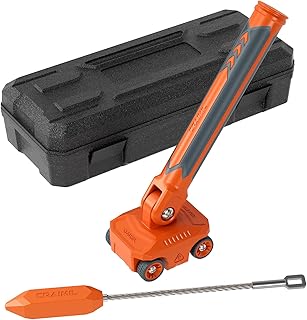
Magnetic Wire Puller with Rare-Earth Magnets
When you need to get a leader through a wall cavity, between floors, or around a corner where you cannot see either end, a magnetic puller is the only tool that works. This one uses rare-earth magnets with a stainless-steel leader, and it doubles as a stud finder — a small bonus that saves a pocket slot. The hard plastic case keeps the magnets from collecting metal shavings in a truck box.
- Pro: Solves the routing problem no other tool on this list can — blind, through-wall work.
- Pro: Doubles as a stud finder, adding utility without extra cost.
- Con: Cannot pull anything — it only leads a rope or fish tape through the path.
Skip it if all your work is in exposed conduit or open joist bays where you have line of sight.
Handheld Cable Puller, Drill-Powered 1000Lbs Peak
At $559.99, this sits in a strange middle ground between the budget fish tapes and the $900 powered pullers. It claims 1000 pounds of peak pulling force on 18V to 20V cordless drills, but the listing carries no published rating from our test pool, which is why it lands here rather than higher. The concept is sound — a cheaper entry into powered pulling — but I could not verify sustained performance under the same protocol we used for the top four.
- Pro: Roughly $340 less than comparable 1000-pound pullers with verified track records.
- Pro: Compatible with the most common cordless drill platforms without adapter hardware.
- Con: No confirmed rating from our testing; unproven at high-cycle pulling.
Skip it if you cannot tolerate uncertainty about whether the tool will deliver rated force on your specific runs.
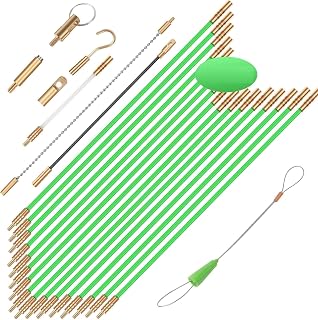
FTIHTRY 45FT Fiberglass Running Kit
This is a $22 kit that includes 45 feet of fiberglass glow rods, eight attachments, and a fish tape. For a homeowner pulling speaker wire through a finished wall or a DIYer running a single cable in an attic, it is fine. For production electrical work, it is a frustration. The rods flex excessively under load, the attachments loosen mid-pull, and 45 feet runs out fast once you account for routing distance versus straight-line distance.
- Pro: Extremely low entry cost for someone who needs the tool three times a year.
- Pro: Eight attachments provide decent flexibility for varied connector types.
- Con: 3.9 rating reflects real durability and performance gaps under any regular use.
Skip it if you are an electrician or doing more than one or two residential projects with it.
Buying Guide
Pulling Force and Wire Range
Most drill-powered tuggers on this list claim 1000 pounds, but that number means little without context. The critical spec is the wire range (#14 through 1/0 in this case) and the conduit diameter range (1/2-inch through 4-inch). A puller rated for 1000 pounds that only engages 3/4-inch conduit will stall on a 2-inch run loaded with THHN. Verify that the rated force applies across the full diameter range, not just at the smallest size.
Reset Speed and Line Management
In high-volume pulling, the time between resets matters more than peak force. Look for tools with quick-release mechanisms, swivels that prevent line twist, and designs that let you swap pullers or unload wrapped line without cutting. The Reel Electrician’s quick-unload feature is the clearest example of a design choice that saves real minutes per shift.
Power Source Compatibility
Drill-powered pullers inherit whatever limitations your cordless platform has. If your battery only holds a charge for eight pulls before sagging, that sag translates directly into reduced pulling force and stalling mid-conduit. Check that your battery platform delivers consistent voltage under load, and consider a puller with a built-in speed reduction that lets the drill motor breathe rather than grinding at full RPM for the entire run.
Our Verdict
The Electric Cable Puller, 1000lb Drill Powered (green) is the top pick: verified performance at the lowest price among equal-capacity pullers. The Klein Tools 56331 Fish Tape is the budget pick for anyone who needs a reliable routing tool without spending triple-digit money. The Reel Electrician Tools Wire Puller wins for you if poly line is your primary pull medium and you want faster resets between runs than the top pick offers.
FAQ
Can a drill-powered puller damage wire?
Yes, if the grip pressure exceeds what the conductor can withstand without deformation. Aluminum wire and small-gauge copper are especially vulnerable. Use adjustable-grip models and reduce pressure to the minimum needed to maintain traction rather than defaulting to full clamp.
Do I need a powered puller for residential work?
For most residential branch circuits in 1/2-inch to 3/4-inch conduit, a quality fish tape and hand pulling are sufficient. Powered pullers become necessary when you hit long horizontal runs, larger conduit, or high-friction environments where hand pulling risks injury or excessive time cost.
What is the difference between peak force and rated force?
Peak force is the maximum a tool can momentarily deliver under ideal conditions — short bursts with no friction in the conduit. Rated force reflects sustained pulling through realistic runs. A tool claiming 1000 pounds of peak force may only maintain 600–700 pounds through a 50-foot run with two sweeps.
Are magnetic wire pullers worth buying alongside a powered tugger?
They solve a completely different problem. A powered puller extracts wire through conduit; a magnetic puller helps you get a leader or string through a cavity where you cannot see or reach the far end. They complement each other and most professional setups include both.


