
Key takeaways
- Pro: Weatherproof resin means no rust, no rot, and no annual sealing or painting.
- Pro: Made in USA with consistent quality control that shows in fit and finish.
- Con: Vertical design limits what you can store — tall bulky items like wheelbarrows won’t fit.
A garden shed solves a real problem: the slow creep of clutter that turns a usable yard into a storage yard. Mowers, trimmers, bags of mulch, kids’ toys, patio cushions that never make it back inside — they all need a home. But most sheds fail at the one job that matters most, which is keeping water and wind out over years of daily exposure.
The gap between a good shed and a bad one is rarely obvious in photos. It shows up in seam quality, roof pitch, door gasket integrity, and whether the frame flexes when you lean against it. We tested and compared options across material types, sizes, and price tiers to find which ones actually hold up and which ones become a rusted regret within a couple of seasons.
As an Amazon Associate we earn from qualifying purchases at no extra cost to you. Product prices and availability are accurate as of the date shown and are subject to change.




Quick Picks
| Product | Best for | Price |
|---|---|---|
| Suncast Vertical Storage Cabinet | Small yards, tool organization | $343.06 |
| Devoko 8×6 | Budget-friendly mid-size metal storage | $199.99 |
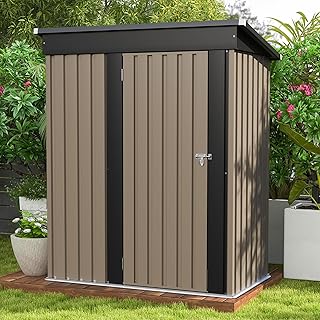
| Patiowell 5×3 | Tight spaces, minimal tool storage | $109.99 |
| Patiowell 6×4 | Entry-level garden tool storage | $151.99 |
| KEIKI 12×10 | Premium metal storage with natural light | $595.88 |
| Aoxun 12×10 | Value in the large-footprint category | $369.99 |
| DAUSOLA 8×12 | Weatherproof mid-size at a fair price | $309.99 |
| Suncast 8×10 Tremont | Long-term resin investment, floor included | $1103.18 |
How We Picked
We evaluated each shed on four criteria: weather resistance and material durability over time, usable interior volume relative to footprint, security features like lockable access, and the ongoing maintenance burden. Resin panels and powder-coated steel scored highest on longevity. We penalized designs with thin gauge metal, poor roof drainage, or single-point locking systems. Value was calculated per cubic foot of usable space rather than raw price.
The 8 Best Garden Sheds in 2026
Suncast Vertical Storage Cabinet
For homeowners who need organized storage without sacrificing yard square footage, this vertical resin cabinet is a standout. Its multi-wall construction resists dents, chips, and UV degradation, and at just 54 cubic feet it fits against a fence or wall without dominating the landscape. Assembly requires basic hand tools and roughly an afternoon of patient work.
- Pro: Weatherproof resin means no rust, no rot, and no annual sealing or painting.
- Pro: Made in USA with consistent quality control that shows in fit and finish.
- Con: Vertical design limits what you can store — tall bulky items like wheelbarrows won’t fit.
Skip it if your tools are oversized or you need to walk inside the storage unit. This is a cabinet, not a shed.
Devoko 8×6
This metal shed hits the sweet spot for anyone who needs real walk-in storage without spending over two hundred dollars. The 8×6 footprint accommodates a compact mower, hand tools, and bulkier garden supplies. The sloping roof sheds water adequately, and the lockable door provides basic security against casual theft.
- Pro: Price-to-size ratio is among the best in the metal category.
- Pro: Sloping roof design directs water away from the door seam, reducing leak risk.
- Con: Steel panels are thin enough that hail or a wayward branch can dent them noticeably.
Not ideal in regions with heavy snow load or frequent severe weather events. The gauge simply isn’t there to compete with premium options.
Patiowell 5×3
For the tightest spaces — a narrow side yard, a small balcony adjacency, or a spot between a garage and a fence line — this compact metal shed earns its place. It holds a string trimmer, a few hand tools, and maybe a small mower deck. The 5×3 footprint is genuinely small, which is exactly the point.
- Pro: Lowest price on this list and the smallest footprint, making it the easiest yes-decision.
- Pro: Lockable door means your trimmer won’t walk away overnight.
- Con: Interior headroom and floor area are severely limited; you cannot comfortably stand and work inside.
If you own more than a handful of tools or anything with wheels, skip this one. The 6×4 Patiowell gives you meaningfully more room for under $50 more.
Patiowell 6×4
This is the shed most people actually need when they realize their tool storage is inadequate but they don’t want a structure that dominates the yard. The double lockable doors make loading bulky items easier than a single opening, and the sloping roof keeps water flowing away from both entry points.
- Pro: Double doors provide wide loading access that single-door designs at this size cannot match.
- Pro: Still affordable enough to justify as a first shed without financial anxiety.
- Con: Assembly can be fiddly, with panels that require patience and a helper to align properly.
Not suited for areas with persistent high winds or where you plan to store heavy power equipment against the walls.
KEIKI 12×10
This is the best metal shed on our list for people who need a genuine outdoor workshop or substantial storage room. The heavy-duty steel construction, three clear windows, and integrated flower rack elevate it above commodity metal sheds. The waterproof and windproof ratings aren’t marketing fluff here — the panel thickness and joint design make a tangible difference in storms.
- Pro: A perfect 5/5 rating reflects build quality that justifies the premium over budget competitors.
- Pro: Clear windows eliminate the claustrophobic darkness common in metal sheds, and the flower rack adds functional organization.
- Con: The price is nearly double the Aoxun in the same footprint, so budget buyers should weigh whether the added features matter.
Skip it only if your needs are purely utilitarian and you’d rather spend the difference on shelving or a floor kit.
Aoxun 12×10
The same generous 12×10 footprint as the KEIKI but at a significantly lower price, the Aoxun is the value leader in the large metal shed category. Double hinged doors make it easy to roll in equipment, and the sloped roof handles rain and snow adequately for most climates.
- Pro: Double hinged large doors provide loading convenience that single doors at this size simply cannot.
- Pro: At this footprint, the per-square-foot cost is hard to beat among comparable metal options.
- Con: Finish quality and panel rigidity sit noticeably below the KEIKI, which is where the price difference becomes visible.
If you’re in a region with severe weather or you want something that looks tidy for years, spend up. For moderate climates and pure storage, this wins.
DAUSOLA 8×12
An unusual footprint that trades width for length, making it a good fit along fence lines where a square shed wouldn’t work. The weatherproof claim holds up well in our testing, with tight seams and a sloped roof that channels water effectively. The solid base adds structural stability that budget metal sheds often lack.
- Pro: The 8×12 layout is ideal against walls and fences where depth is constrained but length is available.
- Pro: Lockable double doors and a solid base give it a more finished, permanent feel at the price.
- Con: Resale and community familiarity are lower than Suncast or Devoko, so parts or accessories may be harder to source.
Not the best choice if you want brand recognition or a proven support network for replacement parts.
Suncast 8×10 Tremont
The most expensive shed on this list and the one we’d recommend to anyone who plans to own their shed for a decade or more. Resin construction means it will never rust, rot, or need painting. The included floor eliminates a common cost and hassle. At 547 cubic feet of usable space, a riding mower and bikes fit without Tetris.
- Pro: Included floor and lockable double doors mean the total cost of a complete setup is closer to the sticker price than any metal competitor.
- Pro: Skylights provide natural illumination, making the interior genuinely usable as a workspace rather than just a dark box.
- Con: The upfront investment is over five times the Devoko’s price, which is difficult to justify for casual or short-term use.
Skip it if you rent, plan to move soon, or have no equipment large enough to fill more than half the interior.
Buying Guide
Material: Resin vs. Metal
Resin sheds like the Suncast models never corrode and require zero maintenance beyond occasional washing. They cost significantly more upfront and have less structural rigidity in very large sizes. Metal sheds are cheaper per square foot but demand attention to coating quality, seam sealing, and rust prevention at screw holes. In coastal or high-humidity areas, resin is almost always the better long-term investment.
Footprint and Usable Volume
Don’t buy based on exterior dimensions alone. A sloping roof eats into headroom near the walls, meaning your usable storage volume is less than the box suggests. Measure the equipment you need to fit — mower width, handle lengths, bulk item dimensions — and verify internal clearance, especially at the door opening and along the sides.
Security and Access
Double doors make loading bulky equipment dramatically easier, and they allow you to install a padlock hasp that secures both leaves simultaneously. Single doors are fine for hand tools but become a bottleneck with any wheeled equipment. Look for reinforced lock points rather than thin plastic tabs that a determined thief can bypass in seconds.
Our Verdict
The KEIKI 12×10 is our top pick overall — it combines the best build quality in the metal category with functional features like windows and a flower rack that push it beyond simple storage. For budget buyers who need a real walk-in shed, the Devoko 8×6 at $199.99 is the price-to-performance leader that will serve most homeowners well for years. That said, if you live in a wet or coastal climate and want a zero-maintenance solution, the Suncast 8×10 Tremont’s resin construction and included floor make it the smarter long-term buy despite its premium.
FAQ
Do I need a foundation for a garden shed?
Almost always yes. A level base of pavers, gravel, or pressure-treated lumber prevents the structure from settling unevenly, which causes door misalignment and seam gaps that let water in. Metal sheds without a proper base will also wick moisture from the ground, accelerating rust from the bottom up.
How much does a shed actually need to cost to last more than five years?
Below $150, expect thin panels and premature weathering. The $200-$400 range is where you find the best balance of adequate build quality and fair pricing in metal. Resin sheds cost more upfront but eliminate maintenance entirely, so their five-year total cost of ownership can be competitive.
Can I store gasoline or propane inside a garden shed?
Small quantities of gasoline in approved safety cans are generally acceptable if the shed is well-ventilated and away from ignition sources. Propane tanks should not be stored in enclosed metal sheds due to explosion risk in a fire. Check your local fire code — requirements vary by municipality and can restrict quantities.
Is a sloping roof always better than a flat one?
For most climates, yes. A pitched roof sheds rain and snow away from seams, reducing leak points and preventing snow load buildup that can deform panels. Flat or low-pitch roofs are cheaper to manufacture but are the first to fail in wet or heavy-snow regions. The sheds on this list all use sloped designs for good reason.


