Key takeaways
- Brush system: Single rubber roller brushes resist hair wrap far better than old bristle brushes. Dual rubber rollers are even better for pets but have more bearings to wear. Bristle side brushes wear fastest and need replacement every 3-6 months.
- Sensors and navigation: LiDAR-based models navigate more predictably and hit less furniture than random-bounce or gyro-only models. Front cameras improve obstacle avoidance for cords and pet waste but add a component that needs lens cleaning.
- Wheels and chassis: Larger rubber drive wheels with independent suspension last longer on tile thresholds and thick rugs. Small plastic caster wheels clog first.
- App and software support: Brands that maintain one app for all models for 4+ years are more reliable long-term than brands that launch a new app every generation.
- Warranty and parts availability: A 1-year warranty is standard, 2-year coverage is above average. More important is whether side brushes, filters, main brushes, mop pads, and batteries are sold separately for at least 3-5 years.
What's inside
- How we rank reliability: failure points that actually matter
- Most reliable robot vacuums compared
- Top picks by reliability in 2026
- Decision matrix: which reliable model fits your situation
- True cost over 3 years: a quick calculation
- Ownership realities: what breaks first and how to prevent it
- Setup for maximum lifespan
- Frequently asked questions
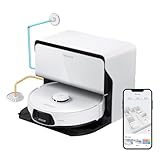
The most reliable robot vacuum in 2026 is the Roborock Q Revo series for most homes, followed closely by the iRobot Roomba j7+ for pet owners who prioritize obstacle avoidance and long-term parts support.
- How we rank reliability: failure points that actually matter
- Most reliable robot vacuums compared
- Top picks by reliability in 2026
- Decision matrix: which reliable model fits your situation
- True cost over 3 years: a quick calculation
- Ownership realities: what breaks first and how to prevent it
- Setup for maximum lifespan
- Frequently asked questions
Reliability here does not just mean strong suction on day one. It means the brushes do not tangle to a stop after three months, the cliff and LiDAR sensors do not go blind from dust, the drive wheels survive thresholds, the app still gets updates in year three, and you can actually buy a replacement filter, brush, or battery in year four. On those criteria, Roborock and iRobot consistently lead, with Dreame, Eufy, and Shark filling specific value gaps.
As an Amazon Associate we earn from qualifying purchases at no extra cost to you.



How we rank reliability: failure points that actually matter
Most breakdowns fall into five categories. A vacuum can be excellent at cleaning and still be unreliable if it fails in one of these areas:
- Brush system: Single rubber roller brushes resist hair wrap far better than old bristle brushes. Dual rubber rollers are even better for pets but have more bearings to wear. Bristle side brushes wear fastest and need replacement every 3-6 months.
- Sensors and navigation: LiDAR-based models navigate more predictably and hit less furniture than random-bounce or gyro-only models. Front cameras improve obstacle avoidance for cords and pet waste but add a component that needs lens cleaning.
- Wheels and chassis: Larger rubber drive wheels with independent suspension last longer on tile thresholds and thick rugs. Small plastic caster wheels clog first.
- App and software support: Brands that maintain one app for all models for 4+ years are more reliable long-term than brands that launch a new app every generation.
- Warranty and parts availability: A 1-year warranty is standard, 2-year coverage is above average. More important is whether side brushes, filters, main brushes, mop pads, and batteries are sold separately for at least 3-5 years.
Most reliable robot vacuums compared
| Model | Navigation | Suction / Bin | Battery / Coverage | Weight / Height | Warranty* |
|---|---|---|---|---|---|
| Roborock Q Revo / Qrevo S | LiDAR + structured light obstacle avoidance | 5,500-7,000 Pa, 350 ml onboard bin, 2.7 L auto-empty dock | 5,200 mAh, up to 180 min, ~3,200 sq ft per charge | ~8.4 lbs / 3.8 in tall | 1 year standard, 2 years in EU/UK |
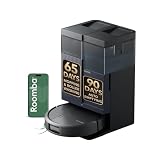
| iRobot Roomba j7+ / j9+ | Camera + PrecisionVision obstacle avoidance | ~2,200 Pa class, 400 ml onboard bin, 2.4 L self-empty bag | ~3,000 mAh, up to 90-120 min, ~1,500 sq ft per run | ~7.5 lbs / 3.4 in tall | 1 year limited, extended plans available |
| Dreame L10s Ultra / L20 Ultra | LiDAR + AI camera | 5,300-7,000 Pa, 350 ml bin, 3.2 L auto-empty dock | 5,200 mAh, up to 210 min, ~3,000 sq ft | ~8.6 lbs / 3.8 in tall | 1 year standard, 2 years in select regions |
| Eufy X8 Pro / X10 Pro Omni | LiDAR + AI mapping | 4,000-8,000 Pa, 350-400 ml bin, 2.5 L dock | 5,200 mAh, up to 180 min, ~2,500 sq ft | ~8.0 lbs / 3.9 in tall | 1 year standard |
| Shark AI Ultra / Shark IQ series | LiDAR or camera + row-by-row | ~2,000 Pa class, 450-500 ml bin, 1.4 L bagless base | ~3,000 mAh, up to 120 min, ~1,500 sq ft | ~7.8 lbs / 3.9 in tall | 1 year limited, 5-year VIP plans via registration |
*Warranty terms vary by country and retailer. Self-empty docks often have separate 1-year coverage for motors and pumps.
Top picks by reliability in 2026
1. Roborock Q Revo series – Best overall reliability
The Q Revo and Qrevo S hit the sweet spot for durability. Dual spinning mops lift for carpet, the all-rubber main brush resists hair wrap, and the multifunction dock washes mops and empties dust automatically, which reduces bin sensor clogging. Roborock’s app remains one of the most stable, with zoned cleaning, no-go zones, and firmware updates that continue for years after launch. Replacement parts are widely available from the manufacturer and third-party suppliers: filters, mop pads, side brushes, and 5,200 mAh batteries are easy to source.
What wears first: side brush after 4-6 months, mop pads after 3 months if mopping weekly, filter after 4 months in dusty homes. Clean the LiDAR turret window monthly and empty the dock’s dirty water tank after each mopping run to prevent odor and pump strain.
2. iRobot Roomba j7+ / j9+ – Best for obstacle avoidance and parts support
If your definition of the most reliable robot vacuum includes not getting stuck and not smearing pet accidents, the Roomba j7+ is still the benchmark. Its front camera identifies cords, socks, and solid pet waste and steers around them. iRobot’s dual rubber brush design is excellent for pet hair and needs less cutting-out than bristle rollers. Long-term support is a major advantage: iRobot typically stocks bags, brushes, and wheels for 5+ years, even for discontinued models.
Trade-off: raw suction numbers and mopping are behind Roborock and Dreame. The j7+ vacuums and the Combo version adds a basic mop pad, not a self-washing mop. Choose it if you have pets, cluttered floors, and want predictable service.
3. Dreame L10s Ultra / L20 Ultra – Best for mopping-heavy homes
Dreame matches Roborock on specs with 5,300 to 7,000 Pa suction, auto mop washing with hot water on newer models, and auto-empty into a 3.2-liter bag. Reliability is good provided you maintain the dock. The weak point across all auto-wash docks, Dreame included, is not the robot but the dock: hair in the wash tray and hard water scale can clog pumps if neglected.
Descale monthly if you have hard water, wipe the charging contacts and mop tray weekly, and replace the dust bag every 60 days. Do that and failure rates drop sharply.
4. Eufy X8 Pro / X10 Pro Omni – Best value for money robot vacuum
For shoppers looking for the best value for money robot vacuum, Eufy consistently undercuts Roborock and Dreame by 15-25% in general market pricing while offering twin-turbine suction and LiDAR mapping. The X8 Pro uses twin rubber brushes that handle hair well, and the X10 Pro Omni adds a full auto-empty and mop-wash dock. App support is solid but map editing is slightly less refined.
Reliability note: consumables are affordable and easy to find, but battery replacements can be harder to source after year two than for iRobot or Roborock. Best for apartments and single-story homes under 2,000 square feet where runtime stress is lower.
5. Shark AI Ultra – Best mid range robot vacuum with bagless base
The mid range robot vacuum segment, generally $400 to $600, is crowded, but Shark stands out for owners who hate buying bags. Its self-empty base is bagless with a 1.4-liter dust cup you empty into the trash. Navigation is reliable for open floor plans, though it bumps more in dark rooms than LiDAR-only rivals. Brushes are a bristle-rubber hybrid, so expect more hair cutting maintenance if you have long-haired pets.
Decision matrix: which reliable model fits your situation
| Your situation | Pick this type | Why |
|---|---|---|
| Pets that shed, lots of cords/toys on floor | iRobot Roomba j7+ / j9+ | Best obstacle avoidance, dual rubber brushes, longest parts history |
| Mostly hard floors + want vacuum and mop in one | Roborock Q Revo / Dreame L10s Ultra | Self-washing mops, large water tanks, gentle on floors |
| Want lowest long-term cost, apartment or small house | Eufy X8 Pro (no dock) or X10 Pro Omni | Lower upfront price in mid-range bracket, cheap filters and brushes |
| Allergies, want bagless and simple emptying | Shark AI Ultra | No bags to buy, large 500 ml onboard bin |
| Looking for most affordable robot vacuum that will last | Eufy 11S-class gyro model or Roomba 600-series | Fewer features to break, $200-$300 range, parts everywhere |
If you want the most affordable robot vacuum without giving up reliability entirely, skip LiDAR and self-washing docks. A basic bagless or small-bin model with a bristle-rubber brush, 2,000 Pa suction, and 100-minute runtime will clean a 800-1,200 sq ft apartment reliably for 2-3 years. You give up auto-empty and smart mapping, but there is no dock pump to fail and replacement side brushes cost only a few dollars.
True cost over 3 years: a quick calculation
A self-empty LiDAR model in the $600 to $800 range typically needs over three years: 6 side brushes, 4 filters, 2 main brushes, 12-18 dust bags (if bagged), and 6-12 mop pads if it mops. In general market ranges, that totals $120 to $200 in consumables.
Cost per use if run 4x per week for 3 years (624 runs): ($700 vacuum + $160 parts) / 624 = about $1.38 per run. A basic $250 vacuum with $80 in parts over the same period is about $0.53 per run, but requires manual emptying each time and lacks mopping. If you mop weekly, the auto-wash dock usually pays for itself in time saved within the first year.
Ownership realities: what breaks first and how to prevent it
- Side brushes splay first: They hit baseboards at 100+ RPM. Replace when bristles bend outward; running a splayed brush strains the motor.
- Filters clog second: Rinse-only if the manual allows it, otherwise tap clean weekly and replace every 2-4 months. A clogged filter cuts suction and overheats the motor.
- Sensors go blind from film: Wipe cliff sensors, camera lens, and LiDAR window with a dry microfiber cloth every 2 weeks. Avoid spray cleaners directly on sensors.
- Wheels jam: Pull hair from drive wheels and the front caster monthly. Avoid running over wet grout or sticky spills; they coat wheel encoders.
- Docks fail from neglect: For auto-empty docks, check the suction path for socks and clumps every month. For mop-wash docks, empty dirty water within 24 hours and clean the tray to prevent mildew and pump failure.
- Common mistake: Setting max suction on thick carpet for every run. It drains the 3,000-5,200 mAh battery faster, generates more heat, and fills the bin in one room. Use balanced mode for daily runs and max only for targeted zones.
Setup for maximum lifespan
Charge fully before first mapping, run a mapping-only pass with chairs up and cords picked up, then set no-go zones around high thresholds over 0.8 inches, shag rugs over 1 inch pile, and pet water bowls. Enable child/pet lock if available, turn on auto firmware updates, and schedule deep cleans 2-3 times per week instead of daily max-power runs. Keep a spare filter and side brush on hand so maintenance is not delayed.
Frequently asked questions
How long should a reliable robot vacuum last?
Three to five years is normal with filter and brush replacements. Battery capacity typically drops to 70-80% after 400-500 cycles, or about 2-3 years of regular use, after which a battery swap restores runtime.
Are rubber brushes really more reliable than bristle brushes?
For pet hair and long human hair, yes. Rubber extractors shed hair into the bin instead of wrapping tight around bristles, which means fewer brush motor stalls and less manual cutting.
Is a self-empty dock worth it for reliability?
It improves reliability for dustbin sensors and reduces allergen exposure, but adds a second motor and, on mop models, water pumps to maintain. Choose bagged for lowest dust, bagless if you want to avoid ongoing bag costs.