Key takeaways
- Sealed oak, engineered hardwood, laminate: Dual rubber extractors are ideal. They maintain contact without grit-trapping bristles and resist hair wrap.
- Matte oil-finished or hand-scraped oak: Avoid frequent mopping passes and high water flow. Use vacuum-only mode plus a damp microfiber manual mop. Grit under wheels is the main scratch source, so run 3-4x per week to prevent sand-like debris buildup.
- High-gloss laminate and dark stained oak: Shows micro-scratches and mop streaks most easily. Choose a model with mop lift and washable pads, and enable low-water mode.
The best Roomba for hardwood floors in 2026 is the Roomba Combo 10 Max for sealed oak and engineered hardwood with mopping, while the Roomba Combo j5+ is the best value pick for wood floors, hard floors, and low-pile rugs.
If you need the best Roomba for wood floors that also handles carpet and hardwood in a mixed home, choose a combo model with dual rubber brushes, liftable mop pads, and smart mapping. Pure vacuum models like the Roomba j7+ and s9+ are better if you already mop manually and want maximum edge pickup without water risk on unsealed or worn finishes.
Our top picks
 iRobot Roomba 115X Combo Robot Vacuum &
- EMPTYING FOR UP TO 3 MONTHS, NO MESS
- Vacuums with a suction power of 15,000 Pa…
- EASY, EFFECTIVE MOPPING
 iRobot Roomba 415X Robot Vacuum & Mop
- WITHOUT THINKING ABOUT IT
- NO MORE SCRUBBING DRIED‑ON MESSES
- REACHES THE PLACES DIRT USUALLY HIDES
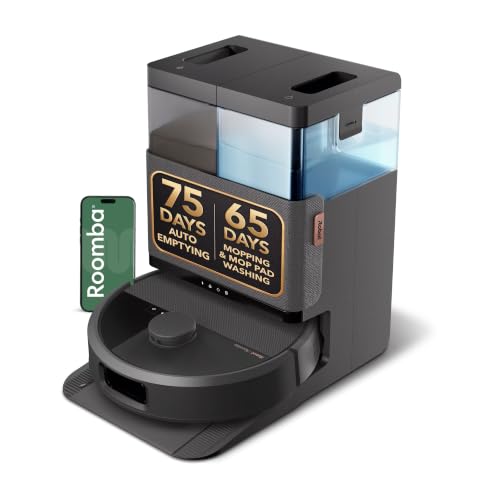 iRobot Roomba 505X Robot Vacuum & Mop
- EVEN WHERE DIRT LOVES TO HIDE
- THE DOCK THAT HANDLES THE DIRTY WORK
- POWERFUL ENOUGH FOR REAL‑LIFE MESSES
| Product | Key specs | |
|---|---|---|
| iRobot Roomba 115X Combo Robot Vacuum & | EMPTYING FOR UP TO 3 MONTHS, NO MESS Vacuums with a suction power of 15,000 Pa… EASY, EFFECTIVE MOPPING | Check price |
| iRobot Roomba 415X Robot Vacuum & Mop | WITHOUT THINKING ABOUT IT NO MORE SCRUBBING DRIED‑ON MESSES REACHES THE PLACES DIRT USUALLY HIDES | Check price |
| iRobot Roomba 505X Robot Vacuum & Mop | EVEN WHERE DIRT LOVES TO HIDE THE DOCK THAT HANDLES THE DIRTY WORK POWERFUL ENOUGH FOR REAL‑LIFE MESSES | Check price |
 iRobot Roomba 705X Robot Vacuum & Mop iRobot Roomba 705X Robot Vacuum & Mop | THE ULTIMATE HANDS‑FREE CLEAN FOR REAL HOMES THE ONLY ROOMBA THAT CLEANS ITSELF WHILE IT… MONTHS OF CLEANING WITHOUT DAILY MAINTENANCE | Check price |
As an Amazon Associate we earn from qualifying purchases at no extra cost to you.
What Actually Matters on Hardwood, Oak, and Laminate
Hardwood cleaning is not about raw suction. An iRobot hard floor cleaner succeeds or fails on scratch risk, fine dust pickup along baseboards, and how it manages water. Use these three criteria to match brush type to your floor finish:
1. Scratch risk and brush type
All current Roombas use dual multi-surface rubber extractors instead of stiff bristle brushes, which is why they are generally safe for sealed hardwood. The difference is in the tread pattern and edge brush:
- Sealed oak, engineered hardwood, laminate: Dual rubber extractors are ideal. They maintain contact without grit-trapping bristles and resist hair wrap.
- Matte oil-finished or hand-scraped oak: Avoid frequent mopping passes and high water flow. Use vacuum-only mode plus a damp microfiber manual mop. Grit under wheels is the main scratch source, so run 3-4x per week to prevent sand-like debris buildup.
- High-gloss laminate and dark stained oak: Shows micro-scratches and mop streaks most easily. Choose a model with mop lift and washable pads, and enable low-water mode.
Keep the 3-arm side brush trimmed and free of bent bristles. A worn side brush flicks grit instead of sweeping it, which causes most swirl marks near edges.
2. Edge pickup and filtration
Hard floors push dust to edges and corners. The D-shape is gone from the current Roomba lineup, so round models rely on a 27-degree angled side brush and wall-follow navigation. The Roomba s9+ still has the widest extractors at about 24 cm and strongest hard-floor edge airflow in the lineup, followed by the Combo 10 Max and j9 series.
For allergies and fine oak dust, look for a self-empty base with an enclosed bag capturing 99% of particles down to 0.7 microns. This matters more on hard floors than carpet because vacuuming resuspends fine dust if filtration is poor.
3. Mopping performance vs. water risk
A Roomba for carpet and hardwood needs to vacuum rugs and mop wood in one run without soaking carpet edges. That requires:
- Auto mop lift of at least 8-10 mm or full pad retraction to top of robot
- Separate water tank with adjustable levels, not just a damp pad
- Keep-out zones for unsealed transitions, pet bowls, and high-pile rugs
Do not use a mopping Roomba on unsealed hardwood, waxed floors, cracked laminate seams, or floors with cupping. iRobot specifies use only on sealed hard floors with its cleaning solution. Plain water is safest for laminate to avoid residue.
Spec Comparison: Best Roombas for Hard Floors
This comparison focuses on specs that change hardwood results, not marketing suction claims that iRobot does not publish in comparable Pascals.
| Model | Type | Brush System | Bin / Tank | Runtime / Base | Weight / Height |
|---|---|---|---|---|---|
| Roomba Combo 10 Max + AutoWash | Vacuum + mop, pad auto-wash | Dual rubber extractors | 410 ml bin, 210 ml tank | Up to 180 min, 60-day bag | 4.4 kg / 8.7 cm |
| Roomba Combo j9+ / j9 Combo+ | Vacuum + mop, auto-lift | Dual rubber extractors | 400 ml bin, 210 ml tank | Up to 150 min, 60-day bag | 3.9 kg / 8.7 cm |
| Roomba Combo j5+ | Vacuum + mop, manual pad swap | Dual rubber extractors | 410 ml bin, 210 ml tank | Up to 120 min, 60-day bag | 3.4 kg / 8.7 cm |
| Roomba j7+ | Vacuum only | Dual rubber extractors | 400 ml bin, no tank | Up to 90 min, 60-day bag | 3.4 kg / 8.6 cm |
| Roomba s9+ | Vacuum only | Extra-wide 24 cm dual extractors | 500 ml bin, no tank | Up to 120 min, 60-day bag | 3.7 kg / 8.9 cm |
| Roomba i3+ EVO | Vacuum only | Dual rubber extractors | 400 ml bin, no tank | Up to 90 min, 60-day bag | 3.4 kg / 9.2 cm |
All models above use Li-ion batteries around 3,300 mAh, HEPA-style high-efficiency filters, and work with the iRobot Home app for room mapping, keep-out zones, and clean-while-away scheduling. Height matters: 8.6 to 8.7 cm models fit under most oak cabinets, while the taller s9+ and i3+ may not clear low mid-century furniture.
Best Picks by Floor Situation
Best overall for sealed hardwood: Roomba Combo 10 Max
Choose this if you have 1,000 to 2,000 sq ft of sealed oak or engineered wood and want vacuum plus light mopping. The pad fully retracts on top of the robot when carpet is detected, so damp pads do not drag across rugs. AutoWash washes and dries the pad at the dock, which prevents the sour-mop smell and streaking common with manual pads left damp.
Set it to vacuum first, then vacuum-and-mop for kitchens and entryways. Use low water on dark oak and standard on textured laminate where grime sits in embossing.
Best Roomba for carpet and hardwood mix: Roomba Combo j9+ or Combo j5+
For homes with 40-60% hardwood plus area rugs, the Combo j9+ offers stronger obstacle avoidance for cords and pet waste with automatic mop lift. The Combo j5+ does the same basic job for less, but you must attach the mop bin manually when you want to mop.
If you have thick rugs over 15 mm pile, create a mop keep-out zone around them. Lift systems handle low and medium pile well, but fringe and shag can still catch a damp pad.
Best vacuum-only for hardwood and oak: Roomba j7+ or s9+
Pick vacuum-only if your floors are older, oil-finished, have gaps between boards, or you prefer to control water yourself. The j7+ has PrecisionVision to avoid shoes, cords, and pet accidents on hard floors. The s9+ picks up more along baseboards in a single pass due to wider extractors and stronger edge airflow, but it is louder at around 65-68 dB vs. 60-65 dB for j-series and taller under furniture.
Best budget hard floor cleaner: Roomba i3+ EVO or Combo j5+
For apartments under 1,000 sq ft with laminate or sealed wood, the i3+ EVO covers systematically without camera-based obstacle avoidance. You will need to tidy cords before runs. Spend the difference on extra filters and bags. If you want occasional mopping, the Combo j5+ is typically in the same general market range as mid-tier vacuums during seasonal sales.
Decision Matrix: Which Type Matches Your Home?
| Your Situation | Choose | Why |
|---|---|---|
| Sealed oak + kids/pets, want mop + vacuum | Combo 10 Max or Combo j9+ | Auto lift/retract protects rugs, dock handles dust and pad washing |
| Dark gloss hardwood, streaks visible | j7+ vacuum + manual damp mop | Eliminates water spots and pad drag marks |
| Laminate with beveled seams | Combo j5+ on low water or vacuum-only | Less water in seams prevents swelling |
| Mostly rugs with wood hallways | j7+ or s9+ | No mop maintenance, better carpet agitation |
| Small apartment, tight budget | i3+ EVO | Systematic cleaning, self-empty base lowers upkeep |
Coverage and Runtime Calculation
Hard floors clean faster than carpet because the robot can move at 25-30 cm per second without multiple agitation passes. Use this to size your model:
Usable coverage per charge = runtime minutes x 12 to 15 sq ft per minute on hard floors.
Example: A 90-minute runtime x 13 sq ft = about 1,170 sq ft per charge in vacuum mode. Mopping reduces coverage by 30-40% because of slower passes and pad overlap, so the same robot covers about 700-800 sq ft mopping.
For a 1,500 sq ft hardwood main floor with two bedrooms on rugs, expect two segments with one recharge on a 90-minute model, or one continuous run on a 150-180 minute model with smart recharge-and-resume. Mapping that allows room-priority cleaning saves more time than extra battery alone.
Setup for Hardwood to Prevent Scratches and Streaks
- Vacuum first, mop second: Run a dry mapping run, then set kitchen and entry as mop zones. Bedrooms with oak stay vacuum-only.
- Secure transitions: Add 30 cm keep-out strips at unsealed thresholds, floor vents, and pet water mats.
- Use iRobot cleaning solution at label dilution or water only for laminate. Vinegar and steam-level heat can dull polyurethane over time.
- Wash mop pads after every 2-3 mops and replace every 2-3 months. A gritty pad causes fine scratches.
- Empty and wipe caster wheel wells monthly. Hair wrapped around the front caster drags grit like sandpaper.
Durability and Ownership Realities
On hard floors, filters and side brushes wear first, not the main extractors. Fine wood dust clogs filters in 6-8 weeks with daily runs. Tap filters weekly, replace every 2 months. Side brushes splay in 3-4 months if they hit chair legs constantly; replace when bristles no longer point straight down.
Rubber extractors last 8-12 months on hardwood, longer than on carpet. Self-empty bags last 45-60 days in a mostly hard-floor home versus 30 days with pets and carpet. Mop pads lose absorbency after 25-30 washes and will start streaking laminate – that is the signal to replace, not extra solution.
Common mistakes are over-wetting laminate, using non-approved cleaners that leave film and cause wheel slip, and running with a full bin. A full 400 ml bin on hardwood blows fine dust out the exhaust because airflow drops. If you do not have a self-empty base, empty after every 600-800 sq ft.
Final Choice
For most sealed hardwood and laminate in 2026, a combo Roomba with mop lift is the most practical iRobot hard floor cleaner because it handles daily grit and weekly damp mopping without a second device. If your oak is unsealed, waxed, or high-gloss and scratch-prone, skip mopping and choose the j7+ or s9+ for safer dry maintenance plus better edge pickup.