Key takeaways
- Patch test a small amount on the outer cheek or jaw area for several days before applying near the eyes.
- Use one new active product at a time so you can identify the cause of irritation.
- Apply a tiny amount to clean, dry skin, leaving space from the lash line.
- Use sunscreen during the day; sunglasses and shade also help limit cumulative environmental exposure.
- With retinol, begin twice weekly and use a plain moisturizer on other nights.
- Stop if you develop ongoing burning, swelling, rash, or eye discomfort, and seek professional advice if symptoms persist.
The best anti aging eye creams depend on your main concern: choose a retinol formula for lines and uneven texture, peptides for a gentler firming-focused routine, caffeine for temporary puffiness, and a moisturizing cream for dryness or a fragile skin barrier.
Our top picks
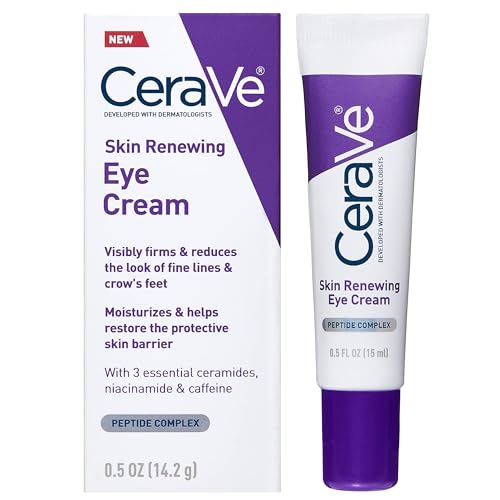 CeraVe Eye Cream for Wrinkles with Peptides
- [ EYE CREAM ANTI AGING ] CeraVe Skin…
- [ CAFFEINE EYE CREAM ] Firming eye cream…
- [ EYE WRINKLE CREAM ] This peptide eye…
 RoC Retinol Correxion Under Eye Cream for
- RoC eye cream with retinol combines RoC Retinol…
- We offer skin care treatments including moisturizers, cleansers,…
- Address the 3 key signs of eye aging—puffiness,…
 Shiseido Benefiance Wrinkle Smoothing Eye Cream
- Smooth & revive eyes with our anti-aging eye…
- Squalane hydrates & helps protect skin's moisture barrier
- Featuring ReNeura Technology+ & KOMBU-Bounce Complex, our Benefiance…
| Product | Key specs | |
|---|---|---|
| CeraVe Eye Cream for Wrinkles with Peptides | [ EYE CREAM ANTI AGING ] CeraVe Skin… [ CAFFEINE EYE CREAM ] Firming eye cream… [ EYE WRINKLE CREAM ] This peptide eye… | Check price |
| RoC Retinol Correxion Under Eye Cream for | RoC eye cream with retinol combines RoC Retinol… We offer skin care treatments including moisturizers, cleansers,… Address the 3 key signs of eye aging—puffiness,… | Check price |
| Shiseido Benefiance Wrinkle Smoothing Eye Cream | Smooth & revive eyes with our anti-aging eye… Squalane hydrates & helps protect skin's moisture barrier Featuring ReNeura Technology+ & KOMBU-Bounce Complex, our Benefiance… | Check price |
 Neutrogena Rapid Wrinkle Repair Retinol Eye Cream | 0.5-fluid ounce tube of Neutrogena Fragrance-Free Rapid Wrinkle… The beginner strength fragrance-free retinol cream hydrates &… Anti-aging eye cream with pure retinol, a form… | Check price |
As an Amazon Associate we earn from qualifying purchases at no extra cost to you.
Best anti-aging eye creams by skin need
There is no single winner for every eye area. Retinol is the most active option in this group, but it is also the easiest to overuse. Peptides are generally more comfortable for beginners and sensitive skin, although their visible results can be subtler. Caffeine can make the eye area look temporarily less puffy, while moisturizing ingredients such as ceramides, glycerin, hyaluronic acid, squalane, and shea butter mainly improve comfort and the appearance of dehydration lines.
| Skin need | Useful ingredients | Texture to seek | Good product examples | Typical use |
|---|---|---|---|---|
| Fine lines and rough texture | Retinol, retinal, moisturizing support | Light cream or lotion | RoC Retinol Correxion Eye Cream; Olay Retinol24 Night Eye Cream | 2 nights weekly initially |
| Early signs of aging or retinol sensitivity | Peptides, niacinamide, ceramides | Cushioning cream | CeraVe Skin Renewing Eye Cream; peptide eye creams | Once or twice daily |
| Morning puffiness | Caffeine, cool storage, lightweight humectants | Gel or thin serum | The Ordinary Caffeine Solution 5% + EGCG | Morning, sparingly |
| Dryness, tightness, or flaky concealer | Ceramides, glycerin, hyaluronic acid, squalane | Rich cream or balm | CeraVe Eye Repair Cream; Avène Soothing Eye Contour Cream | Once or twice daily |
Retinol: the stronger choice for texture and established lines
Retinol encourages faster skin renewal and can gradually improve the look of fine lines and uneven texture. It is usually the ingredient to prioritize when your concern is more than simple dryness. RoC Retinol Correxion Eye Cream and Olay Retinol24 Night Eye Cream are widely available examples of eye products built around retinol technology.
Retinol eye creams commonly have a smooth lotion or cream texture rather than a watery gel. They often absorb faster than a heavy balm, which helps under makeup, but some formulas can leave the area feeling dry. Packaging matters: an opaque, tightly closed tube or pump is preferable because retinol is sensitive to light and air. A jar is less ideal for ingredient stability and hygiene, although the formula and preservative system still matter.
Start with a rice-grain-sized amount divided between both eyes two nights per week. Apply around the orbital bone, not directly on the eyelids, lash line, or inner corner. If the area remains comfortable after several weeks, increase gradually. Irritation, persistent redness, burning, or scaling is a reason to stop rather than push through. Anyone who is pregnant, trying to conceive, breastfeeding, or receiving treatment for an eye or skin condition should ask a qualified healthcare professional whether a retinoid product is appropriate.
Peptides: a gentler everyday compromise
Peptides are short chains of amino acids used in cosmetic formulas to support the appearance of firmness. They do not exfoliate like retinol, so they are usually easier to introduce into a routine. This makes them a sensible choice for beginners, dry skin, or people who already use irritating products elsewhere on the face.
CeraVe Skin Renewing Eye Cream combines a cream texture with barrier-supportive ingredients and is a practical type of choice when comfort matters as much as anti-aging claims. Look for peptides alongside ceramides, cholesterol, fatty acids, glycerin, or niacinamide rather than selecting a peptide product solely because it lists a large peptide count.
Peptide creams are often fragrance-free or very lightly scented, which is useful because fragrance is not necessary around the eyes. Their packaging ranges from tubes to airless pumps. A tube is compact and easy to control; an airless pump can reduce contact with air but may dispense too much product at first. The main limitation is expectation: peptides are better viewed as a consistent, low-irritation maintenance option than a rapid substitute for a retinoid.
Caffeine: useful for a temporary morning effect
Caffeine can make the eye area look temporarily more awake by reducing the appearance of fluid-related puffiness for some users. It is not a replacement for retinol when the main issue is fine lines, and it cannot permanently correct genetic dark circles, hollowness, visible veins, or pigmentation.
The Ordinary Caffeine Solution 5% + EGCG is a lightweight water-based example. It is inexpensive compared with many luxury eye creams, usually fragrance-free, and easy to layer under sunscreen or concealer. The thin serum texture suits oily skin and morning use, but dry skin may need a separate moisturizer over it. Because it is a serum rather than a protective cream, it provides less barrier support in cold or dry weather.
Use one small drop for both eyes; more product increases pilling without necessarily improving the result. Keep expectations realistic: caffeine is most useful when puffiness varies from morning to morning. If swelling is sudden, one-sided, painful, persistent, or accompanied by vision changes, seek medical advice instead of relying on cosmetics.
Moisturizing formulas: best for dryness and makeup problems
When the eye area feels tight, looks crepey, or causes concealer to crack, a moisturizing formula may produce the most noticeable improvement in appearance. Glycerin and hyaluronic acid attract water; ceramides help support the skin barrier; squalane and shea butter reduce the feeling of moisture loss. These ingredients soften the look of dehydration lines but do not work in the same way as a retinoid.
CeraVe Eye Repair Cream is a useful example of a barrier-oriented product, while Avène Soothing Eye Contour Cream represents the kind of gentle, comfort-first formula often considered by sensitive-skin users. Rich textures are helpful at night but can migrate into the eyes or interfere with mascara during the day. For daytime, select a thinner cream and allow it to settle for several minutes before applying makeup.
Fragrance-free is the safer starting point for reactive skin. “Unscented” does not always mean free of fragrance ingredients, so read the ingredient list if you are sensitive. Essential oils and strong perfume may make a product feel luxurious, but they add avoidable risk near the eyes without providing anti-aging benefits.
Head-to-head: which formula fits your situation?
| Your situation | Best starting type | Why | What to avoid |
|---|---|---|---|
| Budget under $20 and morning puffiness | Caffeine serum | Low product cost, fast absorption, makeup-friendly | Using a thin serum alone on very dry skin |
| First anti-aging product | Peptide or moisturizing eye cream | Simple daily habit with lower irritation risk | Starting retinol nightly |
| Visible fine lines and normal, tolerant skin | Low-frequency retinol cream | More targeted texture support | Applying close to the lash line or combining with harsh acids |
| Very sensitive or eczema-prone area | Fragrance-free barrier cream | Prioritizes comfort and moisture retention | Perfumed formulas and multiple new actives at once |
| Dry skin with concealer creasing | Medium-rich moisturizing cream | Reduces surface dryness and improves makeup slip | Heavy balm immediately before makeup |
Texture, packaging, and value considerations
Most eye creams contain only 15 to 20 milliliters, compared with approximately 30 to 50 milliliters for a facial moisturizer. That small size is not necessarily poor value: the application area is tiny. A rice-grain-sized amount for both eyes is roughly 0.05 milliliters. At 0.1 milliliters per day, a 15-milliliter tube contains about 150 applications, or approximately five months of daily use. In practice, over-dispensing, finger contact, and expiration may shorten that period.
Typical market pricing in 2026 is about $10–$20 for basic caffeine or moisturizing formulas, $20–$45 for many retinol or peptide products, and $45–$100 or more for luxury packaging and proprietary blends. Higher price does not prove higher effectiveness. Prioritize a stable package, a tolerable formula, and ingredients matched to your concern.
Tubes are usually the most practical format: they travel well, limit contamination, and make it easier to dispense a small amount. Pumps can be hygienic but sometimes deliver more than needed. Jars are convenient for thick creams, yet repeated finger contact means washing hands before use is especially important. Store retinol products away from direct sunlight and heat, close the cap promptly, and replace any product that changes smell, color, or texture.
How to introduce an eye cream safely
- Patch test a small amount on the outer cheek or jaw area for several days before applying near the eyes.
- Use one new active product at a time so you can identify the cause of irritation.
- Apply a tiny amount to clean, dry skin, leaving space from the lash line.
- Use sunscreen during the day; sunglasses and shade also help limit cumulative environmental exposure.
- With retinol, begin twice weekly and use a plain moisturizer on other nights.
- Stop if you develop ongoing burning, swelling, rash, or eye discomfort, and seek professional advice if symptoms persist.
For most shoppers, the best anti aging eye creams are selected by priority rather than hype: retinol for a carefully managed texture routine, peptides for a gentler daily option, caffeine for temporary morning puffiness, and barrier-focused moisturizers for dryness and sensitive skin. The formula you can apply consistently without irritation is usually a better purchase than a more ambitious product you abandon after a week.