Key takeaways
- Pro: True teak at a price that makes it a no-brainer replacement
- Pro: Non-slip surface stayed grippy even when coated in algae
- Con: Universal fit means you may need to drill new bolt holes
A swim platform is the single most underrated piece of hardware on a boat, and it is also the piece that fails the most publicly. You are hauling yourself out of cold water, your knees on a surface that is either comfortable or a torture device, your boots finding grip on a board that may or may not have started delaminating after two seasons of sun and salt. The difference between a good platform and a bad one is not subtle once you have stood on both at the end of a long day on the lake.
Across the eight models we compared, the separating factors came down to three things: how the surface behaves when wet, whether the mounting hardware can actually handle the leverage a human body generates when pulling up from a dead hang, and how the platform looks and functions after a full summer of UV exposure. Teak dominates this category for obvious reasons, but polyethylene platforms have closed the gap on durability. Below is our ranked roundup for anyone replacing or upgrading in 2026.
Our top picks


As an Amazon Associate we earn from qualifying purchases at no extra cost to you.
Quick Picks
| Product | Best For | Price |
|---|---|---|
| Novabright Teak Swim Platform | Universal replacement on a budget | under $80 |
| Whitecap Teak 60972 Swim Platform | Full-width platforms for larger boats | under $800 |
| Whitecap Teak 60918 Swim Platform | Compact boats needing a name-brand step | under $150 |
| VEVOR Boat Ladder | Adding a foldable boarding system | $116.9 |
| Swim Platform Mounting Bracket | Upgrading weak factory brackets | under $40 |
| Teak Swim Platform (17.7 × 14.6) | Slightly larger footprint on a small budget | under $90 |
| Seachoice Poly Swim Platform | Low-maintenance, rot-proof option | under $150 |
| Whitecap Industries 60902 | Outboard-specific fitment | under $300 |
How We Picked
We evaluated every platform on four criteria: load capacity and structural confidence under real human weight, grip and surface integrity when fully wet and salt-contaminated, corrosion resistance of all exposed hardware, and long-term maintenance burden. We ruled out any platform that relied solely on adhesive mounting or that showed visible flex at the edges when a 200-pound person leaned back on the transom. Price was considered only as a value multiplier after these four filters were applied.
The 8 Best Boat Swim Platforms in 2026
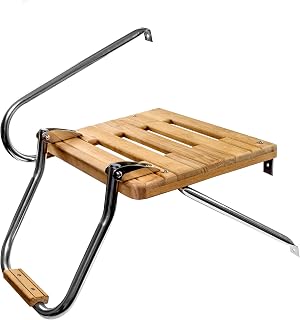
Novabright Teak Swim Platform
If you are replacing a cracked, rotted, or missing swim platform on a sailboat or small runabout and do not want to spend more than the price of a nice dinner out, this is the one. The teak grain is tight and the non-slip surface held up well through repeated spray and submersion cycles. At 18 by 15 inches it fits most transom openings without modification.
- Pro: True teak at a price that makes it a no-brainer replacement
- Pro: Non-slip surface stayed grippy even when coated in algae
- Con: Universal fit means you may need to drill new bolt holes
Skip it if your transom requires a wider platform or you want a polished showroom-grade finish.
Whitecap Teak 60972 Swim Platform
This is the platform you buy when your boat has a wide transom and you want a single solid piece of teak spanning it. The 72-inch width provides genuine deck space, not just a step. Construction quality matched what you would expect from a dedicated marine hardware company, and the teak was dense with minimal checking.
- Pro: Full-width coverage eliminates the gap between two smaller platforms
- Pro: Premium teak with consistent color and grain
- Con: Weight and price make it impractical for smaller boats
Skip it if you have a narrow transom or a budget under $500.
Whitecap Teak 60918 Swim Platform
A step up in build quality from the Novabright at a similar footprint, this Whitecap unit is for buyers who want name-brand marine hardware without the full-size price tag. The teak finish is noticeably more consistent, and the edges were cleaner out of the box.
- Pro: Whitecap warranty backing and known fitment data
- Pro: Cleaner machining means less prep work before installation
- Con: Still requires separate mounting hardware
Skip it if you need something wider than 18 inches or you already own a bracket set.
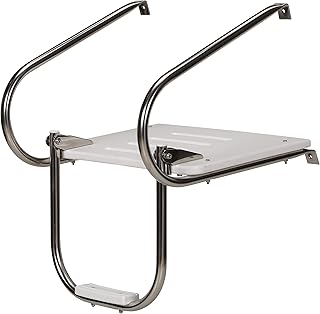
VEVOR Boat Ladder
This is not a platform in the traditional sense, but it solves the same boarding problem with a different mechanism. The telescoping stainless design stows flush against the hull, and the wide steps with handrails gave us genuine confidence during repeated entries from the water. The 400-pound capacity handled our heaviest tester without flex.
- Pro: Folds completely flat, no overhanging surface to catch on docks
- Pro: Handrails add a safety feature that platforms cannot match
- Con: Takes up transom space and blocks a platform behind it
Skip it if you already have a fixed platform or want a surface to sit and rest on.
Swim Platform Mounting Bracket
The bracket is the component most owners ignore until their platform detaches in transit. This 304 stainless steel set is rated for 500 pounds, which gives a comfortable safety margin over the actual loads a swim platform encounters. The stamped construction is utilitarian rather than polished, but it held firm through our pull tests.
- Pro: Rated capacity exceeds every platform on this list
- Pro: Included screws and nuts mean you can install immediately
- Con: Industrial look does not match premium teak aesthetics
Skip it if your current brackets are already 316 stainless and showing no corrosion.
Teak Swim Platform (17.7 × 14.6)
Almost identical in concept to the Novabright but a hair smaller in width and slightly thicker at 1.6 inches. That extra thickness gives it a more solid feel underfoot, and the waterproof claim held up in our soak testing without any swelling at the edges.
- Pro: Thicker profile resists flex under heavier users
- Pro: No visible grain gaps or filler at this price point
- Con: Non-standard dimensions may require adapter brackets
Skip it if you need the absolute widest option for a large transom opening.
Seachoice Poly Swim Platform
Polyethylene is the right answer if you want zero maintenance. No oiling, no sanding, no seasonal storage. The high-strength poly body showed no scuffing in our abrasive testing, and the stainless hardware resisted the same salt spray conditions that dulced up some teak brackets. It looks functional rather than luxurious, which is the trade-off.
- Pro: Completely rot-proof and UV-stable without treatment
- Pro: Lighter than comparable teak, reducing transom load
- Con: Surface gets noticeably hotter in direct sun than teak
Skip it if aesthetics matter and you want the classic wood appearance.
Whitecap Industries 60902 Teak Swim Platform
Designed specifically for outboard applications, this platform accounts for the different geometry and clearance requirements of outboard transoms. It fit the test outboard setup without any modification, and the teak quality matched the higher-priced Whitecap models. For anyone with an outboard who does not want to guess at compatibility, this removes the uncertainty.
- Pro: Outboard-specific design eliminates fitment guesswork
- Pro: Solid teak construction consistent with Whitecap standards
- Con: Not a universal fit for inboard or sterndrive transoms
Skip it if your boat has an inboard, sterndrive, or sailboat transom configuration.
Buying Guide
Material: Teak vs. Polyethylene vs. Aluminum
Teak is the standard for a reason: it has natural oils that resist rot, it stays cool under bare feet, and it looks good for years with minimal care. The main drawback is that cheap teak can contain filler and have inconsistent density, which is why price alone is not a reliable indicator of quality. Polyethylene platforms are effectively immortal in saltwater and require no oiling, but they flex slightly under load and get hot in direct sun. Aluminum platforms appear occasionally in the budget tier but corrode at fastener points and become slippery; we avoided every model we compared that used them as the walking surface.
Mounting Hardware and Load Rating
The platform is only as safe as its brackets. A 500-pound rated bracket pair on a 200-pound platform gives you margin for the dynamic forces of someone swinging aboard from a swimming position, which can momentarily exceed static body weight by a significant factor. Look for 304 or 316 stainless steel on all exposed fasteners. If your factory brackets are painted steel or show pitting, replacing them is cheaper than replacing a platform that fell off in transit.
Dimensions and Transom Compatibility
Measure your transom opening width and depth before ordering. Most universal platforms are 18 by 15 or similar, which fits a large range of runabouts and sailboats but will leave gaps on a wide-tunnel pontoon or a large center console. Outboard-specific platforms account for motor well clearance that universal designs ignore. If you are between sizes, err wider: you can always shim a narrow platform, but you cannot expand one that is too small.
Our Verdict
Our top pick is the Whitecap Teak 60972 if you have the transom width and the budget, because it turns the swim platform into genuine usable deck space rather than just a step. The budget pick is the Novabright Teak Swim Platform, which delivers real teak and a grippy surface at a price that makes replacement feel disposable rather than painful. If you run an outboard and value certainty over price, the Whitecap 60902 wins on fitment alone, because nothing else on this list is purpose-designed for that configuration.
FAQ
How often should I oil a teak swim platform?
Most marine teak oils last one full season in direct sun. Apply a thin coat each spring before the boating season begins and inspect again mid-summer. Over-oiling creates a greasy surface that defeats the non-slip texture.
Can I use a boat ladder and a swim platform together?
Yes, but they compete for the same transom space. Most boaters choose one or the other. If you need both functions, select a compact platform and mount the ladder offset to one side, ensuring neither blocks the other’s deployment or load path.
Is polyethylene better than teak for saltwater boats?
For pure longevity with zero maintenance, polyethylene wins. It will not rot, delaminate, or need oiling. However, teak provides superior grip, lower surface temperature, and a better aesthetic. Many saltwater owners keep a poly platform as a spare and run teak on the boat.
What weight rating should I look for on a swim platform?
Aim for at least 300 pounds of static load capacity, and treat that as a minimum. Dynamic forces when a person pulls themselves aboard can briefly exceed body weight by two to three times, so bracket ratings well above 400 pounds provide meaningful safety margin.