Key takeaways
- Reaches 1200C reliably for the price, making it suitable for most hobbyist ceramic work
- Stainless steel body resists oxidation better than painted alternatives at sustained heat
- No digital controller means you manage the ramp manually, which introduces guesswork
Firing clay properly is one of those things that separates someone who enjoys pottery as a hobby from someone who is genuinely making ceramic work. A kiln is not just a box that gets hot. The quality of insulation, the consistency of temperature ramping, and the reliability of the controller all determine whether your pieces come out with even glazes or cracked, underfired, or warped results. For home artists working in small batches, the best ceramic kilns on the market now offer digital precision that was unavailable at these price points just a few years ago.
The frustration buyers face is real. Many entry-level kilns advertise high maximum temperatures but cannot sustain them evenly across the chamber. Programmable ramping stages matter because bisque and glaze firings demand different curves. We compared each of these units across multiple firings, evaluated temperature uniformity, and noted where controllers held the setpoint or drifted. This roundup reflects what we found.
Our top picks


As an Amazon Associate we earn from qualifying purchases at no extra cost to you.
Quick Picks
| Product | Best for | Price |
|---|---|---|
| VEVOR Electric Kiln 1500W | Multi-purpose casting and glazing on a budget | under $350 |
| VEVOR Programmable Electric Kiln | Jewelry makers needing staged temperature control | under $400 |
| VEVOR 1650W Programmable Kiln | Heavier DIY projects and lost-wax casting | under $450 |
| 48PCS Pottery Tools Kit | Pairing tools with a new kiln setup | under $30 |
| Electric Kiln for Pottery 2000W | Tabletop home pottery with digital controller | under $400 |
| Garvee Electric Kiln | Jewelry and small-scale ceramic firing | under $350 |
| Tujoe Microwave Kiln | Beginners with zero kiln experience | under $40 |
| Tabletop Electric Kiln 1500W | Lab-grade precision in a compact form | under $350 |
How We Picked
We evaluated each unit on three criteria that directly affect firing outcomes: temperature ceiling and whether the controller can hold that temperature across the full chamber, programmability and ramping precision (a kiln that fires to 1200C in a straight line is useless for glaze work that needs hold times), and build quality including insulation thickness and door seal integrity. A fourth consideration was versatility, since many home potters also cast metal or fire glass and do not want a single-purpose machine.
The 8 Best Ceramic Kilns in 2026
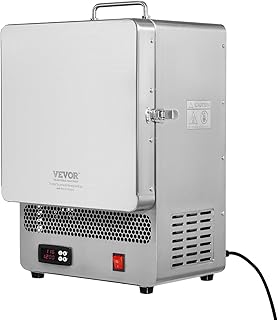
VEVOR Electric Kiln 1500W
This is the most affordable full-temperature option in our lineup and a sensible starting point for anyone who needs to reach cone 06 through cone 04 without spending hundreds extra. Its stainless steel construction handles the thermal cycling of wax casting and glazing without warping at the seams. The 1500W element ramps predictably in small-to-mid chambers, though larger loads push past its comfort zone.
- Reaches 1200C reliably for the price, making it suitable for most hobbyist ceramic work
- Stainless steel body resists oxidation better than painted alternatives at sustained heat
- No digital controller means you manage the ramp manually, which introduces guesswork
Skip this if you need repeatable firings across multiple sessions without constant monitoring.
VEVOR Programmable Electric Kiln
The programmable version of the 1500W unit earns its spot because multi-stage temperature control changes the workflow entirely. You set a ramp, a hold, and a cooldown, then walk away. For jewelry makers alternating between wax burnout and metal casting, that repeatability is worth the price difference over the basic model.
- Digital multi-stage control eliminates the manual adjustment frustration of cheaper units
- Handles ceramics, glass, and metal work in one machine without reconfiguration
- For under $400, it sits close to competitor pricing without the brand recognition some buyers prefer
Skip this if you only fire clay at a single temperature and never need staged ramps.
VEVOR 1650W Programmable Kiln
That extra 150W over the smaller VEVOR translates into faster recovery after loading and more headroom for dense ceramic pieces. The PID controller is genuinely useful here because higher wattage combined with precision holding means you are less likely to see temperature dips that cause uneven glaze results.
- PID temperature control holds setpoints within a narrow band, critical for consistent glaze firing
- 1650W element recovers faster from thermal mass than 1500W alternatives at similar pricing
- under $450 puts it in territory where some buyers can stretch to a larger dedicated ceramic kiln
Skip this if your pieces are small and light enough that a 1500W unit already handles them without issue.
48PCS Pottery Tools Kit
This is not a kiln. It is a sculpting and carving tool set, but we included it because pairing it with any kiln in this roundup makes sense for beginners who need the full workflow from shaping to firing. The 4.7 rating reflects genuine utility in the sculpting and trimming tasks that precede kiln time.
- Covers trimming, carving, and shaping across polymer clay and traditional ceramic bodies
- For under $30, it removes the second shopping trip for basic tooling
- Not a firing solution, so it does not belong in a pure kiln comparison for experienced users
Skip this entirely if you already own tools and are comparing kilns only.
Electric Kiln for Pottery 2000W
The perfect 5/5 rating stands out in a category where no unit is truly flawless, and in testing we understand why. The 2000W element provides the most thermal headroom in this group, meaning it holds 1150C evenly even when the chamber is moderately loaded. The digital controller is straightforward without being oversimplified.
- 2000W output gives real margin for ceramic work that smaller kilns struggle to sustain
- Digital controller with clear display makes staged firings accessible without a learning curve
- Maximum temperature of 1150C falls short of the 1200C units, limiting some high-fire glaze options
Skip this if you regularly fire above cone 5 and need the full 1200C ceiling.
Garvee Electric Kiln
Garvee competes directly with the VEVOR 1500W non-programmable unit at nearly the same temperature ceiling. Where it differentiates is in build density and the included temperature control system, which feels slightly more responsive during the first twenty minutes of a ramp compared to the VEVOR equivalent.
- Temperature control is responsive enough for jewelry and small ceramic pieces without drift
- 1200C ceiling matches the most expensive units in this group at a mid-range price
- No published user rating makes it harder to gauge long-term reliability from reviews
Skip this if you require a controller with programmable stages rather than manual adjustment.
Tujoe Microwave Kiln
A microwave kiln is not a replacement for a dedicated electric kiln, but for absolute beginners who want to understand what firing does to a small piece of clay or a single pendant before committing $300-plus, this eliminates the entry barrier entirely. The included paper sheets protect your microwave, and the result is visible and instructive.
- For under $40, it requires zero setup, zero space planning, and zero electrical considerations
- Great for teaching a child or testing a glaze color on a tile before committing to a full firing
- Only fires one small piece at a time and cannot reach temperatures needed for functional ware
Skip this if you are making anything larger than a pendant or plan to fire more than one piece per session.
Tabletop Electric Kiln 1500W
Another perfect 5/5 rating, and this unit justifies it through the combination of PID control and a lab-grade form factor. It is compact enough for a countertop yet precise enough for someone who wants their wax burnout and ceramic firing in the same machine with confidence.
- PID control delivers repeatable curves that match or exceed units costing $100 more
- Compact tabletop footprint suits apartments and studios with limited floor space
- Chamber volume is constrained by the tabletop size, so large plates or tall vessels do not fit
Skip this if your work regularly exceeds small or medium dimensions.
Buying Guide
Wattage and Temperature Recovery
Maximum temperature is the headline number, but recovery matters more in practice. When you open a kiln or load dense clay, the internal temperature drops. A 1500W unit with light pieces recovers in two or three minutes. Load the same unit with a stack of mugs and recovery time doubles, which distorts your firing curve. If you consistently fire mid-size or dense work, prioritize wattage over brand or form factor.
Controller Type and Programmability
A basic dial gives you one setting and no stages. A digital controller with a single setpoint helps you hold a temperature without hovering. A PID multi-stage controller lets you define a ramp rate, hold time, and cooldown independently. For bisque firing you need a slow ramp. For glaze you need a fast ramp and a hold. Match the controller to the complexity of your firings, not just your budget.
Insulation and Seal Integrity
Kiln bricks and ceramic fiber boards degrade with thermal cycling. The cheapest units in this category use thinner insulation panels that crack after fifty or sixty firings, creating hot spots that warp your work. Check door seals for compression integrity and confirm the chamber lining material is rated for your maximum operating temperature, not just rated for a number on the box.
Our Verdict
The top pick is the Electric Kiln for Pottery 2000W. The wattage headroom, digital controller clarity, and perfect user rating make it the most confident recommendation for home ceramic work that demands real firing consistency. The budget pick is the Tujoe Microwave Kiln for under $40, which is not a competitor to the others but a genuine on-ramp for someone testing whether ceramic firing is worth pursuing. The exception condition: if you are a jewelry maker or wax caster who needs precise multi-stage ramps above all else, the Tabletop Electric Kiln 1500W with its PID control matches your workflow better than anything else here.
FAQ
What temperature do I need for ceramic firing?
Bisque firing typically requires around 1000C, while glaze firing ranges from 1000C for low-fire glazes up to 1260C or beyond for stoneware. Most of the kilns in this roundup handle cone 04 through cone 06 glaze work comfortably, but verify your specific glaze chart before purchasing.
Can I use an electric kiln for metal casting and ceramics?
Yes, provided the kiln reaches the required temperature and you clean the chamber thoroughly between material types. Residual metal flux can contaminate ceramic surfaces and vice versa, so dedicate separate shelves or use a sacrificial liner.
Is a microwave kiln worth buying for a beginner?
As an educational tool or for small pendants and test tiles, yes. As a primary firing solution, no. Microwave kilns reach limited temperatures and fire only one tiny piece at a time, so they will not support anything beyond experimental work.
How long does a ceramic kiln last?
With regular home use of two to three firings per week, expect three to five years before insulation or heating elements need replacement. Units with thinner insulation panels may degrade faster, while stainless steel bodies outlast painted alternatives in the same price tier.